Global markets are in the rare situation where both gold (XAU) and Bitcoin (BTC) are moving lower despite increasing geopolitical tensions. The escalation in the Middle East and surge in oil prices would normally support safe haven assets. However, both assets have lost ground after the Federal Reserve held hawkish position. Rising bond yields and stronger US dollar have put pressure on financial markets. This environment has led to a general sell-off and investors have been forced to minimize their exposure to risk and non-yielding assets.

Gold and Bitcoin Under Pressure as Liquidity Tightens
The recent drop in both assets is indicative of a classic liquidity squeeze, rather than the failure of safe haven narrative. The surge in oil prices to over $110 has raised inflation fears, which boosted yields and the US dollar. This combination is a difficult environment for gold and Bitcoin. Gold does not provide yield and Bitcoin is still perceived as high risk asset. As a result, investors have begun selling both to generate cash and hedge against risk.
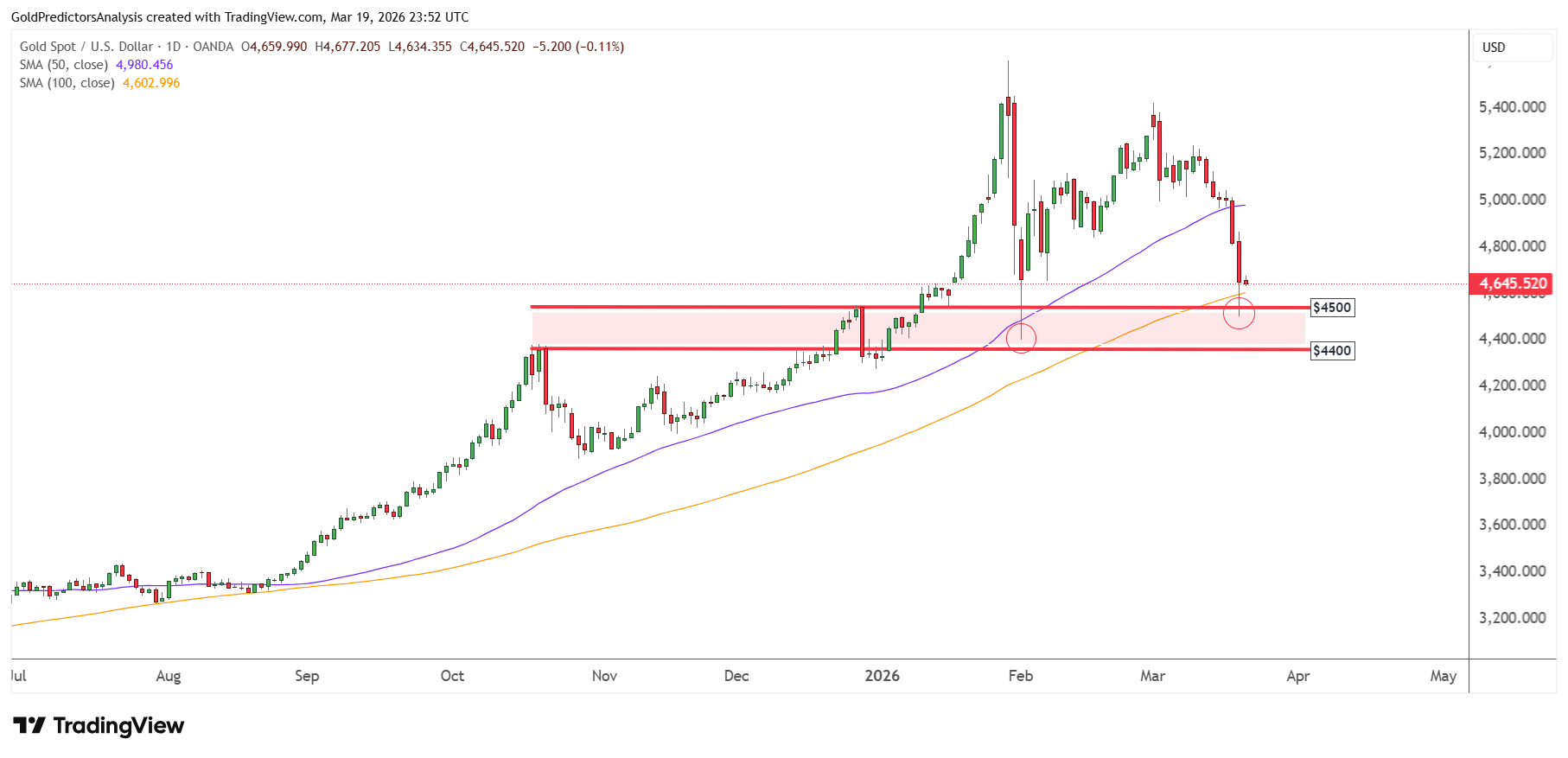
In the last 24 hours, both markets experienced sharp drops. The gold price dropped towards the support zone of $4500-$4600 after breaking the psychological level of $5,000. This support zone is key level in the gold market, whereby a break below $4,500 will introduce further downside. A recovery above $5,000 will confirm another rally.
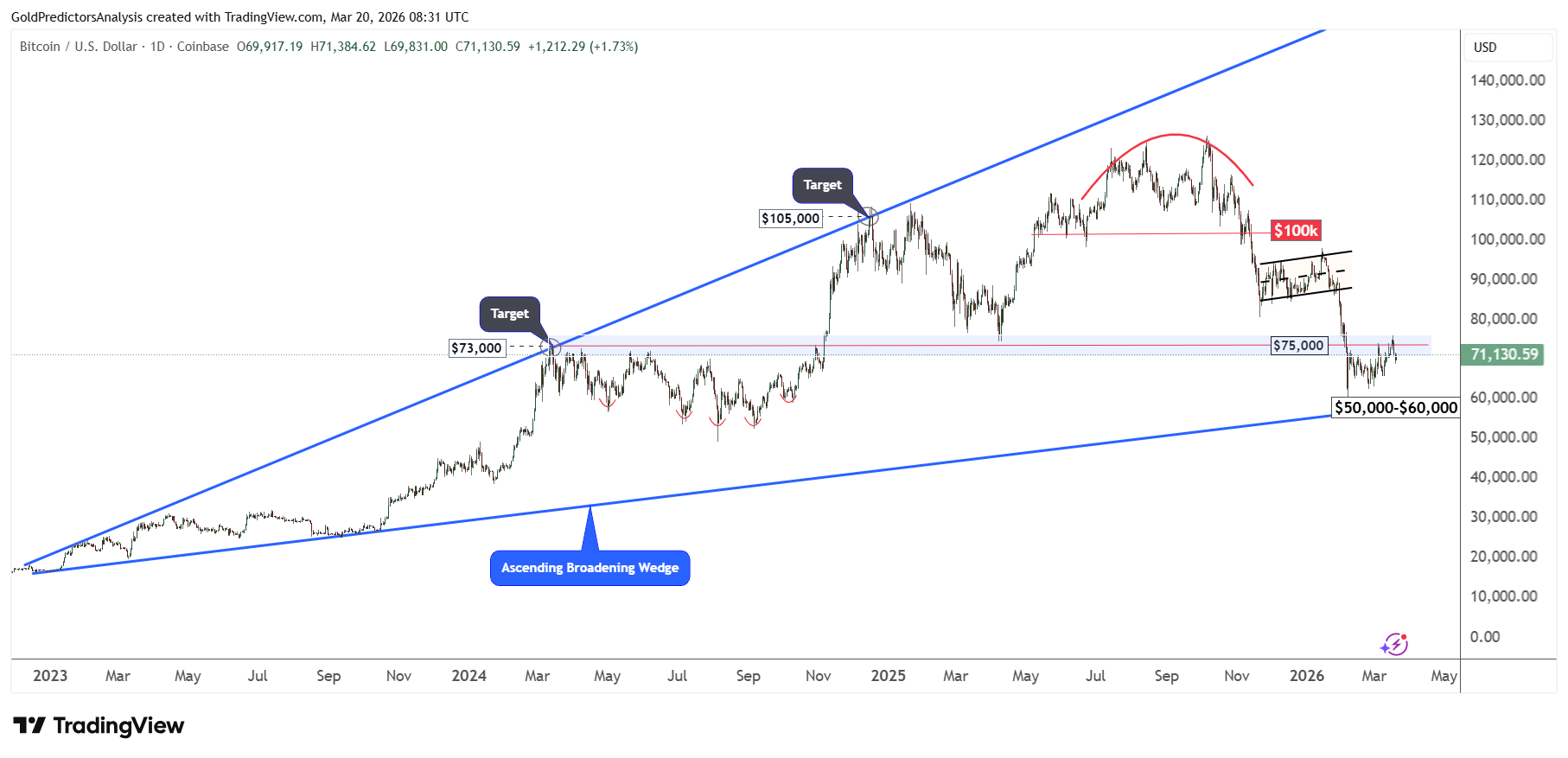
On the other hand, the Bitcoin price dropped over 5% this week towards $70,000, as discussed in the previous article. The Bitcoin price has initiated a strong rebound from the support of $60,000, which is considered a strong support region.
This support region is defined by the emergence of an ascending broadening wedge pattern, which indicates a move to $75,000. However, the price failed to break above $75,000. This failure indicates that the short-term direction of Bitcoin is uncertain. A break below the $50,000 to $60,000 zone will introduce a strong drop towards $35,000.
This move represents that during the macro stress, liquidity is priority. Investors move out of holding assets and into cash positions. In such phases, traditional hedges can fall as they are used to cover losses in other areas.
Gold Price Forecast
Every new Gold analysis as it publishes, today's technical signal and key levels, live price — on one page.
See all Gold forecasts
Shifting Safe-Haven Dynamics in Modern Market
The relation between gold and bitcoin is changing. Gold continues to be the global reserve asset with a substantially larger market size. However, Bitcoin is attracting attention as an alternative store of value. After the start of US-Iran war, capital flows into Bitcoin and pushed price higher, while gold struggled to hold gains and dropped lower. This shift implies that some investors are now finding that Bitcoin is better hedge in certain conditions.
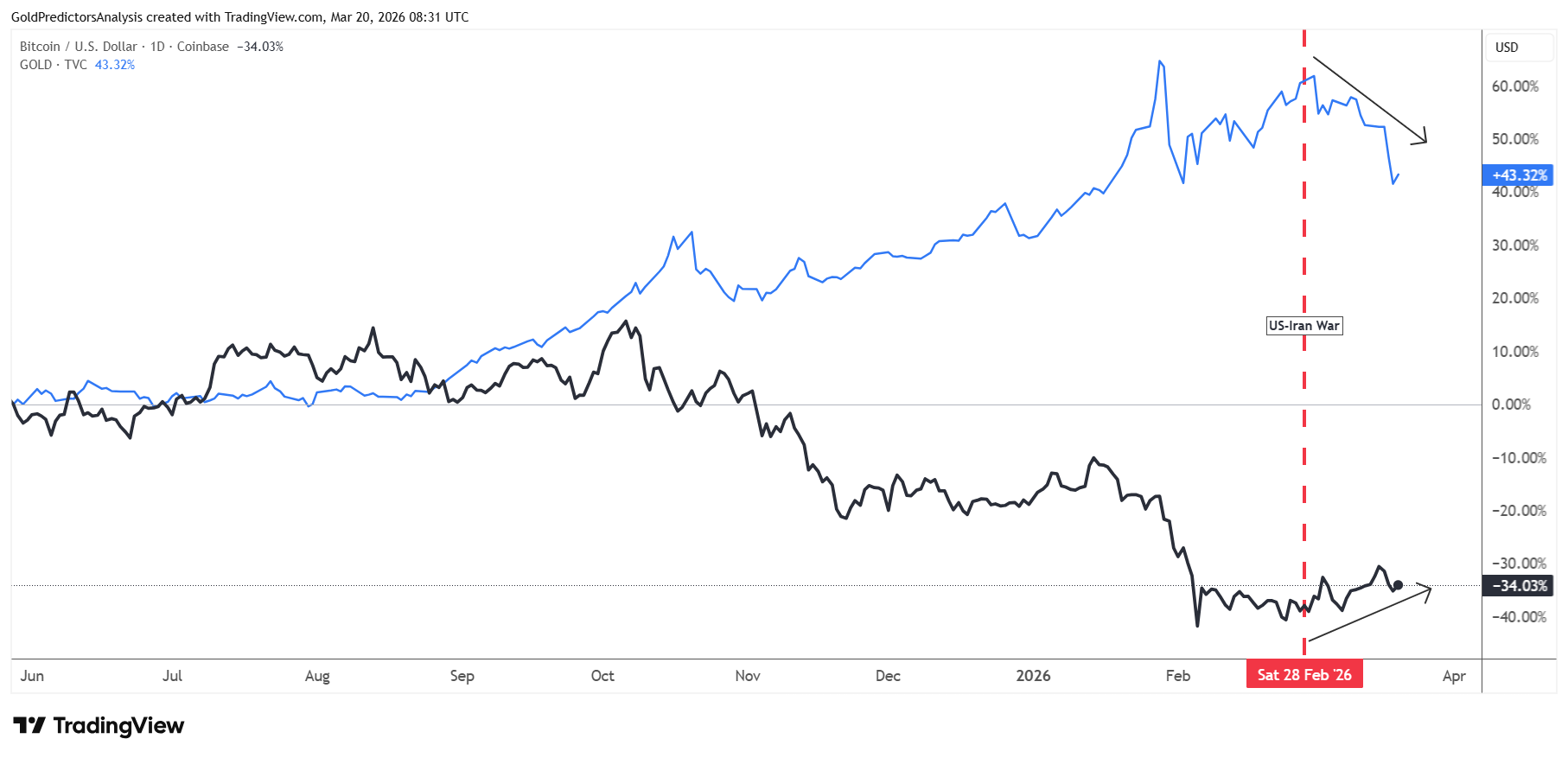
This change also indicates broader shift in market behavior. Gold and Japanese yen would increase during the times of uncertainty. Now, those patterns are not as consistent as digital assets are meeting the demand for alternative investments. This does not replace the role of gold, but it demonstrates the fact that the market is changing and becoming more complex.
Bottom Line
Gold and Bitcoin are significant assets, but their market situation has changed. The surge in yields and US dollar has put short term pressure on both markets. The recent drop reflects sell-off due to liquidity and not a breakdown of their long term roles. As things calm down, both assets may regain strength, but traditional landscape of safe havens is shifting with rise of Bitcoin.
The gold price has hit support at $4,500 while Bitcoin has hit the support of $60,000. A break of key levels in these assets will introduce further downside. However, Bitcoin has risen slightly after start of the US-Iran war, but gold has dropped significantly. Their movements will depend on emerging global conditions as news breaks.
If you’d like to know more about how crypto markets work, please visit our educational area.