Gold Settles Flat but the Real Story Was the Volatility
Spot Gold settled last week at $4493.68, basically flat but that wasn’t the real story in my opinion. Early last week, gold prices broke hard to $4099.12, a four-month low, before rebounding the rest of the week. That volatility tells us exactly the kind of market we’re in right now, forced selling, then short-covering. The price action has been ugly at times, not very stable and not very clean. It also suggests that the market has shifted away from the safe-haven narrative, to an interest rates and liquidation story.

Central Bank Selling Is the Key Shift Nobody Wants to Talk About
I think that the key shift is the central banks. There was chatter last week of selling and increasing speculation of potential rate hikes. Apparently, Turkey sold a large amount of gold to support its currency as the war drove Iranians into the country. There is also speculation that Russia has been a seller for cash flow. This matters because the entire 2025 rally was anchored on the premise that central bank buying was the most supportive factor. Geopolitical risk is still elevated, which is keeping the “safe-haven” argument alive, but it may not be strong enough if a wave of central banks decide to sell.
Yields and the Dollar Are Doing Real Damage
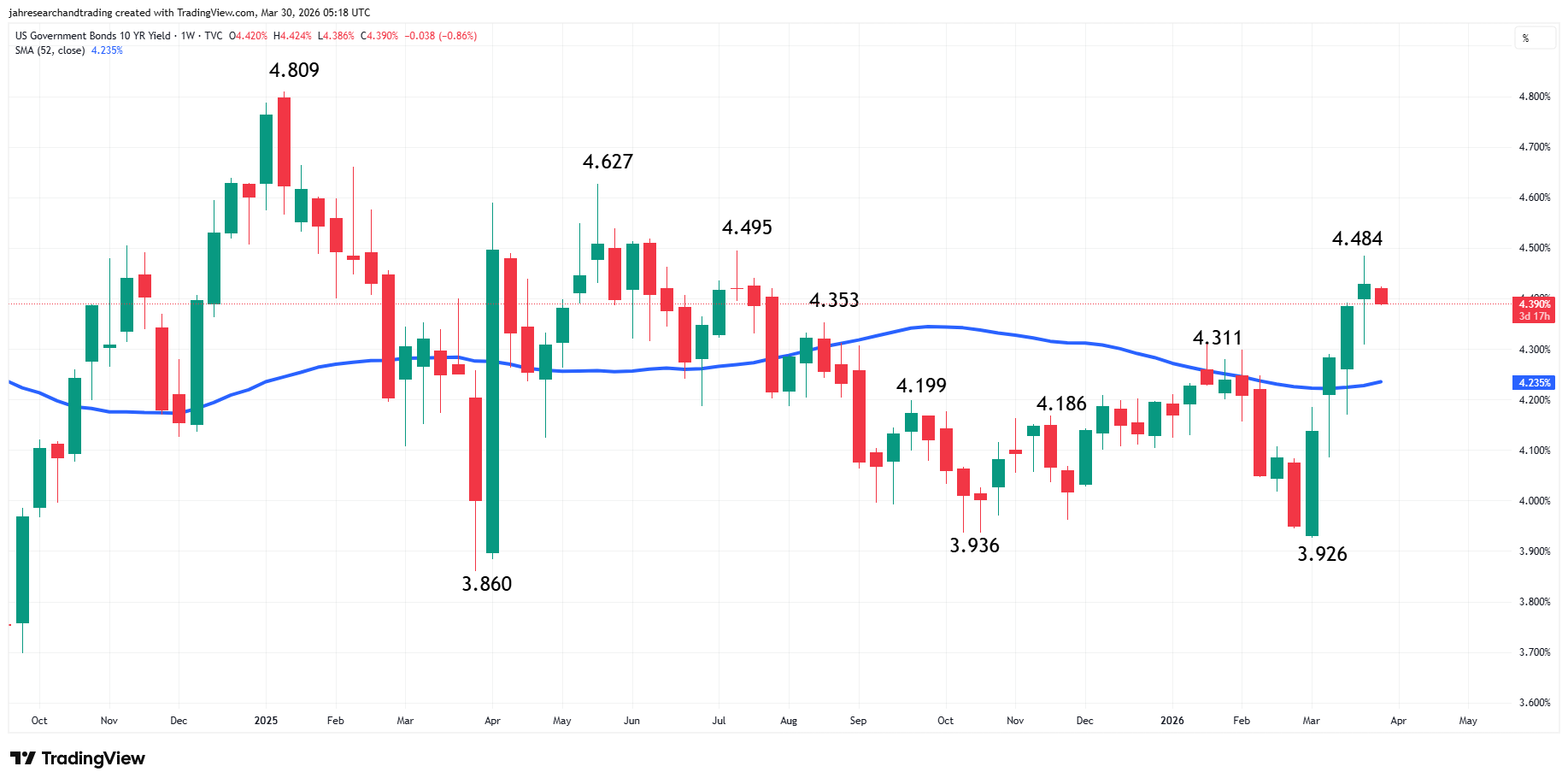
Yields and the U.S. Dollar are other factors weighing on prices. The war between the U.S. and Iran is driving oil prices higher, which is feeding inflation concerns. These worries have been enough to push Treasury yields up, while reducing Federal Reserve rate cut expectations. Besides the central bank selling, the jump in yields may have given gold prices a meaningful nudge lower. That’s one factor that the gold bulls don’t seem to want to acknowledge. While they seem to be zeroed in on the geopolitical risks, the real risk of no rate cuts have been slowly eroding support.
Two Things to Watch This Week — the War and the Jobs Report
At the start of this week, some gold traders will have their eyes on the war and whether there will be an escalation. But others will be eyeing the jobs report, because it too can have a major influence on Fed policy and the direction of interest rates.
With inflation expectations rising, a strong jobs report will push yields higher and pressure gold prices even further. But there is going to be a problem with rising inflation and weak jobs data, that will signal stagflation, something the Fed would like to avoid.
Gold Price Forecast
Every new Gold analysis as it publishes, today's technical signal and key levels, live price — on one page.
See all Gold forecastsThe War Is Creating Spikes but It’s Not in Control
Geopolitics is still there, but after a month of fighting, gold prices are lower and yields are sharply higher. I think that’s enough to tell us what is really driving the price action. The war can create price spikes in either direction but it’s not in control so focus on gold’s relationship with interest rates.
In my opinion, rallies are likely to be sold as long as yields remain elevated and central bank selling remains a possibility. But if yields suddenly start to rollover, then expect buyers to step back in quickly especially if last week’s plunge to $4099.12 and subsequent technical rebound, reestablished what value is.
Technical Outlook
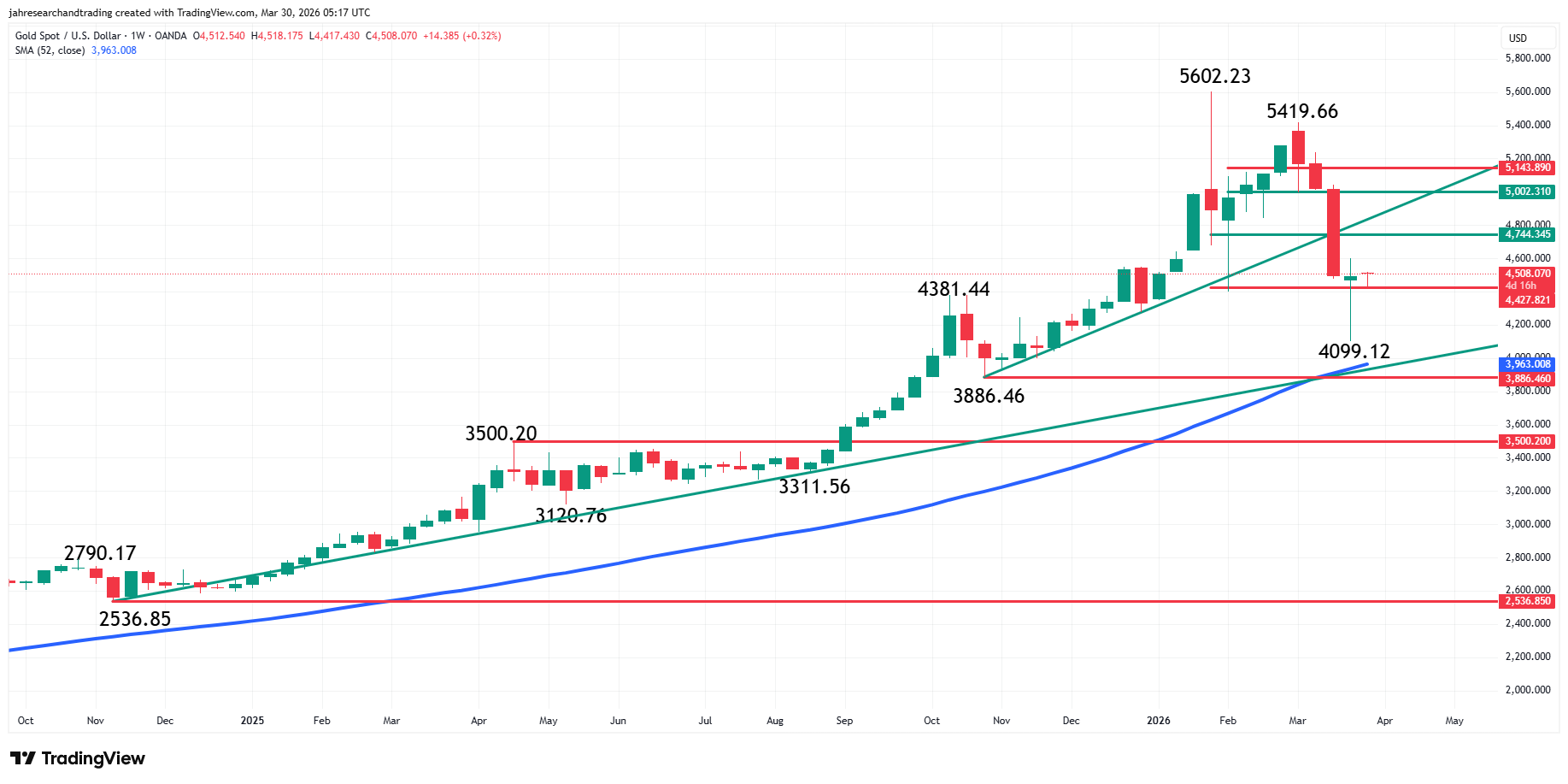
Technically, the major area to watch this week is not last week’s low at $4099.12, but rather the support cluster formed by the 52-week moving average at $3962.85 and the October bottom at $3886.46. Breaking this area could bring in a wave of selling, in my opinion. In this case, there is just something about taking out the last swing bottom before the all-time high that may tell us that this great bull market rally is over for now.
On the upside, buyers are going to try to sustain a rally over $4427.82. If that works, momentum may take us to $4744.35 and the uptrend line at $4852.
More Information in our Economic Calendar.