Gold Price Pulls Back After Hitting $4526.15 — Is This Rally Finally Stretching?
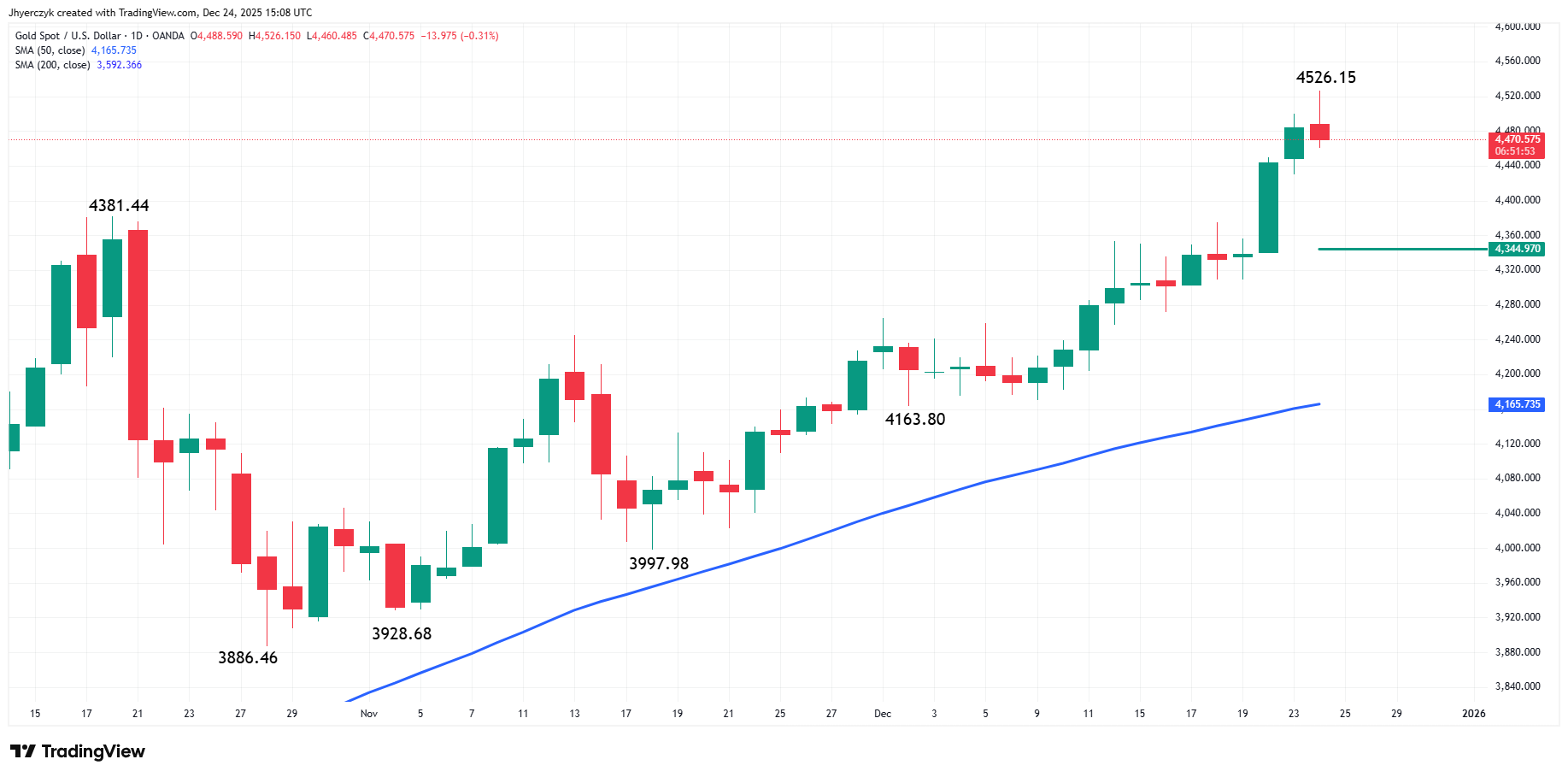
Spot gold is easing off the highs on Wednesday after tagging a fresh record at $4526.15 earlier in the session. It’s in a position to form a potentially bearish closing price reversal top, but with markets shutting down for Christmas, this looks more like profit-taking and position-squaring than a meaningful shift in trend. A higher-high, lower-close can print today, but we’d still need confirmation in the next session before calling an actual turn.
At 15:26 GMT, XAUUSD is trading $4465.22, down $19.33 or -0.43%.

Gold Market Rally Extends as Metals Complex Heats Up
Gold finally broke through $4500, and the move didn’t happen in isolation — silver and platinum surged to fresh records too. Safe-haven demand, expectations of more Fed easing next year, and speculative buying continue to support the run.
With no bearish catalyst in sight, buyers still have control. Central bank demand, a weaker dollar, and strength across base metals, including copper, all reinforce the broader metals bid. Gold is now up more than 70% this year, its strongest annual gain since 1979, as geopolitical stress keeps investors positioned defensively.
SocGen analysts argue the only real threat to this rally is a slowdown in central bank buying. Without that, positioning still leans higher, supporting their call for $5000 by end-2026.
Rates Market Steady, but Growth Data Adds Noise to the Fed Path
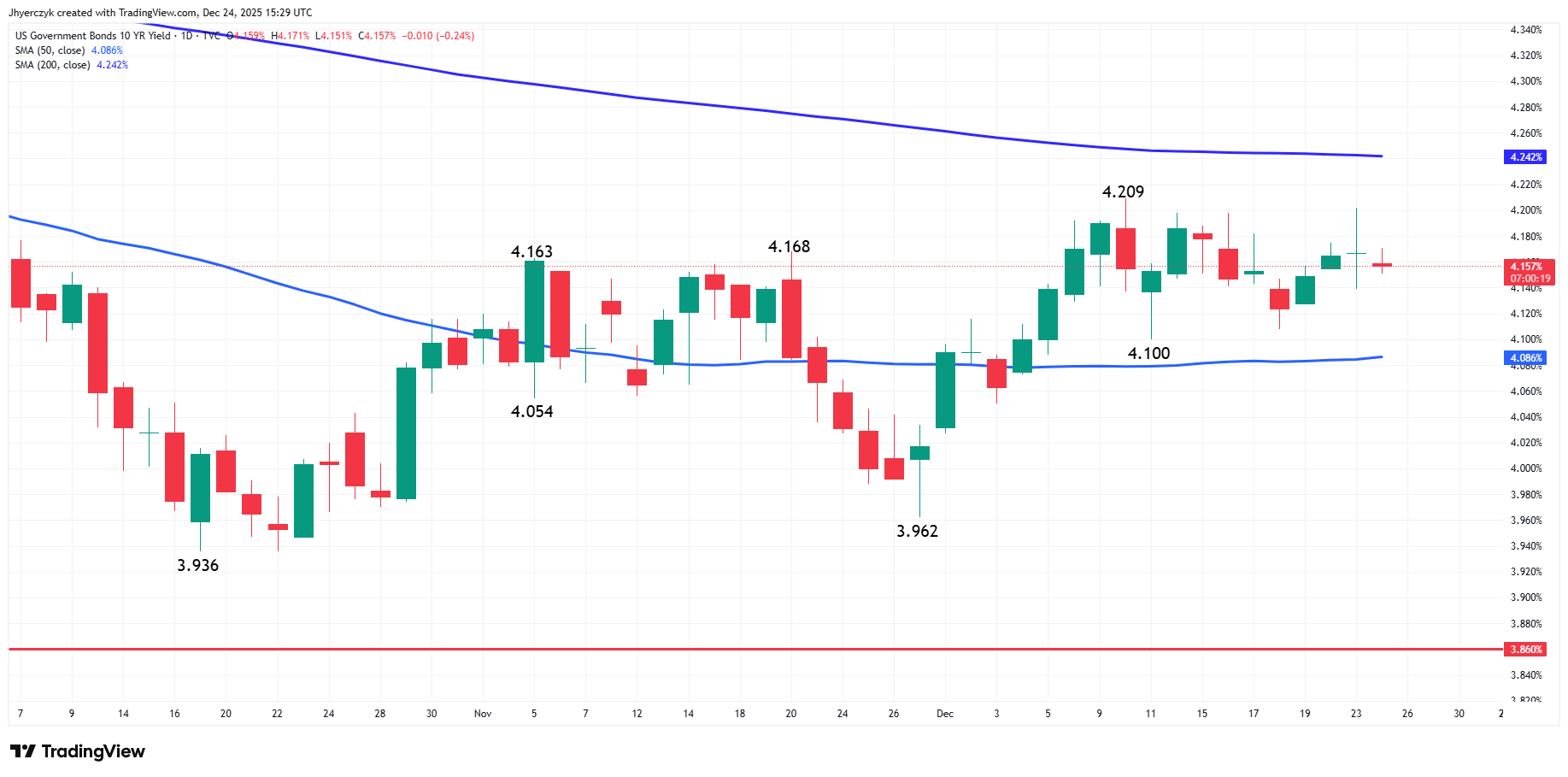
Treasury yields barely moved heading into the holiday break. The 10-year hovered near 4.161%, while the 2-year sat around 3.53% and the 30-year eased slightly. Traders essentially paused after digesting stronger-than-expected Q3 GDP at 4.3%, the fastest in two years. Jobless claims fell to 214,000, showing the labor market hasn’t cooled enough to give doves full control.
Gold Price Forecast
Every new Gold analysis as it publishes, today's technical signal and key levels, live price — on one page.
See all Gold forecastsFed commentary remains split. Kevin Hassett said the Fed is “way behind the curve” on cuts, while Cleveland Fed President Beth Hammack argued for holding rates steady for several more months. Futures now favor no move until April. The backdrop isn’t perfectly aligned with gold, but the metal still benefits as long as real yields avoid a sustained push higher.
Dollar Tries to Stabilize — Gold Buyers Still Comfortable
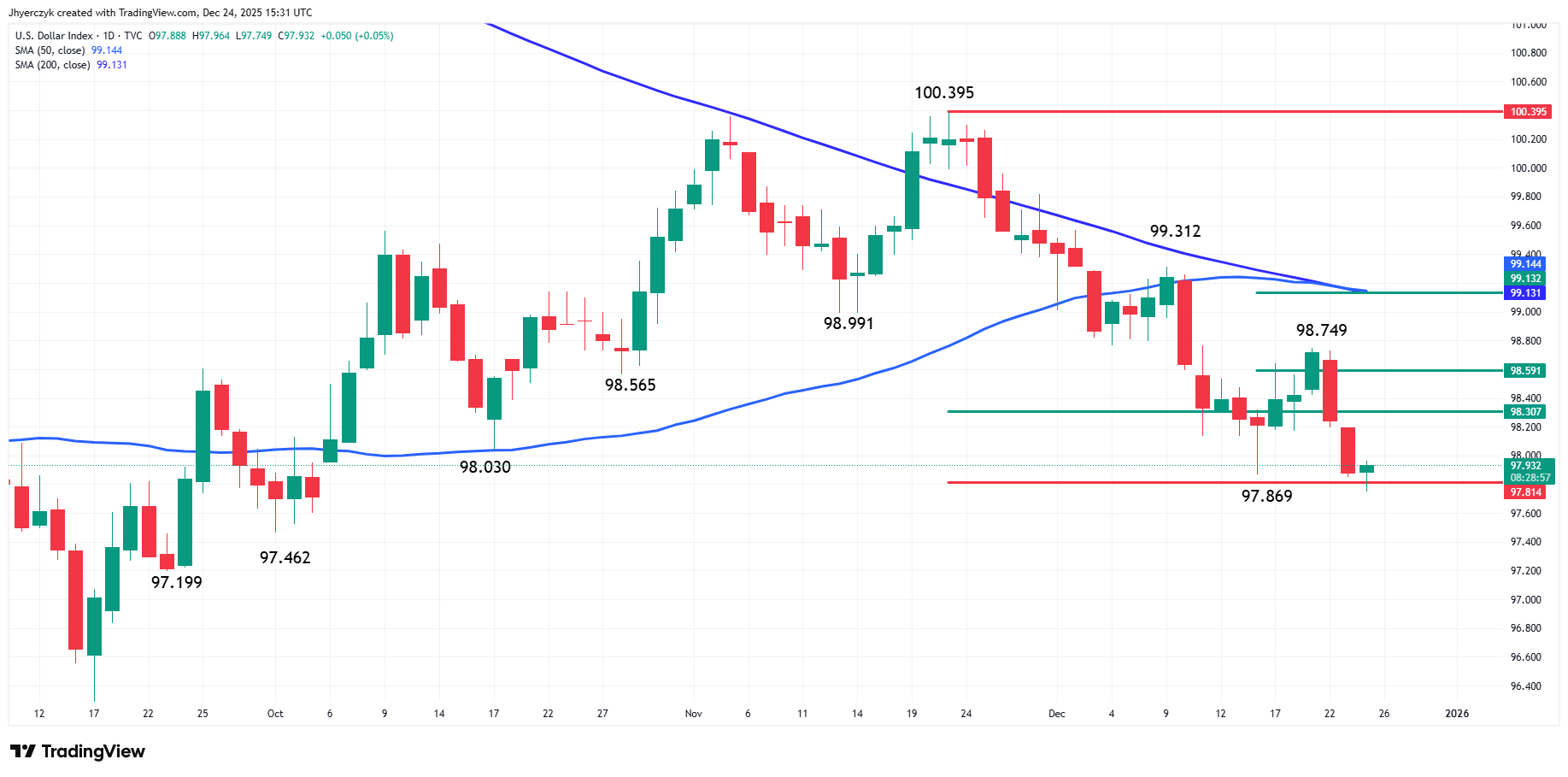
The U.S. Dollar Index ticked up to 97.927 after dropping to a multi-month low at 97.749 earlier in the session. A firmer dollar may slow the upside, but gold isn’t trading like it’s threatened. Buyers continue to step in on weakness, and that’s what matters right now.
Gold Price Forecast: Bias Stays Bullish Unless $4526.15 Becomes a Confirmed Top
Today’s pullback still looks shallow. If sellers press and we get confirmation of a closing price reversal top in the next session, gold could slip into a short-term correction. Without that signal — and with fundamentals still supportive — the bias stays bullish. As long as buyers defend the breakout zone and sentiment remains anchored by easing expectations and central bank demand, traders will keep looking higher rather than lower.
More Information in our Economic Calendar.