Gold Edges Higher After Testing Support, Awaits CPI Report
Spot Gold is edging higher on Friday after hitting its lowest level since February 6 as the market continued to consolidate between a pair of retracement zones at $4744.34 to $4541.88 and $5002.31 to $5143.89.

Uncertainty Over Fed Rate Cut Timing Caps Gains
Yesterday’s steep plunge may have been a sign of relief because from the looks of this week’s earlier three-day rally, it seemed as if traders were unwilling to take out offers, suggesting uncertainty and lack of confidence. And why not? The economic numbers this week have been good enough to add to the confusion over the timing of the Fed’s first rate cut in 2026. Simply stated, gold wants to move higher but needs lower rates to jump-start the move. Without a rate cut, traders are going to have to be content with building an elongated support base until the bullish fundamentals realign.
Longer-term, gold remains well-supported by steady central bank buying, with the 50-day moving average at $4626.87 providing guidance and solid support.
Strong NFP Data Drives Yields and Dollar Higher
Gold has been muted to the upside since Wednesday when the U.S. released hotter-than-expected Non-Farm Payrolls data, which helped drive Treasury yields higher as well as the U.S. Dollar. Higher yields tend to weigh on gold prices because they are competing assets. Treasuries pay a fixed rate of return and come with the government’s guarantee. Gold doesn’t pay a dividend or yield. A firm dollar tends to drive down foreign demand for dollar-denominated gold.
CPI Report Could Determine Direction
Gold traders will be watching the reaction in Treasury yields and the dollar today following the release of the January Consumer Price Index at 13:30 GMT, since this report is likely to have a direct impact on Fed policy.
Gold Price Forecast
Every new Gold analysis as it publishes, today's technical signal and key levels, live price — on one page.
See all Gold forecastsAhead of the report, traders are calling for no Fed rate cut in March and high expectations for one in June. This assessment is helping to cap gains in gold. It’s no coincidence that gold topped out in January, the day after the Fed’s policy announcement and the day before President Trump revealed his choice of the new Fed chairman. Kevin Warsh is expected to take over in June, just in time for a key Fed meeting.
Hot CPI Could Tank Prices, Cool Reading Could Spark Rally
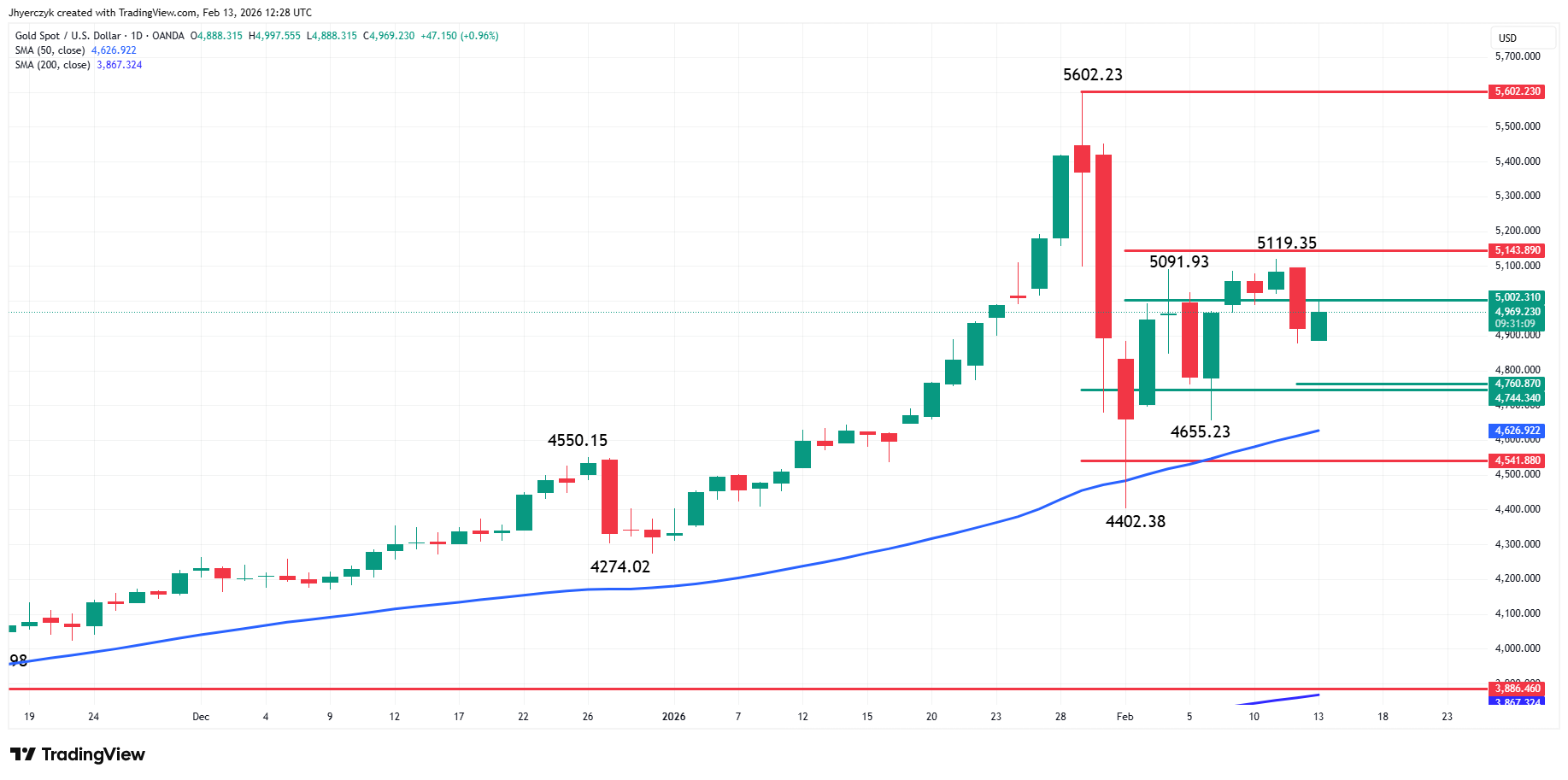
With gold traders already on edge due to the big labor market number, a higher-than-expected consumer inflation number could tank prices to support at $4760.87 to $4744.34. If this fails, the 50-day moving average at $4626.93 will become the next target.
A lower-than-expected CPI number could launch a rally into $5002.31 to $5143.89 and likely solidify the chances of a June rate cut.
I think the Fed, like the gold bulls, would like to see steady-to-lower inflation numbers too.
More Information in our Economic Calendar.