Gold Traders Weigh Greenland Resolution Against Key PCE Inflation Data
Spot Gold is slightly lower on Thursday as traders continue to assess the impact of the events surrounding the possible U.S. acquisition of Greenland, while they await the release of key inflation data that could influence Fed policy ahead of next week’s monetary policy meeting.
At 13:33 GMT, XAUUSD is trading $4822.06, down $9.32 or -0.19%.

Will Traders Trim the “Greenland Premium” After Trump’s Framework Announcement?
The key question is whether the premium speculators built into the market when President Trump threatened Europe with tariffs over the weekend will now be trimmed. Late Wednesday, Trump called off the Greenland-related tariffs and announced he had the “framework” for Greenland. With both of these issues off the table, gold traders now have an excuse to trim their positions and take profits. But will they?
Technical Analysis: First Support at $4712.52, Uptrend Line Critical at $4655.79
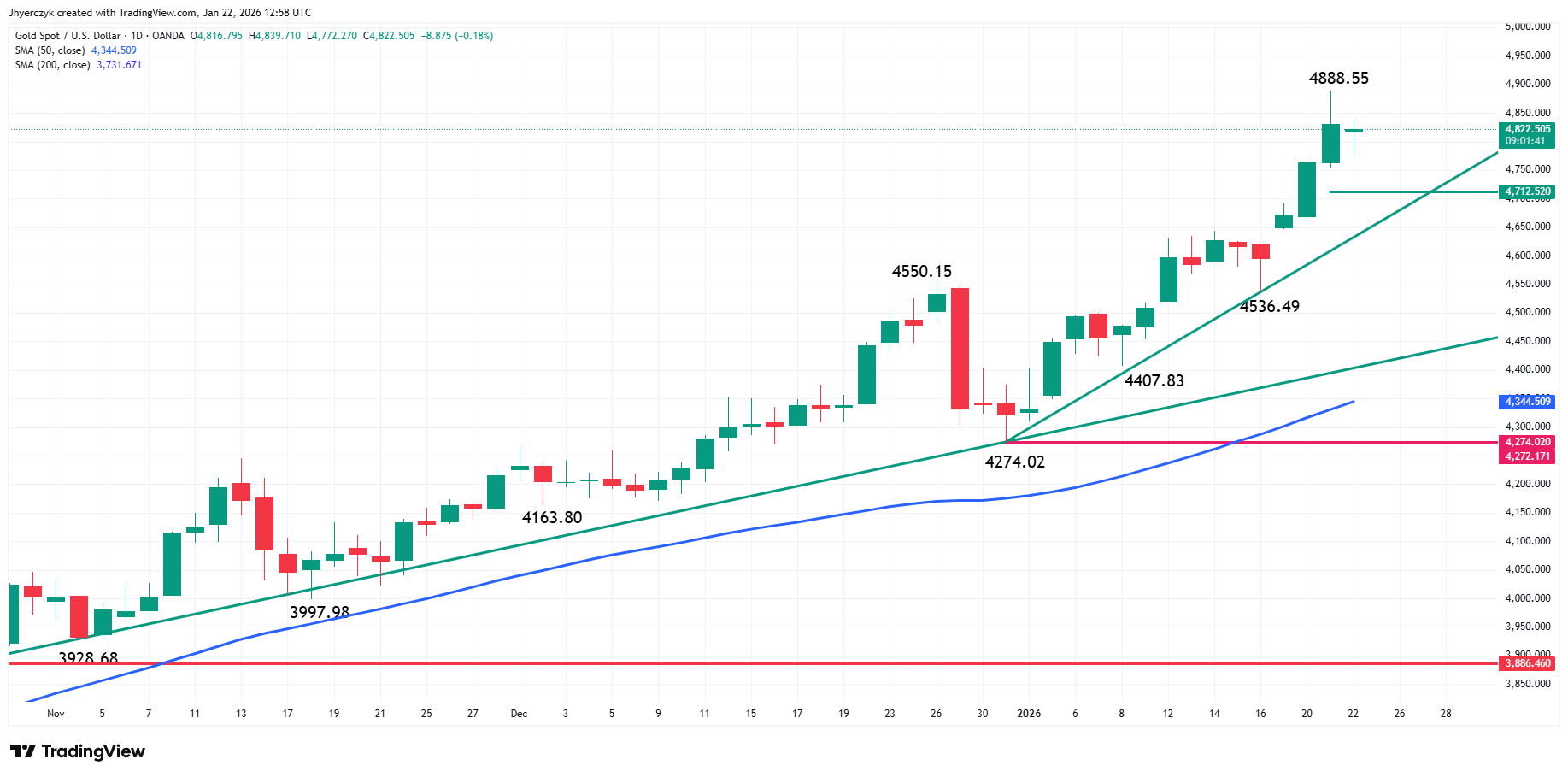
A slight pullback on profit-taking will not be a trend-changing event. It may even create the next buying opportunity. The charts show the first downside target as a minor pivot at $4712.52. However, the most important support is the uptrend line at $4655.79. The trendline has been guiding the gold market higher since the December 31 main bottom at $4274.02.
On the upside, a breakout through $4888.55 will signal a resumption of the uptrend with no visible resistance.
PCE Inflation Report Due at 14:00 GMT: Fed’s Favorite Gauge in Focus
The Federal Reserve’s favorite measure of inflation, the Personal Consumption Expenditures price index (PCE), will be released today at 14:00 GMT. It is going to give investors the opportunity to learn how much inflation has risen over the past few months. Traders expect the report to show a 2.8% rise over the 12 months through November, according to a consensus estimate cited by Wells Fargo Securities.
Gold Price Forecast
Every new Gold analysis as it publishes, today's technical signal and key levels, live price — on one page.
See all Gold forecastsFed Unlikely to Act on Stale Data; June Rate Cut Now More Likely
Fed officials will take the PCE data to their next meeting on January 27-28, but are unlikely to act on it since the report is stale. With the Fed likely to insist on more up-to-date data, the timing of the next rate cut is likely to be pushed into June, which does not really bode well for gold traders betting on an earlier cut.
“Given that recent inflation reports have been significantly impacted by data collection issues due to the federal government shutdown during October and the first half of November, Fed officials are likely to want to see several more months of data in order to get a clearer understanding of the underlying trends,” Brett Ryan, senior U.S. economist at Deutsche Bank, wrote in a commentary.
Higher PCE Data Could Trigger Near-Term Correction Despite Greenland Resolution
The quick solution to the Greenland problem may have capped the rally over the short-run, but higher-than-expected PCE data may actually have a negative influence on gold prices. Let’s see if it kickstarts a near-term correction.
More Information in our Economic Calendar.