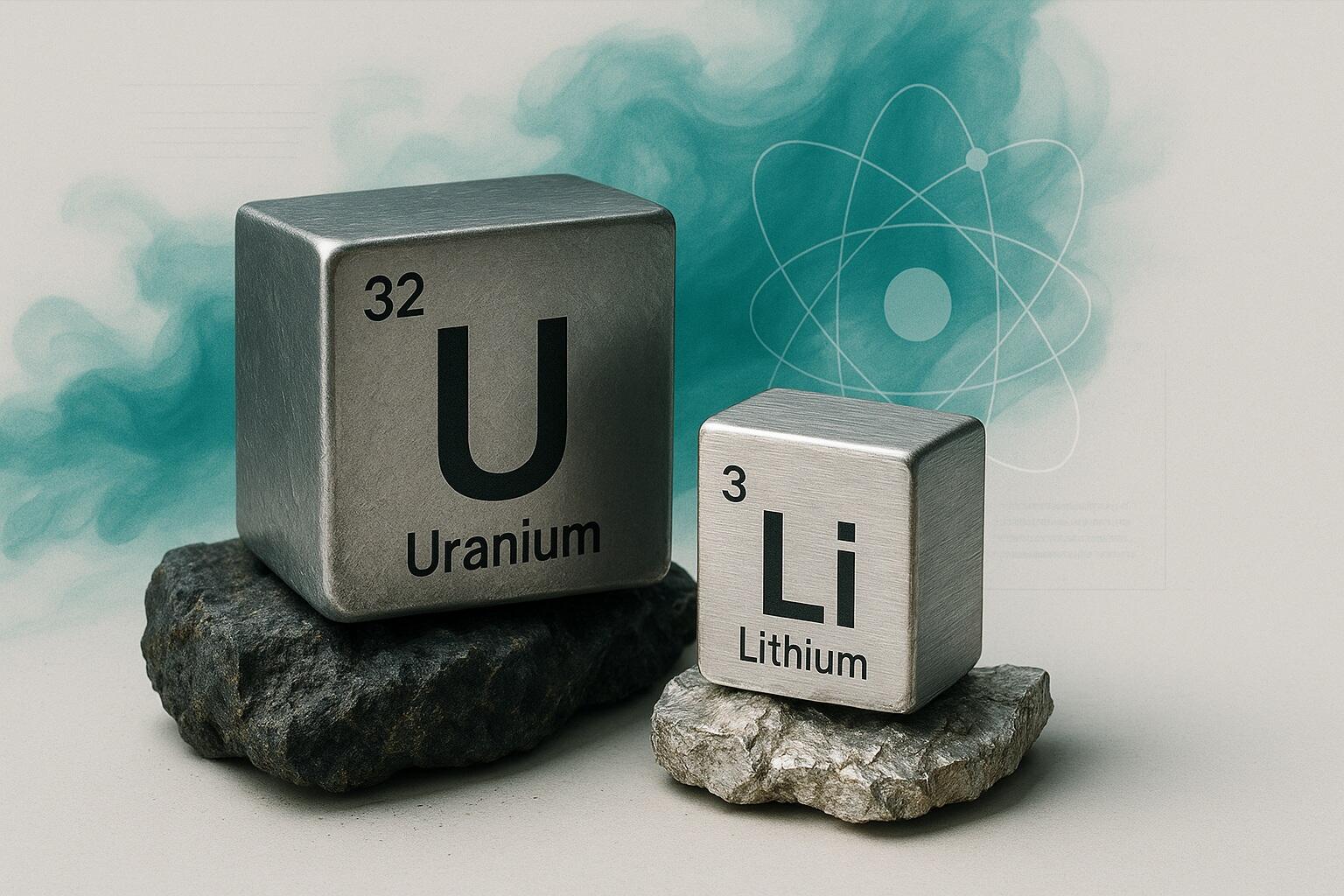
Commodities have quietly but decisively become the best-performing asset class of the past five years. Since 2021, no fewer than 47 Commodities across metals, energy and agriculture have registered successive multi-year and all-time record highs. That degree of breadth and persistence is not the hallmark of a late-cycle surge. It is the defining characteristic of a structural repricing.
A Historic Breakout That Changed the Regime
The leadership in 2025 was unambiguous. Silver emerged as the top-performing Commodity, delivering an extraordinary 165% annual gain and closing the year at a new all-time high of $83.62 an ounce. Platinum followed with a rise of more than 140% as chronic supply deficits collided with renewed investor demand. Gold, often dismissed as “defensive”, climbed 66% – its strongest annual performance since 1979.
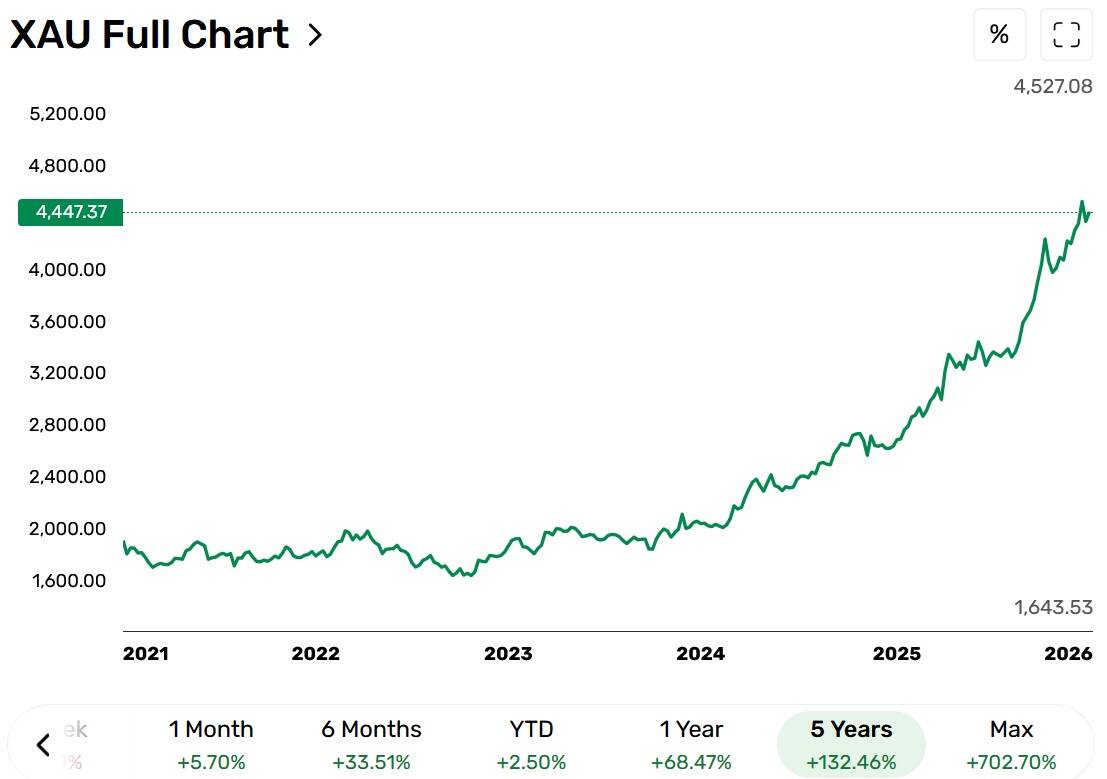
Gold’s advance deserves particular attention. Since October 2023, it has risen from the $1,800 level to register 91 separate all-time record highs in just 27 months. In effect, the yellow metal has printed a new record high almost every week for more than two and a half years. Modern market history offers no precedent.
“This is not a blow-off top,” says Lars Hansen, Head of Research at The Gold & Silver Club. “It is what a global repricing looks like when confidence in paper systems erodes and capital begins to migrate toward real assets.”
Brent Oil Price Forecast
Every new Brent Oil analysis as it publishes, today's technical signal and key levels, live price — on one page.
See all Brent Oil forecastsEarly Stages of a Supercycle, Not the End
Sceptics argue that the easy money has already been made. The data suggests the opposite. In 2025, Commodity markets did not merely reach new highs – momentum accelerated and participation broadened. Historically, this pattern has marked the early stages of Commodity Supercycles, not their conclusion.
Analysts at The Gold & Silver Club have argued since early 2021 that Commodities had entered a new Supercycle, identifying the sector as one of the most important long-term opportunities of the decade. Five years on, the evidence has only strengthened. “Supercycles don’t end after five years,” Hansen notes. “They mature when supply finally catches up – and we are nowhere near that point.”
Wall Street is now echoing that view. Goldman Sachs recently told clients that “the setup for Commodities in 2026 is more bullish than it has ever been,” describing markets as still being “in the first inning of a multi-year, potentially decade-long Supercycle.” Similar conclusions are emerging across major institutions’ 2026 outlooks.
Why 2026 Changes Everything
The drivers now propelling Commodities are deeper and more durable than inflation alone. The world is entering a lower-rate but fiscally unstable environment in which government debt continues to rise even as policy flexibility shrinks. Real yields remain compressed, purchasing power is eroded and capital is steadily redirected away from financial claims toward tangible assets.
Fiscal dominance has become a defining feature of the global economy. With debt servicing costs constraining policymakers, inflation, currency debasement and financial repression are increasingly unavoidable. Commodities benefit directly: they are priced in depreciating currencies while representing finite, real-world inputs.
Geopolitical fragmentation reinforces the trend. Globalisation has given way to a multipolar system characterised by trade barriers, resource nationalism and strategic stockpiling. Energy, food and critical materials are now matters of national security. Supply chains are duplicated, costs rise and long-term equilibrium prices reset higher.
At the same time, industrial demand is undergoing a structural step-change. The acceleration of artificial intelligence, electrification, automation and defence spending has driven sustained demand for Copper, Aluminium, Silver and Nickel. As capital expenditure shifts from financial engineering to physical build-out, Commodities move from the margins of portfolios to their core.
A Once-In-A-Generation Allocation Shift
Institutional behaviour confirms the shift. Sovereign wealth funds, hedge funds and family offices are no longer treating Commodities as tactical hedges. They are increasingly being allocated as strategic assets – a change that alters market structure and supports higher prices for years to come.
Taken together, the forces shaping 2026 point to a world that is more fragmented, more resource-constrained and more dependent on physical inputs than at any time in decades.
Commodities are no longer optional. They are essential.
“This is not a forecast,” says Hansen. “It is a statement of fact. 2026 will be remembered as the Year of Hard Assets.”
History suggests that periods of structural repricing do not reward hesitation. They reward early positioning, discipline and the willingness to move before consensus fully arrives.
The only question that matters, now is: are you positioned to capitalise on what may prove to be the greatest generational wealth transfer of our lifetime?