



The United States and Israel strikes on Iran have opened a new geopolitical front that markets cannot ignore this week. Iran’s missile response sparks fear of escalation in the Middle East. Investors are now concerned with whether the conflict remains confined or if it spreads to important energy routes. This theme is set to dominate in price action across commodities, currencies, equities and safe-haven assets in the coming days.
Middle East Conflict Becomes the Key Macro Catalyst
This conflict immediately moves the macro narrative around the world towards geopolitical risk. Markets were already tenuous based on tariffs and volatility in the tech sector. A military escalation adds a whole new level of uncertainty.
Traders will now respond to all headlines pertaining to retaliation, diplomacy or further strikes. If tensions increase, the risk appetite will decline and defensive assets will strengthen. If there are de-escalation signals, markets could quickly stabilize. Therefore, this battle becomes the driving force behind cross-asset volatility this week.
Oil Prices Face Upside Risk from Supply Fears
The most sensitive market to these developments will be oil. Iran is located near the Strait of Hormuz which is a chokepoint through which 20% of the world’s oil flows. The interruption to this route has caused a tightening of global supply which will further increase prices.
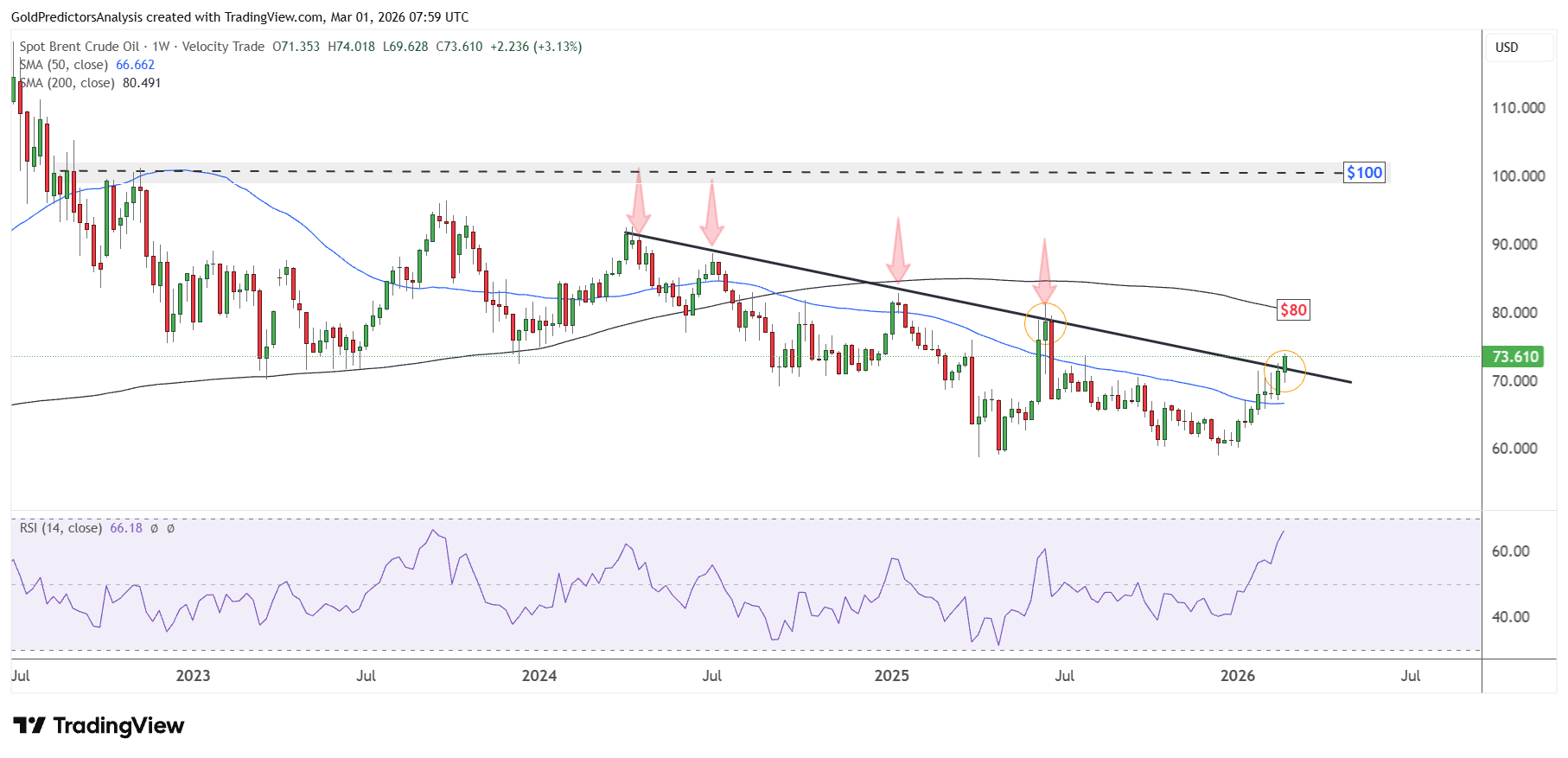
Brent crude oil (BCO) is already trading near $73 and has risen very strongly this year. Moreover, WTI crude oil (CL) also shows strength. Shipping suspensions and security risks are added to immediate supply concerns.
Gold Price Forecast
Every new Gold analysis as it publishes, today's technical signal and key levels, live price — on one page.
See all Gold forecastsIf the conflict is limited, oil may test $80. However, a sustained disruption could push prices above $80 and move towards $100. This surge in oil prices will likely increase global inflation expectations. Higher oil prices would be good for energy stocks but put pressure on inflation sensitive assets.
This outlook is also confirmed by the technical charts as Brent crude oil has broken the descending trend line at $72 and is poised to gain momentum to $80. A break above $80 would open the door for a move to $100. Due to growing tensions, there is a high risk of a big gap in the oil market openings on Monday.
Currency Markets Shift on Geopolitical Risk and Oil Price Dynamics
US Dollar Faces Mixed Pressures
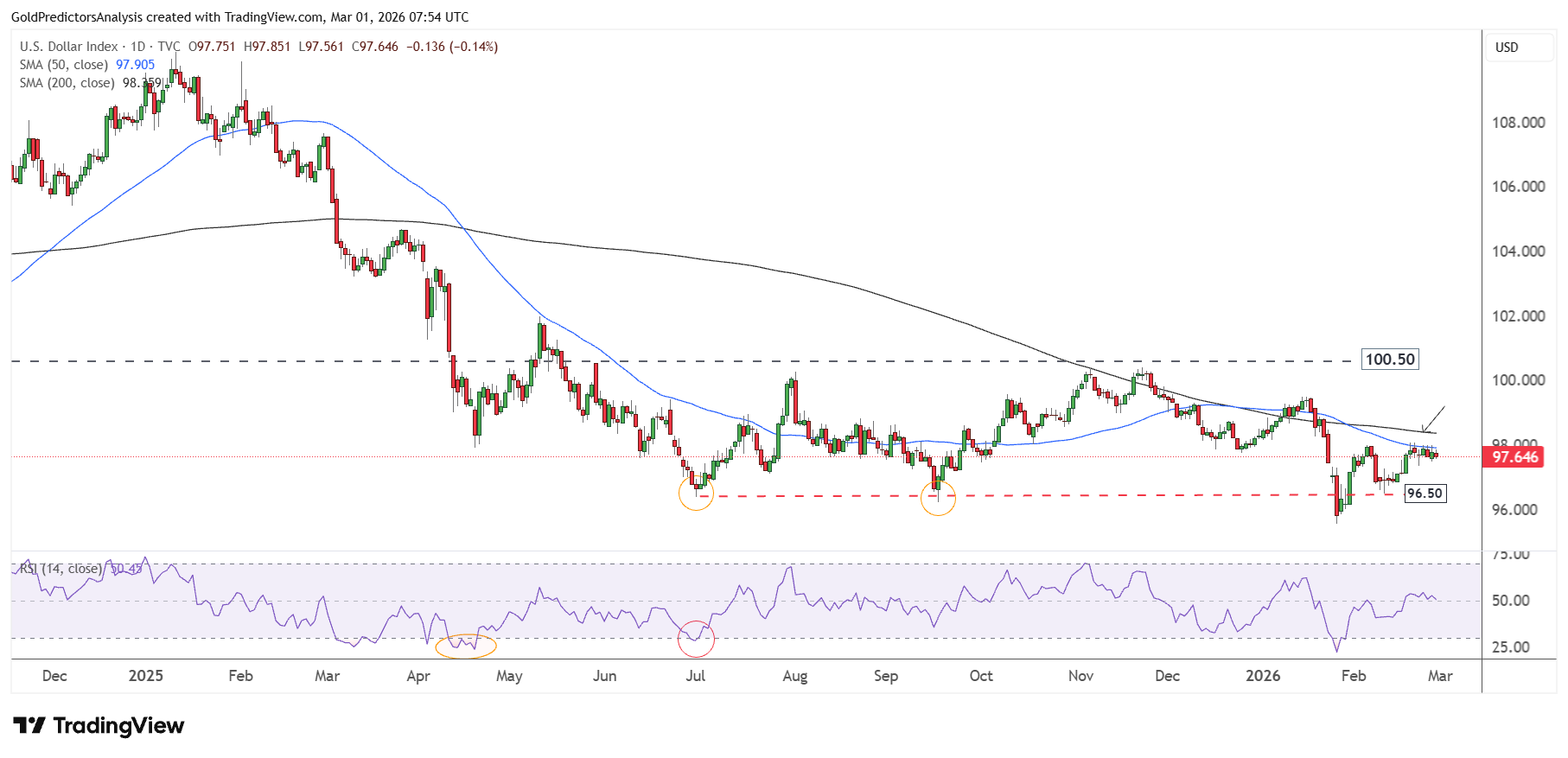
The currency markets will likely experience strong movements as a change in risk sentiment occurs. The U.S. dollar may weaken at first due to risk-off flows, but higher oil prices could boost the dollar later as the United States is a net energy exporter.
The chart below shows that the US dollar index remains weak below the 50 and 200-day SMAs. However, a break below 96.50 is required to take the index to 90. The increasing global risks may lead to significant volatility. A break above 98.50 will take the index to 100.50.
Safe-Haven Currencies Gain as Risk Aversion Rises
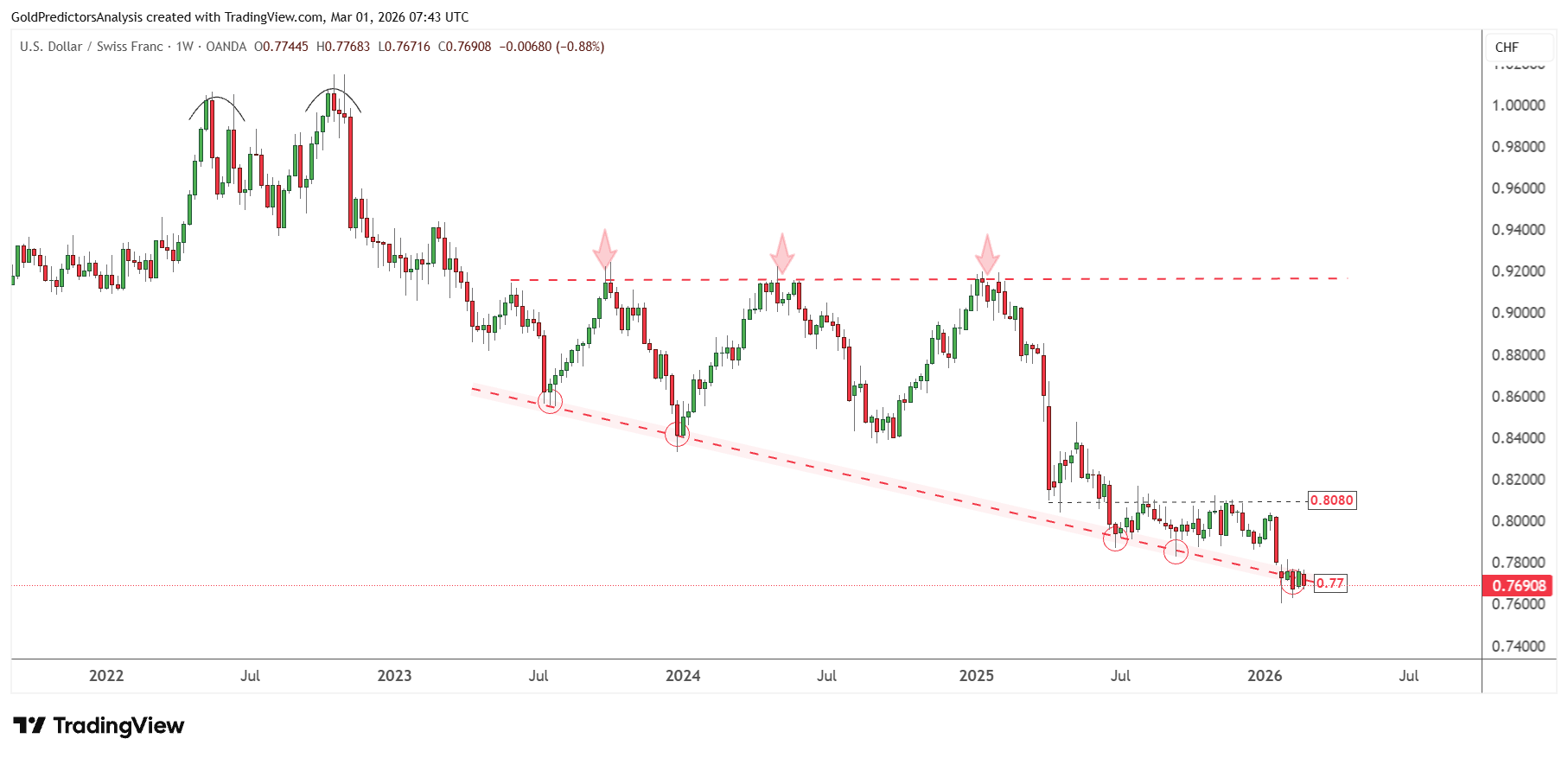
Safe-haven currencies like the Swiss franc and Japanese yen are likely to receive high demand. Meanwhile, regional currencies such as the Israeli shekel may continue to be volatile because they are directly exposed to conflict headlines. Therefore, FX markets will trade in 2 phases: immediate fear-driven flows and later adjustments determined by energy price trends.
The safe-haven demand for the Swiss franc is also observed in the technical charts as USDCHF is attempting to break below 0.76. This level is defined by the strong support of the triangle pattern. A break below this level will likely introduce a strong drop in the pair towards 0.70.
Gold and Silver Strengthen on Safe-Haven Demand
Precious metals will likely gain from this geopolitical shock. Gold (XAU) is already trading in strong uptrend and benefits from increased geopolitical risks. Investors tend to transfer money to gold to safeguard portfolios during conflict. Silver (XAG) will tend to follow gold in such risk off periods. Escalation of this kind will likely help strengthen bullish momentum for both metals.
The chart below shows that the gold price has formed a strong based patterns after the reversal from the key $4,400 level. The breakout from the $5,100 has opened the door for a surge to $5,600.
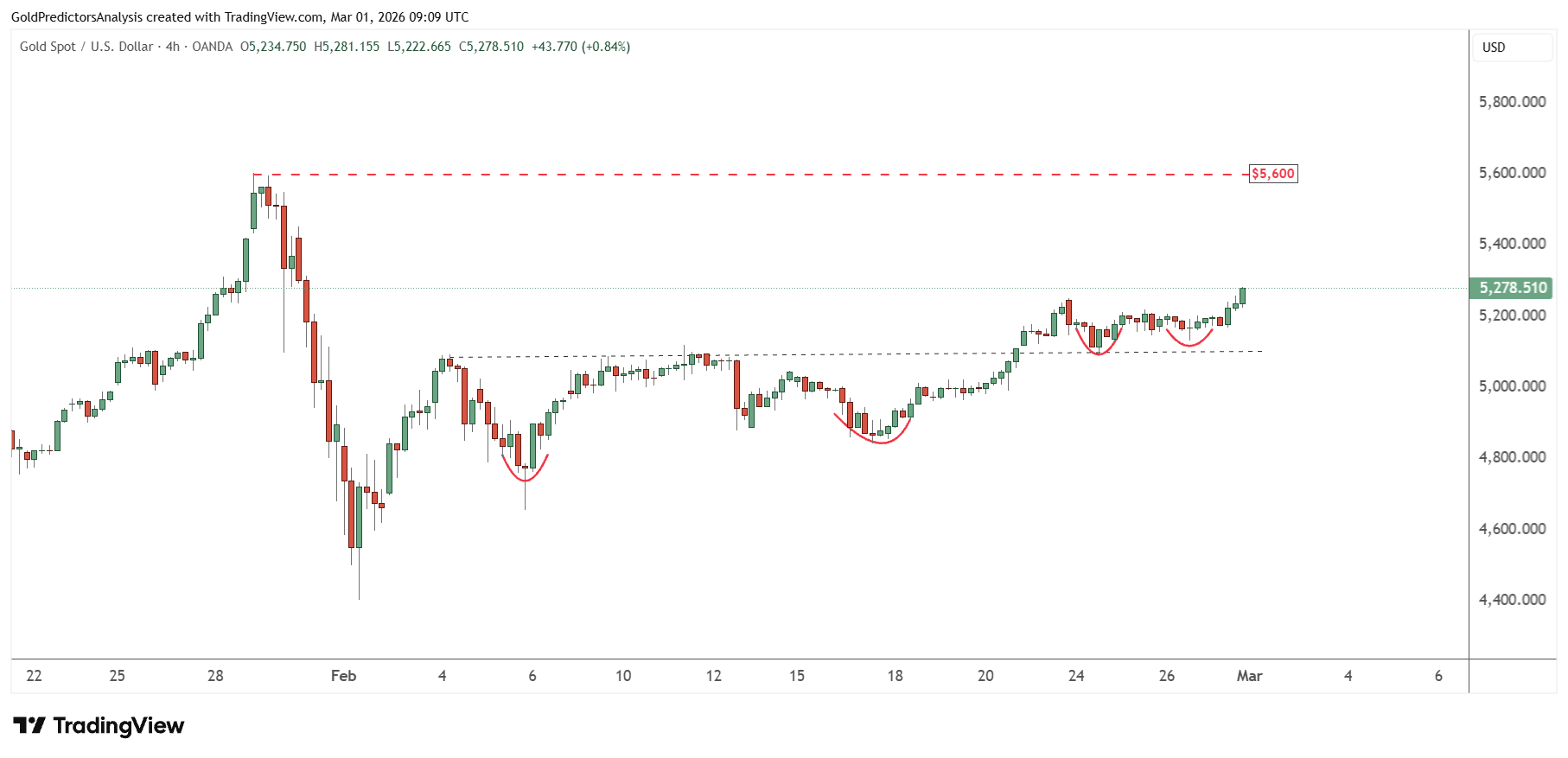
The escalation in the crisis will further support this move and will likely trigger a break from the record level. Silver prices will also follow the gold rally, and the technical breakdown in gold to silver ratio will support leadership in silver.
A strong weekly close above the key line and then the US strikes on Iran during the weekend increase the likelihood of a gap in the gold market at Monday’s opening.
Bitcoin Loses Appeal as a Safe Haven
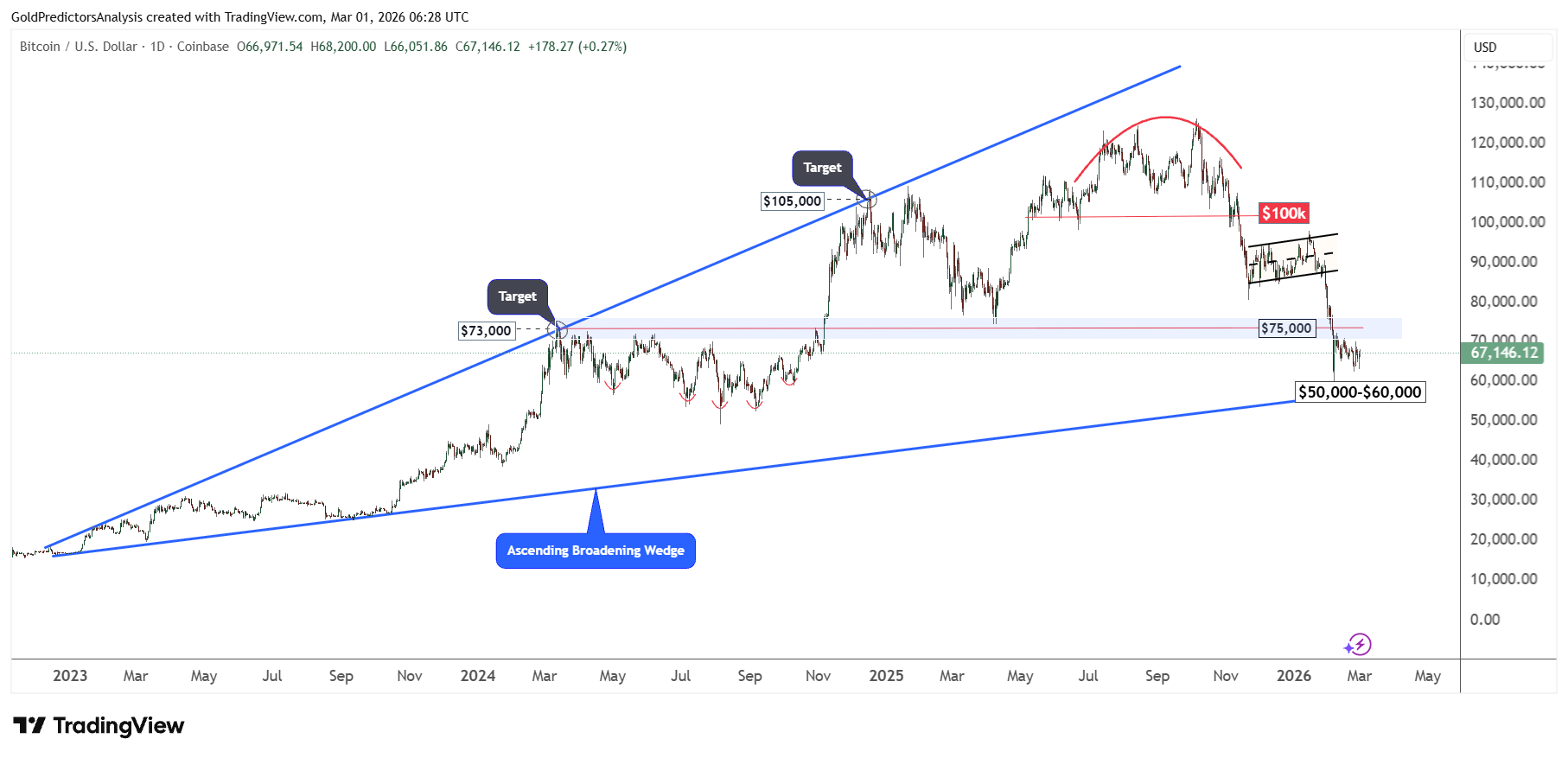
Bitcoin (BTC) has not acted as safe haven during geopolitical tensions recently. The digital asset has fallen and lost tremendous amount of value in the last two months. This reaction implies that investors seek tangible hedges such as gold in times of conflict. In case the volatility keeps being high, there are chances that Bitcoin could face pressure to save liquidity to safer assets. A stabilization in global risk sentiment would be required before digital assets are able to gain strength.
According to the illustrations below, the Bitcoin price has already reached the strong support zone of $50,000-$60,000. That is the reason why Bitcoin failed to break below $60,000 despite escalating tensions in the Middle East on weekends.
However, if Bitcoin breaks the $50,000 level, prices will likely drop towards the $30,000-$35,000 levels before any meaningful rebound. A recovery above $76,000 will indicate further upside.
Global Equities Face Rising Volatility Amid Geopolitical Risk
Equity markets are likely to respond with large swings as geopolitical risk premiums are expected to increase.
VIX Surge Signals Growing Market Fear
The chart below indicates that the VIX volatility index has already risen this year and could continue to soar if hostilities continue to escalate. According to the data, the VIX spikes heavily during major global shocks with the largest spike in March 2020 during the pandemic and another strong spike in March 2025 due to geopolitical tensions.
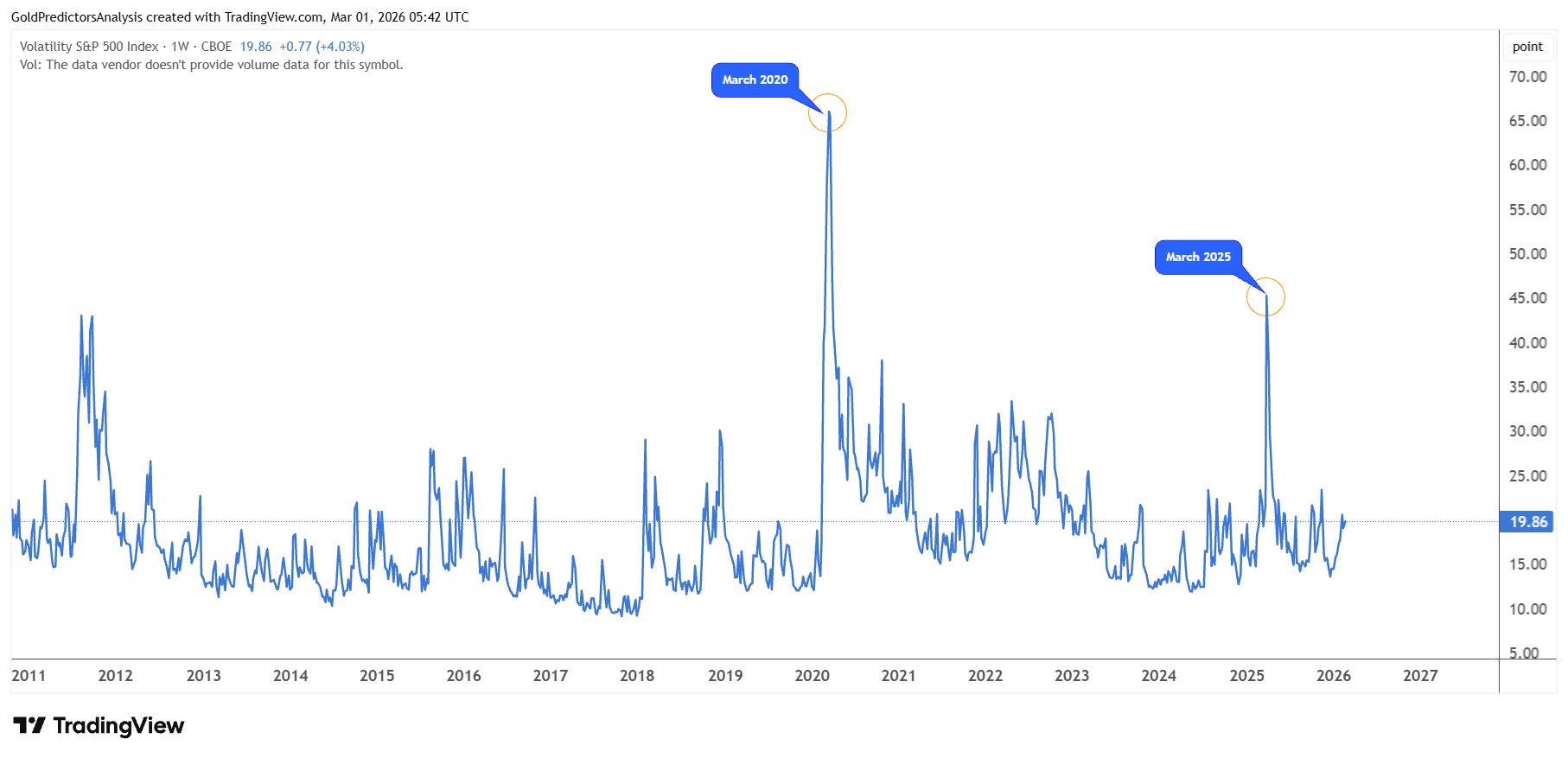
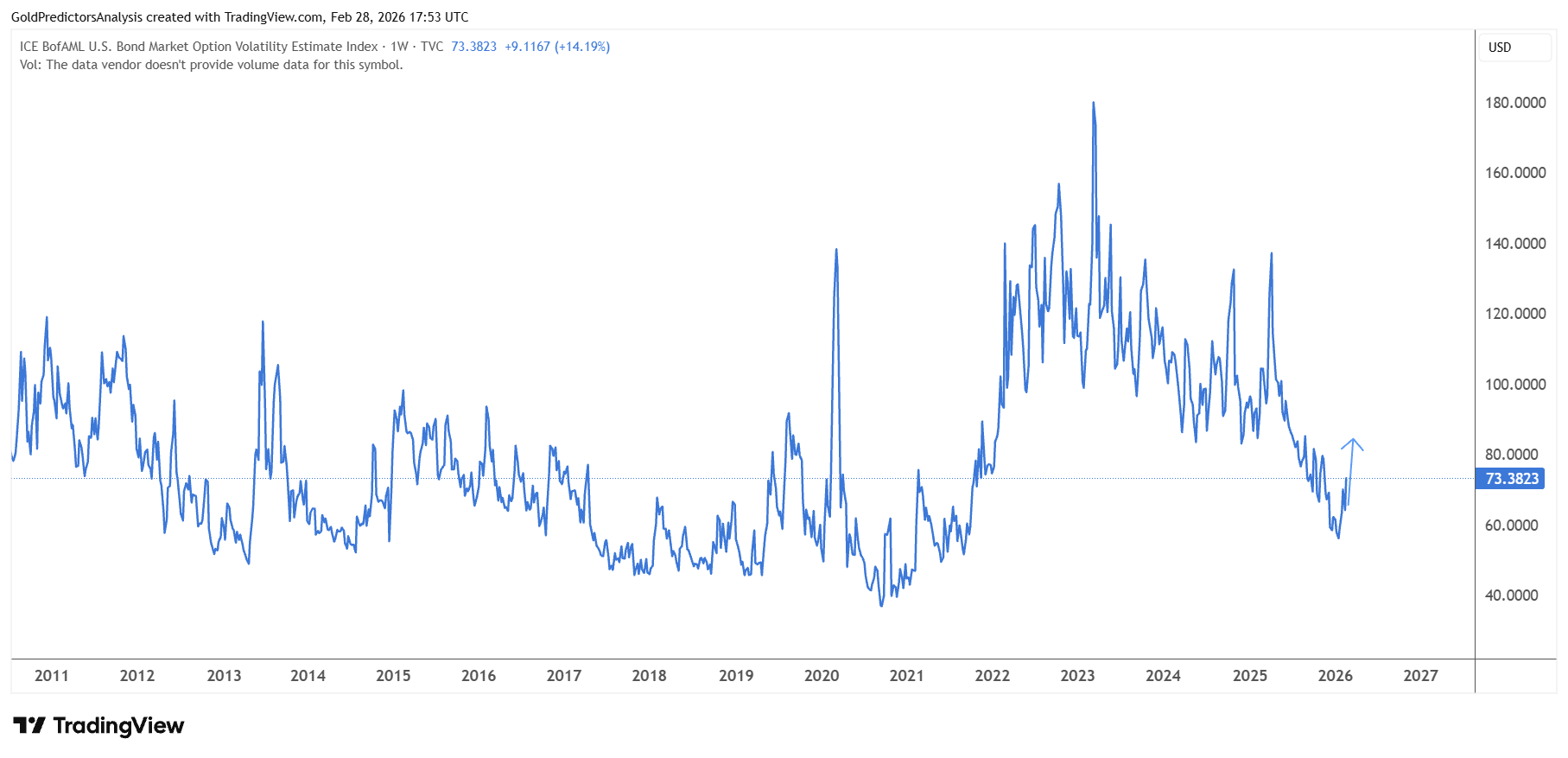
These spikes show sudden spikes in market fear when investors are hedging against risk and anticipating increased volatility in the equity market. The current increase in VIX suggests that markets are again pricing in uncertainty which is indicative of fragile risk sentiment and potential sharp swings in S&P 500. This uncertainty is also observed by the strong upside move in the Move index as seen below.
Gulf Equity Markets May React First to Escalating Tensions
Gulf region stock markets such as Saudi Aramco, Al Rajhi Bank, Emirates NBD (UAE), Qatar National Bank and First Abu Dhabi Bank could be the first to signal investor sentiment as there could be a decline if tensions continue.
Higher oil prices could have a positive impact on energy shares but hurt broader equity indices due to rise in input costs and concerns about inflation. Therefore stock markets can be rotating between defensive sectors and energy plays while overall volatility remains high.
S&P 500 Tests Key Support Amid Rising Geopolitical Risk
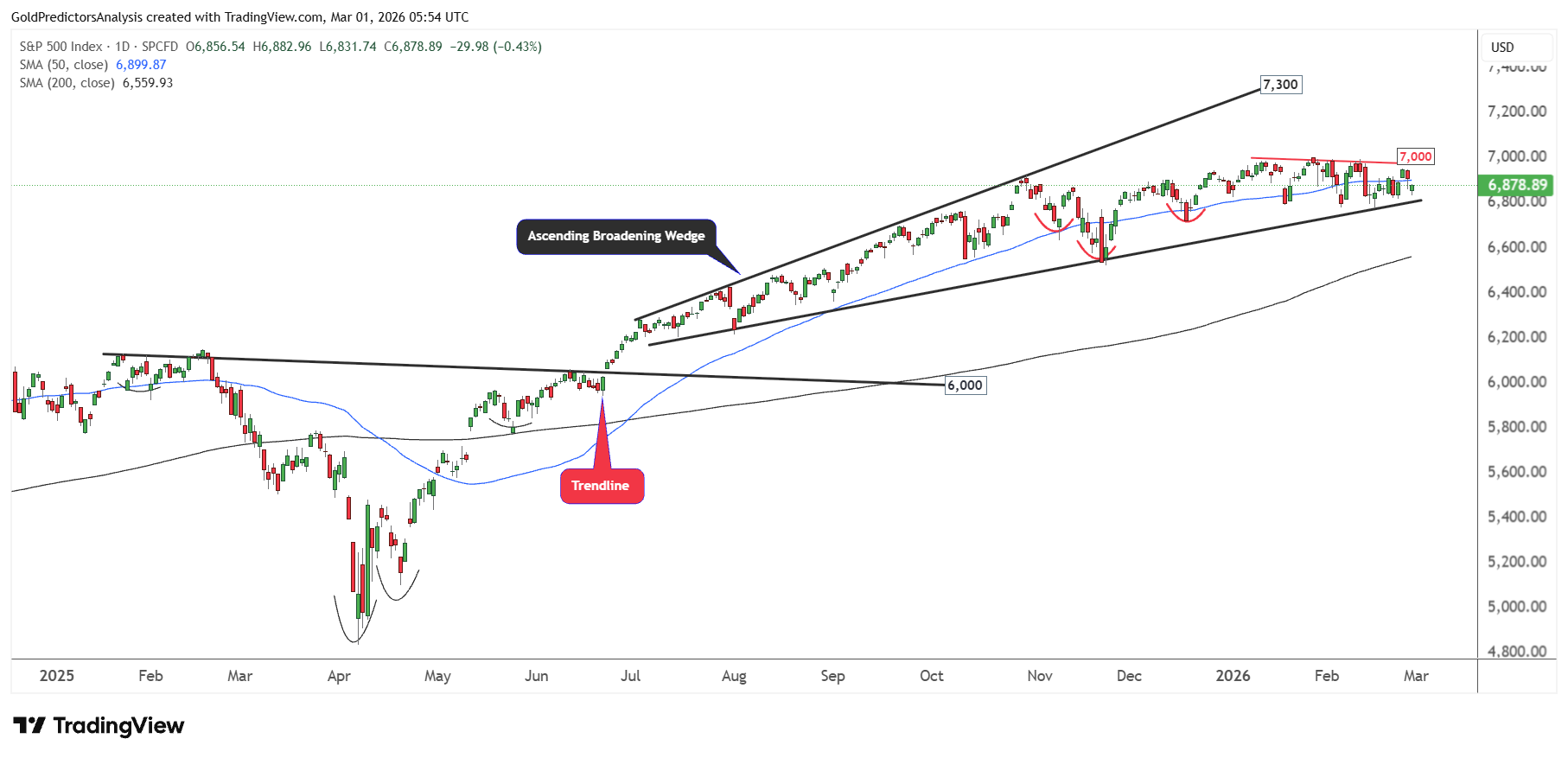
The chart below shows that the S&P 500 is currently trading at the key support of ascending broadening wedge pattern. A break below 6,750 will introduce a drop to $6,500. Moreover, a break below 6,500 will indicate further downside towards 6,200.
Airline Stocks Under Pressure from Airspace Closures and Fuel Costs
Sector specific impacts will also become visible. Airline stocks are at risk of downside with the flight cancellations, airspace closures and higher fuel costs in the Middle East. Rising fuel costs are also putting pressure on airline margins.
These uncertainties in the airline industry will also impact the global airline stocks due to the increased fuel consumption, higher insurance costs and reduced passenger demand on affected routes which directly pressure the margins and earnings expectations.
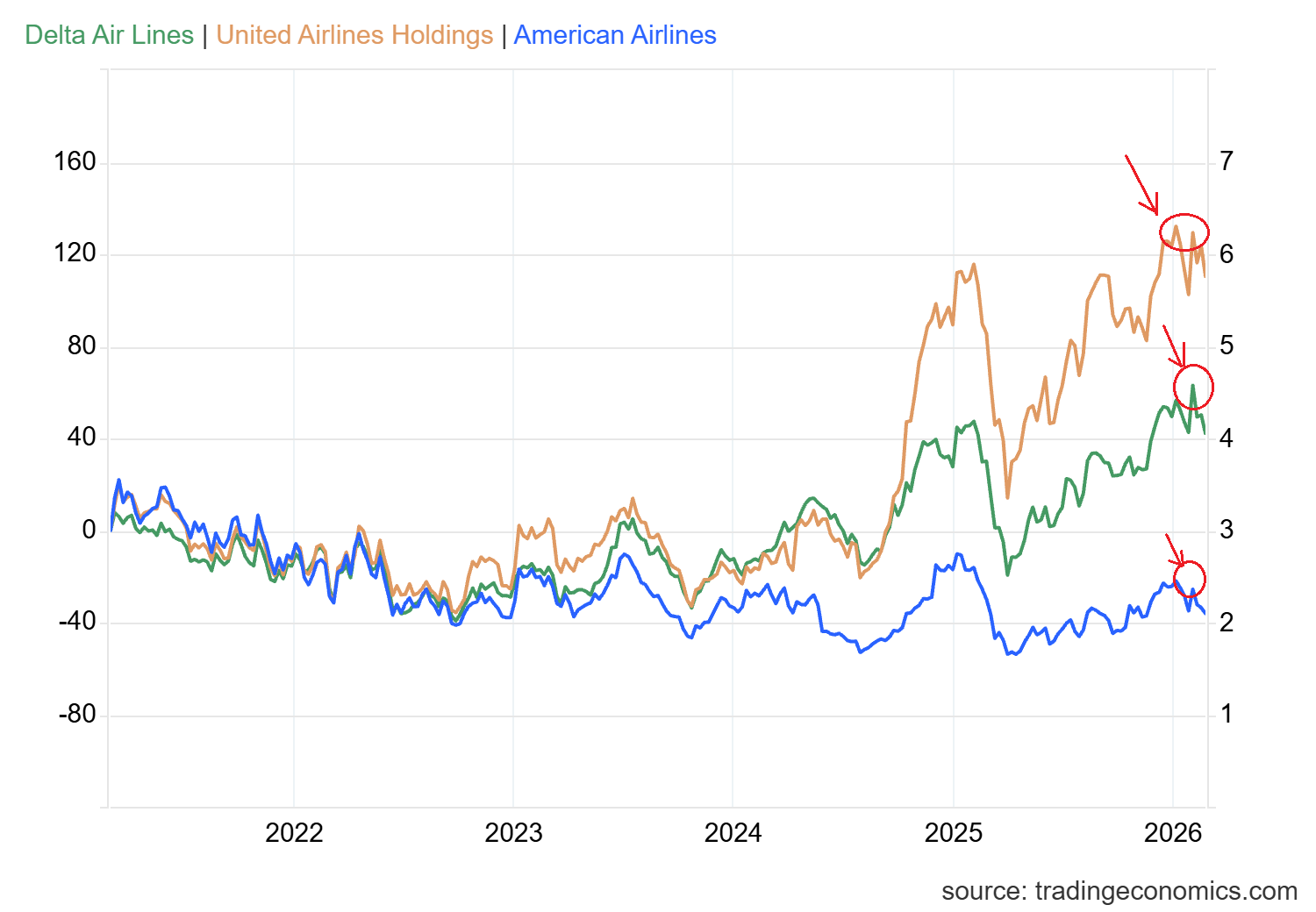
The chart below shows that the major US airlines such as Delta Air Lines (DAL), United Airlines (UAL) and American Airlines (AAL) have already shown the negative price action last week. This pressure is likely to continue to the downside this week. Investors will likely sell the airline stocks and benefit from the defence stocks.
Defence Stocks Positioned to Benefit From Rising Military Spending
On the other hand, defence companies may experience uptick in demand as governments increase military spending due to uptick in geopolitical threats. This divergence highlights the conflict driven nature of markets, which is to punish travel and reward defence-related industries.
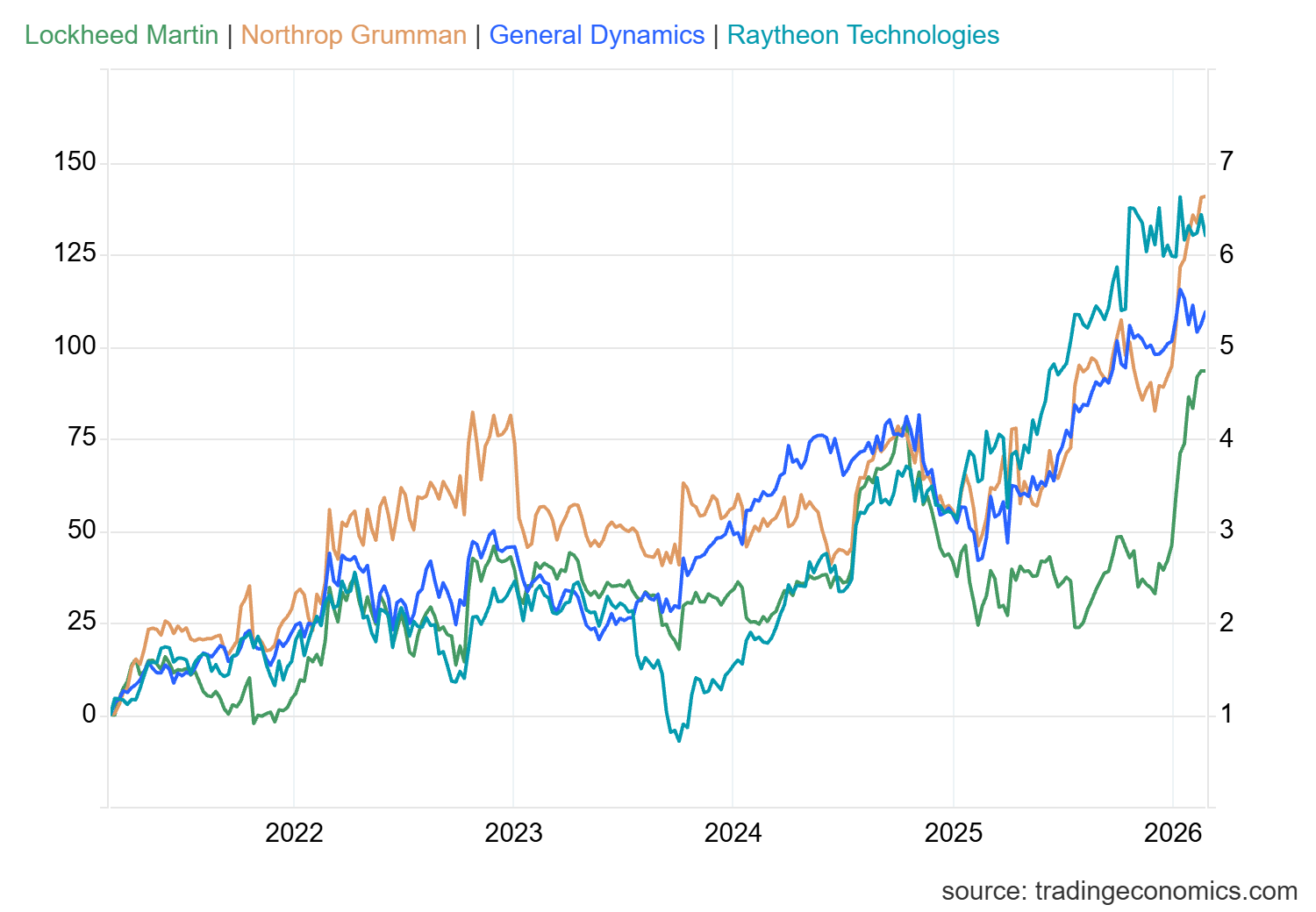
The chart below shows that US defence stocks have shown strong gains since the geopolitical conflict started in 2022. Lockheed Martin (LMT), Raytheon Technologies (RTX), Northrop Grumman (NOC), and General Dynamics (GD) have gained over 50% with RTX Corp gaining over 100% since 2023. This trend will further stabilize due to growing geopolitical tensions.
Tariff Ruling Adds Policy Uncertainty to Markets
Markets are also digesting Supreme Court ruling against Trump’s global tariffs, despite geopolitical tensions. The decision increases the prospect of massive tariff refunds and introduces new uncertainty regarding U.S. trade policy. At the same time, administration has hinted at the possibility of new temporary tariffs, so trade tensions may not be gone for good. This policy uncertainty may add to volatility in currencies and equities and aid demand for safe havens. When combined with the Middle East conflict, it strengthens a risk off tone in global markets. Traders will therefore be watching geopolitical headlines and trade policy signals.
What to Expect for Markets This Week
This week market direction will primarily depend on how the conflict unfolds. If tensions cool down, then volatility may remain high, but risk assets could find some stability after initial shock. However, if the Strait of Hormuz continues to be disrupted or military responses persist, it is likely that oil and precious metals will continue to move higher while global equities feel renewed pressure to sell. In that situation, investors would seek safer investments such as the Swiss franc, Japanese yen and U.S. Treasuries to preserve their capital.
At the same time uncertainty surrounding Trump’s tariff policy, combined with an increase in Middle East tensions, is providing support for the strength in gold, silver and defence stocks. On the other hand, cyclical sectors, such as the airline industry and broader equity indices, can continue to come under pressure because of increased fuel costs and decreased risk appetite.
Overall, markets will remain highly sensitive to headlines with quick moves across oil, gold, currencies, and equities due to the developments in the Middle East and new trade policy signals from Washington.
If you’d like to know more about how commodity markets work, please visit our educational area.