
The S&P Global Japan Services PMI was in the spotlight, along with the Bank of Japan and USD/JPY, in early trading on Wednesday, January 7.
Service sector activity, labor market conditions, and price trends are key for the BoJ, given that the sector accounts for around 70% of Japan’s GDP.
This week, BoJ Governor Kazuo Ueda signaled further rate hikes if prices and the economy aligned with the Bank’s projections. The BoJ Governor’s comments followed last week’s Summary of Opinions, which had a hawkish tone.
The prospect of further BoJ rate hikes and a dovish Fed rate path supports a bearish medium-term outlook for USD/JPY.
Below, I’ll discuss the macro backdrop, the near-term price catalysts, and technical levels traders should closely watch.

Services Sector PMI Puts the BoJ Center Stage
The S&P Global Japan Services PMI fell from 53.2 in November to 51.6 in December (prelim: 52.5), signaling a slight loss of economic momentum. However, sub-components of the PMI are likely to bolster expectations of a BoJ rate hike in the first half of 2026. Highlights from the December PMI survey included:
- Service providers increased staffing levels.
- Wages contributed to an upswing in input prices, with firms passing rising costs on to customers, increasing selling prices.
Typically, tighter labor market conditions drive wage growth and consumer spending, fueling demand-driven inflation. Additionally, higher selling prices indicate a rise in inflationary pressure, supporting the BoJ’s hawkish policy stance.
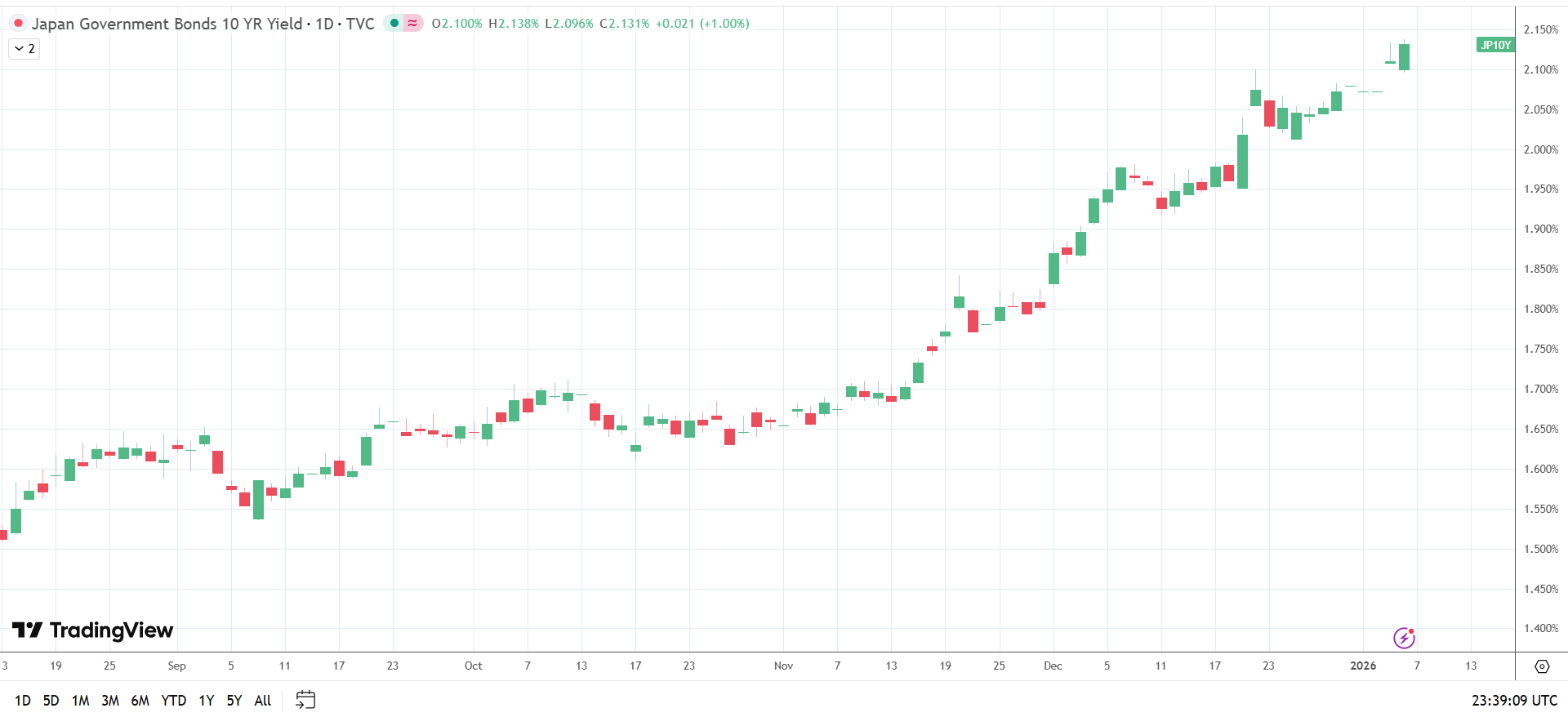
The BoJ’s December rate hike, the Summary of Opinions, and the hawkish rhetoric have contributed to the sharp rise in Japanese Government Bond (JGB) yields. 10-year JGB yields climbed to 2.138% this week, the highest since the 1990s. Increased risk of the BoJ’s neutral interest rate, neither accommodative nor restrictive, being at the higher end of the Bank’s 1% to 2.5% band has sent yields soaring.
The yen’s weakness remains a headache for policymakers, who have raised concerns that higher import prices are eroding households’ purchasing power. A higher neutral rate would enable the BoJ to raise interest rates aggressively, strengthening the yen.
These dynamics affirm the bearish short- to medium-term outlook for USD/JPY.
USD/JPY briefly climbed from 156.707 to 156.720 before falling to a low of 156.540 after the release of the finalized Services PMI.
USD/JPY Price Forecast
Every new USD/JPY analysis as it publishes, today's technical signal and key levels, live price — on one page.
See all USD/JPY forecasts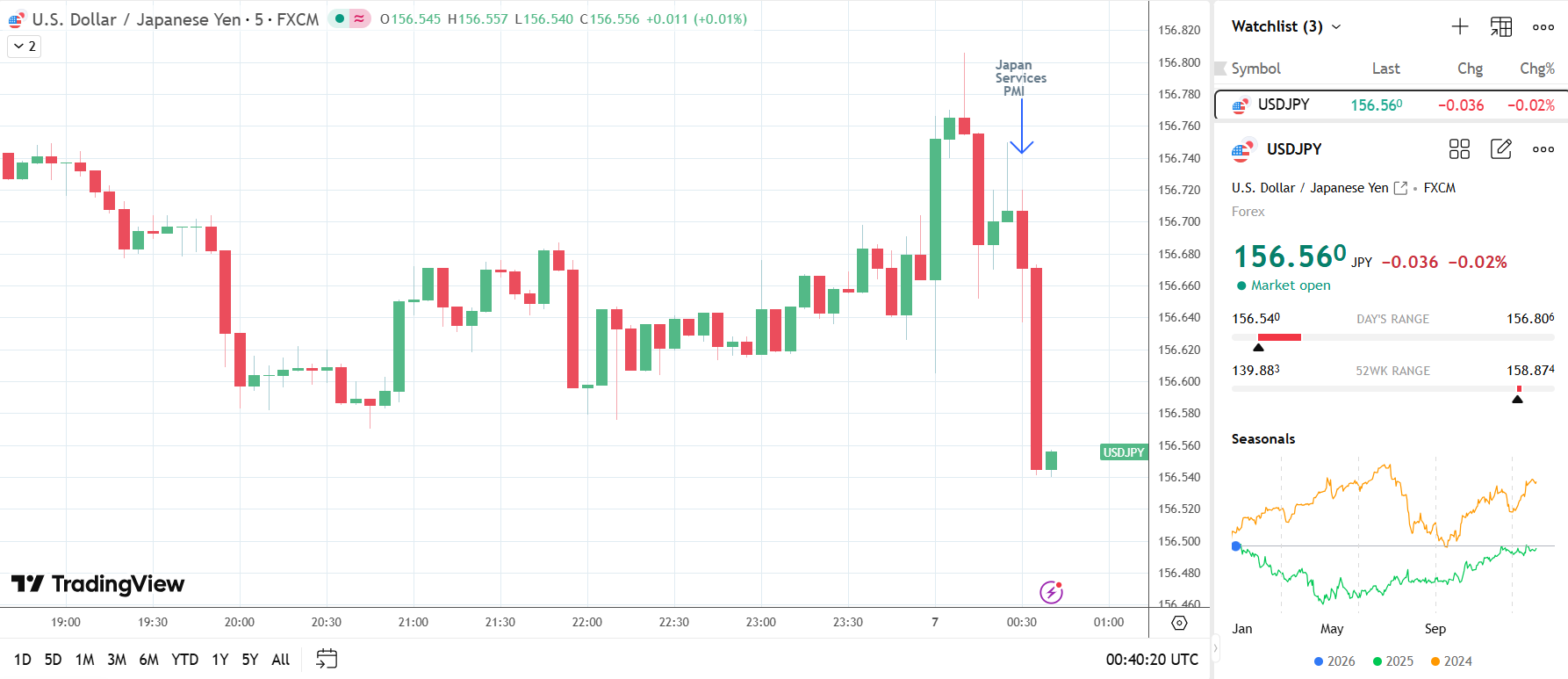
US ISM Services PMI to Spotlight the Fed
Later on Wednesday, the highly influential ISM Services PMI will influence market bets on a March Fed rate cut. Economists expect the ISM Services PMI to fall from 52.6 in November to 52.3 in December. A lower reading, closer to the 50 neutral rate, would indicate slower economic activity, given that the sector contributes roughly 80% to US GDP. A loss of economic momentum would support a more dovish Fed rate path, weighing on the US dollar and USD/JPY.
Beyond the headline PMI, traders should also consider the employment and prices sub-components, given the Fed’s dual mandate. Crucially, the ISM Services PMI is likely to have a greater impact on USD/JPY than ADP employment change and JOLTs job openings figures, also out on Wednesday.

Today’s US economic indicators will be crucial for the near-term USD/JPY price trajectory. Softer bets on a March Fed rate cut countered expectations of BoJ rate hikes, sending the pair briefly through 157.
According to the CME FedWatch Tool, the chances of a March Fed rate cut fell from 51.1% on January 5 to 47.2% on January 6.
Nevertheless, expectations of further BoJ rate hikes, a new Fed Chair potentially favoring lower rates, and a deteriorating US labor market remain key drivers. These fundamentals reinforce the bearish short- to medium-term outlook for USD/JPY.
Technical Outlook: USD/JPY on a Downward Trajectory
For USD/JPY price trends, traders should closely monitor the technicals and the fundamentals.
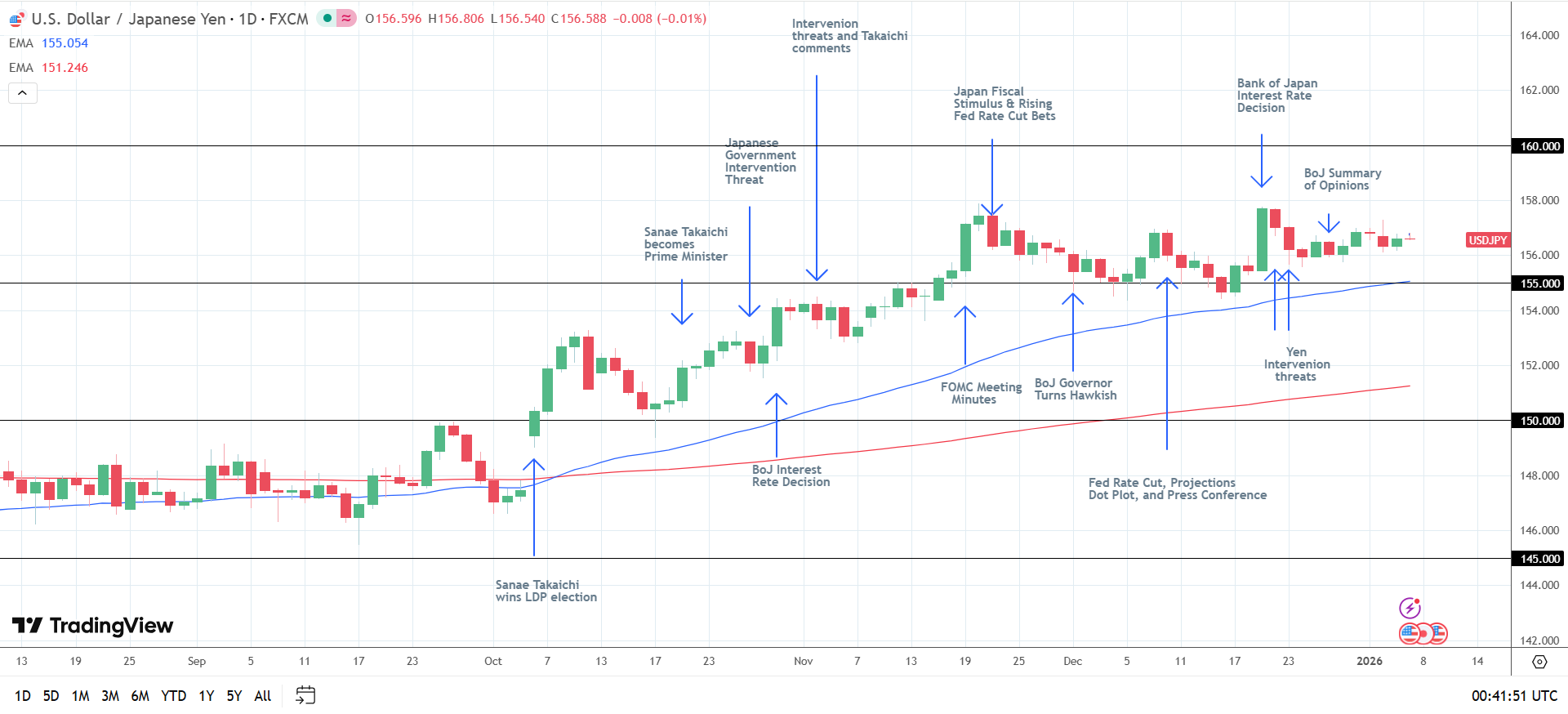
Viewing the daily chart, USD/JPY remains above its 50-day and 200-day Exponential Moving Averages (EMAs), indicating a bullish bias. While technicals remained bullish, bearish fundamentals are evolving, countering the technical structure.
A drop below the 50-day EMA and the 155 support level would signal a bearish near-term trend reversal, exposing the 200-day EMA. If breached, 150 would be the next key support level.
Crucially, a sustained break below the 50-day and 200-day EMAs would reaffirm the bearish short- to medium-term price outlook.
Position and Upside Risk
In my view, bets on more BoJ rate hikes, threats of yen intervention, and expectations of Fed rate cuts suggest a negative price outlook. However, the BoJ neutral interest rate and incoming US economic data will be pivotal, given the focus on US-Japan rate differentials.
A higher neutral interest rate level would signal multiple BoJ rate hikes and a narrower US-Japan interest rate differential. A narrower rate differential would likely trigger a yen carry unwind, sending USD/JPY toward 140 over the longer term.
However, upside risks to the bearish outlook include:
- Dovish BoJ rhetoric and neutral interest rate in the range of 1% and 1.25%.
- Upbeat US economic indicators.
- Hawkish Fed chatter.
These events would send USD/JPY higher. However, the threat of yen interventions is likely to cap the upside at the 158 level, based on the latest communication.
Read the full USD/JPY forecast, including chart setups and trade ideas.
Conclusion: Focus on the BoJ Neutral Rate
In summary, the USD/JPY trends will hinge on the BoJ’s neutral rate and the Fed rate path.
A neutral rate in the range of 1.5% to 2.5% would suggest a more hawkish BoJ rate path. Additionally, dovish Fed chatter would support expectations of narrower rate differentials, reinforcing the bearish outlook for USD/JPY.
Crucially, a sharply stronger yen could kickstart an unwinding of yen carry trades, which would likely push USD/JPY toward 140 over the longer 6-12 month time horizon.
For more in-depth analysis, review today’s USD/JPY trading setups in our latest reports and consult the economic calendar.