



While November’s inflation data from the USA brought considerable volatility to gold with little overall change, the dollar was more stable and generally moved slightly down against most major currencies. No figures were released for October due to the government shutdown then. This article summarises the latest inflation from the USA, then looks briefly at the charts of EURUSD and GBPUSD.
The important context of the Fed’s moves since September 2024 to cut rates is concern among some participants that premature loosening might drive a resurgence of inflation, as seen in the late 1970s. So far, though, there’s no clear indication of this happening:
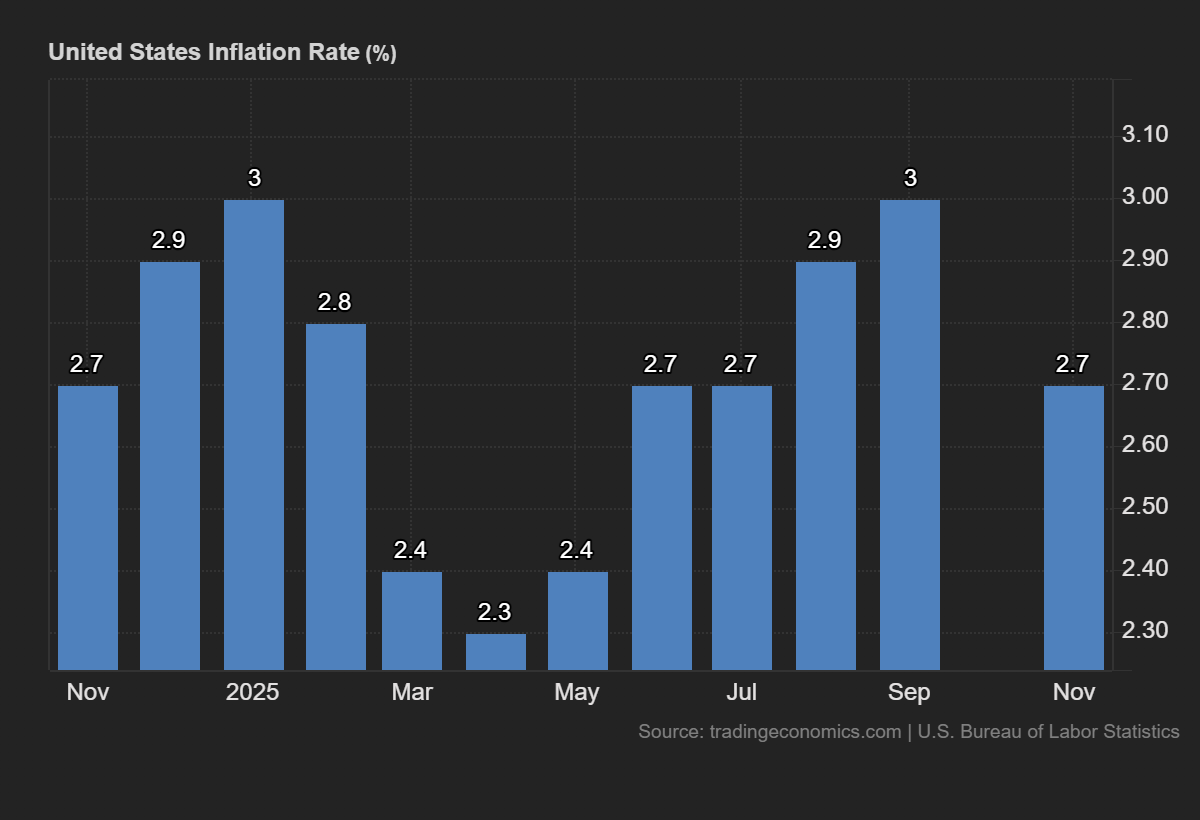
2.7% annual headline inflation for November is 0.4% lower than the consensus and significantly lower than the previous figure available for September. The core figure at 2.6% is the lowest since March 2021. For the moment, inflation holding around 2.7-3%, although with some lower exceptions, seems to support expectations for one or two cuts by the Fed in 2026.
The main effect of this release of inflation on probabilities for the Fed next year was the moderate increase in the likelihood of another cut in March. This is now around 60% compared to less than 50% in the second week of December, according to CME FedWatch. Although the Fed signalled only one cut in 2026 at its last meeting, participants consider this unlikely, with around 75% expecting at least two.
November’s inflation definitely was surprising, but part of the reason for the relatively muted reaction in markets might be the lack of data from October. The longest shutdown of the American government on record caused significant disruption to the collection of various data and is likely to have meant that recent releases are less reliable than usual. Upcoming releases in the new year, showing stable or possibly further declining inflation, might drive more losses for the dollar and possible gains for gold.
Euro-dollar Posts Slight Overall Decline After Major News
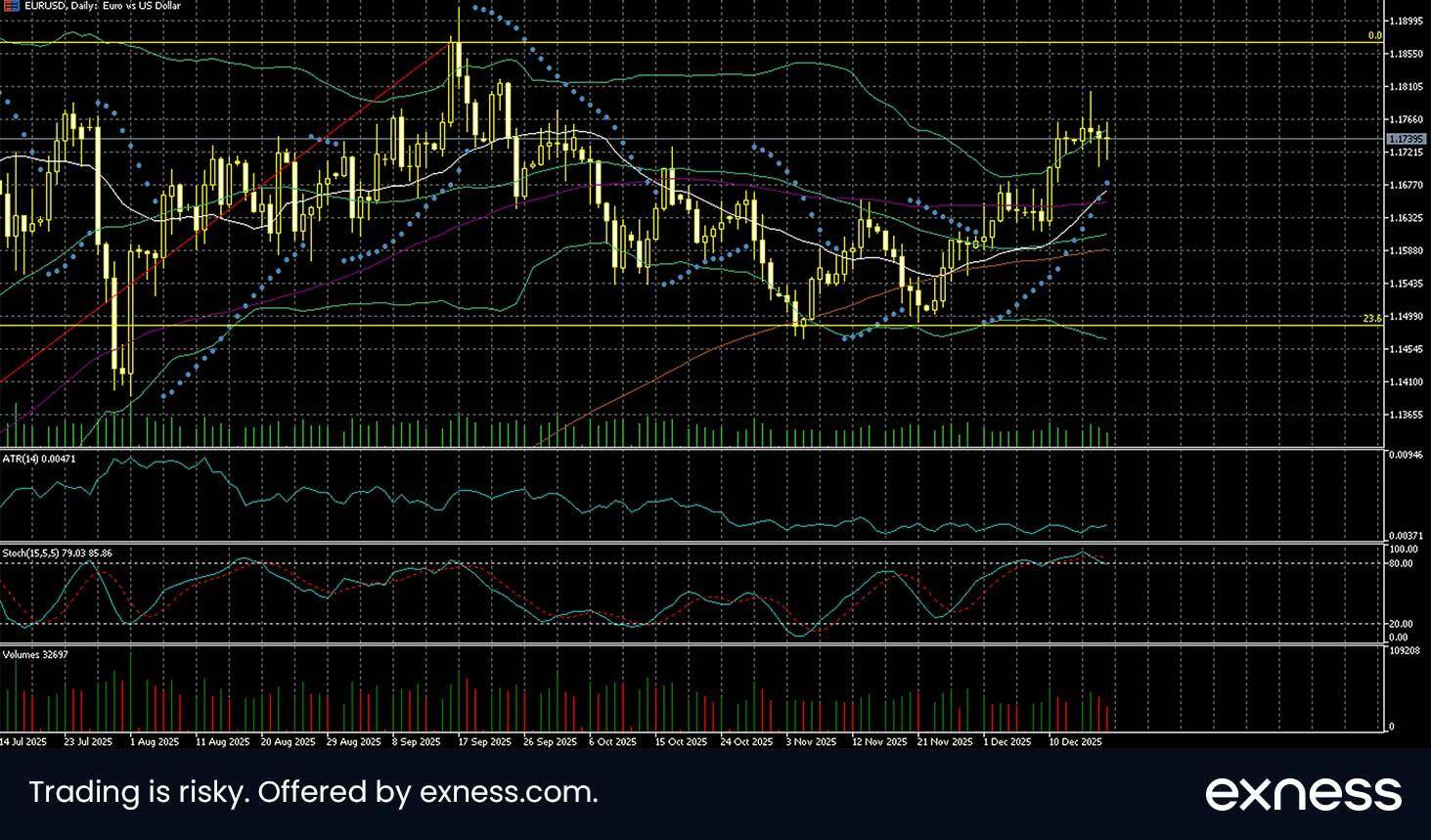
Following significantly lower American inflation and the ECB’s decision to hold its key refinancing rate at 2.15%, euro-dollar declined slightly amid high intraday volatility. The ECB has now held rates for six consecutive meetings, so it seems likely that the cycle of loosening has ended or at least will continue an extended pause. The lower reliability of American inflation due to the government’s shutdown and the ECB’s decision offering no surprises has meant that there’s been less clear direction than might have been expected on 18 December, given the normal importance of these releases.
The overall uptrend on the weekly chart isn’t clearly over, but it does seem to have paused since the trend on the daily is sideways. Its possible lower limit is the area of the 23.6% weekly Fibonacci retracement slightly below $1.15, but this was broken briefly in July. Before any extended move lower, the price would need to pass the dynamic supports of the four moving averages, 20, 50, 100, and 200. Overbought, combined with being slightly inside the upper half of the range, might make selling more favourable, but this depends on the upcoming data.
The likely long-term resistance around $1.187 is a high of more than four years, so in the current insipid fundamental environment, it is very unlikely to be broken in the next few weeks. Both the slow stochastic and Bollinger Bands are very close to overbought. 23 December’s American GDP for the third quarter might bring a clearer direction ahead of the holidays.
EUR/USD Price Forecast
Every new EUR/USD analysis as it publishes, today's technical signal and key levels, live price — on one page.
See all EUR/USD forecastsCable Up After the BoE’s Cut and Lower US Inflation
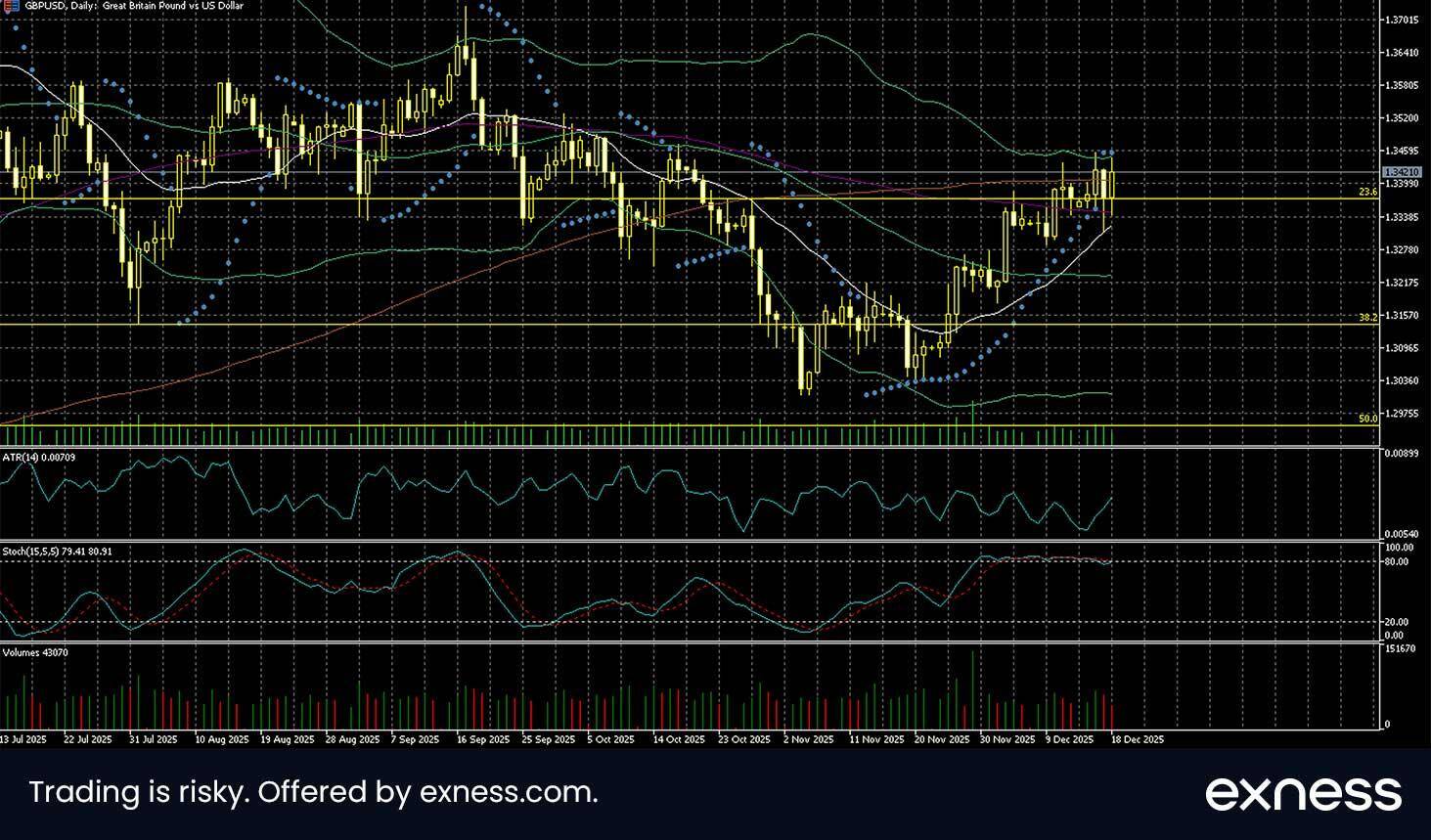
The Bank of England cut to 3.75% on 18 December as widely expected; however, the majority on the Monetary Policy Committee was only one, lower than some predictions. That might suggest a lower probability of another cut in February. Meanwhile American inflation for November was significantly lower than expected, also helping to drive cable up.
The pound’s bounce since the British budget late last month has been strong and fairly consistent, breaking through several important areas, although facing some resistance. With the price now in the value area between the 100 and 200 SMAs, further gains, if any, might be more muted. The 23.6% weekly Fibonacci retracement seems to be the main technical reference for now. $1.35 is a potential resistance.
After a very high volume around the budget, there’s been a drop-off closer to the average in recent months, in December so far. The main dynamic support remains the 20 SMA, which is now slightly above $1.33. Another push below the 38.2% Fibo around $1.314 over the open days of the festive season is unfavourable unless the 23 December American GDP is notably surprising.
This article was submitted by Michael Stark, financial content leader at Exness.
For the latest analysis, ideas for trading and more, follow Michael on X: @MStarkExness.
The opinions in this article are personal to the writer; they do not represent those of Exness. This is not a recommendation to trade.