
Yields and Oil Ground the Nasdaq
The Nasdaq Composite dropped 177 points or 0.68% Monday to close at 26,048. The S&P 500 fell 19 points or 0.26% to 7,389. The Dow Jones Industrial Average managed a gain of 45 points or 0.09% to 49,571. Semiconductors led the selling and the 10-Year U.S. Treasury yield hitting 4.63% is the reason this market is having trouble finding buyers right now.

Yields Are Back in Control
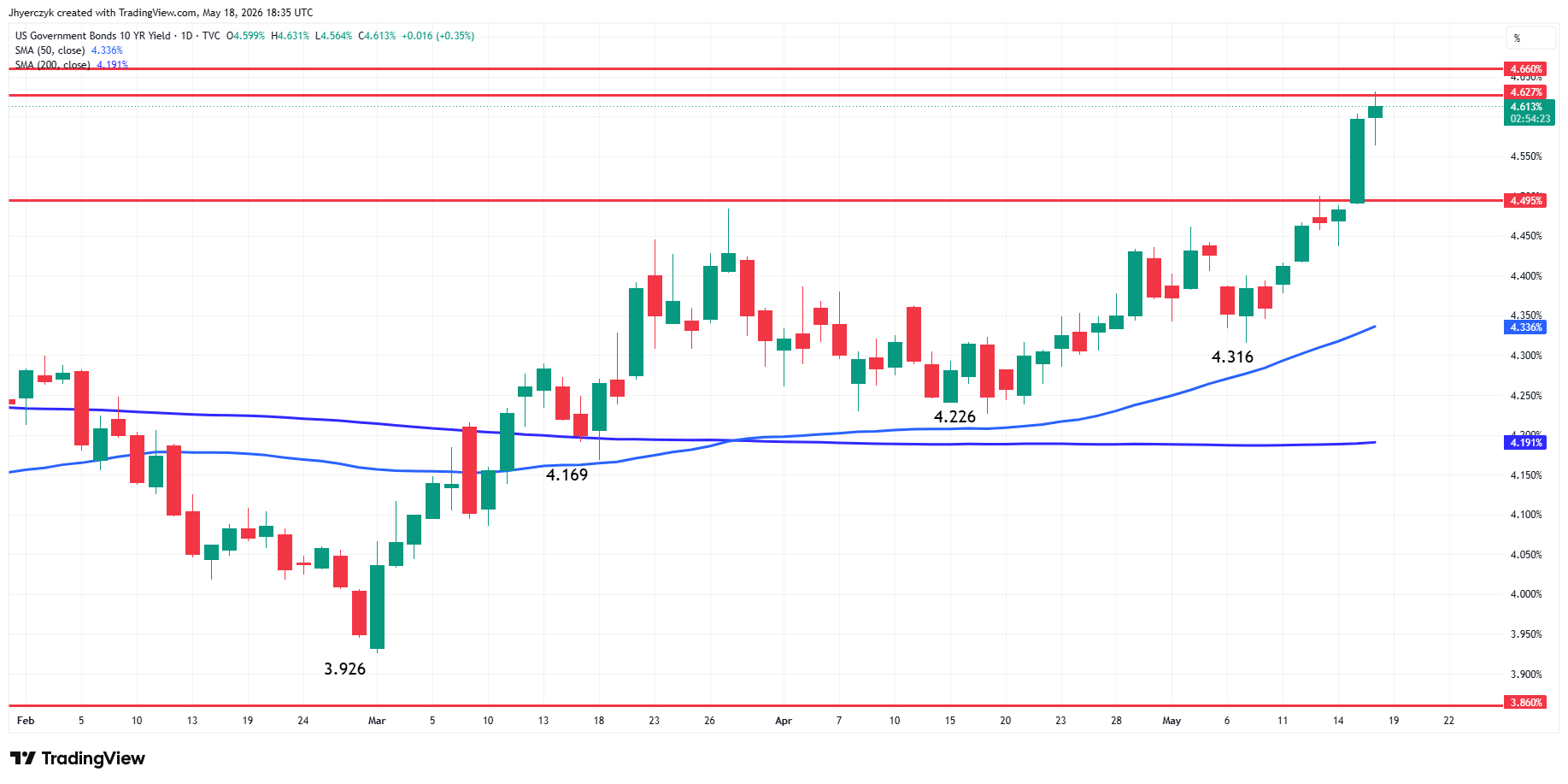
The 10-Year U.S. Treasury yield hit 4.63% Monday, its highest level since February 2025. That is the number running this market right now. Higher yields raise borrowing costs for businesses and consumers and they make bonds more attractive against stocks at the same time.
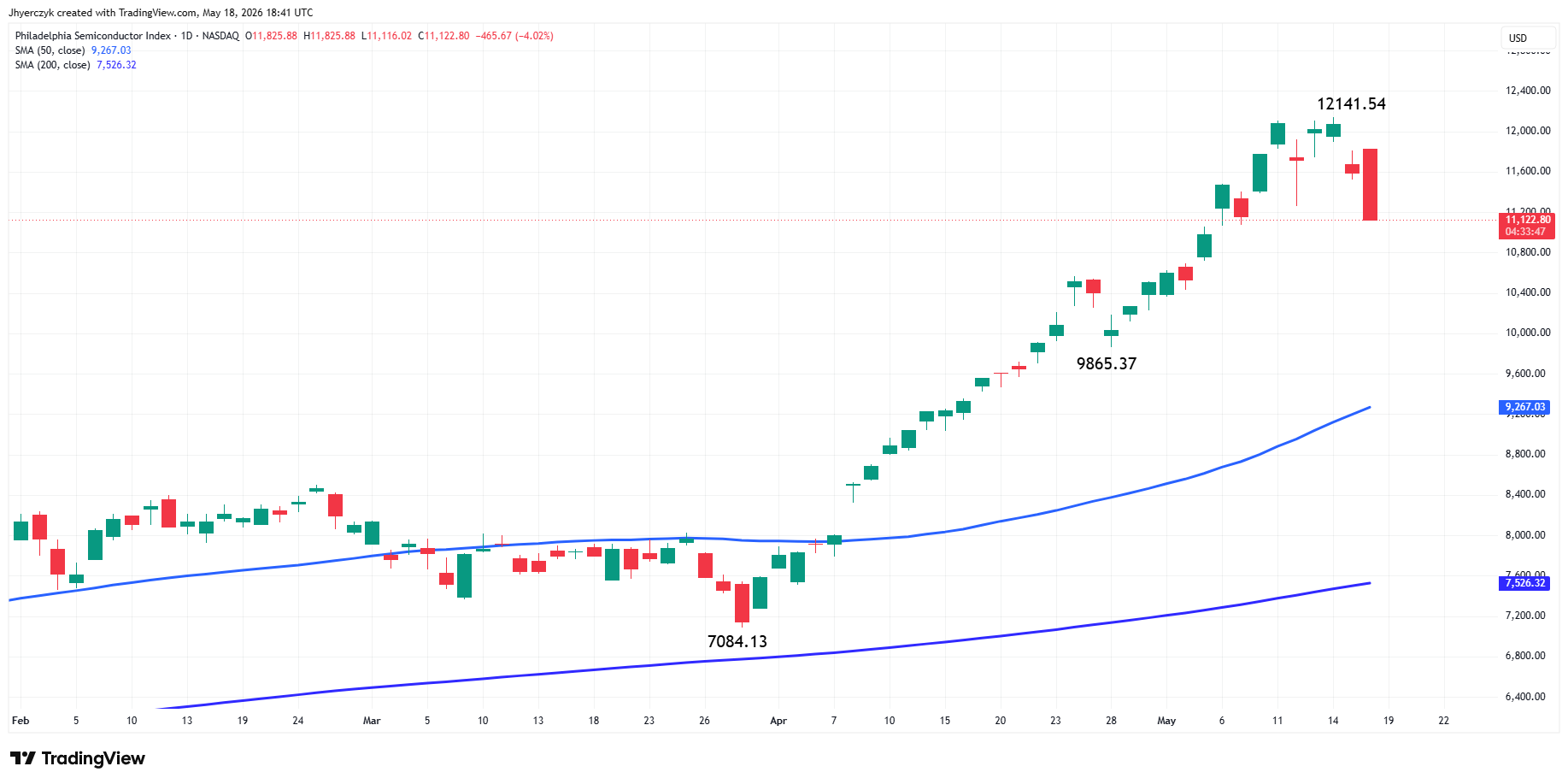
The Nasdaq felt it first because that is how it always works. The stocks that ran hardest on AI and growth expectations are the ones giving ground the fastest when yields climb. The Philadelphia Semiconductor Index fell more than 4% Monday. Chipmakers led the rally all year and they are leading the pullback now.
Oil Added to the Pressure
Spot Brent crude oil rose 1.4% Monday after a volatile session tied to the Iran situation. Prices briefly turned lower after reports surfaced that the United States had proposed a temporary waiver on Iranian oil sanctions. It did not hold. Traders are not ready to price in a resolution and every time a headline offers hope the follow-through falls apart. The way I see it, elevated energy prices feeding inflation at the same time the bond market is repricing rate expectations is a bad combination for equities. Both problems are live right now and neither is close to resolving.
The Fed Is Back in the Conversation
Traders are now pricing in more than a 40% chance the Federal Reserve raises interest rates by at least 25 basis points in January. A month ago that number was near zero. Inflation data last week came in hotter than expected and the bond market responded immediately. I’ve watched this shift happen fast. The market had been comfortable ignoring the inflation risk tied to oil prices and the Iran situation. That comfort broke on Friday when yields moved sharply higher and it did not come back Monday.
NASDAQ 100 Price Forecast
Every new NASDAQ 100 analysis as it publishes, today's technical signal and key levels, live price — on one page.
See all NASDAQ 100 forecastsStocks in the News
Dominion Energy jumped 9.2% after NextEra Energy announced an all-stock acquisition valued at roughly $66.8 billion. NextEra fell 5.8% on the announcement.
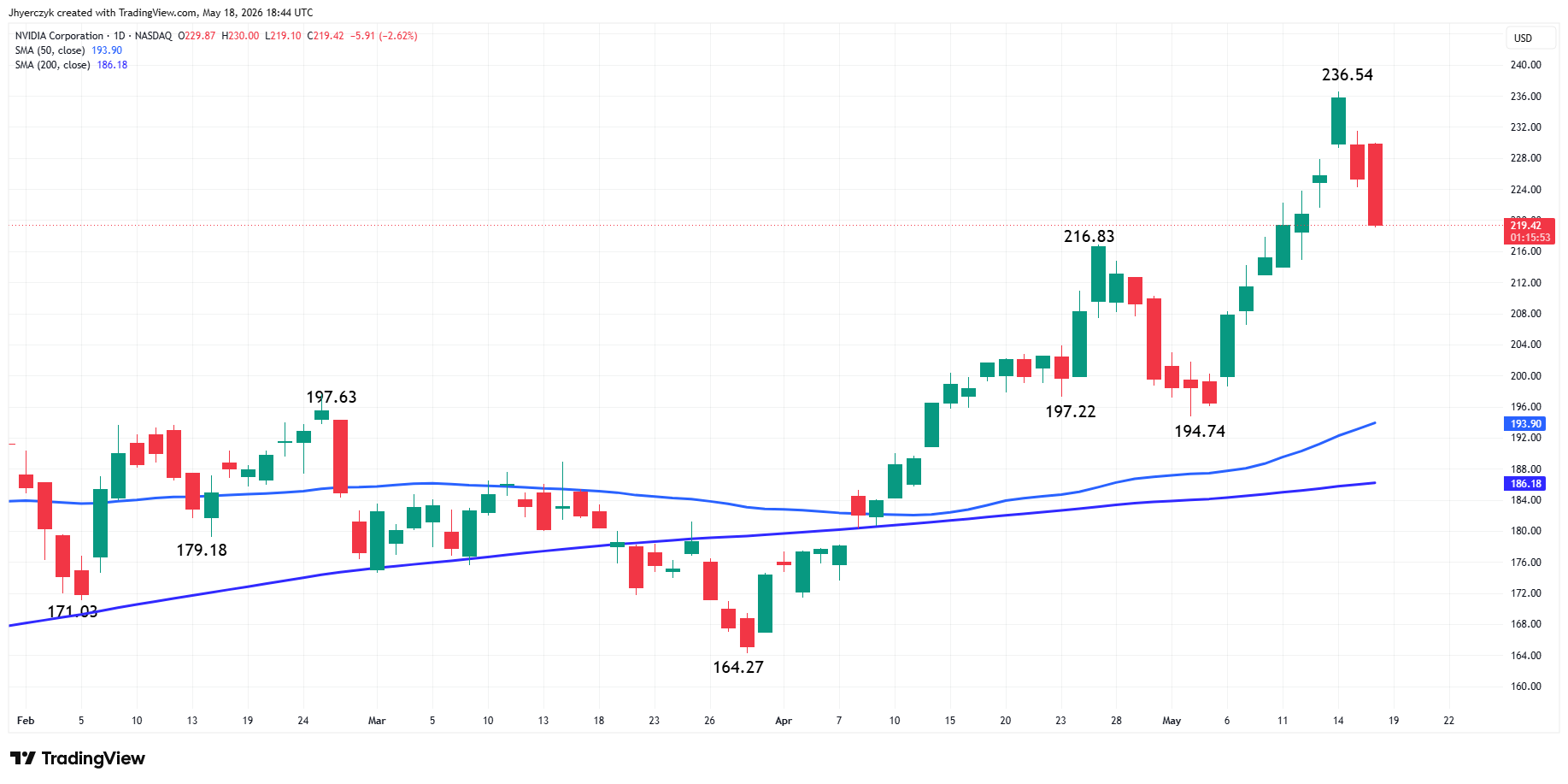
Regeneron dropped 10.2% after its experimental melanoma treatment failed the primary endpoint in a late-stage clinical trial. Nvidia stayed in focus ahead of Wednesday earnings. The stock surged 36% off its March lows and expectations are extremely high going into the print.
Technical Outlook
Nasdaq Composite Index Technical Analysis
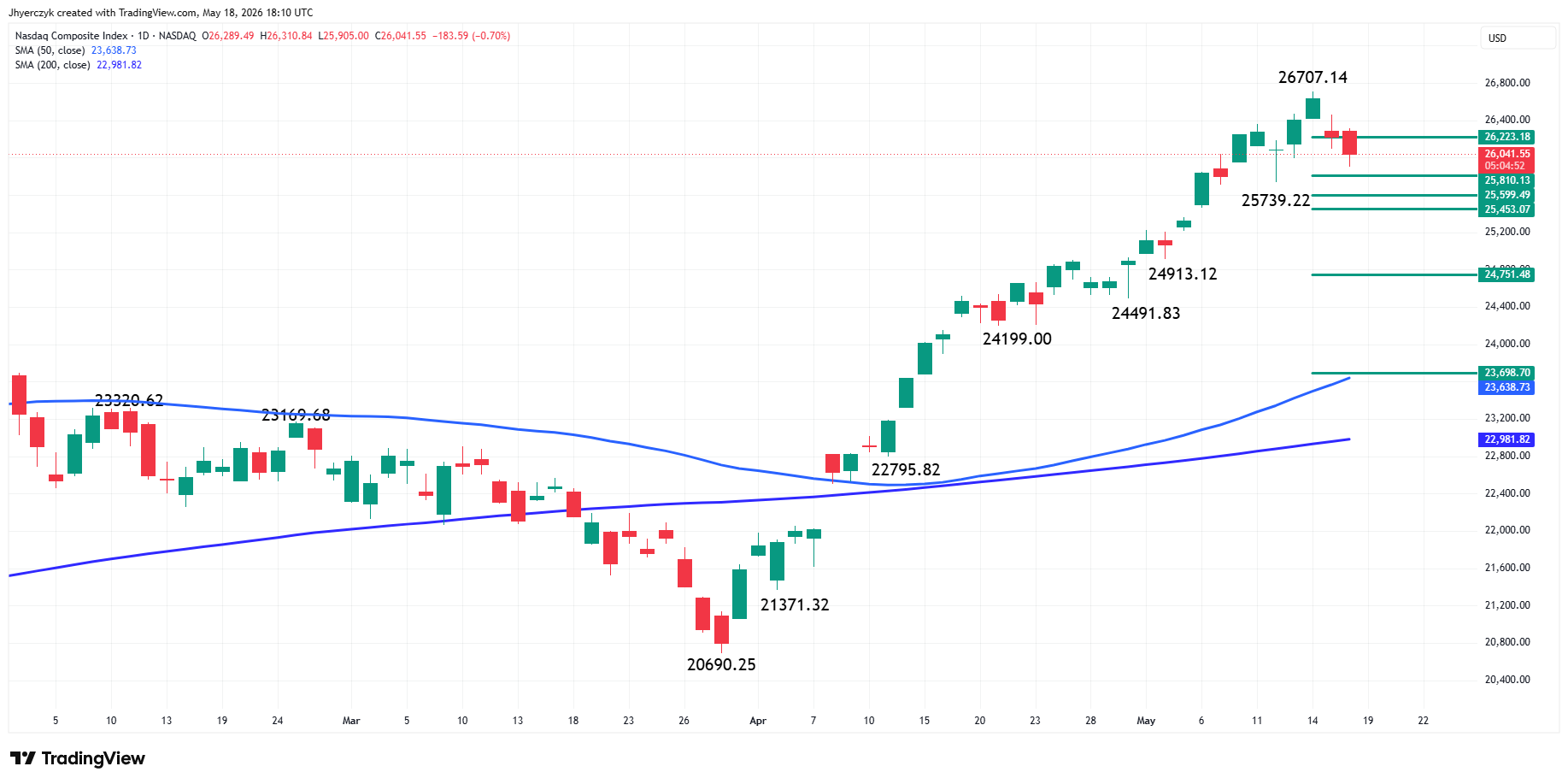
The Nasdaq Composite broke to the downside on Monday after crossing to the weak side of a minor pivot at 26223.18. This price is now intraday resistance.
The sustained move under 26223.18 indicates the presence of sellers. If it creates enough downside momentum then the losses could extend into a series of minor pivots at 25810.13, 25599.49 and 25453.07. Traders should pay attention to trader reaction at these levels. It will tell us if buyers are still in “buy the dip” mode.
The last minor bottom at 25739.22 is also an important level to watch. Taking out this level will break the pattern of higher-tops and higher-bottoms. This would be indicative of a shift in investor sentiment.
If the Nasdaq is just going through a period of long liquidation then, with the trend up, investors will be looking for new opportunities to buy, but at more favorable prices.
A true top is going to take a few days to form. The first leg down is usually followed by a test of the record high. If sellers come in on that move then that will be a sign of more downside pressure to follow.
What to Watch
The 10-Year U.S. Treasury yield and oil are the two drivers that are not resolved going into the rest of the week. Yields at 4.63% are already pressuring growth stocks and if inflation data or Fed commentary pushes them higher from here the selling in semiconductors and tech is not done. Oil holding elevated keeps the inflation story alive and gives the Fed no reason to soften its tone. Those two factors together are what broke the market’s confidence on Friday and nothing Monday changed that picture.
The Nasdaq Composite broke the weak side of 26223.18 and that level is now resistance. The next support cluster sits at 25810.13, 25599.49 and 25453.07. The minor bottom at 25739.22 is the level that matters most. Losing it breaks the pattern of higher tops and higher bottoms and that changes the conversation about whether this is a dip or something that needs more time to work through.
More Information in our Economic Calendar.