Mega-Cap Selling and Rebalance Hit Nasdaq at Once
The Nasdaq dropped roughly 1.3% Monday afternoon and the damage came from three places at once. Alphabet fell hard after reports that AI engineers left for competitors and that dragged the rest of mega-cap tech down with it. The Nasdaq-100 rebalance landed on top of the selling and forced institutional money through the order books whether funds wanted to trade or not. SpaceX added to the pain with a third straight post-IPO decline.
The Dow held gains of around 0.3% as capital moved into industrials and traditional sectors. Money is not leaving equities. It is leaving growth names for parts of the market that do not carry AI spending questions on every earnings call.

Daily Nasdaq Composite Index (IXIC) Technical Analysis
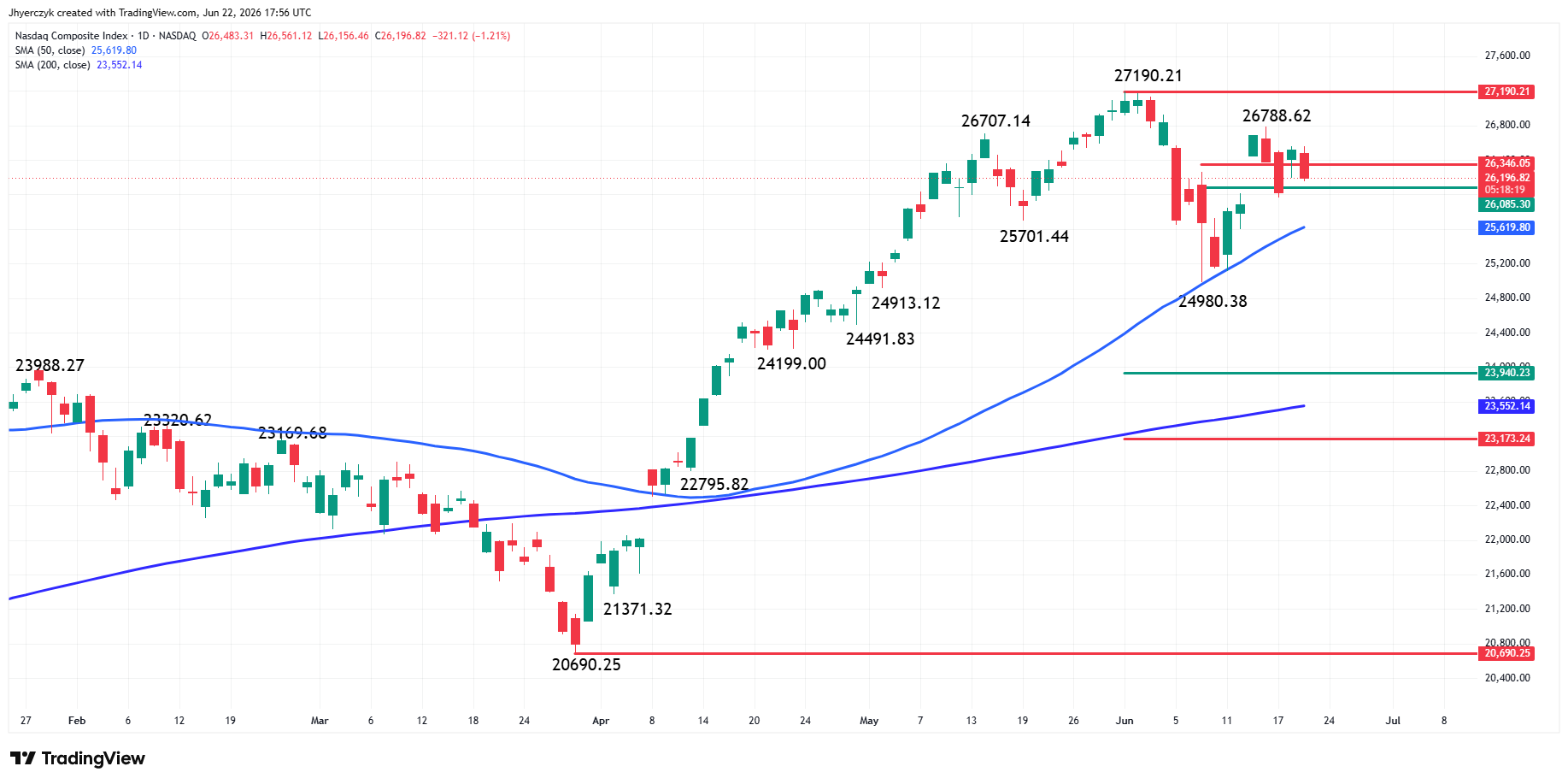
The Nasdaq Composite Index is trading lower shortly after the mid-session with the price action suggesting more and more that a potentially bearish secondary lower top has formed at 26788.62. The only thing standing in the way of a minor correction is the retracement zone at 26346.05 to 26085.30.
After spending the early morning above it, sellers finally drove the index under the Fibonacci level at 26346.05. This was the first sign of weakness. The next price traders are watching is the 50% level at 26085.30.
A sustained move under 26085.30 will indicate increasing selling pressure. This could trigger a sharp break into the 50-day moving average at 25620.01. We could see a technical bounce on the first test, but if it fails then look for the selling to possibly extend into the main bottom at 24980.38. This is a potential trigger point for an acceleration to the downside.
The long-term range is 20690.25 to 27190.21. Its 50% to 61.8% retracement zone at 23940.23 to 23173.24 is our major downside target and value zone. Inside this area is the 200-day moving average at 23552.27, solidifying its importance as a significant zone to watch.
Our negative outlook will be nullified if a sustained move over 26346.05 leads to a breakout over 26788.62.
Dow Jones Price Forecast
Every new Dow Jones analysis as it publishes, today's technical signal and key levels, live price — on one page.
See all Dow Jones forecastsAlphabet’s Talent Losses Made the Selloff Personal
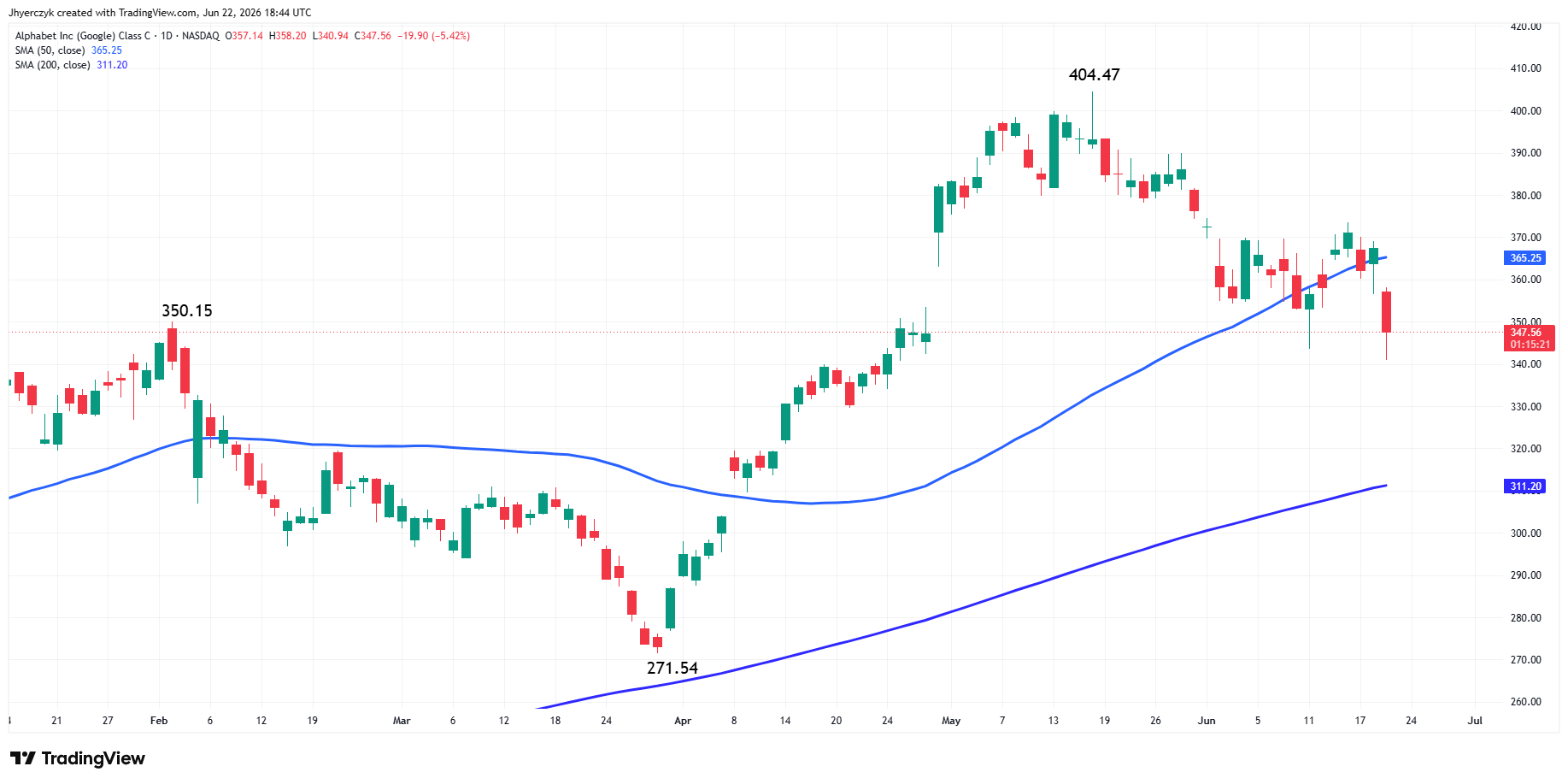
Alphabet fell more than 5% and dragged the rest of mega-cap tech down with it. Reports that key AI engineers and researchers left for competitors gave the market a specific reason to sell beyond the general spending concerns that have been building for weeks. When the people building the AI products walk out in the middle of the arms race, the stock does not get the benefit of the doubt.
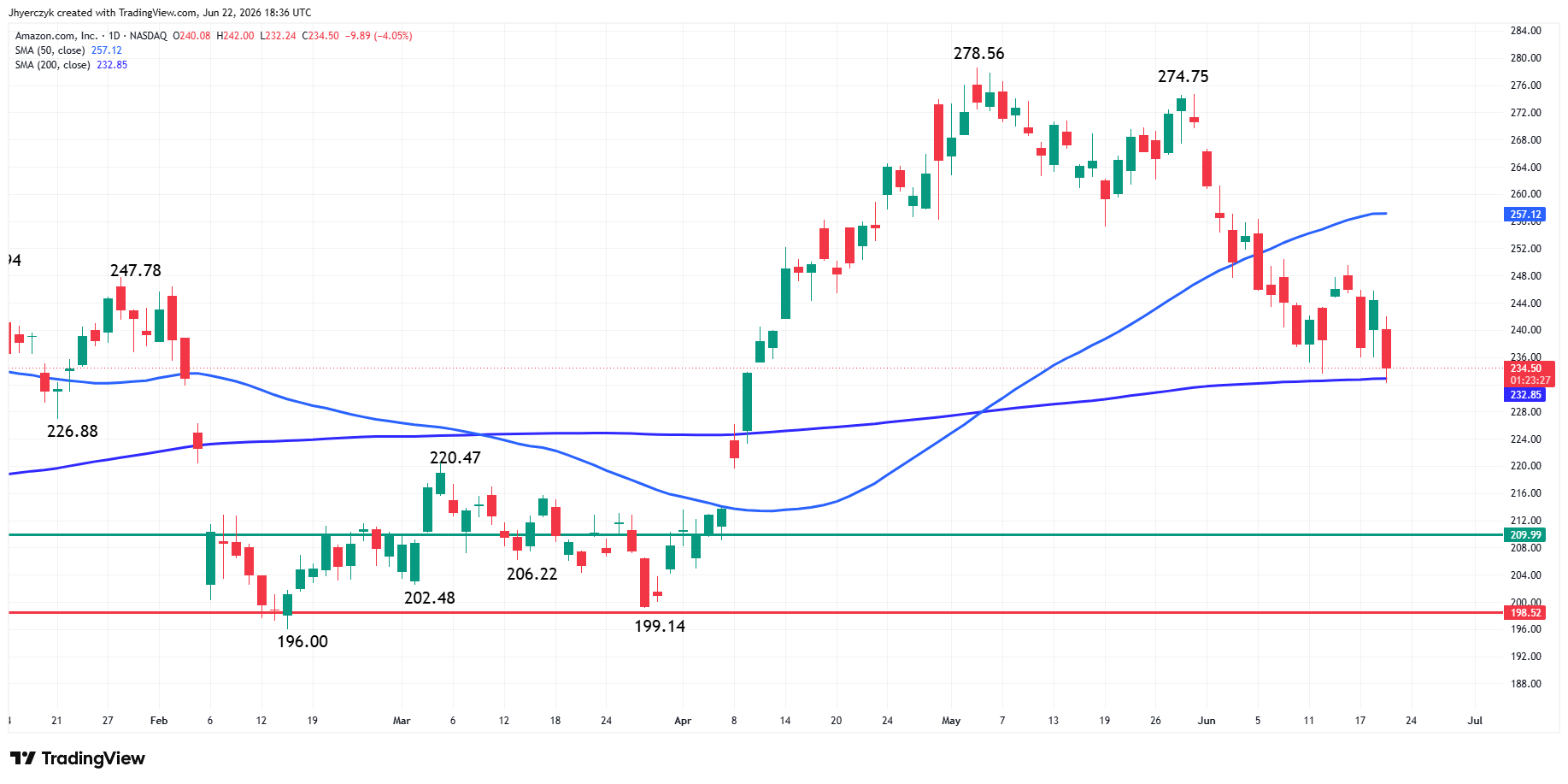
Amazon dropped roughly 4% on related concerns about the gap between AI capital expenditure and the revenue it is producing. Meta lost approximately 2%. Microsoft slipped around 2%. Four of the largest names in the index selling on the same AI theme on the same afternoon is not rotation within tech. The market is telling those companies the spending has to show up in earnings or the premium keeps compressing.
The timing made it worse. This hit the same week traders are waiting for inflation data with last week’s hawkish Fed meeting still fresh. Funds that were already trimming mega-cap exposure ahead of the data used the Alphabet headline as the reason to move faster.
The Rebalance Made a Bad Day Worse
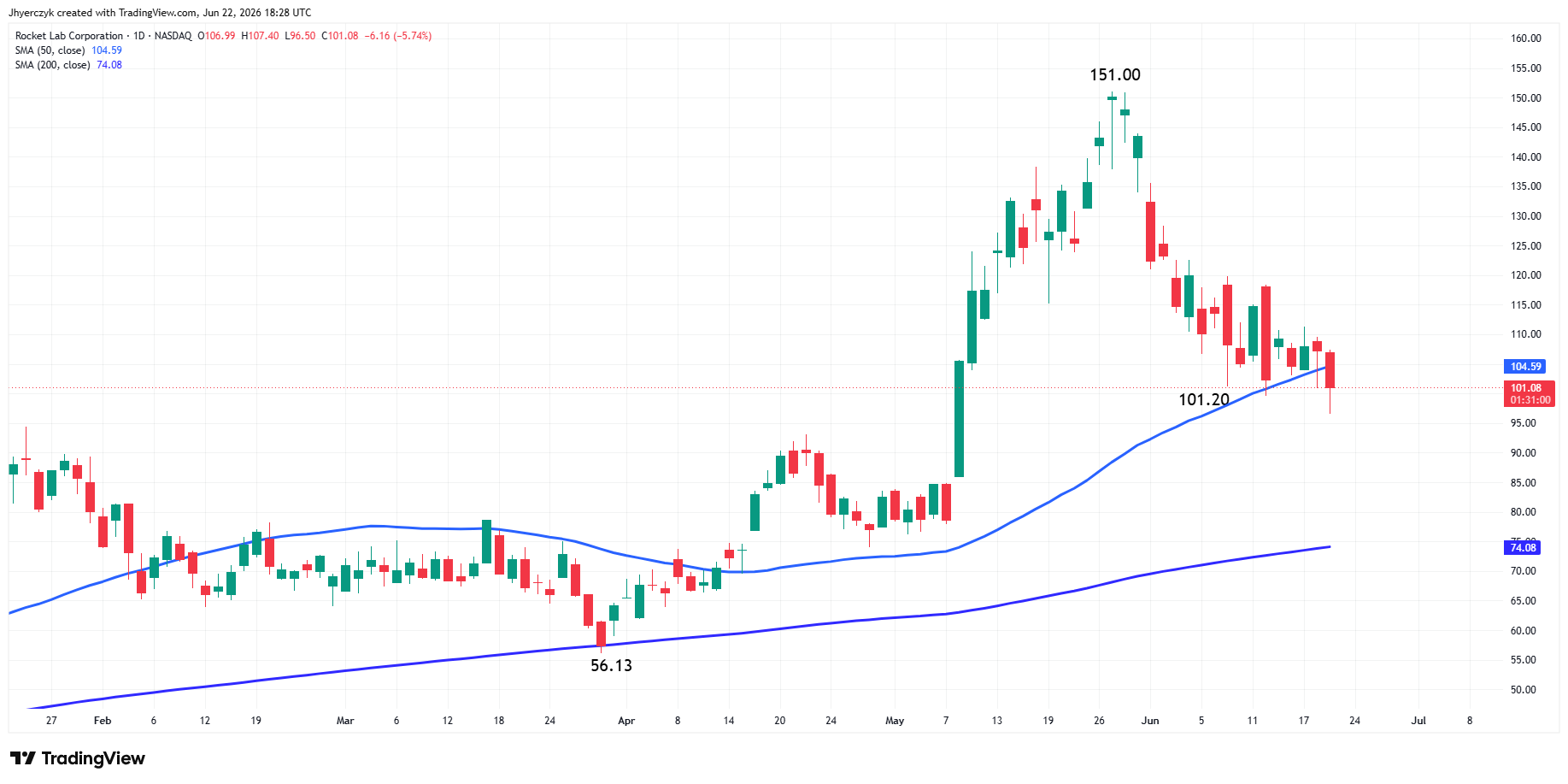
The Nasdaq-100 rebalance dropped on top of the mega-cap selling and amplified everything. Astera Labs, CoreWeave, Nebius Group, Rocket Lab, and Teradyne are being added to the index and every fund tracking the Nasdaq-100 has to buy them and adjust weightings across the rest of its portfolio at the same time.
The new components sold off on the same day they joined. Rocket Lab dropped 7% to 8%. CoreWeave fell 6% to 7%. Funds buying because they are required to while the stocks fall anyway tells you how much organic selling is running underneath the forced institutional flows. The rebalance added volume that had nothing to do with fundamentals and made the session worse for everyone positioned long in growth.
Stocks in the News
SpaceX extended its post-IPO losing streak to three consecutive sessions after surging 19% on its debut. Rocket Lab and CoreWeave both sold off on the same day they were added to the Nasdaq-100.
Lower Oil Helps but Inflation Data Decides
Progress between the U.S. and Iran over the weekend pushed crude prices lower Monday and that took some pressure off the inflation outlook. But one afternoon of falling oil does not rewrite the rate picture. The market is looking past Monday’s crude move to key inflation data later this week.
Last week’s Fed meeting is still hanging over growth stocks and a hot inflation print validates the committee’s hawkish stance. That would give the rotation into traditional sectors more room to run and make the case for staying short the names that got hit hardest Monday. A soft number is the only thing that gives the buy side a reason to step back into mega-cap tech without worrying about the Fed making things worse.
What to Watch
The AI spending question got louder Monday and it is not going away before earnings season. Alphabet losing engineers to competitors puts a specific face on the risk that has been building across mega-cap tech for months.
The market is no longer just asking whether the spending produces returns. It is asking whether the companies spending the most can hold onto the people building the products.
Four mega-cap names selling on the same theme on the same afternoon changes the conversation heading into the next round of corporate commentary.
Inflation data later this week is the second catalyst. A hot number on top of last week’s hawkish hold puts the growth trade under pressure from both sides.
Nasdaq Composite sellers pushed through the first level of the retracement zone Monday and the secondary lower top at 26,788.62 is looking more confirmed. The 50% level at 26,085.30 decides the next move. Losing it opens a run at the 50-day and the main bottom below that becomes the trigger for a faster decline.
More Information in our Economic Calendar.