Oil and Yields Pressure Stocks
The stock market finally reacted to what traders have been watching for days. West Texas Intermediate crude oil climbed toward $96 a barrel, the 10-Year Treasury yield approached 4.5% and the 30-Year Treasury yield moved closer to 5%.
The Dow Jones Industrial Average fell 424 points, the S&P 500 lost 0.7% and the Nasdaq Composite dropped 1%. The market spent much of the spring celebrating strong economic data. On Wednesday, strong data became part of the problem. Higher oil prices did the rest.

Daily Nasdaq Composite Index (IXIC) Technical Analysis

The Nasdaq Composite (IXIC) is sharply lower shortly after the mid-session on Wednesday, posting one of its biggest declines in weeks. Nonetheless, the main trend remains intact.
The main trend is up according to the daily swing chart. A trade through 27190.21 will signal a resumption of the uptrend. A move through 25701.44 will change the main trend to down.
The main range is 25701.44 to 27190.21. Its retracement zone at 26445.83 to 26270.15 is the first downside target. A pullback into this area is likely to attract new buyers since the main trend is up. A failure here will shift momentum to the downside, putting the main bottom at 25701.44 on the radar.
Last Friday’s close at 26972.62 is the most important price level to watch, in my opinion. Currently, the index is below this price level, putting it in a position to form a potentially bearish closing price reversal top. Watch trader reaction at this level into Friday’s close. It could be an early sign of a major top.
Dow Jones Price Forecast
Every new Dow Jones analysis as it publishes, today's technical signal and key levels, live price — on one page.
See all Dow Jones forecastsOil Near $96 Keeps Inflation Pressure Alive
West Texas Intermediate crude oil gained about 2% to roughly $96 per barrel while Brent crude oil climbed near $97. U.S. and Iranian forces exchanged strikes overnight and traders immediately turned their attention back to the Middle East. The Strait of Hormuz remains the issue. The market has spent months talking about reopening the waterway, but it still has not happened.
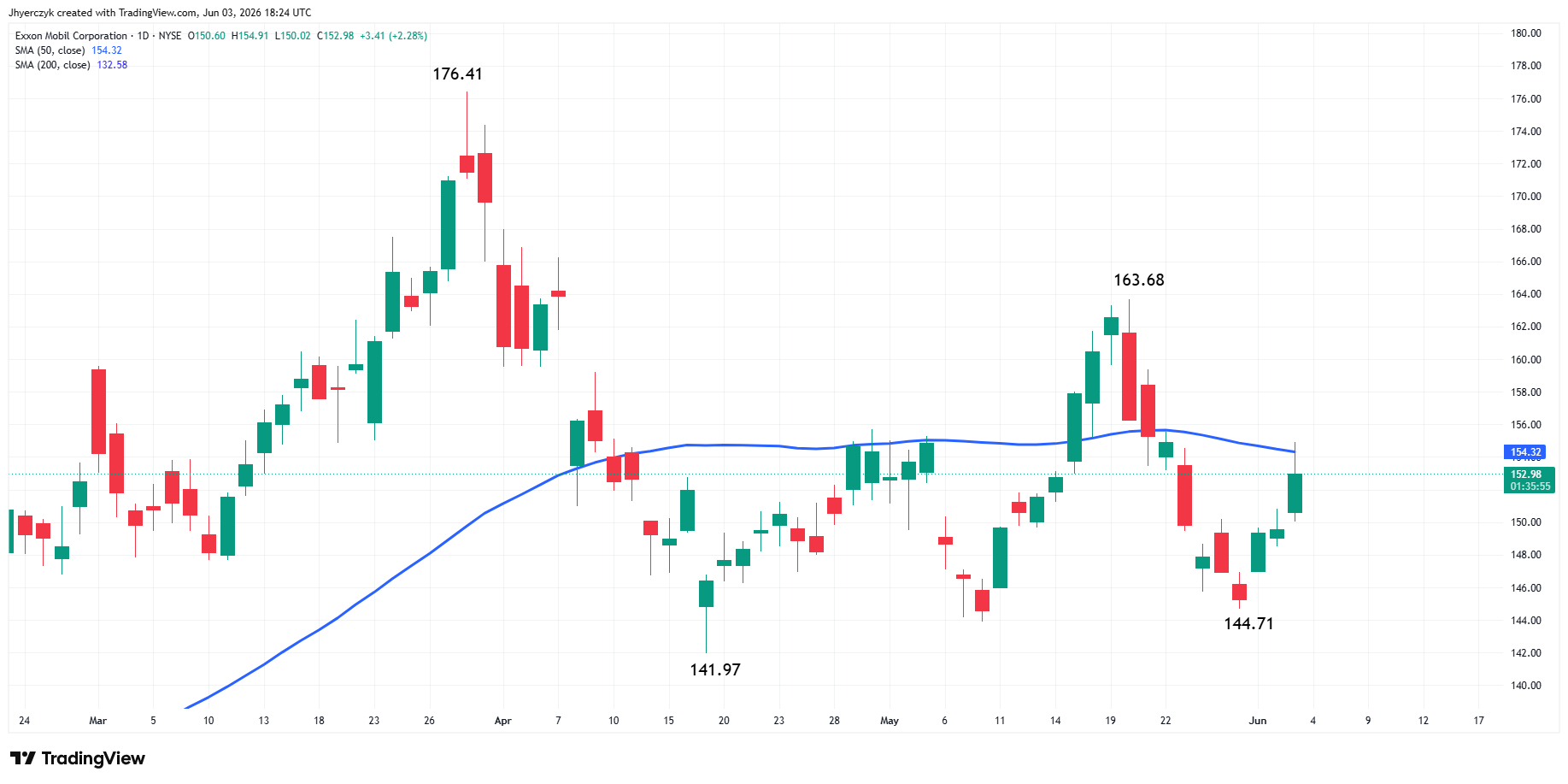
Crude oil near $96 keeps the inflation story alive. That was enough to support energy stocks even as the broader market moved lower. Exxon Mobil and Marathon Petroleum each gained about 3% while APA Corp also moved higher. Energy was one of the few areas attracting buyers during the session.
The bond market was paying attention too. The 10-Year Treasury yield pushed toward 4.5% while the 30-Year Treasury yield moved closer to 5%. Stocks have handled higher yields for much of the rally. Crude oil near $96 and yields moving higher at the same time is a different story.
Strong Data Pushes Yields Higher
ADP reported stronger-than-expected private hiring and traders also had to digest another services sector report showing the economy continues to expand. The ISM Services Index came in at 53.6 during May. That was slightly below expectations, but it remained comfortably above the 50 level. Business activity improved and production remained healthy.
The reports did not give traders much evidence that the economy is slowing. The labor market continues to hold up and the services sector continues to expand. For weeks, traders have been looking for data that would make rate cuts easier to justify. Wednesday’s reports did not help that case.
Technology Leads the Selling
Technology stocks were among the weakest performers of the session. Nvidia fell about 3%, Microsoft dropped roughly 3%, Dell Technologies lost more than 4% and Oracle declined nearly 6%. These stocks have carried a large portion of the rally over the past year, but sellers were in control Wednesday as traders reduced exposure to some of the market’s biggest winners.
The weakness spread beyond the largest names. Lumentum and Coherent gave back part of their recent gains after strong rallies tied to AI infrastructure and data center spending. Traders were taking profits in several areas that had been market leaders.
The AI trade remains one of the strongest stories on Wall Street, but Wednesday showed that even the strongest groups are not immune to selling pressure when yields and oil prices move higher.
Quantum Stocks Give Back Gains
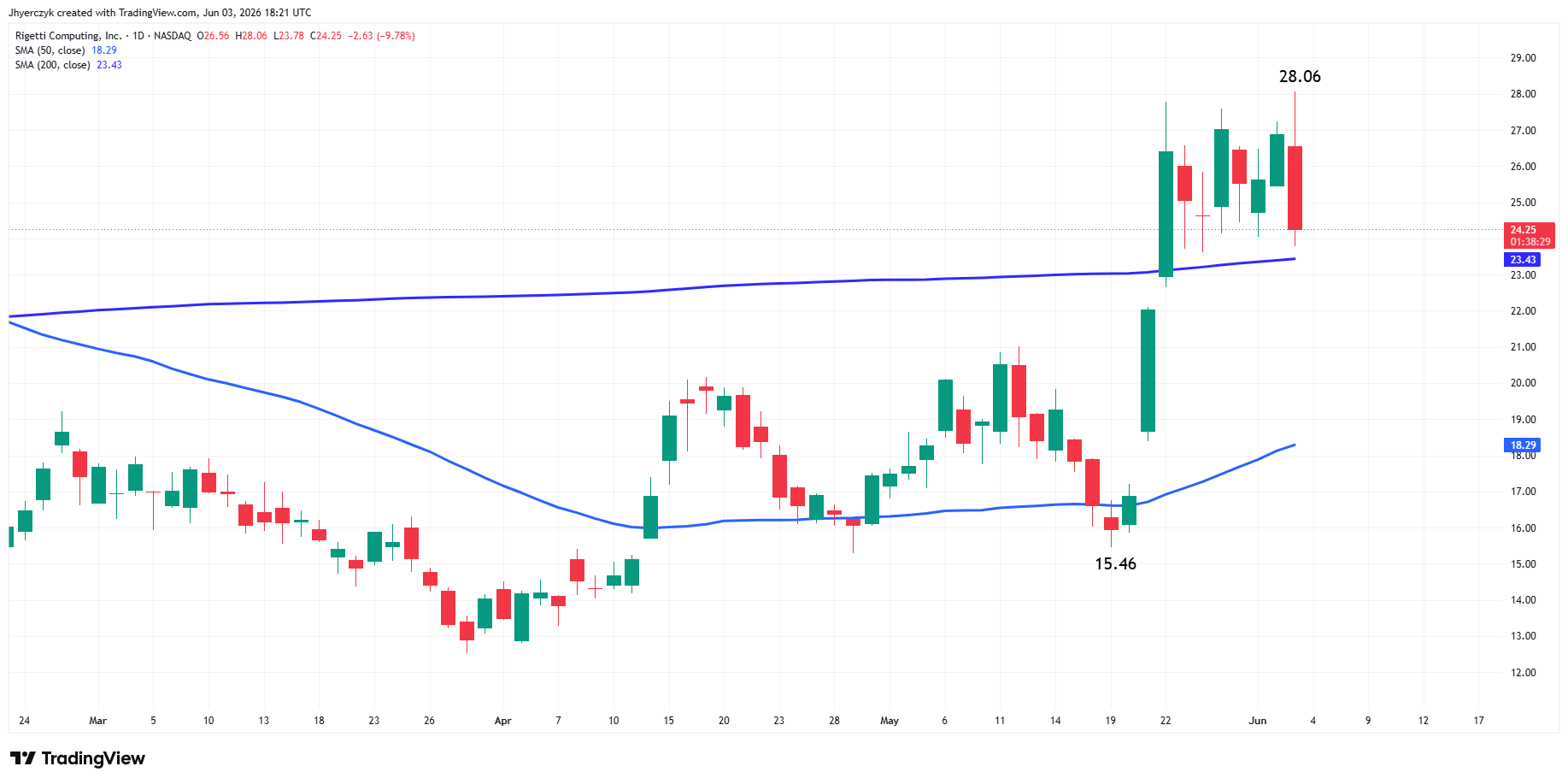
Quantum computing stocks also came under pressure after posting strong gains earlier in the week. Rigetti Computing dropped 10%, D-Wave Quantum lost 7% and IonQ fell 4%.
IBM declined more than 7% despite announcing plans to invest more than $10 billion in quantum computing initiatives. Traders focused on taking profits rather than the long-term investment announcement.
The group had been one of the market’s hotter trades recently. Wednesday looked more like profit-taking than a change in the longer-term story.
Buyers Still Found Opportunities
Not every stock moved lower. GameStop gained 6% after reporting first-quarter revenue growth of 14% and announcing a new $2 billion share repurchase program. Medtronic climbed nearly 5% after delivering stronger-than-expected quarterly revenue while Yum Brands added about 2% following an analyst upgrade from Morgan Stanley.
Marvell Technology extended its rally after posting its best trading day on record earlier in the week. The stock gained nearly 6% and remained one of the stronger names in the market.
The broader market was under pressure, but buyers were still willing to step into stocks with strong company-specific stories.
Private Equity Firms Come Under Pressure
Private equity stocks had a rough session. Blackstone, KKR and Blue Owl Capital all moved lower after reports that Partners Group limited withdrawals from one of its funds.
The headline raised concerns across the group and sellers stayed active throughout the day. The move was not enough to become the market’s biggest story, but it was another example of investors reducing exposure rather than adding risk.
What to Watch
The Nasdaq Composite is now trading below last Friday’s close at 26972.62. That puts the index in position to form a potentially bearish closing price reversal top into Friday’s close. Traders should be watching that level closely over the next two sessions.
The first downside target remains the retracement zone at 26445.83 to 26270.15. The trend is still up and buyers are expected on the first test of that area. If the selling picks up, traders will start looking at the main bottom at 25701.44.
Oil near $96 and the 10-Year Treasury yield near 4.5% remain the bigger market stories. The stock market has spent months benefiting from falling inflation expectations and hopes for lower rates. Crude oil and bond yields are both pushing against that story.
The bulls still have the trend. The bears have oil, yields and a Federal Reserve that is not getting much help from the data.
More Information in our Economic Calendar.