



Market Overview
Oil & Natural Gas Outlook April 16 — Hormuz Risk vs Demand Weakness
Crude Oil markets remain ridiculously sensitive to the vagaries of global events , with WTI hovering around the $90-$93 mark and Brent just a hair above $95-$96 as traders gingerly weigh the risk of war against slowly weakening economic indicators. The ongoing standoff between the US and Iran and the threats to the shipping of oil through the straits of Hormuz is still the main thing keeping prices up, which means supply risk stays high. That being said, the constant talk of potential negotiations is being used to temper some of the price rises, creating a bit of a rollercoaster ride in the markets.
From a bottom line sort of perspective, the market is really conflicted. On the one hand, things are really tight on the ground, and the IEA is spooked – which means that if things do get worse, prices might actually go up. On the other hand, people are getting a little worried about demand, inventory levels are building up again, and the dollar is easing off a bit, which is sending mixed signals and preventing a real price surge. This tug of war is the reason why prices are chugging along, just below recent highs, despite the ongoing supply risks.
Natural gas is a whole different ball game though. Prices hovering near $2.60 tell us that domestic production is still in the midst of a bit of a boom, the weather has been mild, and gas storage levels are pretty comfy. Unlike oil, the US gas market is largely insulated from global shenanigans – although if the LNG shipping is disrupted for a while, that could eventually start to push prices up.
All in all, oil is still being driven by geopolitics, while gas is just really over supplied – which is why we’re seeing such a stark difference between these energy markets.
Natural Gas (NG)
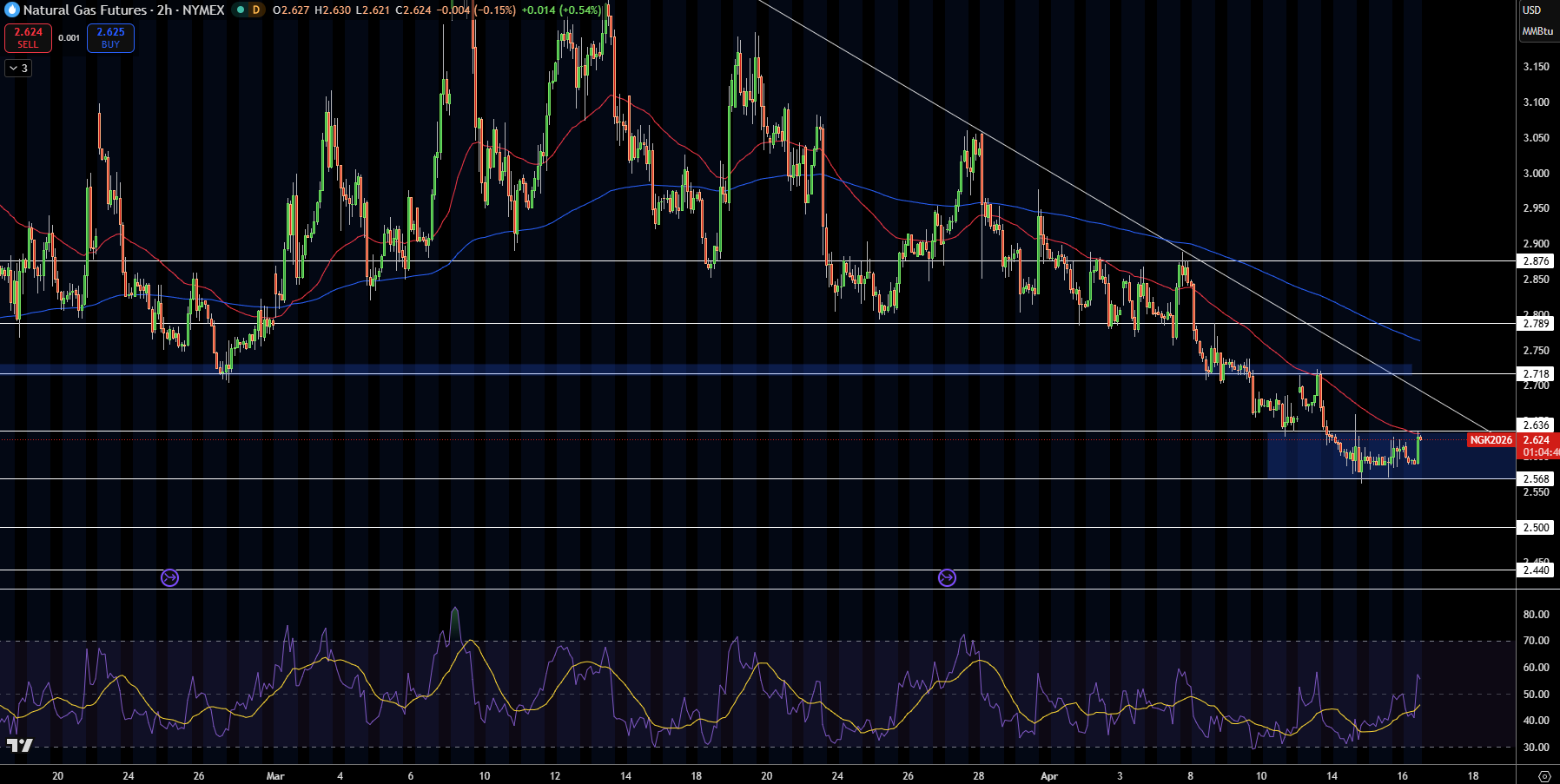
Natural gas is still looking pretty bearish , with prices currently trading in the $2.62-$2.65 area which just so happens to be a demand zone. Price action is also below those EMAs as well as the descending trend line resistance, which is still pretty much bearish control. Indicators are showing weak momentum recovery as that RSI near 40-45 suggests.
A break above $2.70 could possibly see some short covering start to kick in towards $2.78 , whereas a failure will risk a drop to $2.56 and lower.
Trade idea: Sell when we get below $2.60 with a target of $2.56 -$2.50 and a stop loss above $2.70.
Natural Gas Price Forecast
Every new Natural Gas analysis as it publishes, today's technical signal and key levels, live price — on one page.
See all Natural Gas forecastsWTI Crude Oil (USOIL)
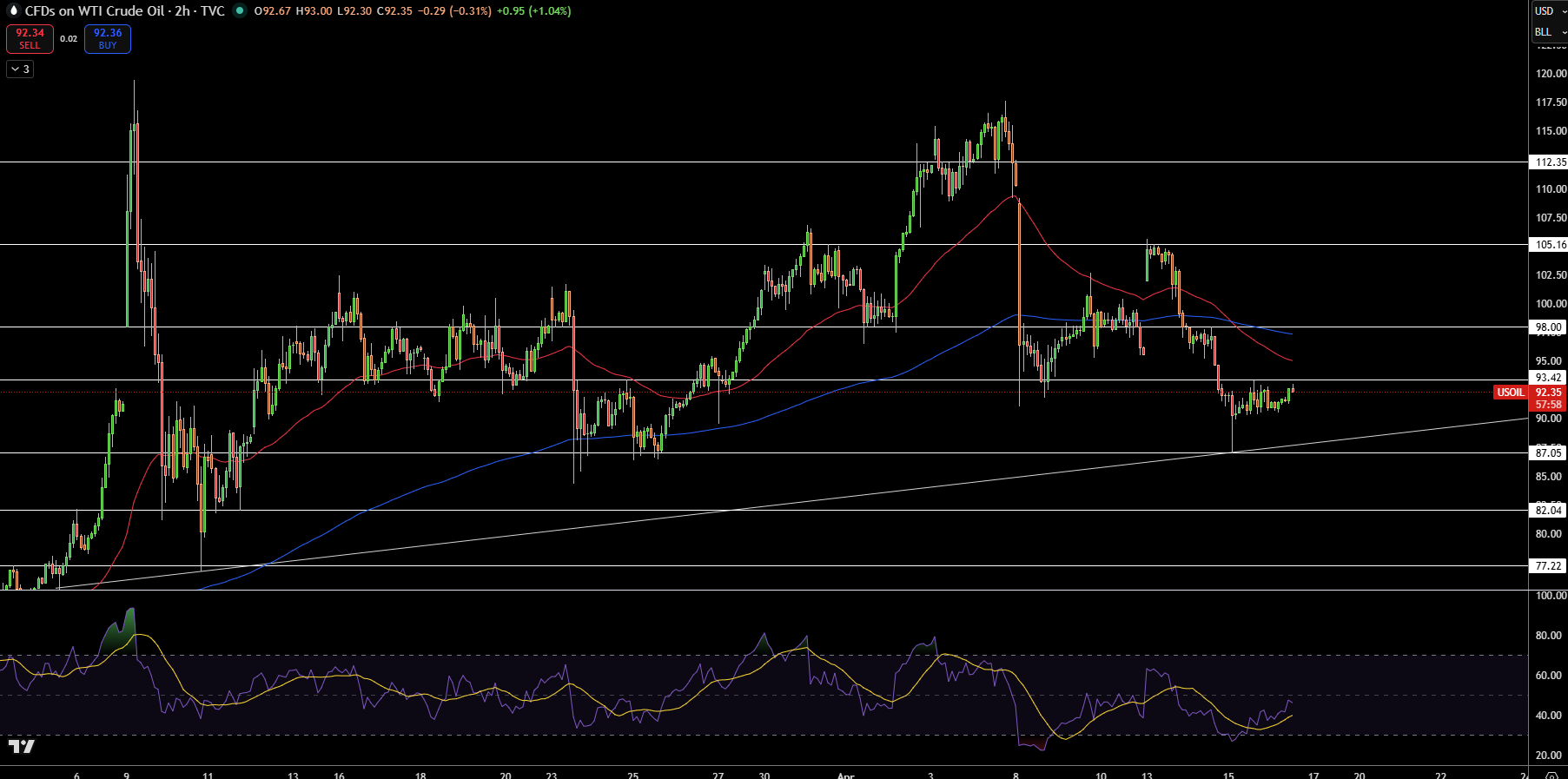
WTI’s currently stabilising in the $92-$93 region which is acting as a solid base above the long term ascending trend line and $91 level that’s still giving the market some underlying support. Price is still sitting below both the 50 day and 200 day EMAs which is keeping overall market sentiment pretty cautious. Indicators are showing bearish pressure is slowly easing as the RSI near 40-45 suggests.
A break above $95 – $96 could signal a return to the higher end of the range at $98 and $101 whereas a drop below $91 could well see prices drop down to $87.
Trade idea: Buy when we get above $96 , with a target of $100-$101 and a stop loss below $91.
Brent Crude Oil (UKOIL)
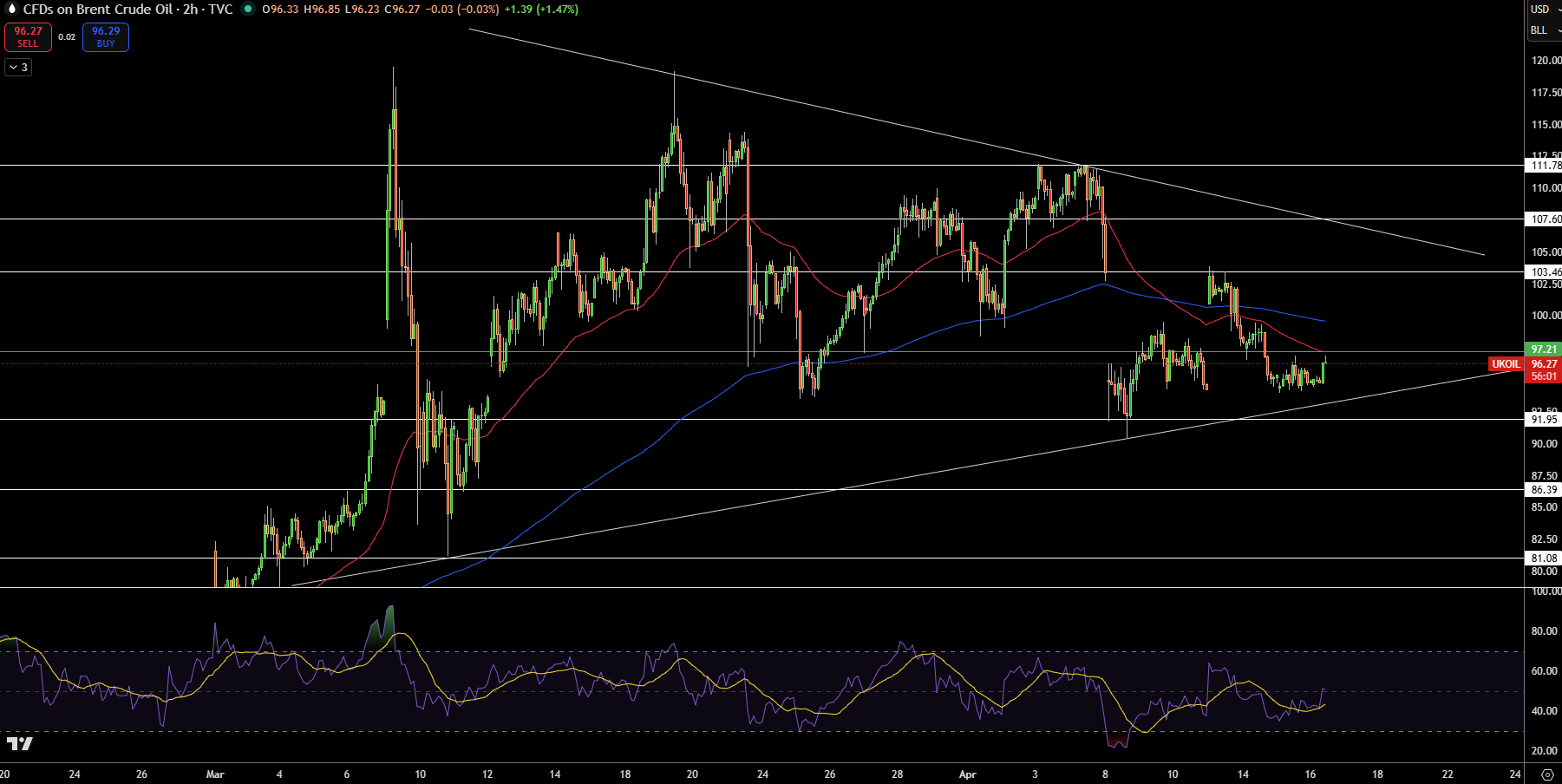
Brent’s currently trading around $96 , and looks pretty comfortable holding on to support from that rising trend line near the $92-$93 region. Price action’s looking a bit compressed at the moment – all bunched up under that descending resistance level which could spell a breakout in the making. If we do see a push above $97.50-$98 then it could be time for Brent to make a run for $100 and $103.50.
On the flip side, a failure to hold support below $92 could have us seeing prices drop down to $89-$90.
Trade idea: Buy when we see a break above $98 and the accompanying breakout, with a target of $100-$103 and a stop loss below $92.