June Natural Gas Holds Gains but I’m Not Chasing This Rally
June Nymex Natural Gas closed up 3.13% Monday and hit a four-week high in the front-month contract. I’m watching this move carefully and I want to be direct about what I think it is. This is short-covering, not fresh buying. The selloff from January 30 to April 30 was prolonged in both price and time. The first rally off a bottom that size is almost always shorts covering, not new money coming in. The smart buyers don’t chase the first leg. They wait for the pullback and that is exactly what I am doing.
Technical Outlook
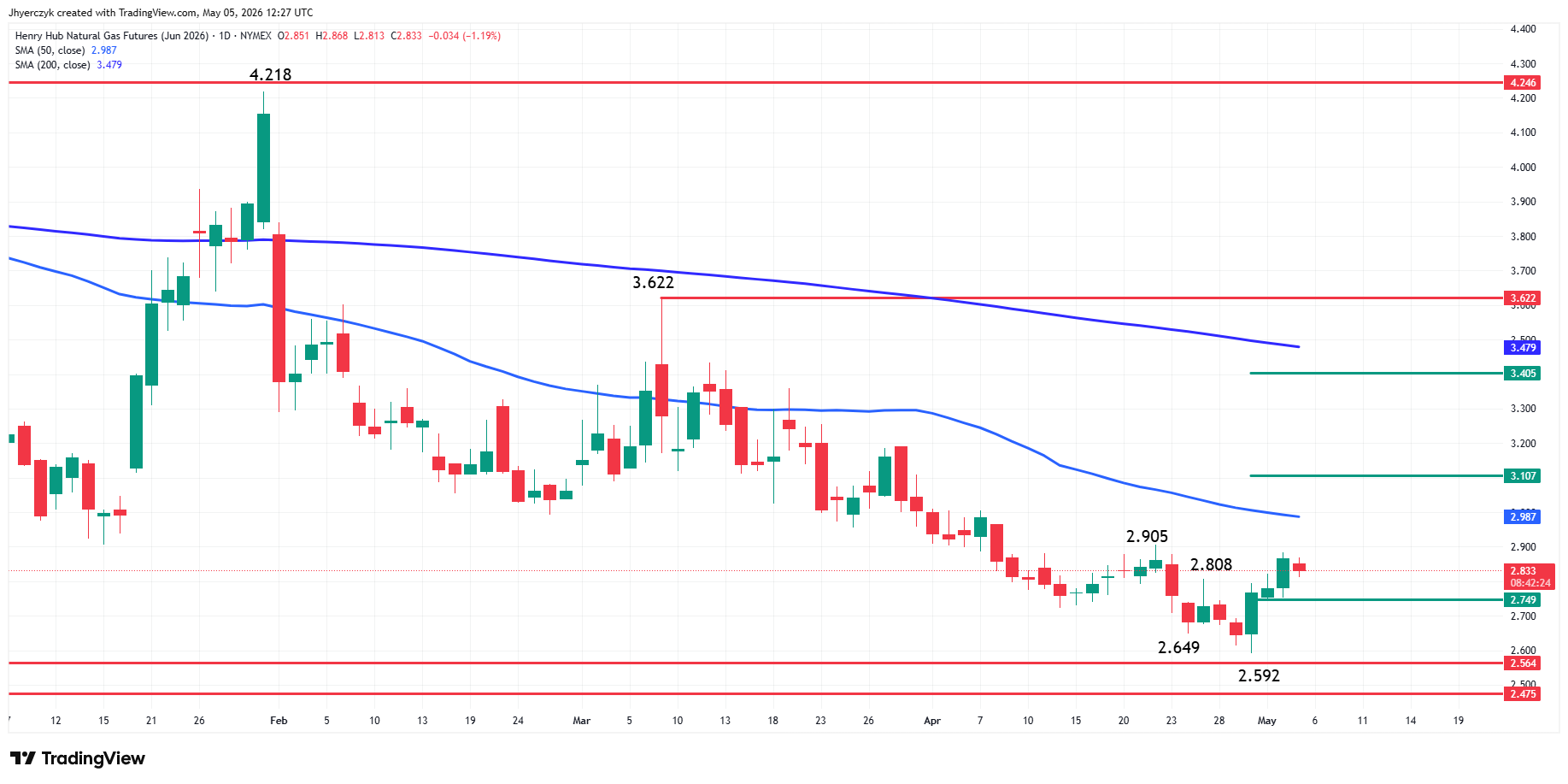
Following a prolonged move down in terms of price and time, the first rally from a bottom is usually fueled by short-covering. It makes sense because the smart buyers aren’t going to pay up yet. They may show up to create the bottom and form a support base, but I don’t believe they’re chasing. Their function is to defend the bottom and just their presence may be enough to spook the weaker shorts.
As I’m watching this three-day short-covering rally develop, I’m already planning for the pullback. That’s the move I’ll be watching for because that’s when the new buyers tend to show up. If they believe in the rally then they’re going to buy the first correction because they have the bottom at $2.592 to lean on. They aren’t trying to pick the bottom, but they will buy if they see an exit.
If buyers do come in on the first pullback then a secondary higher bottom could form, setting in motion the chances of an even steeper rally. The second rally is usually strong because it’s driven by short-covering and new buying. So this is our near-term plan.
The current near-term range is $2.905 to $2.592. Its pivot is $2.749. I’ll be watching this level to see if a test attracts new buyers.
Our current near-term targets are a minor top at $2.905 and the 50-day moving average at $2.987. The latter is critical because it is resistance, a trend indicator and a potential trigger point for an acceleration to the upside. Overcoming the 50-day MA could extend the rally further into an intermediate 50% level at $3.107.
Essentially, over the short-run we’re not chasing the first leg up, but we will be looking for a 50% pullback of the short-covering rally and playing for a secondary higher bottom formation to fuel an even bigger rally over the near-term.
Natural Gas Price Forecast
Every new Natural Gas analysis as it publishes, today's technical signal and key levels, live price — on one page.
See all Natural Gas forecastsWeather Gave the Bulls a Session
Below-normal temperatures are sitting across the Midwest through May 13 and that is what got the buyers off the sideline Monday. Cooler forecasts at this time of year pull in heating demand when the market was expecting none. Lower-48 gas consumption came in at 65.5 Bcf per day Monday, up 7.0% year over year. That number tells you the weather is already influencing usage. It is not enough to flip the fundamental picture but it gave traders a reason to cover shorts after April’s beating and that was enough to run the market 3% in a session.
Oil Dragged Natural Gas Higher
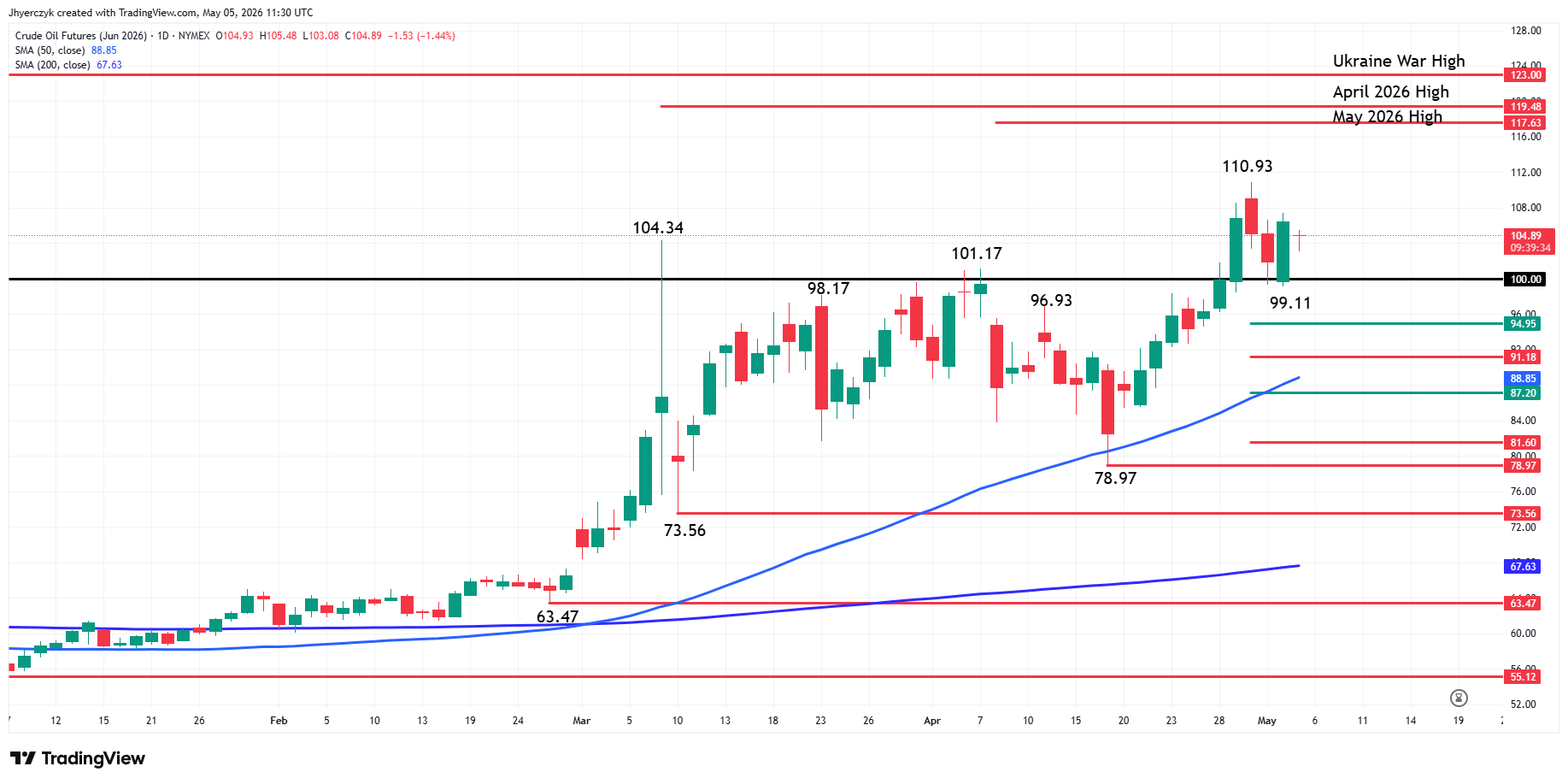
June WTI crude oil surged more than 4% Monday and natural gas caught the carry-over. That relationship is direct. When crude runs on geopolitical headlines, energy complex sentiment lifts and natural gas gets pulled along with it. I’m not going to pretend the fundamental case for natural gas changed because oil moved. It didn’t. But the tape does not care about that distinction on a day when crude is up 4%.
The Strait and Qatar Are Changing the Global Picture
The Strait of Hormuz staying closed is starting to matter for natural gas in a way that is not fully priced in yet. Middle Eastern natural gas supplies flowing to Europe and Asia are being cut off and global buyers are looking for replacement supply. That puts U.S. LNG exports in a stronger position than they were three months ago.
Qatar’s Ras Laffan facility is the other piece of this. Iran damaged 17% of its LNG export capacity and repairs are expected to take three to five years. Ras Laffan accounts for roughly 20% of global LNG supply. That is not a disruption that gets absorbed quickly. The market has not fully processed what a multi-year reduction in Qatari LNG output means for U.S. export demand going forward. I’m watching that story closely because it is the most significant structural change in global natural gas markets right now.
Storage and Production Are Still the Headwind
I keep coming back to production as the reason I cannot get fully bullish here. Lower-48 dry gas output hit 110.1 Bcf per day Monday, up 3.2% year over year. The Energy Information Administration raised its 2026 production forecast to 109.59 Bcf per day. The gas rig count climbed to 130, not far from the multi-year high of 134 set in February. Production is not rolling over and until it does the supply ceiling stays in place.
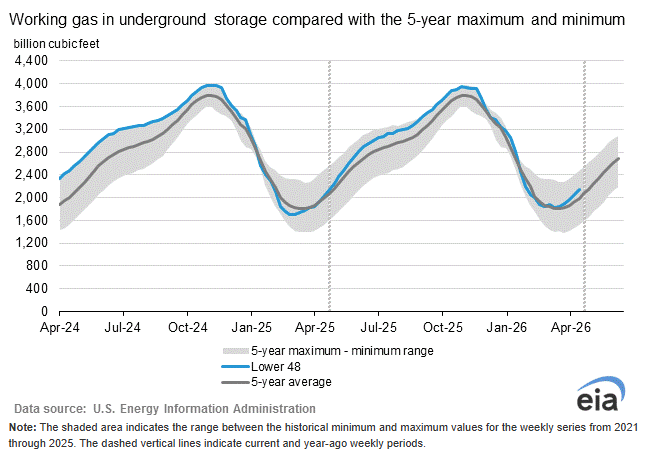
Storage is the other problem. Inventories are 7.7% above the five-year seasonal average and nearly 5% above last year. The latest weekly injection of 79 Bcf came in below the 83 Bcf expectation but was still well above the seasonal norm of 63 Bcf. Europe’s storage sitting at 32% full versus the five-year average of 45% tells you where future LNG demand is headed, but that does not fix the domestic storage problem today.
What I’m Watching
The pivot at $2.749 is the level I am focused on now. If this short-covering rally pulls back and that pivot attracts new buyers, a secondary higher bottom could form and that is when the real rally starts. That second move is the one I want to be in because it is driven by both short-covering and new buying at the same time.
Until I see that setup develop I am not chasing. The 50-day moving average at $2.987 is the line that changes my read if this market can get there with volume behind it. Right now production is near record highs, storage is elevated and the weather trade has a short shelf life. Patient money waits for the pullback. That is where we are.
More Information in our Economic Calendar.