Sharp Breakdown to New Retracement Low
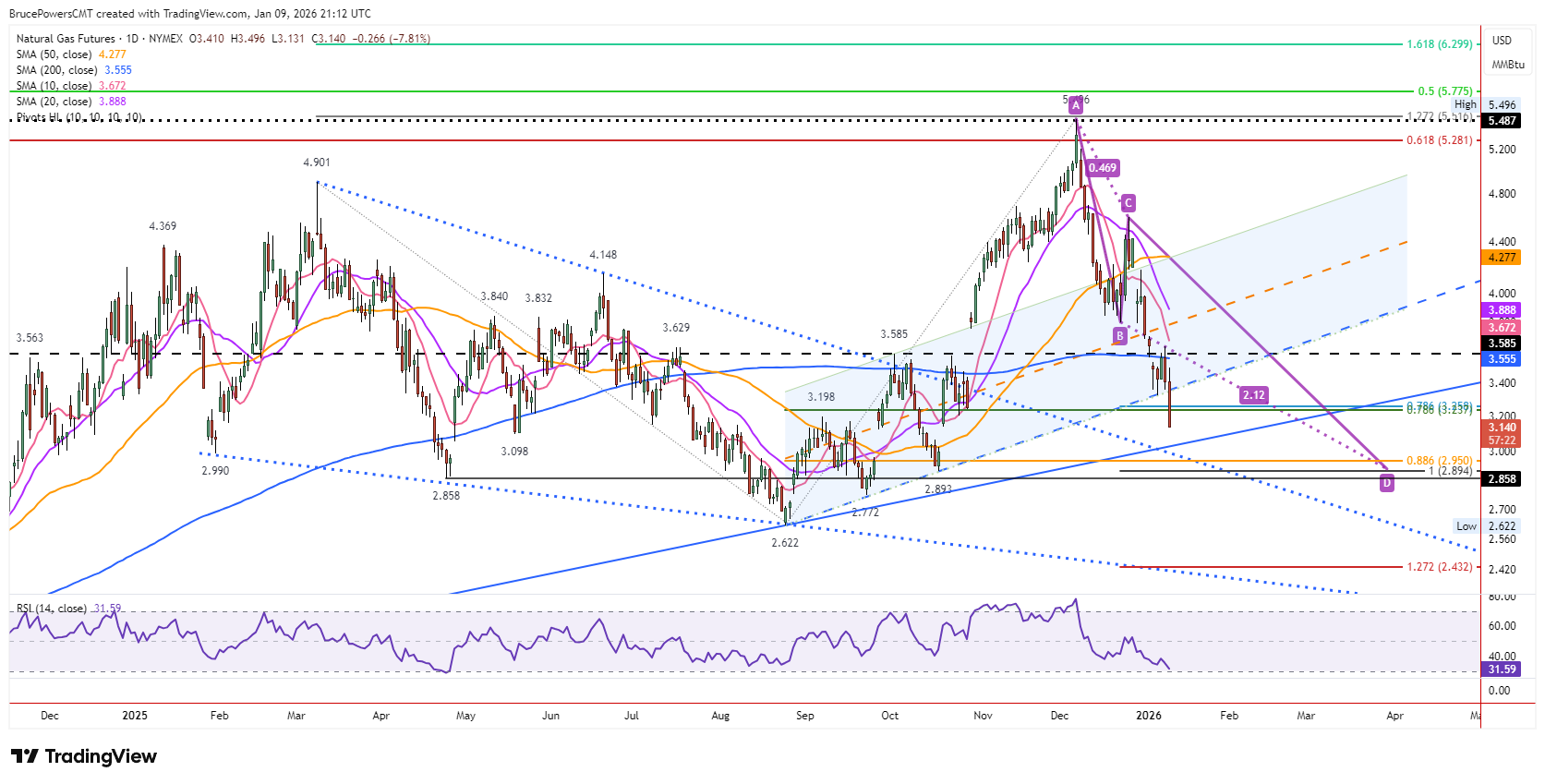
Natural gas fell hard to a new retracement low of $3.13 on Friday, breaking through two potential support areas on the way down. It looks set to confirm the bearish continuation with a close below the second price zone at $3.24, which marks the 78.6% Fibonacci retracement of the prior upswing. Sellers remain in charge at time of writing with trading continuing near the lows of the day. The decisive breakdown points to a likely test of support near a lower uptrend line and the possibility of reaching an extended downside target below that line.
Internal Trendline Failure Opens Lower Support Zone
An internal uptrend line, that has been an area of support for the correction, broke today with a drop below the prior corrective low of $3.32. If support fails to stop the descent near the long-term trendline, lower targets become possible. There is another support zone lower from $2.95 to $2.86. It begins with an 88.6% Fibonacci retracement and ends at an interim swing low from April. That April low was followed by a sharp rally. Within the range, there is also a prior interim swing low at $2.89, and a quarterly low, that aligns with a 100% projected target for a falling ABCD pattern, for a combined four levels establishing the price zone.
Quarterly Structure Still Suggests Major Support
Given the long-term nature of the quarterly pattern, support would be expected above $2.89 at a maximum. A quarterly bullish reversal triggered in Q4 2025, establishing a high quarterly high and higher low. Plus, the breakout was confirmed with a 2025 closing above the Q3 high.
200-Day Average Confirms Resistance
This week confirmed the breakdown from the 200-day average on January 5, as it was successfully tested as resistance before Friday’s decline, on both Thursday and Wednesday. It suggests that buyers are staying on the sidelines until perceived value improves. At a minimum, this improves the chance that the rising trendline is eventually tested as support before the correction completes.
Post–Falling Wedge Pullback in Progress
Another perspective is applied when considering the breakout of a large bullish falling wedge in October. The current decline is the first pullback following that breakout. Once a bottom is found another sharp advance could follow given the volatility spike on both the rally and decline after the breakout.
Natural Gas Price Forecast
Every new Natural Gas analysis as it publishes, today's technical signal and key levels, live price — on one page.
See all Natural Gas forecastsIf you’d like to know more about what drives natural gas prices, please visit our educational area.