Natural Gas Remains Under Pressure
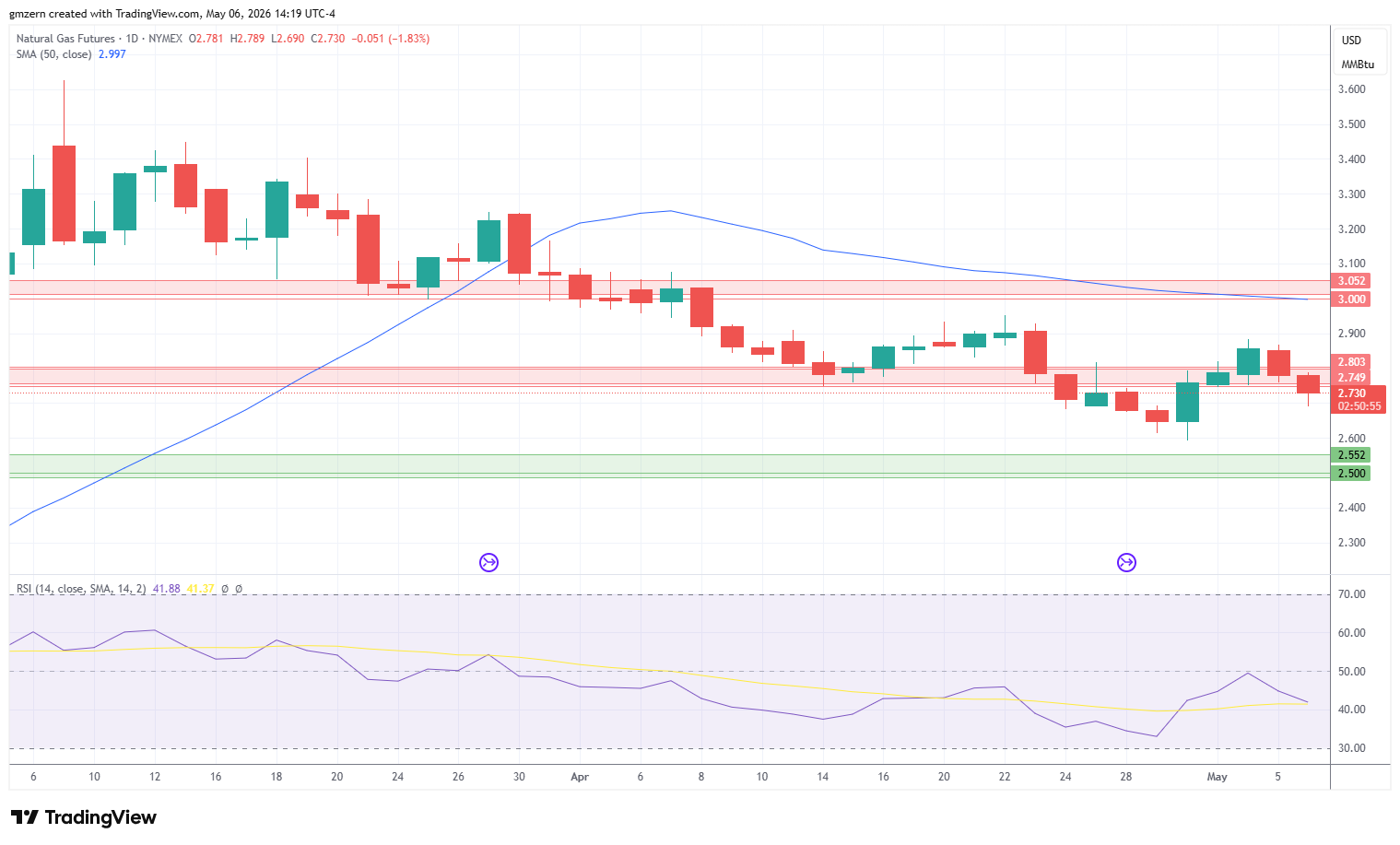
Natural gas is losing ground as pullback continues. Traders prepare for the EIA report, which will be released tomorrow. Analysts expect that working gas in storage increased by +72 Bcf from the previous week.
From the technical point of view, natural gas failed to settle above the resistance level at $2.75 – $2.80 and is trying to settle below the $2.70 level. In case this attempt is successful, natural gas will move towards the $2.60 level. A move below the $2.60 level will open the way to the test of the support at $2.50 – $2.500.
On the upside, a successful test of the resistance at $2.75 – $2.80 will push natural gas towards the next resistance level, which is located in the $3.00 – $3.05 range.

WTI Oil Dives As Traders Bet On A Deal Between U.S. And Iran
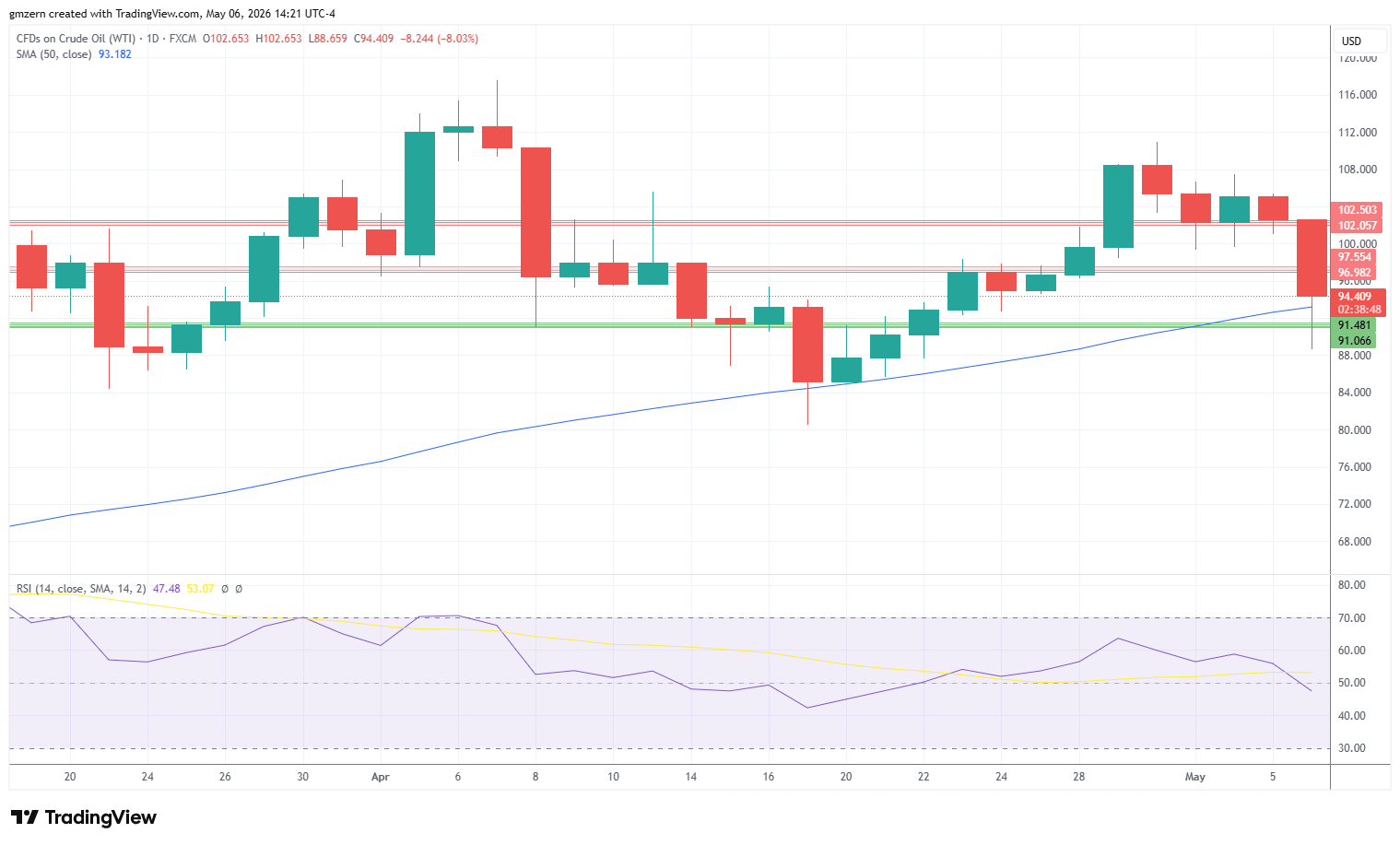
WTI oil suffered a sell-off as traders reacted to geopolitical developments. Recent reports showed that Iran was evaluating the latest U.S. proposal to end the war in the Middle East.
Negotiations between U.S. and Iran may take place next week in Islamabad. If Iran agrees to the proposal, it will gradually reopen the Strait of Hormuz, while U.S. will lift the blockade of Iranian ports. It should be noted that nothing has been agreed yet.
Today, traders also had a chance to take a look at the EIA Weekly Petroleum Status Report. The report indicated that crude inventories declined by -2.3 million barrels from the previous week, compared to analyst forecast of -3.3 million barrels. At current levels, crude inventories are about 1% above the five-year average for this time of the year.
Total motor gasoline inventories declined by -2.5 million barrels, compared to anlayst consensus of -2.1 million barrels. Distillate fuel inventories decreased by -1.3 million barrels from the previous week.
U.S. crude oil imports declined by -273,000 bpd, averaging 5.5 million bpd. Over the past four weeks, crude oil imports averaged 5.6 million bpd.
Strategic Petroleum Reserve decreased from 397.9 million barrels to 392.7 million barrels as U.S. continued to sell oil from strategic reserves.
Domestic oil production declined from 13.586 million bpd to 13.573 million bpd. From a big picture point of view, domestic oil production remains stuck below the 13.6 million bpd level despite high oil prices.
WTI oil rebounded from session lows and is trying to settle back above the $95.00 level. In case this attempt is successful, WTI oil will head towards the nearest resistance, which is located in the $97.00 – $97.50 range.
On the support side, a move below the 50 MA at $93.19 will push WTI oil towards the support at $91.00 – $91.50.
Natural Gas Price Forecast
Every new Natural Gas analysis as it publishes, today's technical signal and key levels, live price — on one page.
See all Natural Gas forecastsBrent Oil Tested Support At $97.00 – $97.50
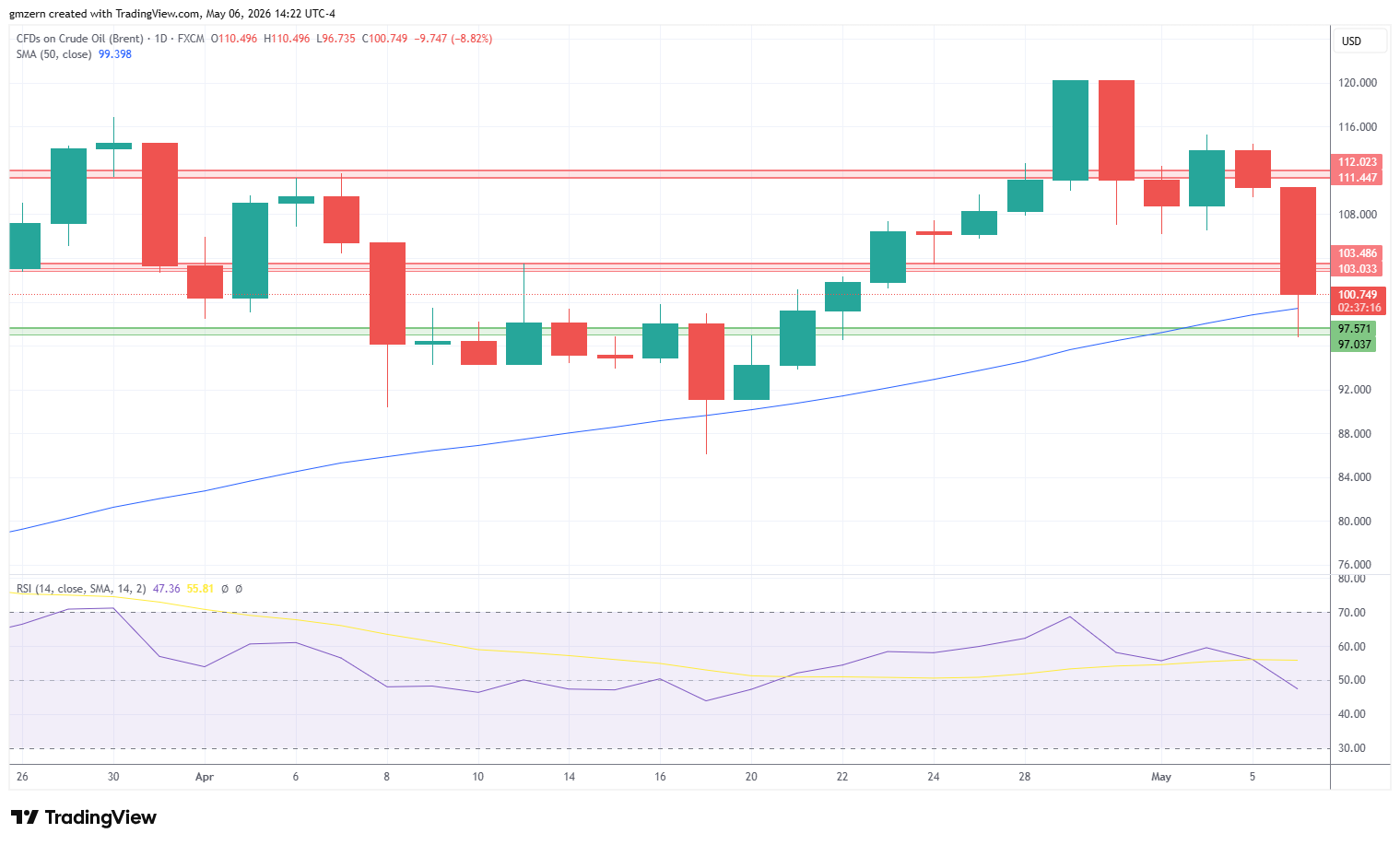
Brent oil settled near the $100 level as traders focused on the situation in the Middle East and bet that the Strait of Hormuz could be reopened soon.
In case Brent oil pulls back below the $100 level, it will head towards the 50 MA at $99.40. A move below the 50 MA will push Brent oil towards the support level at $97.00 – $97.50.
On the upside, Brent oil needs to settle back above the resistance at $103.00 – $103.50 to gain sustainable upside momentum in the near term.
If you’d like to know more about how commodity markets work, please visit our educational area.