Natural Gas Is Flat Ahead Of The Weekend
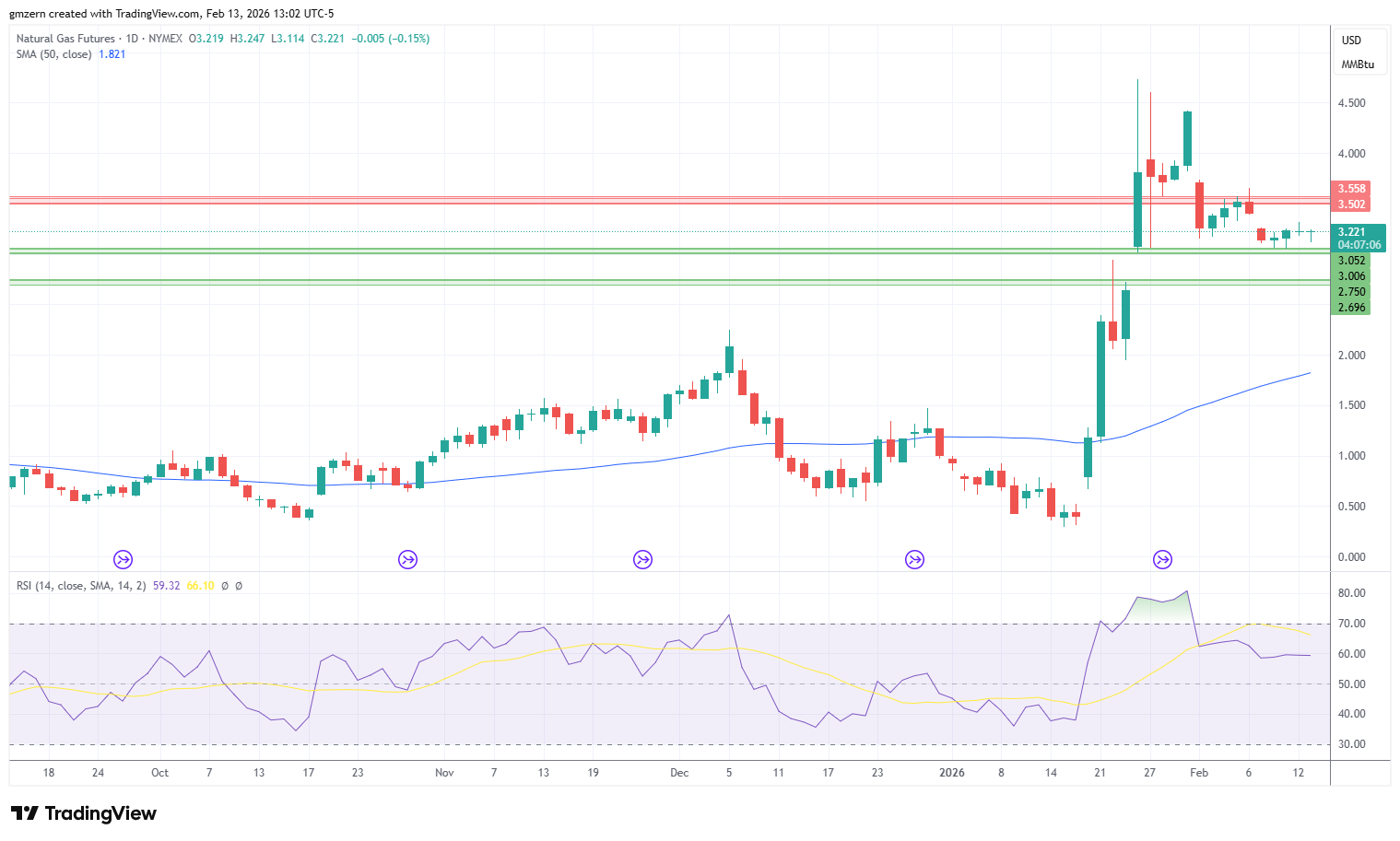
Natural gas is mostly flat as the market stabilizes after yesterday’s EIA report, which indicated that working gas in storage decreased by -249 Bcf from the previous week.
Today, EIA released its natural gas production forecast for 2026 and 2027. According to the EIA, natural gas production will increase by 2% in 2026 and then further increase by 1.2% in 2027. Rising production is bearish for natural gas markets.
Current demand for natural gas is low, but traders stay optimistic as natural gas stocks are below the five-year average for this time of the year.
In case natural gas manages to settle above the $3.25 level, it will gain additional upside momentum and move towards the nearest resistance level, which is located in the $3.50 – $3.55 range.
On the support side, a successful test of the support level at $3.00 – $3.05 will open the way to the test of the next support at $2.70 – $2.75.

WTI Oil Moves Away From Session Lows
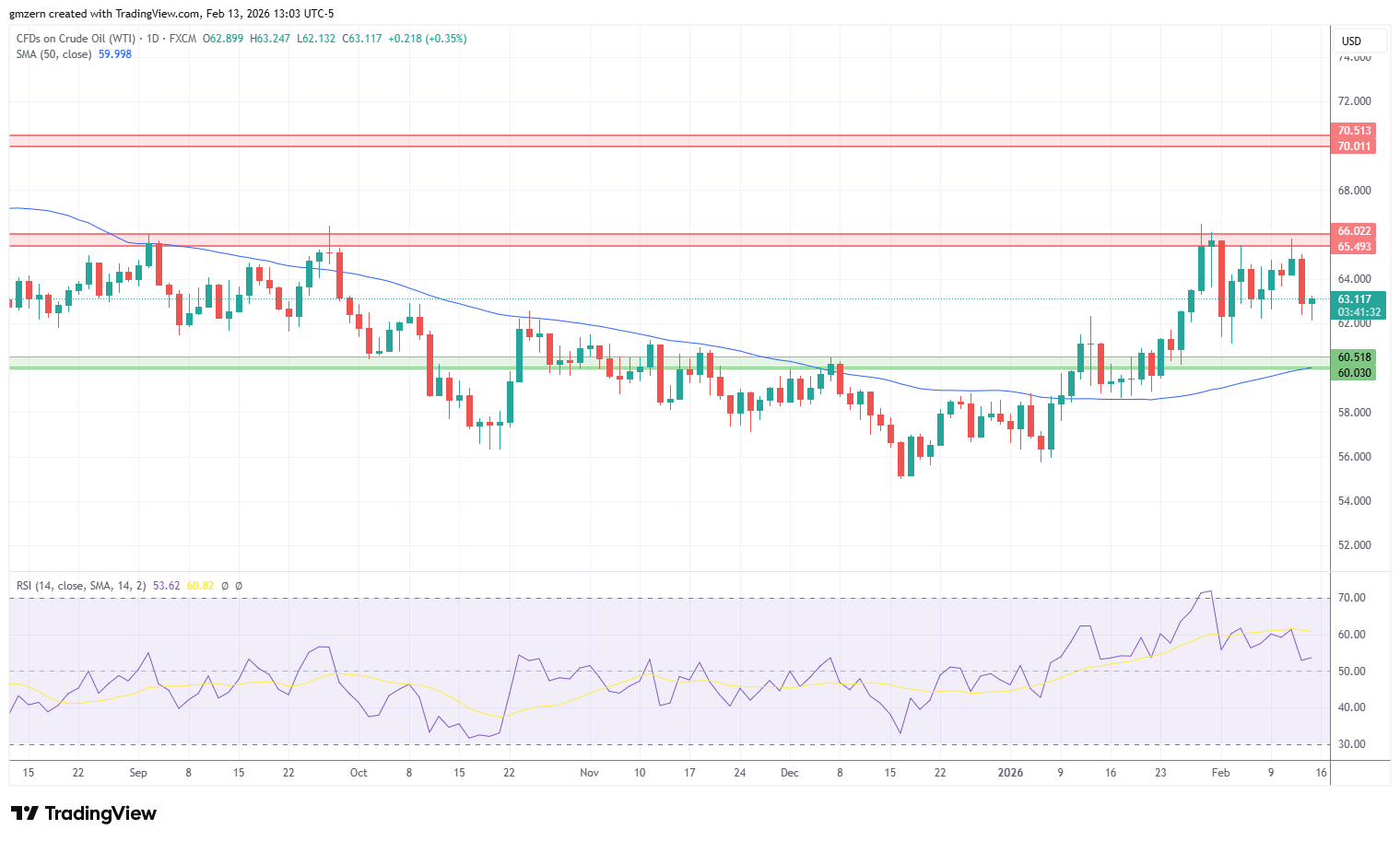
WTI oil rebounded from session lows as traders focused on Trump’s recent decision to send a second aircraft carrier to the Middle East.
President Trump has recently said that the second aircraft carrier was “leaving very shortly” and added that the U.S. would need it in case Iran does not agree to a deal.
Geopolitical premium may rise ahead of the weekend as some traders won’t be ready to maintain their short positions amid geopolitical tensions.
That said, it takes time for an aircraft carrier to travel from one part of the world to another, so traders have some time to evaluate whether Iran would agree to a deal or reject it.
Today, oil traders also focused on inflation data from the U.S. Inflation Rate declined to 2.4% in January, compared to analyst forecast of 2.5%. Lower-than-expected inflation provides Fed with an opportunity to cut rates, which would boost economic growth.
However, traders may stay focused on the supply side of the supply/demand balance. In case geopolitical premium declines, oil prices may gain significant downside momentum as supply continues to grow at a faster pace than demand.
Most likely, a rate cut from the Fed would not provide sufficient support to oil demand in the near term, so it’s not surprising to see that oil markets showed little reaction to U.S. CPI data.
WTI oil made an attempt to settle below the $62.50 level but lost momentum and rebounded towards the $63.00 level. In case WTI oil settles back above $63.00, it will head towards recent highs near the $65.50 level.
On the support side, a move below the $62.50 level will open the way to the test of the support at $60.00 – $60.50.
Natural Gas Price Forecast
Every new Natural Gas analysis as it publishes, today's technical signal and key levels, live price — on one page.
See all Natural Gas forecastsBrent Oil Attempts To Settle Back Above $68.00
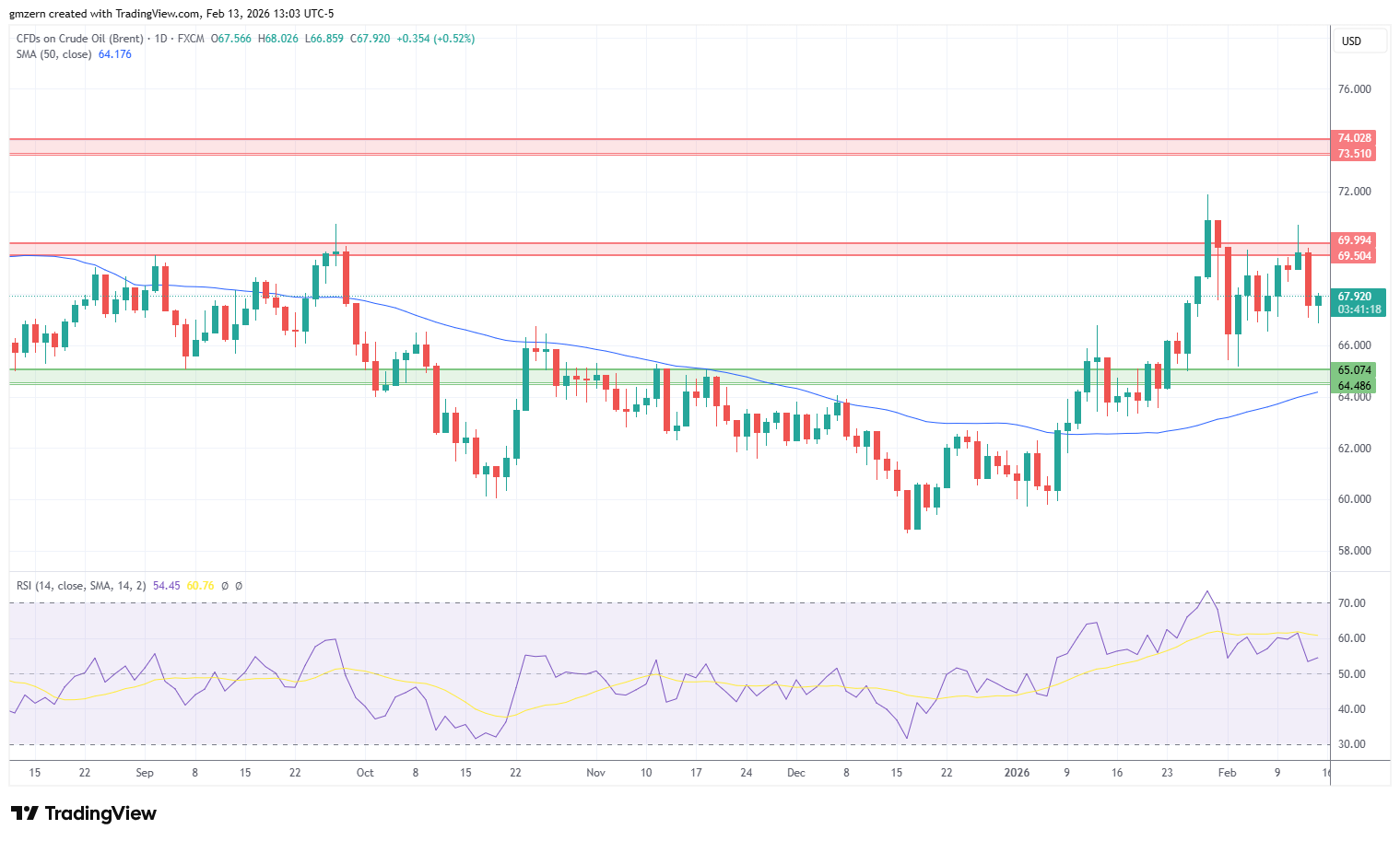
Brent oil has also managed to move away from session lows as traders used the pullback as an opportunity to increase their long positions at attractive levels.
Recent trading sessions were choppy as traders reacted to Iran-related news. The general trend remains bullish as geopolitical tensions rise.
However, oil failed to gain strong momentum as traders remain worried about rising supply from both OPEC+ and non-OPEC+ countries.
If Brent oil climbs back above the $68.00 level, it will head towards the nearest resistance at $69.50 – $70.00. A successful test of this level will push Brent oil towards the $72.00 level.
If you’d like to know more about how commodity markets work, please visit our educational area.