Mixed Market Response to Inflation Data
The major U.S. stock indexes are a mixed bag on Friday with the blue chip Dow and benchmark S&P 500 showing modest gains while the tech-weighted Nasdaq struggles to find its footing. Investors could still be reeling from yesterday’s steep sell-off, because in my opinion, the reaction to cooler-than-expected should’ve been a little more bullish.
The U.S. Bureau of Labor Statistics (BLS) said shortly before the opening that consumer inflation rose 0.2% in January, producing a yearly gain of 2.4%. Both figures came in below the consensus estimate. Core CPI met expectations.

What the Inflation Numbers Mean for Your Portfolio
But what does it mean for stocks? Probably more of a relief than a bullish or bearish outlook. I think investors took the inflation data in stride. Basically, it shows it’s headed in the right direction, but still higher than the Fed’s 2.0% mandate. It does give the Fed some breathing room, however, after Wednesday hot jobs report. Although it likely means Fed policy expectations are going nowhere, I think it does give the central bank a dovish tilt even though there are enough member hawks to prevent a rate cut at this time.
AI Fears Trigger Sector-Wide Selloff
Today’s inflation data may have served as a distraction ahead of a losing weekly close as investors remain rattled by artificial intelligence and its potential disruption of business models and employment. What started as a sell-off in software stocks has now spread into real estate, trucking, and financial services. CNBC reported that financial stocks like Charles Schwab and Morgan Stanley have dropped 10% and 6% respectively this week. Software company Workday is sharply lower this week and commercial real estate firm CBRE has cratered double-digits week to date.
Media Stocks Face Growing Pressure
The fear of contagion into other sectors and subsectors has media stock investors on edge. Walt Disney is down 3% this week and Netflix is off by 7%, suggesting the selling pressure could continue into next week. In my opinion this could turn out to be a major problem because with earnings season over, investors will have nothing to fall back on.
I think it’s easy to say “let’s sell that stock because it’s AI-related” but it goes beyond that. With all the money being pumped into AI, credit issues can develop too and that would be a major concern for banking and the broad-based financial markets.
NASDAQ 100 Price Forecast
Every new NASDAQ 100 analysis as it publishes, today's technical signal and key levels, live price — on one page.
See all NASDAQ 100 forecastsKey Technical Levels to Watch
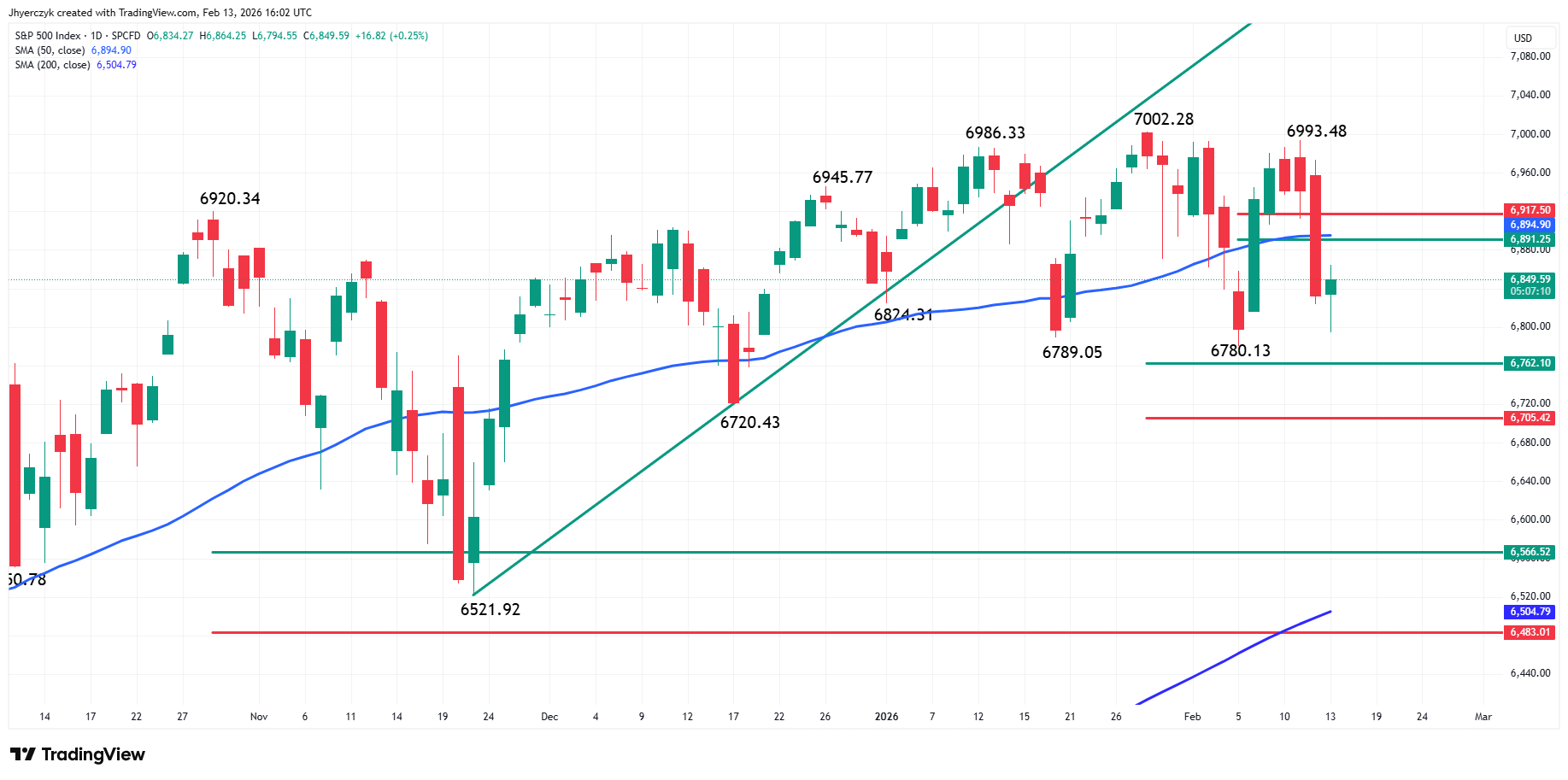
Looking at the S&P 500 Index (SPX), I see issues with the 50-day moving average, currently at 6895.19. The market has shown the importance of this indicator at least four times since late November with investors getting a little complacent with “buy the dip” when it breaks through it. Well, that trading style will only work for so long before it fails and traders start searching for real value at the 200-day moving average at 6404.87, for example.
Continue to respect the 50-day which is now resistance, but if any buy attempts are rejected repeatedly then the index could start moving decisively down toward the 200-day.
More Information in our Economic Calendar.