


Japan’s changing inflation outlook has created a more complicated outlook for the Nikkei 225. Core inflation grew to 1.8% in March. The rising price of oil put pressure on consumers, businesses and the government. The index is attempting to break the 60,000 level, but the next move will depend on how the market weighs up inflation, Bank of Japan (BOJ) policy, government policy and the rise in bond yields.
Japan Inflation Sends a Mixed Signal to Markets
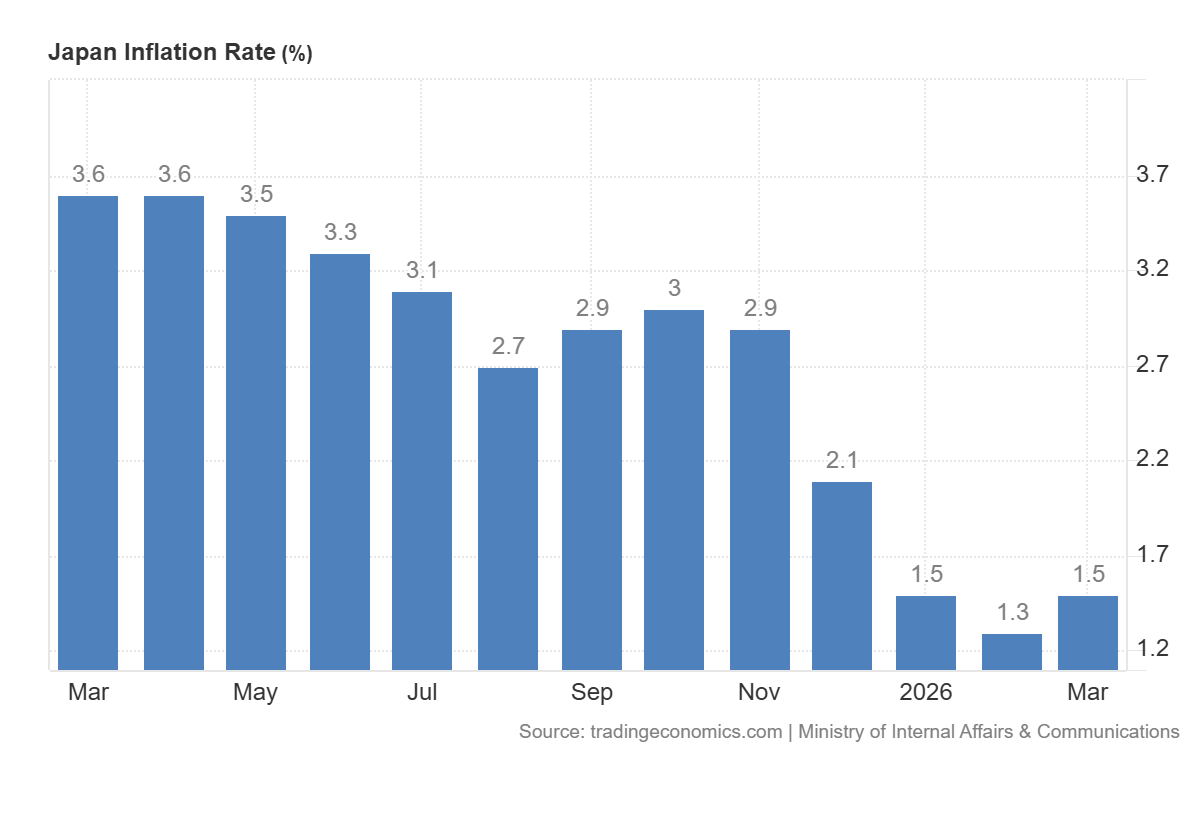
The Japanese inflation report sends mixed message to the market. The chart below shows that Japan’s inflation rate increased to 1.5% in March 2026 as compared to the 1.3% in February.
On the other hand, the core inflation increased from 1.6% in February to 1.8% in March. This data suggests that inflation is picking up.
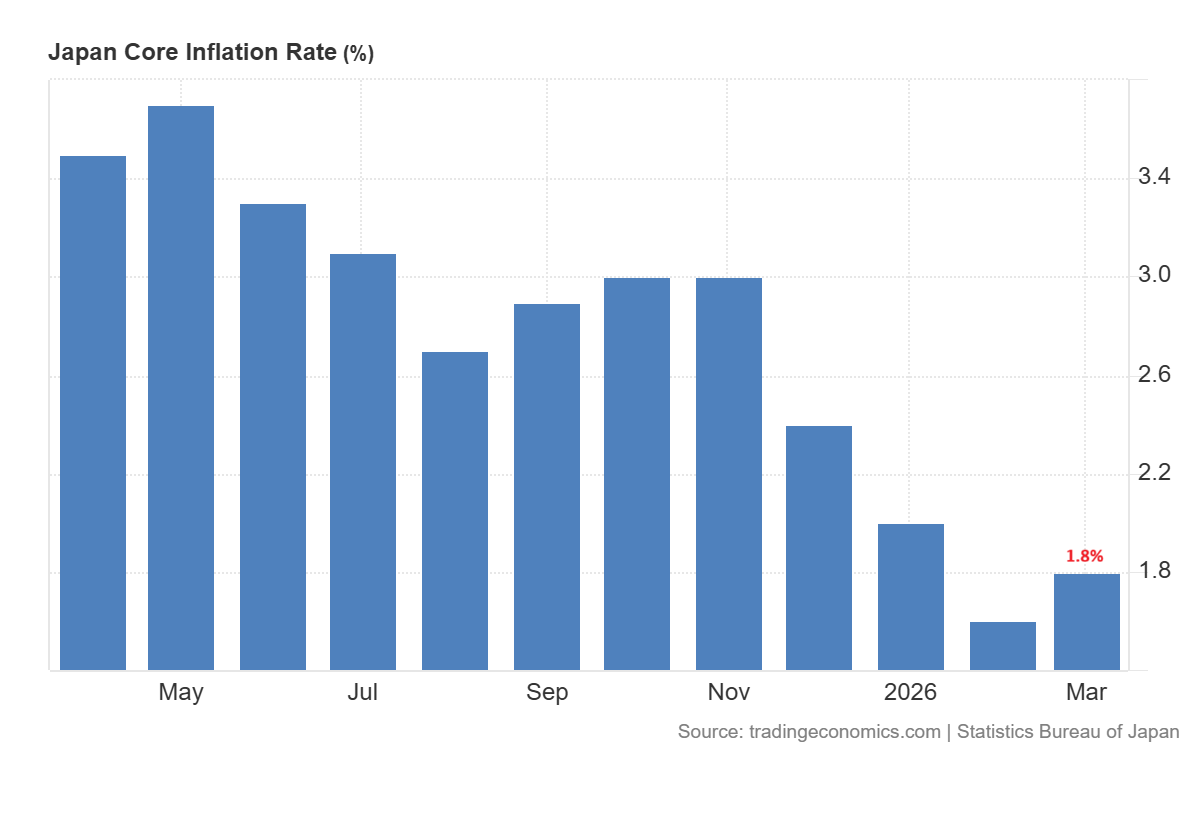
For the second consecutive month, the headline inflation remained below the BOJ’s 2% inflation target. This is difficult environment for the Nikkei 225 as investors must consider not only rising oil prices but also falling consumption.
Nikkei Price Forecast
Every new Nikkei analysis as it publishes, today's technical signal and key levels, live price — on one page.
See all Nikkei forecastsOil Price Risk and BOJ Caution Could Test the Nikkei 225 Rally
The US-Iran conflict is impacting oil prices. Japan is a net importer and changes in energy prices can quickly affect the public and business. The government has released stockpiles of crude oil and placed cap on gasoline prices while offering subsidies on fuels. But they also show the government is still concerned about the impact of oil. Higher oil prices could lead to core inflation approaching 3% by fiscal 2026. But core-core inflation will likely stay below 2% because of low consumption.
The mixed inflation outlook poses challenge for the BOJ. The BOJ is likely to keep its rates at 0.75% at its April 27-28 policy meeting, but its statement might still sound hawkish. Higher oil prices can feed through to higher inflation expectations and over 83% of respondents to a recent survey expect prices to rise in the coming year. This argues for a slower pace of interest-rate increases. But sluggish growth and a decline in consumer purchasing power could prevent the BOJ from being too hawkish.
For the Nikkei 225, this means the rally can continue, but may be tested if bond yields continue to rise and the yen becomes more volatile. A continued rise will be supported by corporate earnings, foreign capital flows and a belief that Japan can contain inflation while supporting growth.
Nikkei 225 Technical Analysis: 60,000 Breakout Opens Path to 65,000
The daily chart for Nikkei 225 shows that the index closed at 60,000 last week, which indicates that the index is attempting to break higher. This breakout shows strong bullish price action in the index.
The bullish price structure is seen in the strong recovery from the 50,000 level at the 200 SMA. The recovery has formed a V-shaped recovery pattern which has pushed the index within the ascending channel pattern. A breakout above 60,000 will indicate a quick move to 65,000.
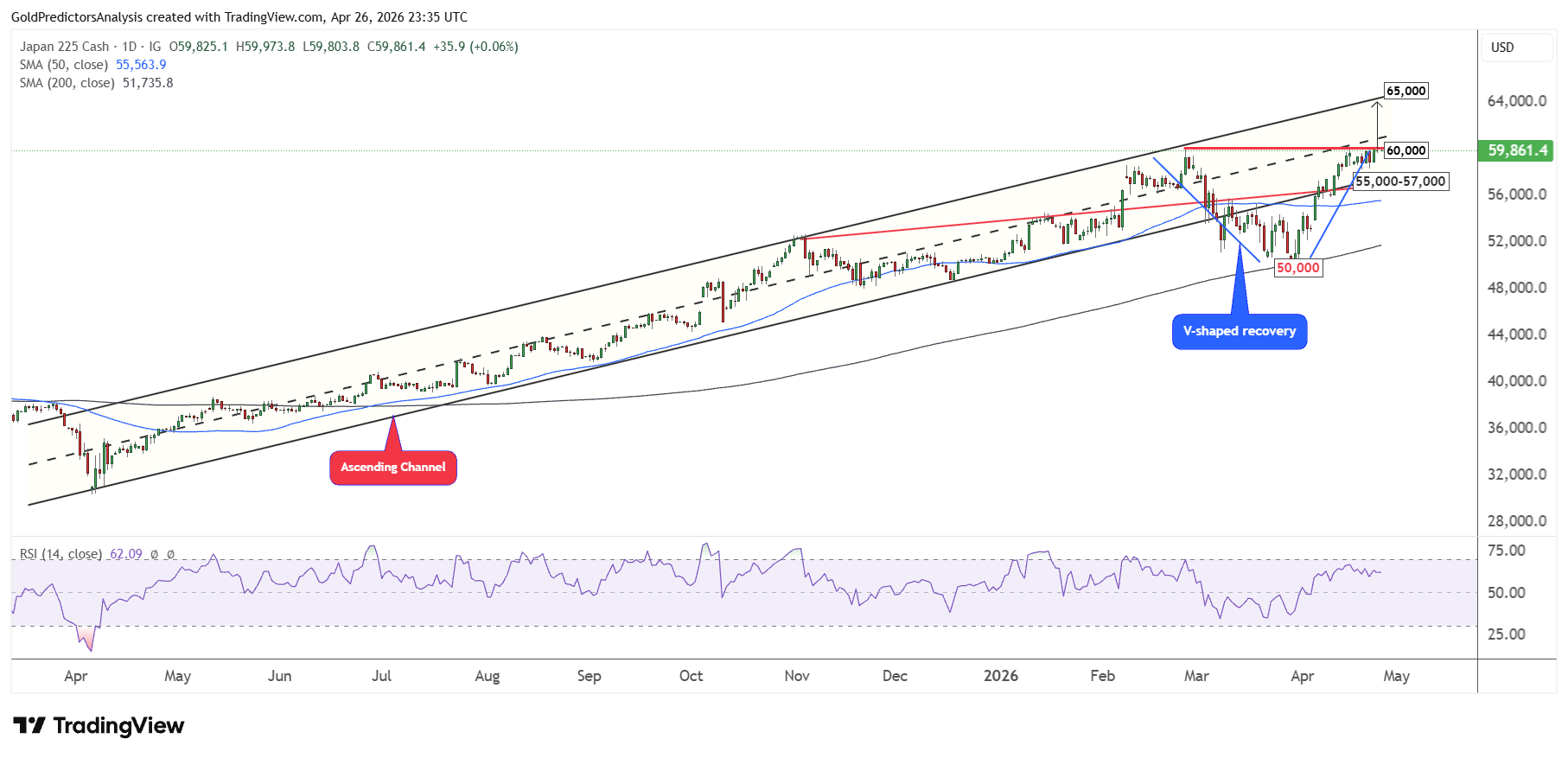
However, the next correction from 65,000 will offer another rally towards 70,000. The RSI is also consolidating above the mid-level, which indicates further upside in the short term.
This bullish price action in the index is also observed in the chart below. The recovery in April was very strong and produced multiple bullish price compressions along the way.
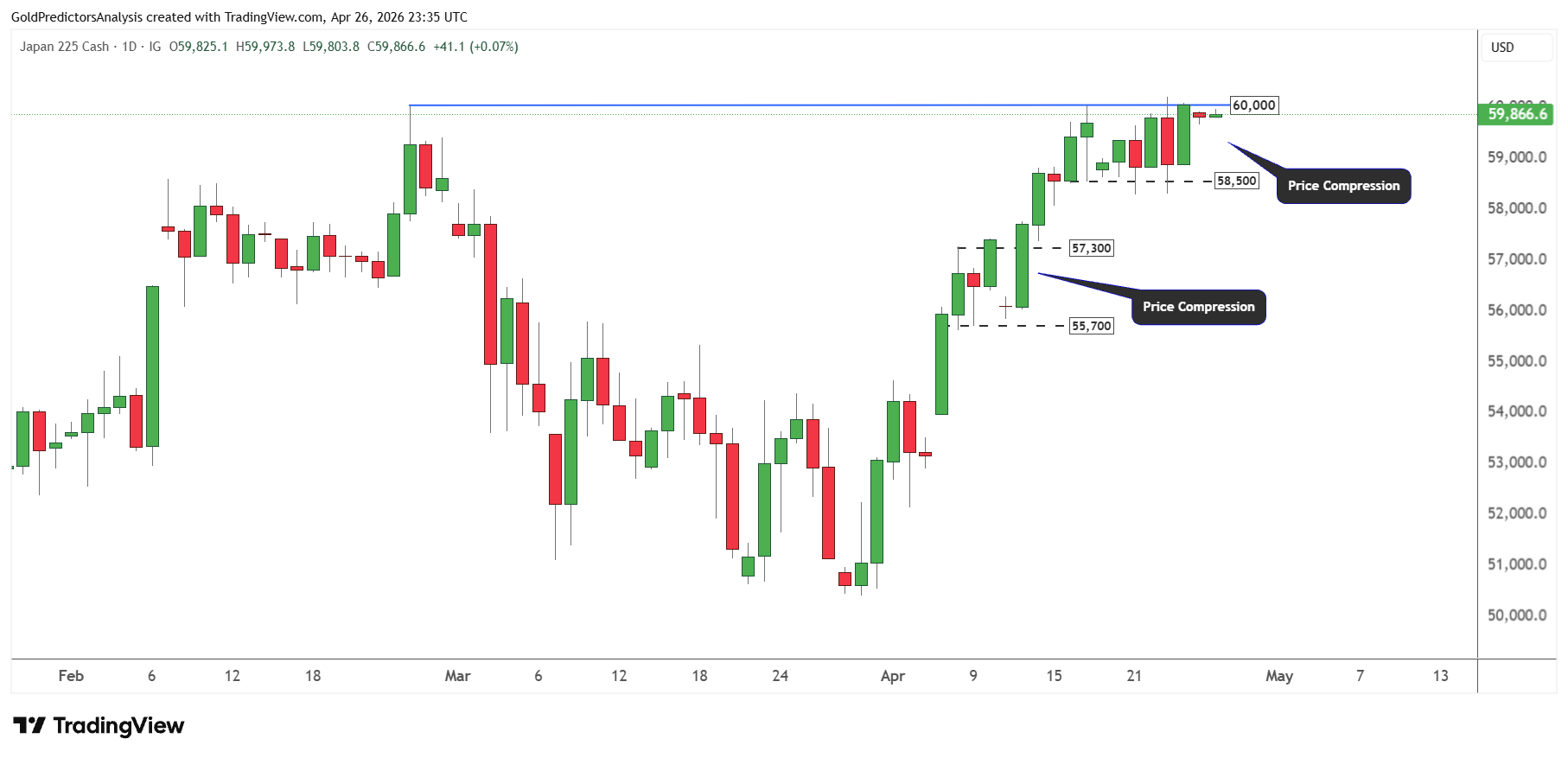
The recent price consolidation between 58,500 and 60,000 suggests that a confirmed breakout above 60,000 will trigger a rally.
Conclusion
Nikkei 225 has strong technical momentum, but there are growing macro headwinds. Higher oil prices, mixed inflation and caution could lead to temporary fluctuations. But the move above 60,000 confirms that the bulls are still in charge. If the index continues above this level, the next targets will be 65,000 and 70,000. There may be a correction if bond yields increase or the yen depreciation is more volatile, but robust earnings, foreign investment and trust in Japan’s policy settings may remain supportive of a strong trend.