The equity market of Japan began the week on a strong note as the Nikkei 225 closed higher on Monday as investors shifted to growth and cyclical sectors. The index was boosted by the real estate, banking and textile stocks. Moreover, volatility decreased significantly that indicates increased investor confidence. The combination of sector rotation and reduced risk indicates that sentiment is stabilizing following the uncertainty of US-Iran war.

Sector Rotation Signals Strong Market Participation
Profits in real estate and banking shares reveal that investors are returning to domestic expansion themes. When confidence is recovering, finances are usually at the forefront and this rotation indicates that capital is moving back to risk-sensitive areas. The presence of strong performers like Resonac Holdings, Lasertec and Taiyo Yuden indicates that both the traditional and technology related industries are gaining demand. This wide involvement enhances the general market structure.
Market internals are also in favor of the bullish tone. The Tokyo Stock Exchange saw greater gains than declines, a fact that validates underlying strength rather than a thinly sliced rally. Meanwhile sudden decline in Nikkei volatility suggests that demand for hedging is diminishing and situation is improving. This large breadth and reduced volatility underpin further upside in the near term.
AI Chip Demand and Global Relief Drive Nikkei Higher
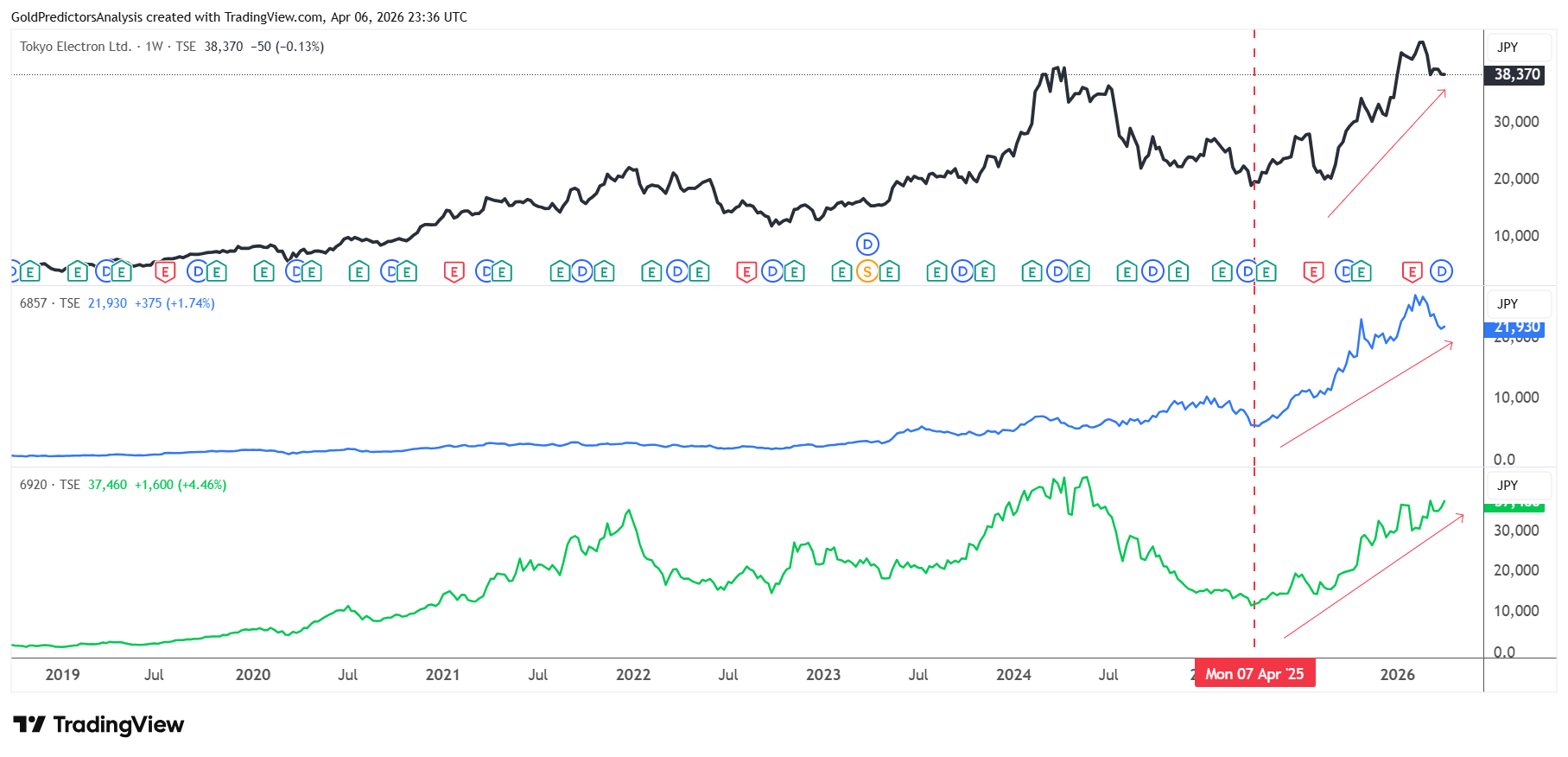
The rally in semiconductor stocks contributed to positive momentum in Nikkei 225. Investors added exposure to chip equipment associated with AI servers and memory needs. This trend was improved by optimism before the announcement of earnings by Samsung because markets expect increased demand of semiconductors globally. The structural advantage of Japan in this cycle is that it leads in such fields as wafers, inspection tools and sophisticated materials. The chart below confirms that semiconductor stocks have formed a strong bottom in April 2025 and continue to support the Nikkei rally.
Nikkei Price Forecast
Every new Nikkei analysis as it publishes, today's technical signal and key levels, live price — on one page.
See all Nikkei forecastsMoreover, the improvement in the geopolitical sentiment provided additional support. The possibility of ceasefire in the Strait of Hormuz contributed to the decrease in fears of energy supply disruption. The decreased volatility of oil will favour Asian equities by alleviating inflation and stabilizing trade. Transport, manufacturing and export based sectors also benefit from this environment.
Nikkei 225 Key Levels to Watch
From technical perspective, the Nikkei 225 has been consolidating over the past few days due to thin holiday trading. Despite this consolidation, the overall price structure on the 4-hour chart is constructive since the last week of February 2026. The index has been forming a rounding bottom pattern and looks to trend higher towards the $56,500 level.
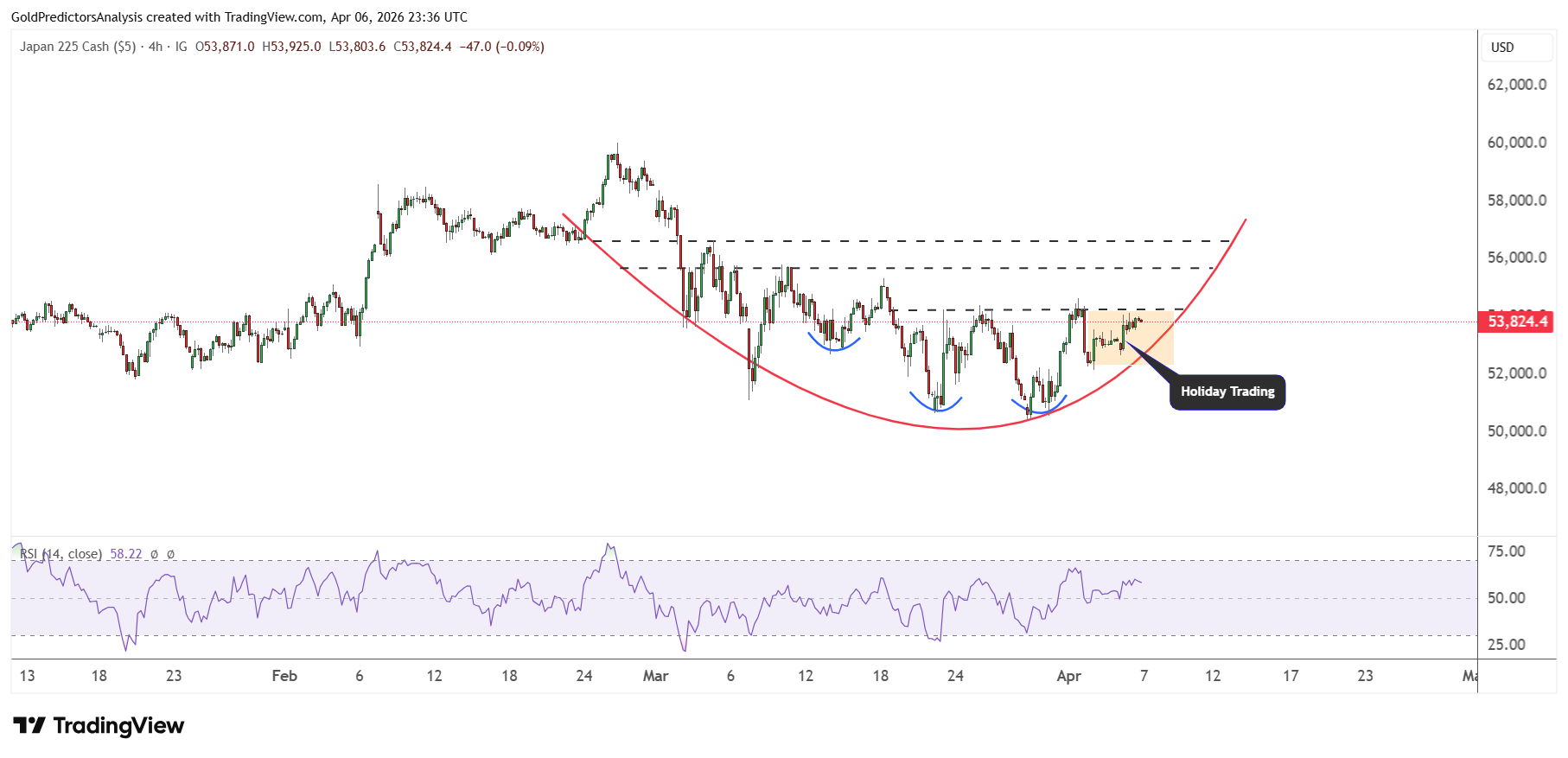
A break above $56,500 will open the door for further upside towards the $60,000 level. However, a break below $50,700 will indicate a further drop towards the $46,000 level.
The long term monthly chart discussed in the previous article shows that the index is expected to remain bullish. The Nikkei index is now in correction mode and looks for a bottom for next move higher.
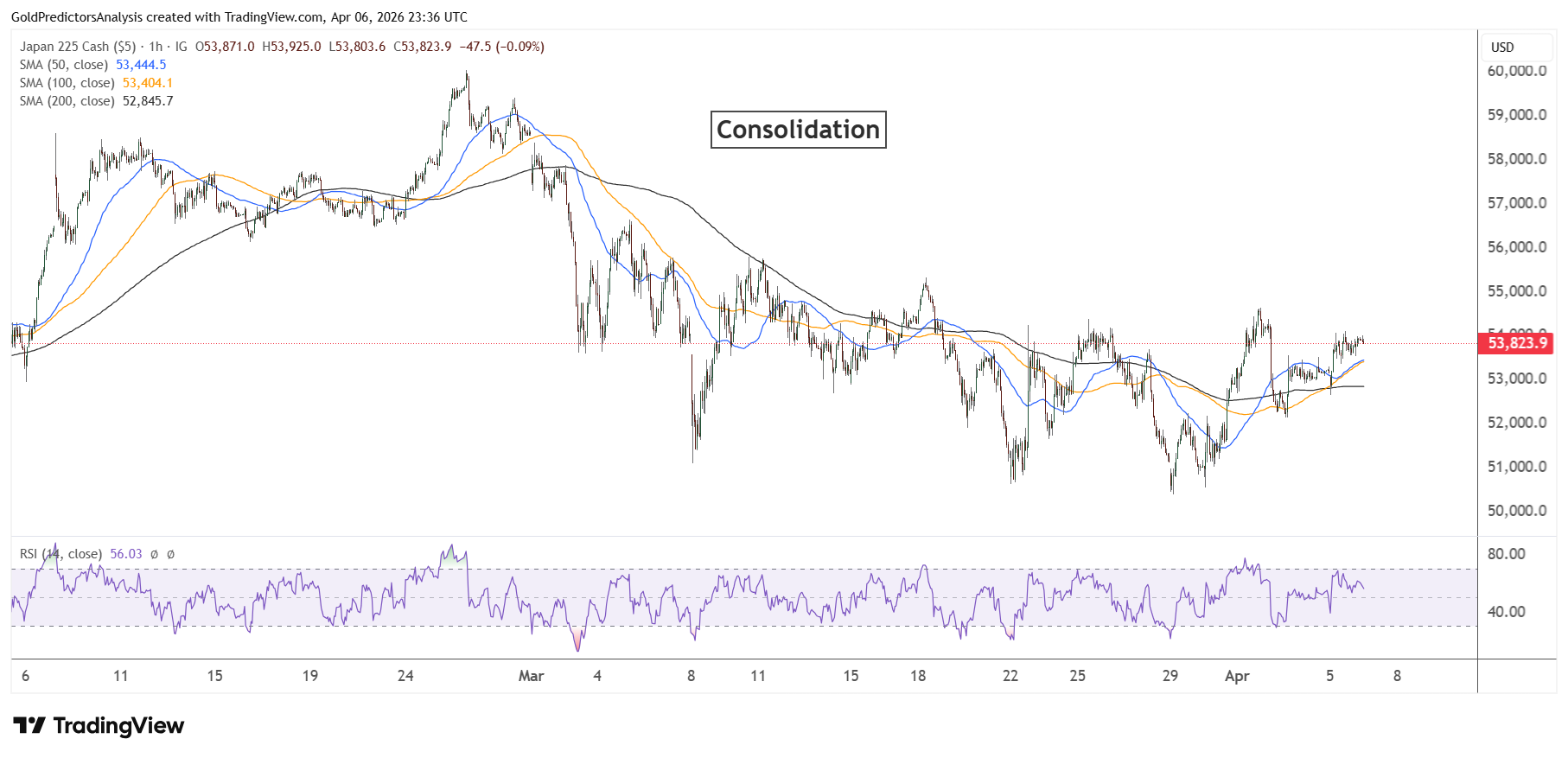
These short term consolidations are also observed on the hourly chart, where the index is consolidating between 50,000 and 54,000. The moving averages are now indicating no direction in the short term.
Conclusion
The Nikkei 225 is starting to recover due to several factors, such as sector rotations, decreasing volatility and positive momentum with semiconductors. Improving global market sentiment has also supported this positive momentum. However, the overall risk environment (geopolitical & oil) continues to remain a major contributor to the market’s sensitivity. A break above 56,500 will be bullish signal to target 60,000. On the other hand, a break below 50,700 will indicate deeper correction to 46,000.