
Crude oil prices dropped on Tuesday after a brief rally the previous day. Brent oil fell to $97, while WTI oil dropped to $91. This drop indicates that traders are not confident in the US-Iran peace talks. Some optimism had been baked into the market for a deal in May, which weighed on oil last month. But the mixed messages from Washington and Tehran have continued to keep uncertainties alive. This has helped oil prices to hold onto the full war-risk premium.
The primary reason is the Strait of Hormuz. A normal flow of tankers and a reduction in the supply-risk premium of crude oil would be possible if there is a clear deal between the USA and Iran. But if negotiations are not successful or Iran refrains from allowing the passage of shipping through the Gulf then oil prices may stay supported. The market is watching the headlines from both sides, the threats against Hormuz and the actual movement of tankers through the waterway.
Supply data also supports the oil in the short term. Crude exports to Asia and Europe surged to a record high in May as U.S. refiners found alternative sources of supplies amid the Middle East crisis. In my view, U.S. crude stocks will also drop due to strong demand in the physical market. Therefore, crude oil prices can remain volatile. A peace deal could have a negative impact on prices, but limited supply and shipping risks could support WTI and Brent at elevated levels.

WTI Oil Forecast: $80–$120 Range Defines the Next Move
The short-term outlook for WTI crude oil still shows strong consolidation between $80 and $120. Crude oil prices dropped from the $105 resistance level after hitting the black dotted trend line on May 19.
This drop hit the support of $87 and produced a rebound higher. A break above $94 in WTI crude oil will likely push prices toward $100. But a break below $87 will likely take prices toward the $80 area.
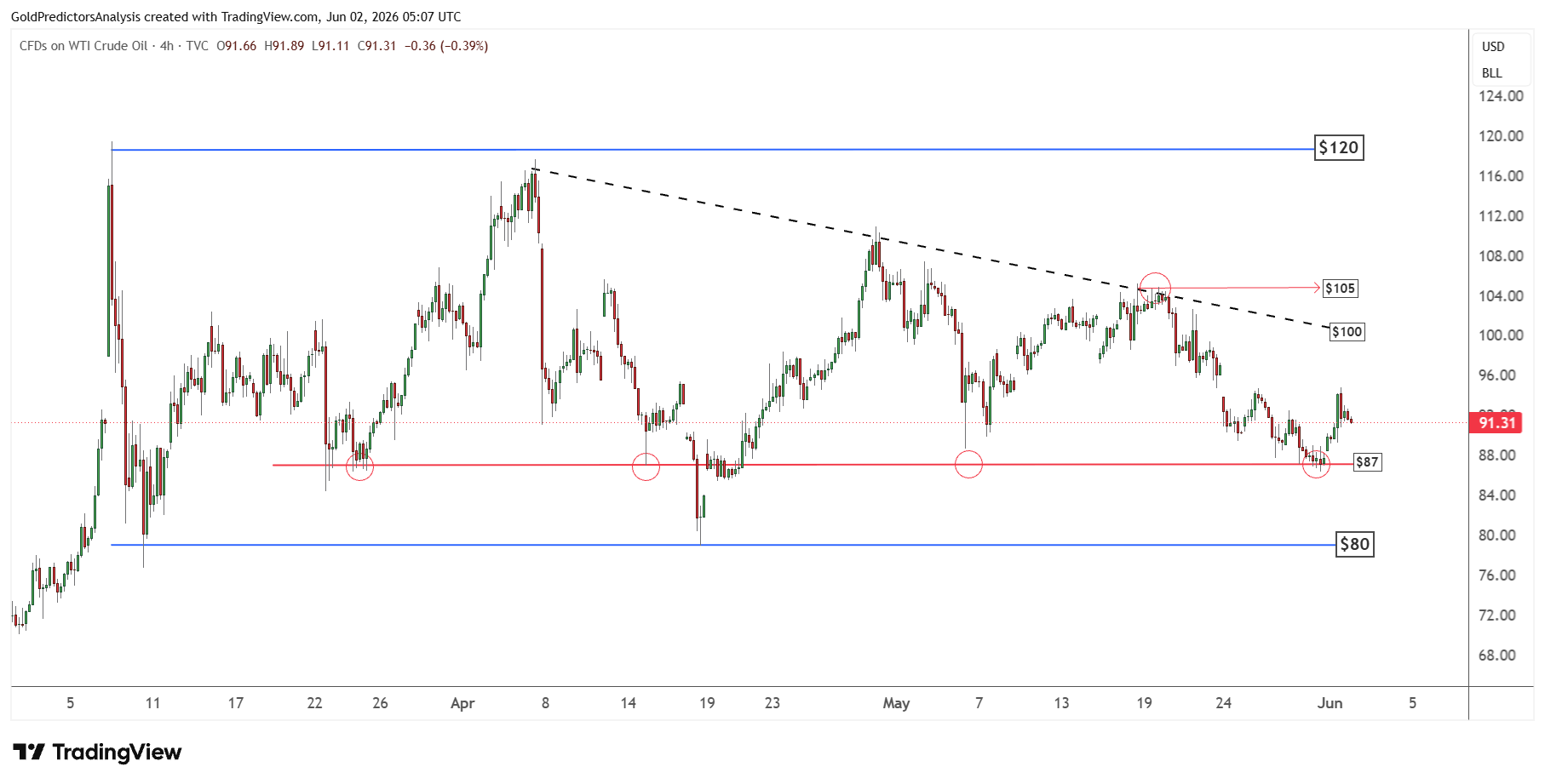
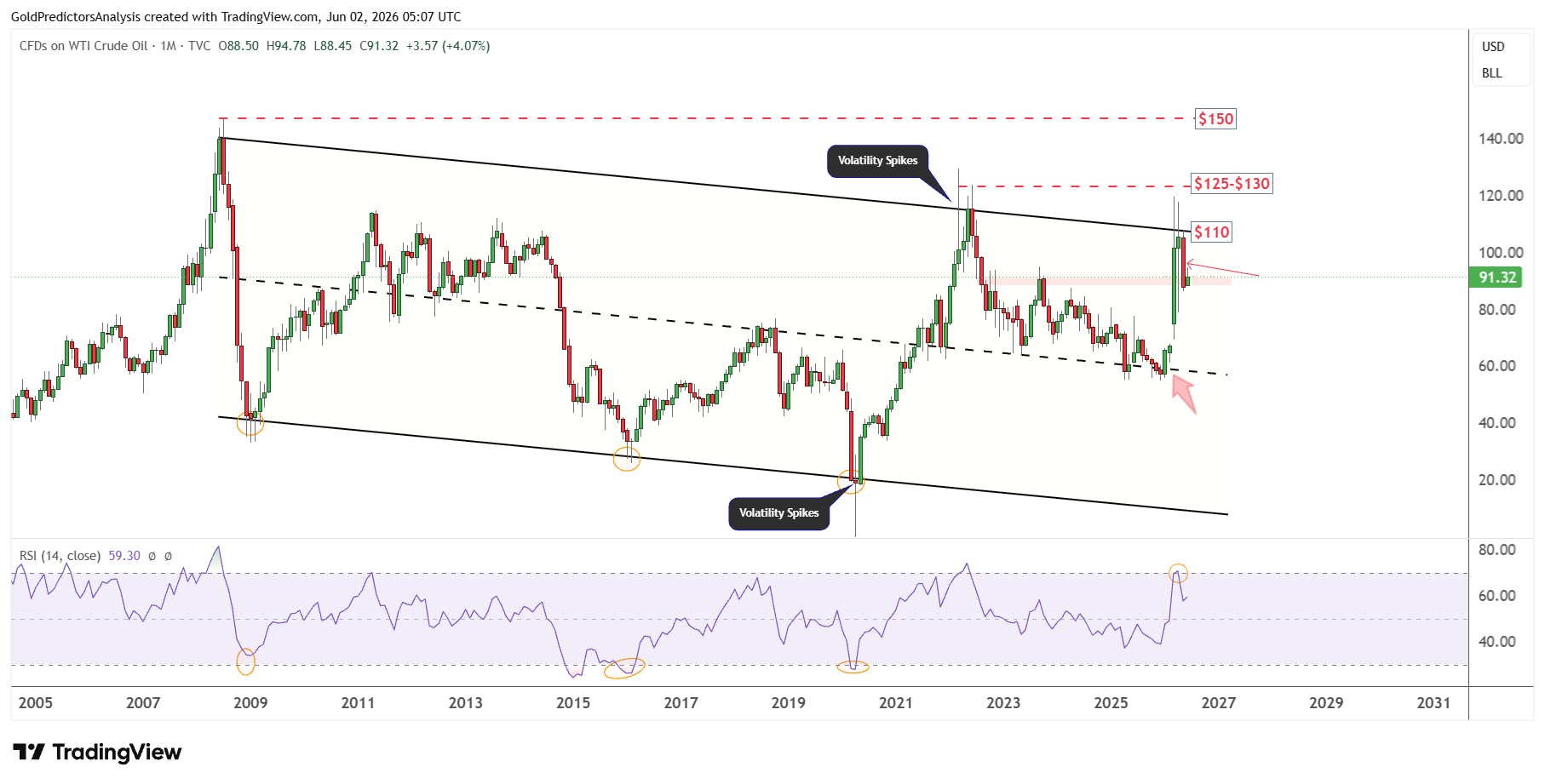
Until the $80 or $120 level is broken in WTI crude oil, the market remains highly volatile and shows strong consolidation. The long-term outlook for WTI crude oil also shows a strong correction in May 2026 from the long-term resistance of the $110 area.
This resistance stems from the descending channel pattern that is drawn from the July 2008 highs. Therefore, the correction was required to stabilize prices below $110. This correction was also important to push the RSI lower from overbought levels. But WTI crude oil is still holding the support zone of $80 and shows strong consolidation.
A break above $110 in WTI crude oil is required to push prices toward $130 and $150. Until then, prices will likely consolidate below $100 to stabilize and find the next move.
Brent Oil Price Forecast
Every new Brent Oil analysis as it publishes, today's technical signal and key levels, live price — on one page.
See all Brent Oil forecastsBrent Oil Forecast: $90 Support Remains the Key Level
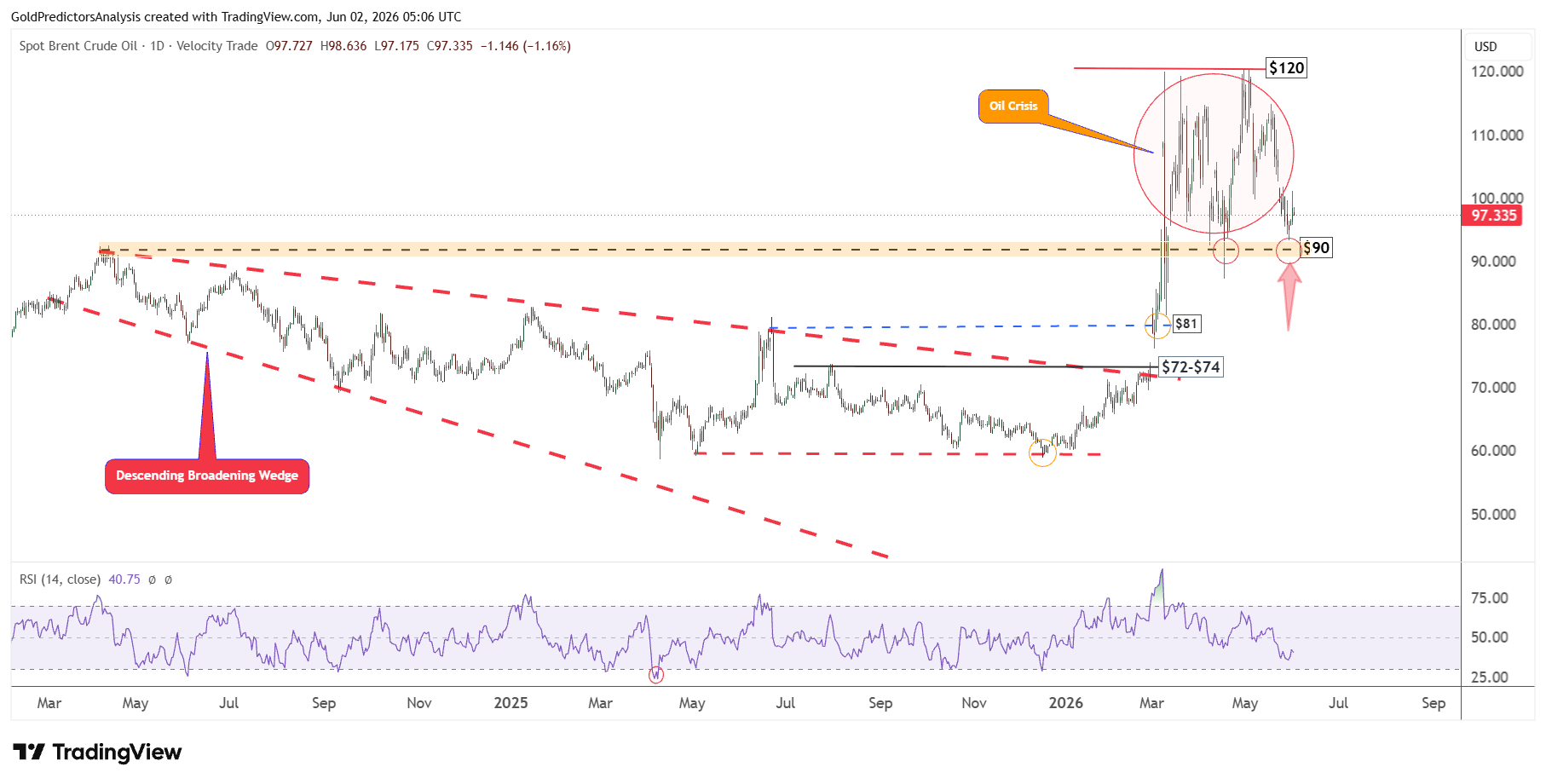
Brent crude oil also shows strong consolidation between $90 and $120. Despite this consolidation, the overall picture for Brent crude oil remains strongly bullish, as the price broke the descending broadening wedge pattern in February 2026.
After the breakout of the descending broadening wedge pattern, Brent crude oil also broke the $90 resistance. This resistance has now become the support level for the next move.
Last week’s drop in Brent crude oil already hit the upper end of the $90 range, which triggered a strong rebound. But the rebound is still weak, and the RSI remains above the support zone. This indicates that another drop may develop in the Brent crude oil market.
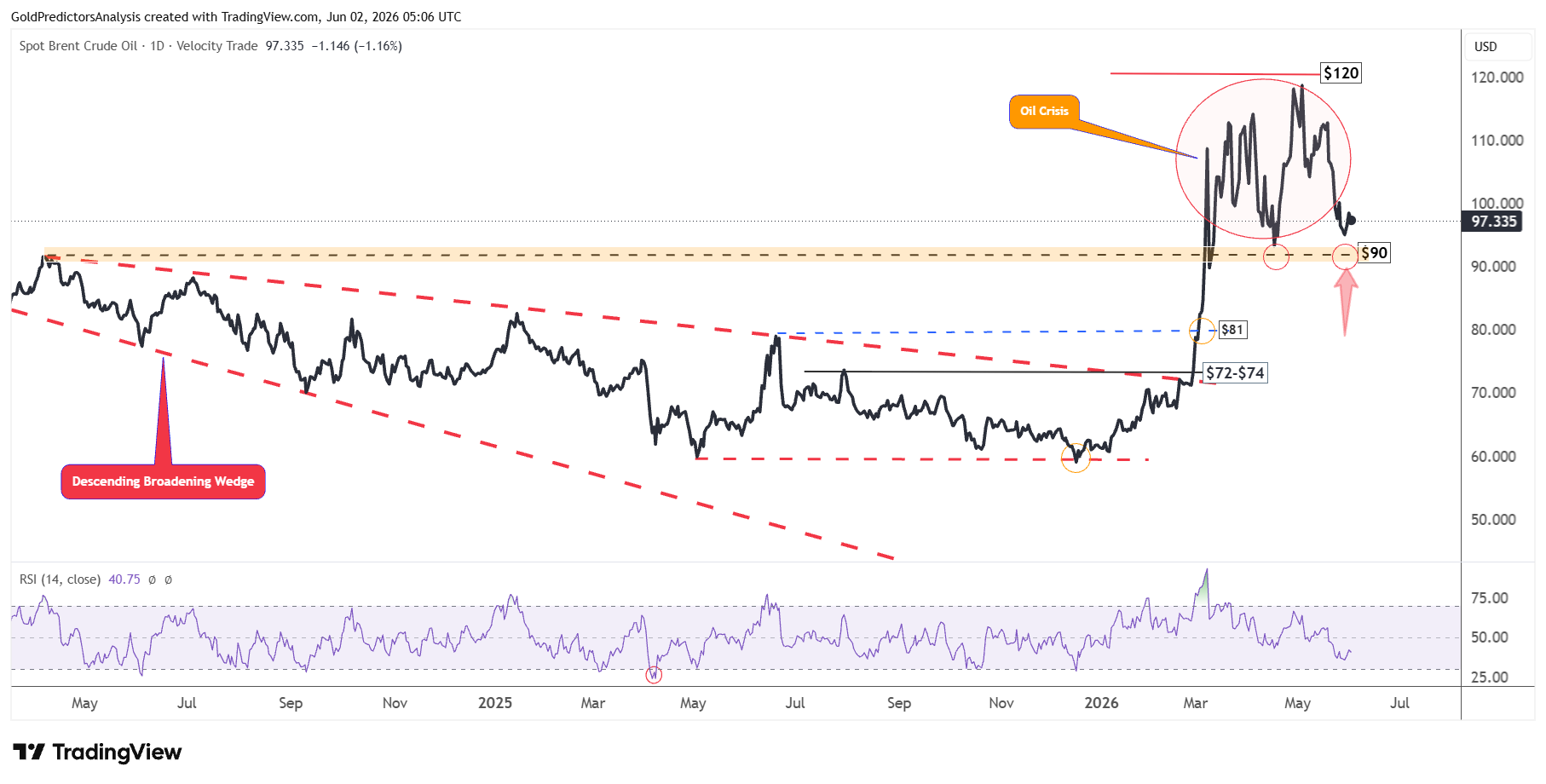
This support zone is clearer on the line chart, which shows that the price has hit slightly above the $90 area, which is above the April 2026 support. This suggests that the short term correction in Brent crude oil might not be over yet.
To initiate strong upward momentum in Brent crude oil, the price must break above the $120 area. A break below the $90 support will push prices toward the $80 region.
Bottom Line
Crude remains volatile as markets expect more concrete developments in the U.S.-Iran peace talks. Any agreement would bring the war-risk premium down and push WTI and Brent lower. But tight supplies, solid U.S. crude exports and falling inventories support prices. The prices for both WTI and Brent are stuck in the $80s and $90s and show no signs of breaking out of their respective ranges. A move above $120 is required to push the prices higher.
Read more: WTI and Brent Rebound as Iran Risk Revives Supply Fears