



Oil prices jumped on Thursday as the conflict in the Middle East escalates. Brent crude oil rose to about $96 a barrel, while WTI oil rose above $88. The United States launched another round of strikes on Iran. Meanwhile, Iran threatened to keep the Strait of Hormuz closed. These developments led to fear of a big supply disruption.
The threat has also spread to the Red Sea. Yemen’s Houthis have attacked Saudi oil tankers and declared naval blockade against Saudi Arabia. This creates the second major risk for global energy flows. Tankers can choose longer routes around Africa and avoid the Red Sea. This would increase shipping, fuel and insurance costs. It may also cause a delay in deliveries to Europe and Asia. The further escalation of the conflict in the Middle East will boost the Brent and WTI prices.
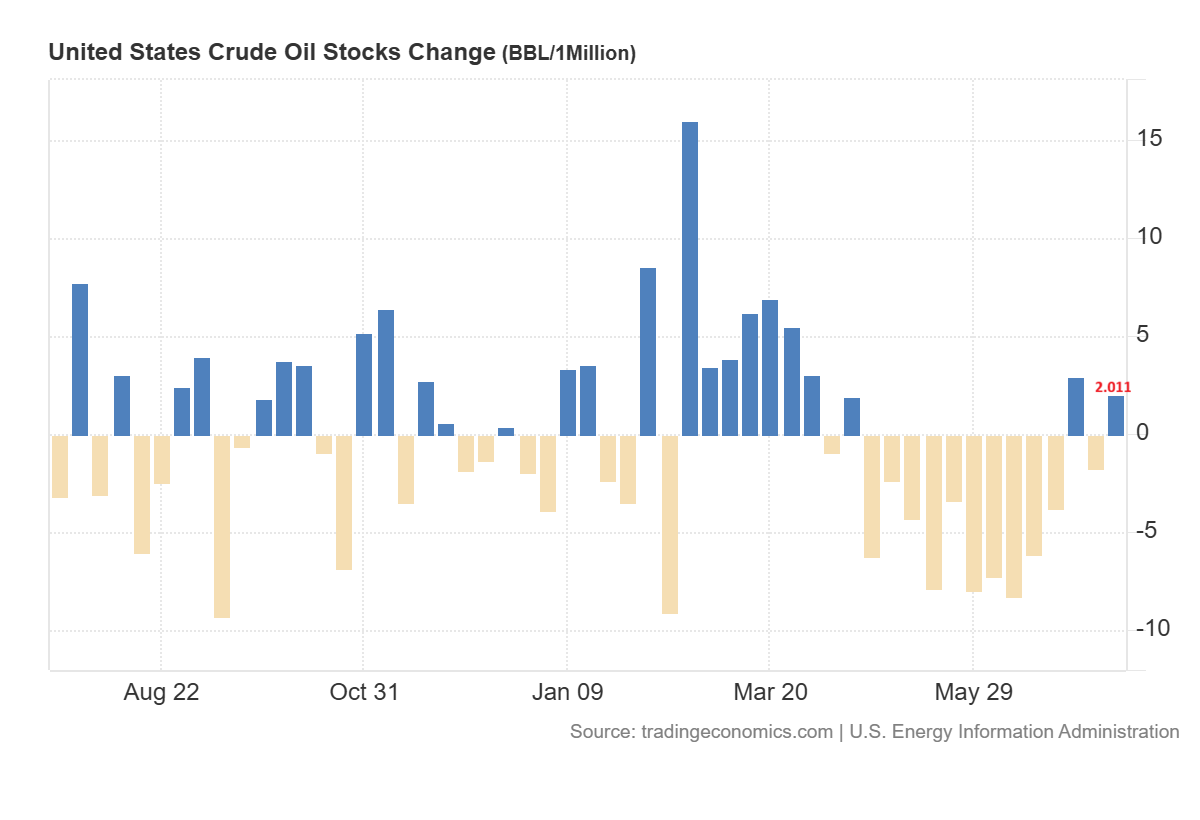
The U.S. crude inventories rose by 2 million barrels. But inventory data may have less influence as the major shipping routes are still at risk. The oil prices may continue to surge if the Strait of Hormuz remains closed and tensions in the Red Sea escalate. The military tensions must be reduced to eliminate current supply premium in the market.
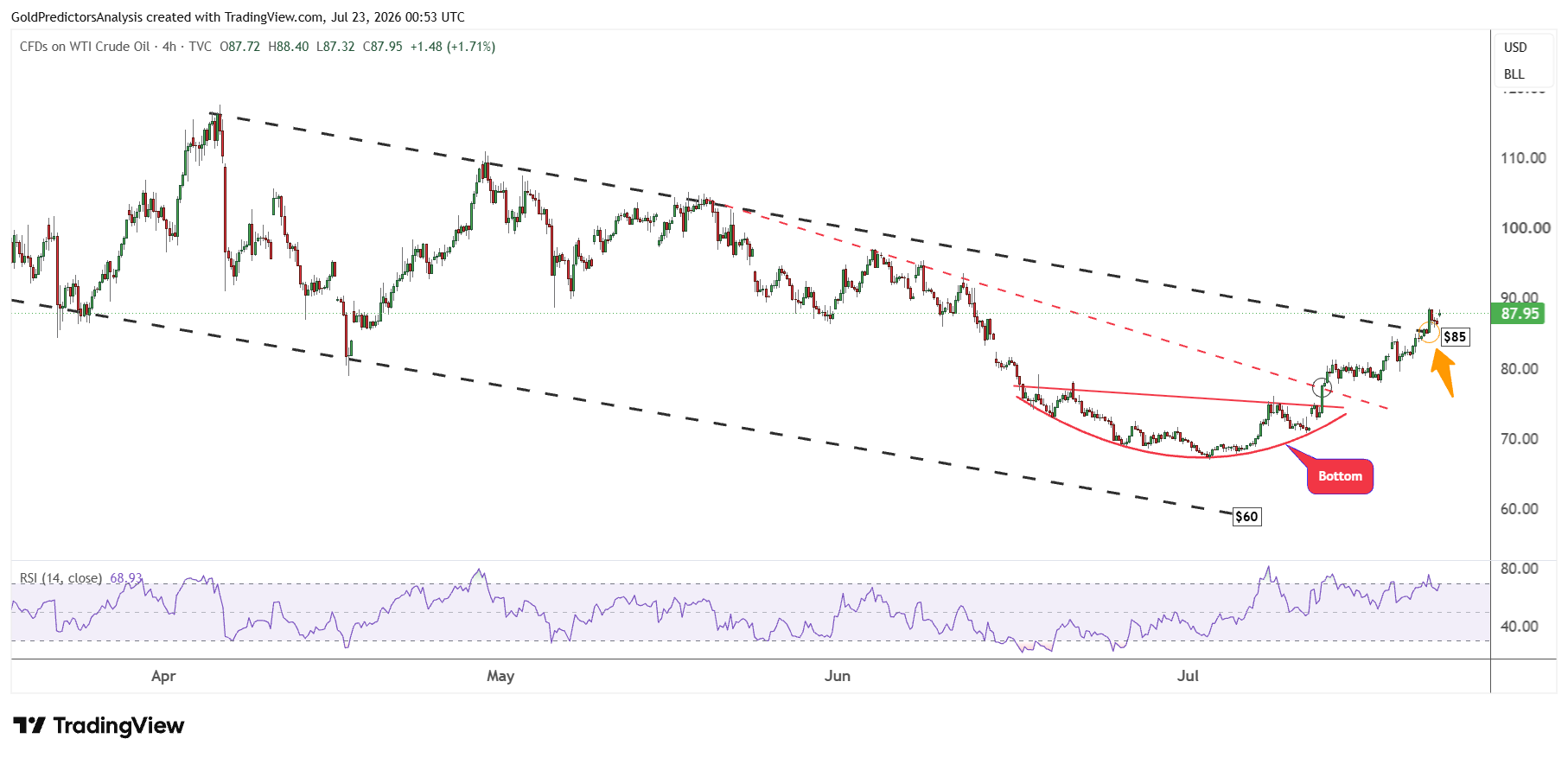
WTI Technical Analysis – Breakout Targets $109 and $120
WTI crude oil has broken above the $85 area as seen in the 4-hour chart below. This breakout has opened the door for strong rally toward the immediate resistance in the $93 to $96 area. As long as the price holds the $80 support, momentum in WTI crude oil will likely develop toward $109 in the short term.
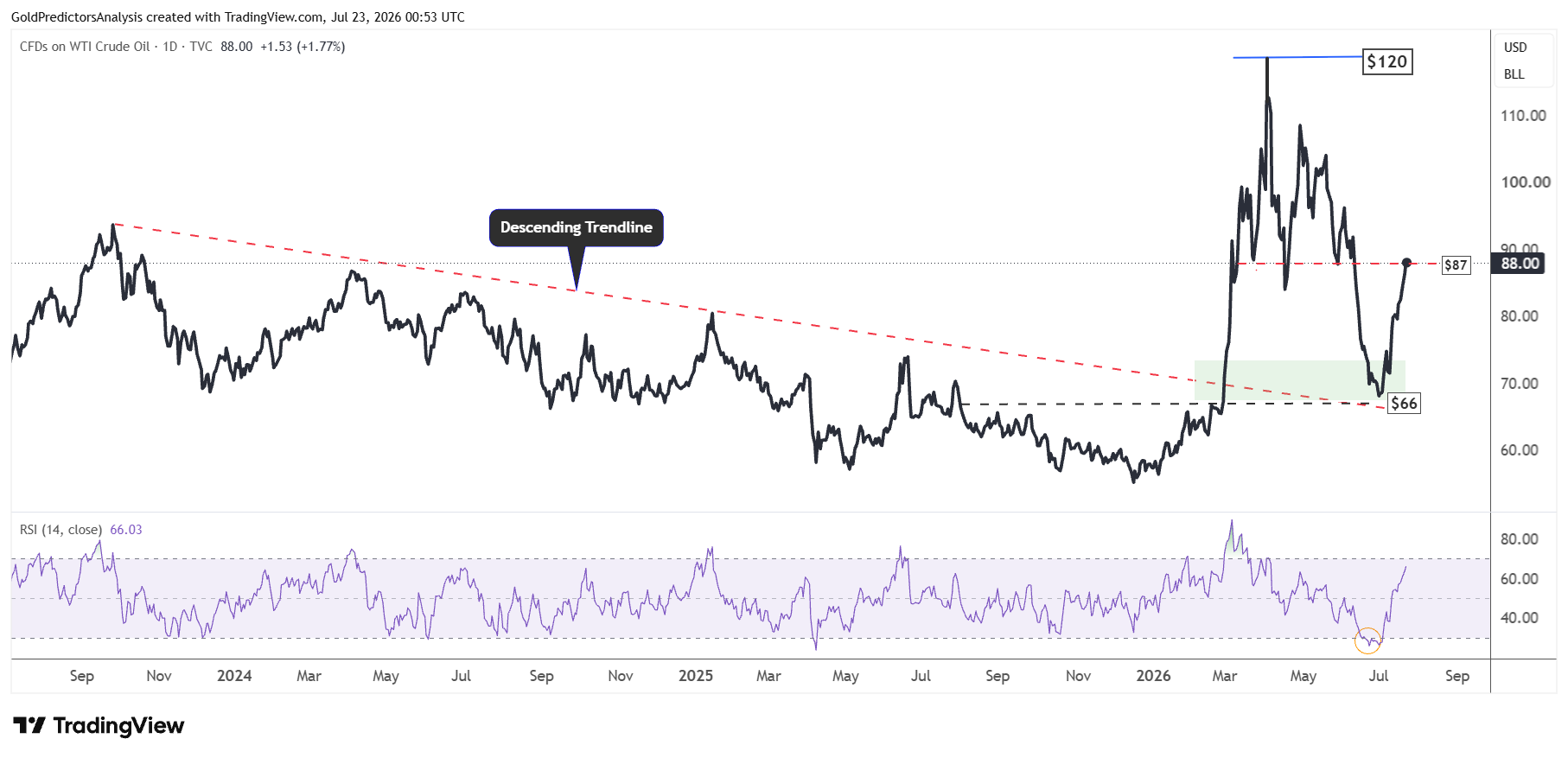
The daily chart for WTI crude oil also shows strong support around $66. This support is defined by descending trend line stretching from the September 2023 highs. The strong rebound from $66 indicates that the overall price structure for WTI remains bullish. The price has already reached $87. A break above $87 will further push the price toward $109 in the short term.
The ongoing escalation in the Middle East crisis has opened the door for strong surge toward $120 in the next few weeks.
Brent Oil Price Forecast
Every new Brent Oil analysis as it publishes, today's technical signal and key levels, live price — on one page.
See all Brent Oil forecastsBrent Technical Analysis – Break Above $90 Targets $110
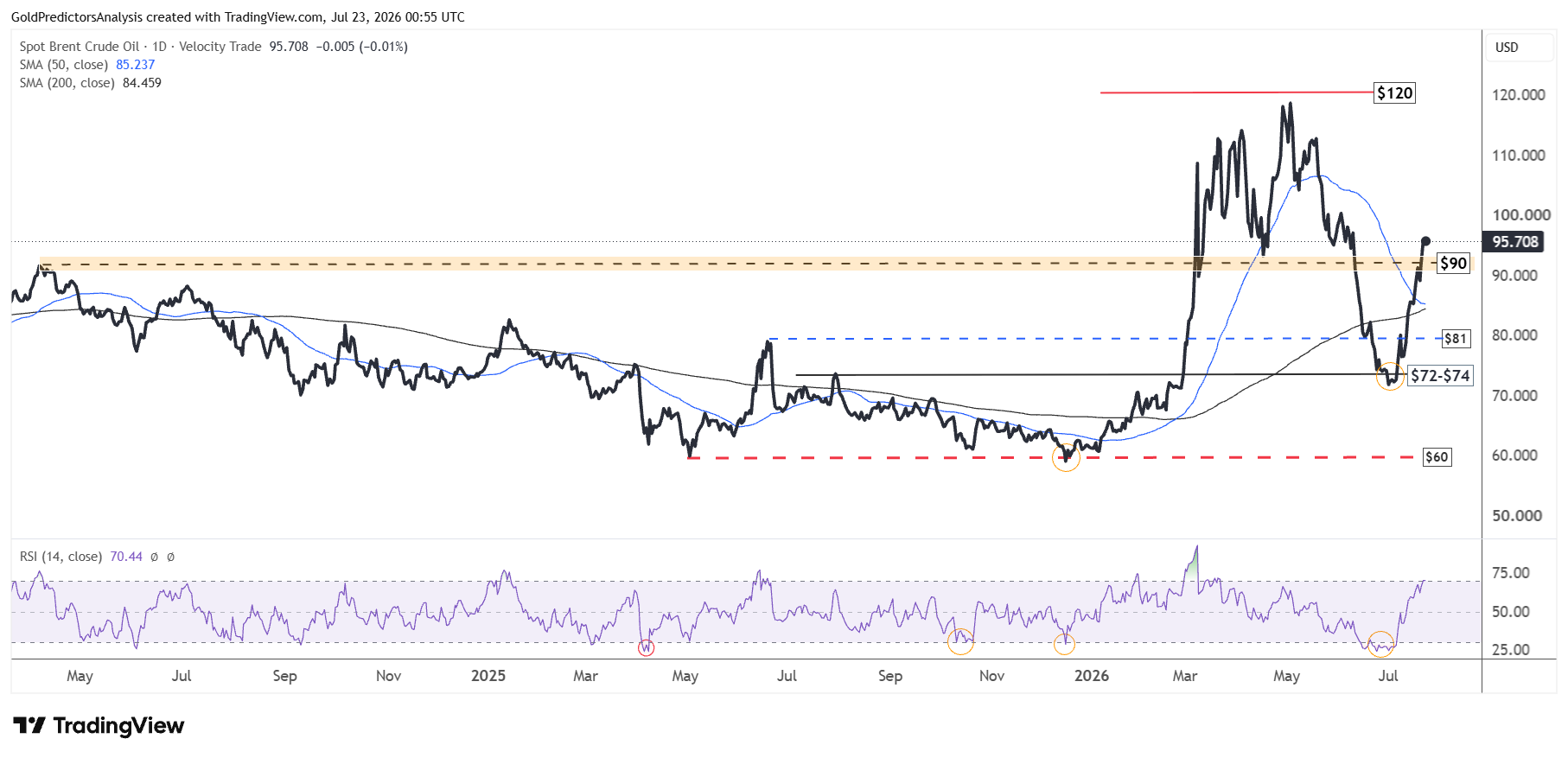
The daily chart for Brent crude oil shows bullish momentum after a strong rebound from the $72 support area. This support is defined by the horizontal support line stretching from the July 2024 highs.
The price has already broken above the $90 resistance and is now looking for further rally toward the $110 region. The 50-day SMA remains above the 200-day SMA and the price has already recovered above $90. This indicates that the short term momentum in Brent crude oil remains strongly bullish. The RSI has already reached near the 70 level, but the possibility of further upside in the short term remains high. As long as the $90 support holds, the price will likely rally toward $110 in the short term.
The weekly chart for Brent crude oil also shows a strong rebound from the $70 support region and a recovery above the 50-week and 200-week SMAs. The weekly candles point toward $100 as the immediate target of this rebound. However, prices are likely to continue rallying due to the geopolitical developments in the Middle East.
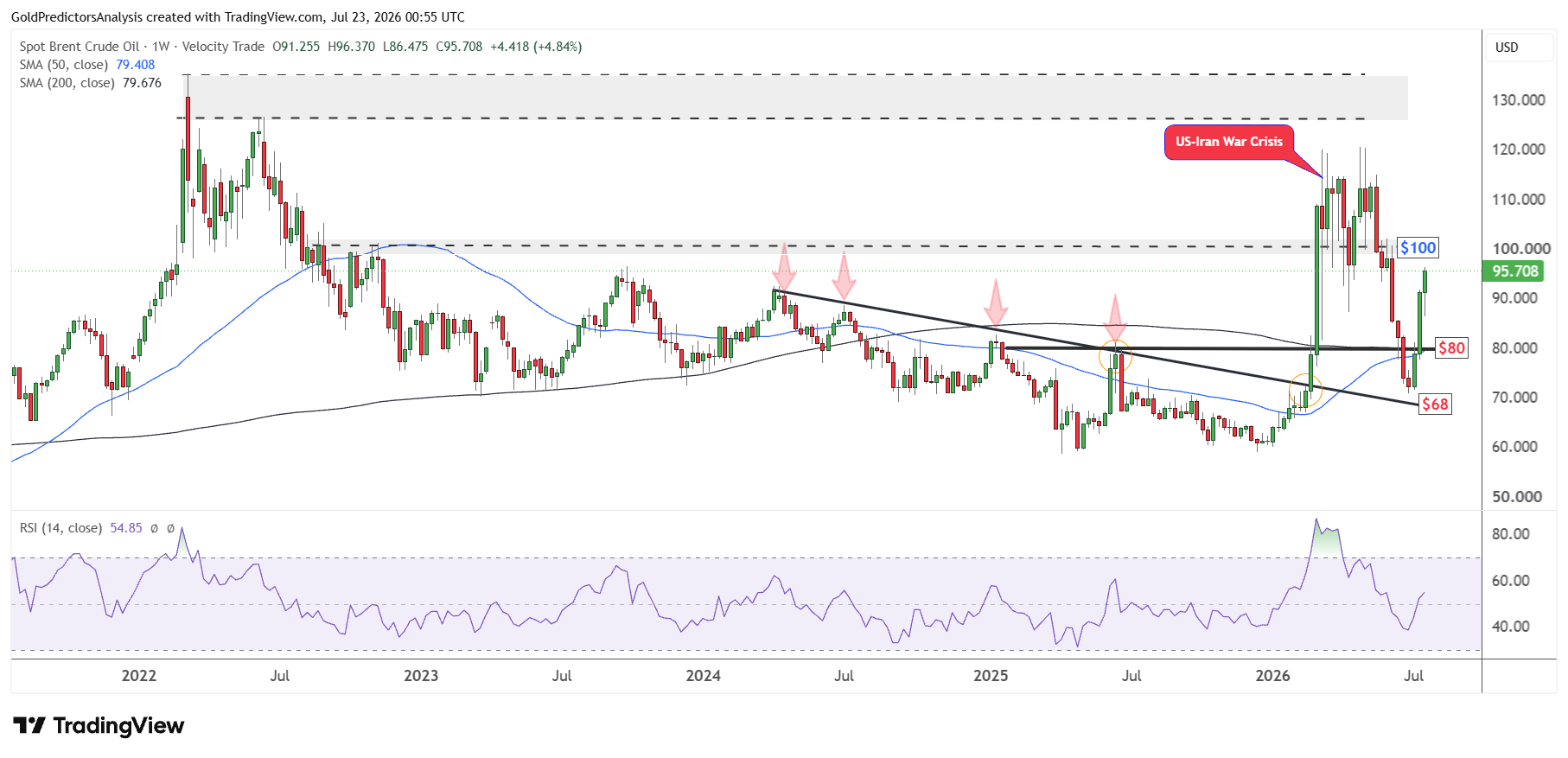
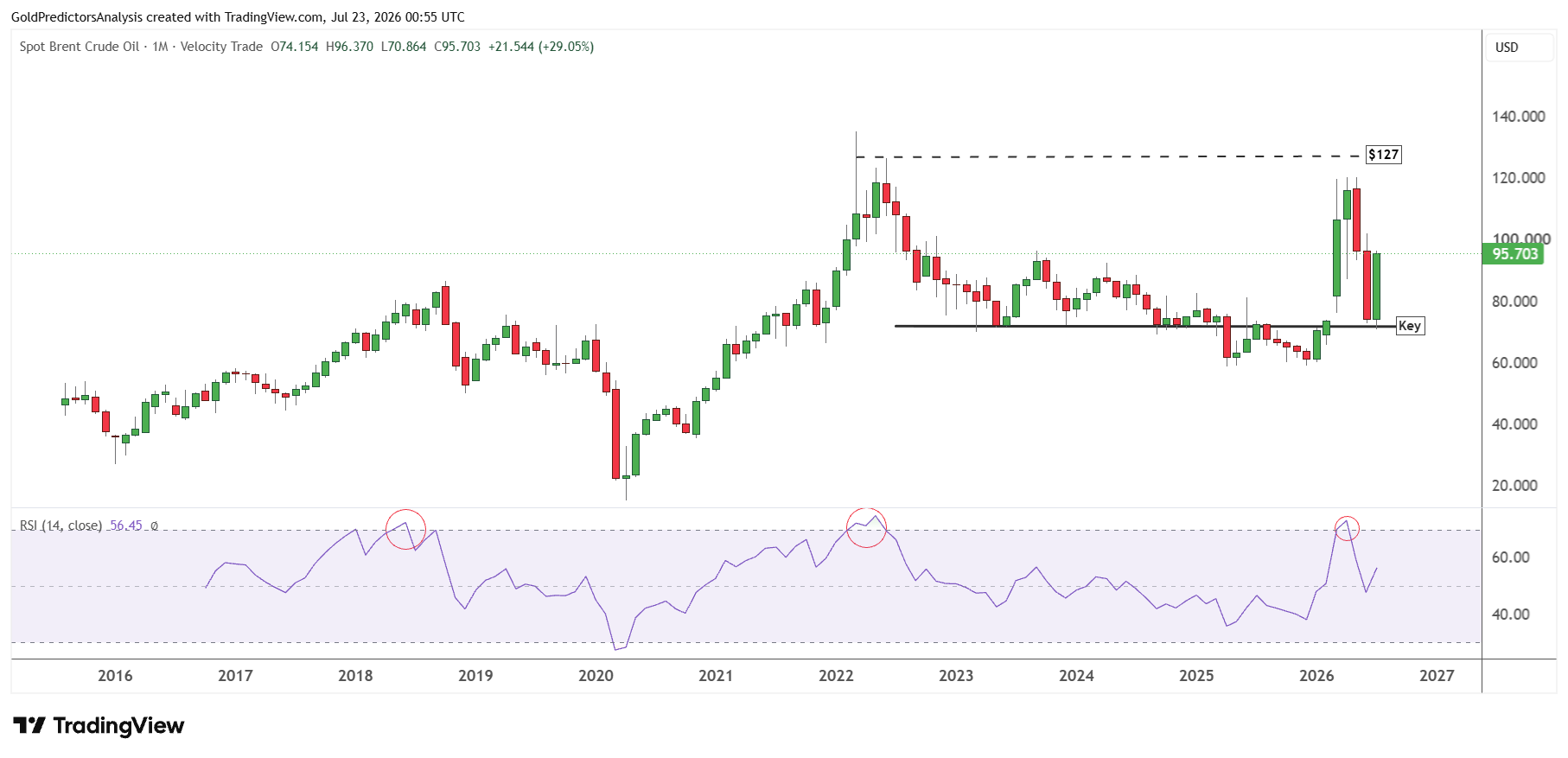
The monthly chart for Brent crude oil also shows that the price failed to break below the key level at $70 and initiated a strong rally. The rebound in July has already recovered 90% of the June losses. The June high was $102.12 and a break above this level will indicate a further rise in the price. The monthly chart for Brent crude oil also shows that the price failed to break below this key support at $72. This increases the possibility of strong rally in the next few weeks.
Bottom Line
Oil prices remain strongly supported as the conflict threatens supplies through the Strait of Hormuz and the Red Sea. WTI oil has broken above the key resistance and may continue to rally to $109 if the price stays above $80. Brent oil has also broken above $90 and may target $110 in the short term. A break above the June high could open the door toward $120 in Brent oil.
Read more: Red Sea Supply Risks Could Push Crude Oil to $120