
Oil prices recovered on Thursday following big decline in the previous session. Traders reconsidered the prospect of a Middle East peace deal and were more cautious. Brent oil rallied to over $105 and WTI oil regained ground to close near $97. The shift is a sign that the market’s confidence that the war premium is gone is not complete. There could be peace talks but the results are uncertain. This uncertainty is continuing to support oil prices following Wednesday’s drop.

Oil Prices Rebound as Peace Outlook Remains Uncertain
Oil prices fell sharply on Wednesday as investors grew optimistic that the Middle East war may be coming to an end. The slide was only temporary, though. President Donald Trump declared that it is too early for direct negotiations with Tehran. Iran also claimed that the U.S. offer was more of a wish list than a real offer. These comments lessened some of the initial optimism and oil prices began to climb once again.
Now Iran is considering the U.S. peace proposal, which might pave the way to a formal end to the conflict. But some key questions have yet to be answered. These include Iran’s nuclear program and the reopening of the Strait of Hormuz. It is important for oil because the Strait is one of the world’s most important key shipping lanes. Both sides were nearing a single-page memorandum, said a mediation source in Pakistan. The U.S. has also given Iran 48 hours to respond. Nevertheless, traders are wary since a draft deal is not equivalent to a peace deal.
Oil supply could remain tight over the next few weeks, even if both sides reach an agreement. Restoring flows from the Middle East Gulf will take time to get to the refiners. This will allow oil firms to pump out of storage tanks during the busy summer season. Crude and fuel inventories in the U.S. also dipped last week which indicates that the market is already consuming supplies. Crude stocks dropped by 2.3 million barrels to 457.2 million barrels. This is why oil prices might remain high until real supply data improves.
Oil Technical Analysis: Brent Holds Key Support as WTI Stays Range-Bound
The daily chart for Brent crude oil shows that the price has been consolidating between $80 and $120 over the past two months. The price again formed a bottom at the $90 area after breaking out of the descending wedge pattern, which indicates constructive and bullish price action.
Brent Oil Price Forecast
Every new Brent Oil analysis as it publishes, today's technical signal and key levels, live price — on one page.
See all Brent Oil forecasts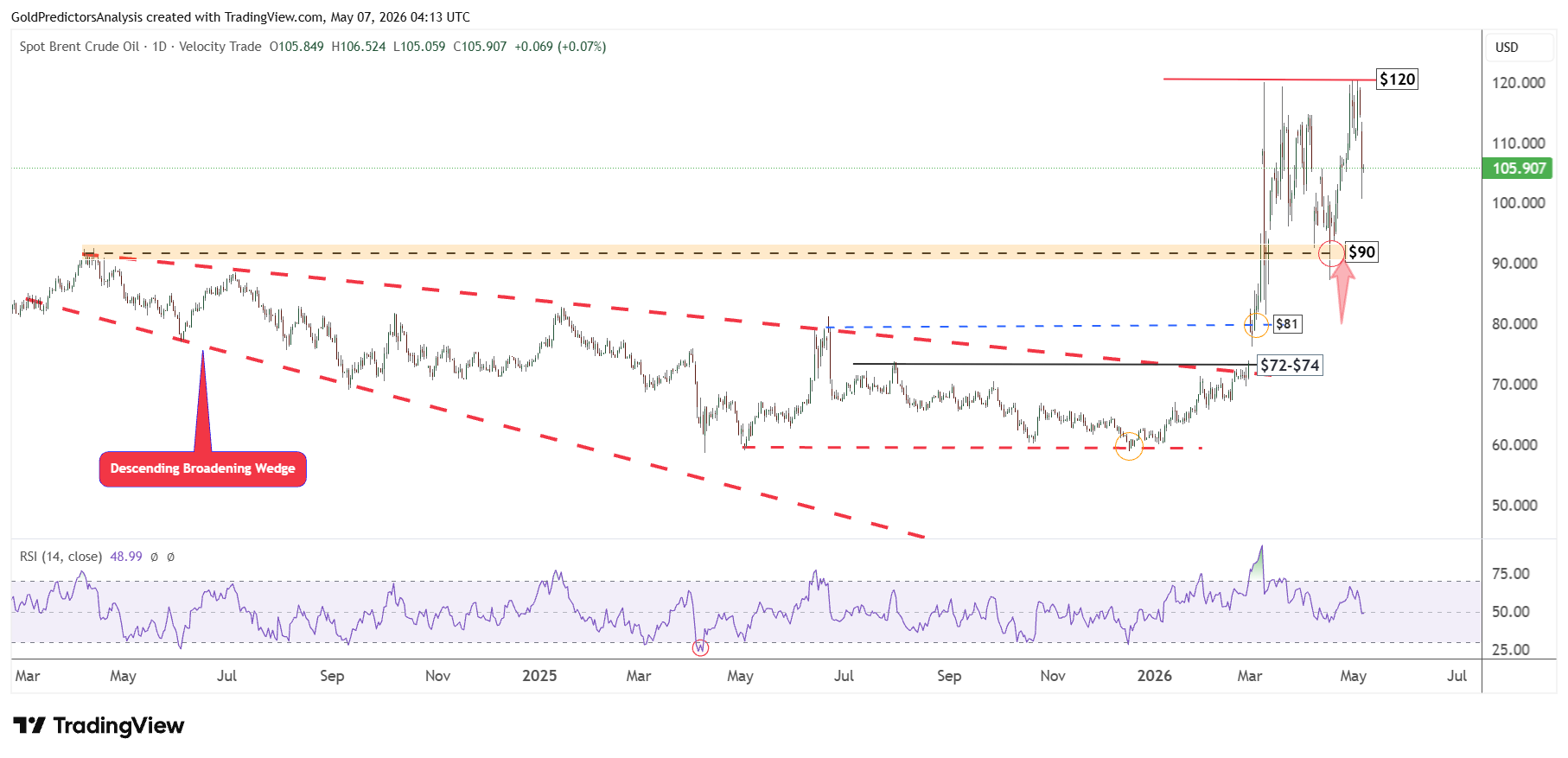
However, the price needs to break above $120 to initiate further upside in the Brent crude oil market. The bullish price structure suggests that if Brent crude oil remains above the $80 area, the next move might be higher if supply concerns do not resolve.
This bullish price action is also observed on the weekly chart, which shows a strong surge in Brent crude oil prices after the breakout from the descending trend line in February 2026.
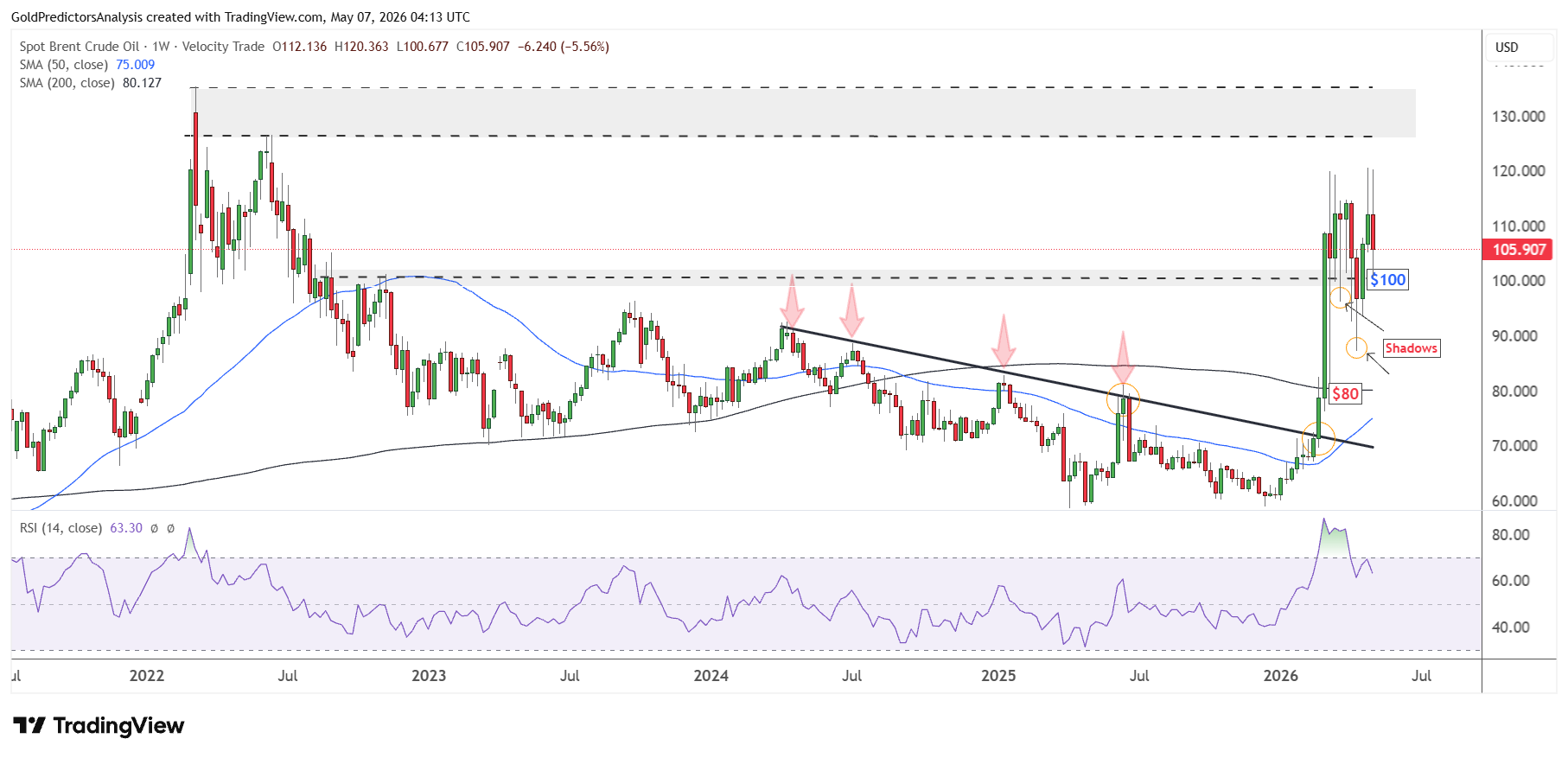
This surge indicates that if Brent oil holds the $80 support, prices may escalate toward $125-$135 zone. However, any peace deal and the resumption of oil flows to the Strait would likely keep prices in consolidation between $80 and $120 for the next few weeks.
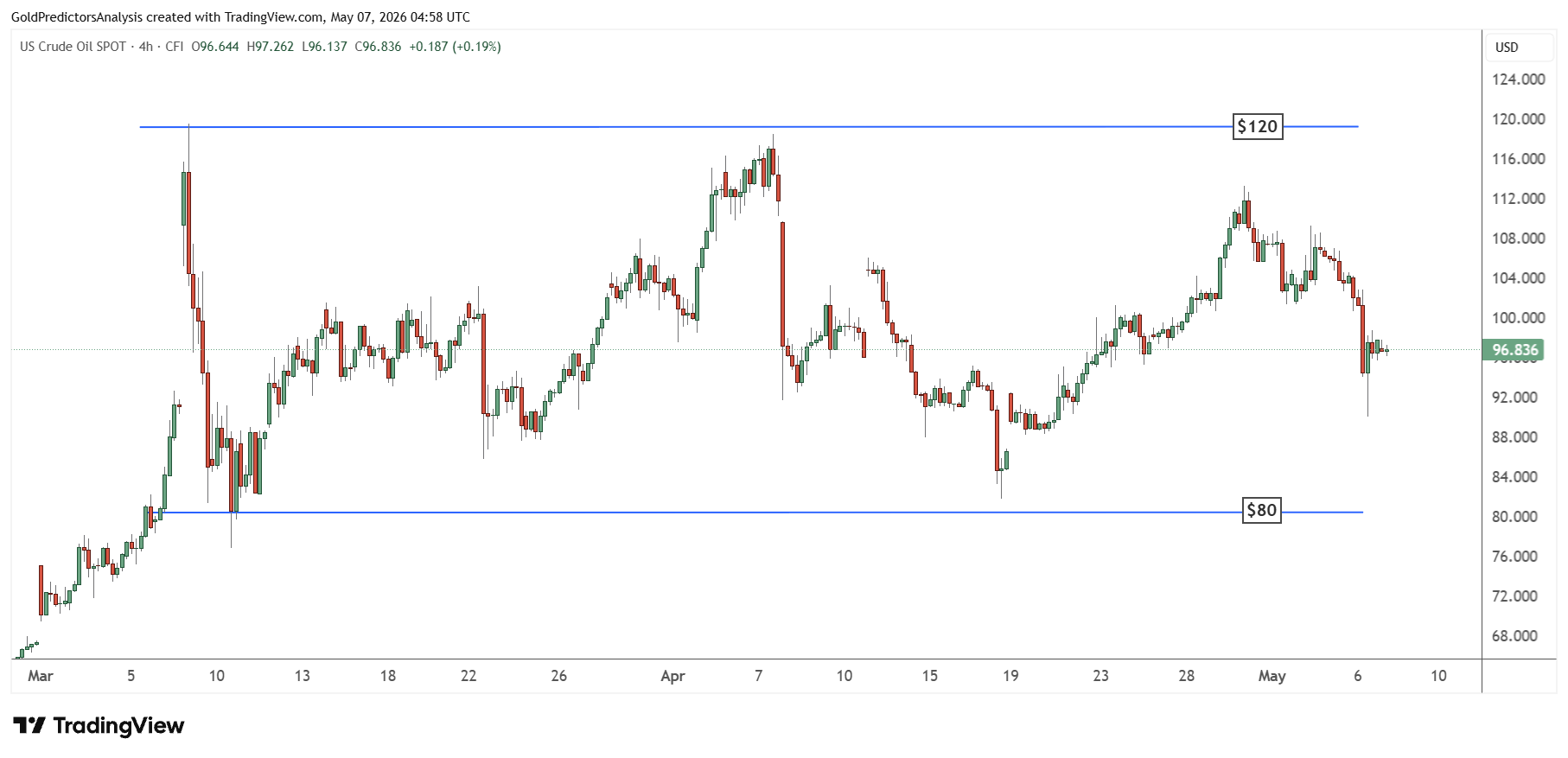
WTI crude oil also shows strong consolidation between $80 and $120, as seen in the 4-hour chart below. Since the price surged to $113, which is very close to $120, the price again dropped. This kind of price action indicates short-term consolidation without any direction.
Bottom Line
Oil prices continue to swing between optimism of peace and concerns about constrained supply. A final agreement might be able to cut down on the war premium, but it would not fix the supply issues immediately. It will take time for oil flows from the Middle East Gulf to get back to normal and U.S. stocks are already under pressure. This helps support Brent and WTI in the short term.
Technically, Brent will require a move above $120 to validate the more bullish move, with the $80 region being important support. Oil prices might remain in a broad range with a slight bullish bias until traders have clear signs of a peace agreement and improvement in oil flows.
If you’d like to know more about how to trade crude oil, please visit our educational area.