
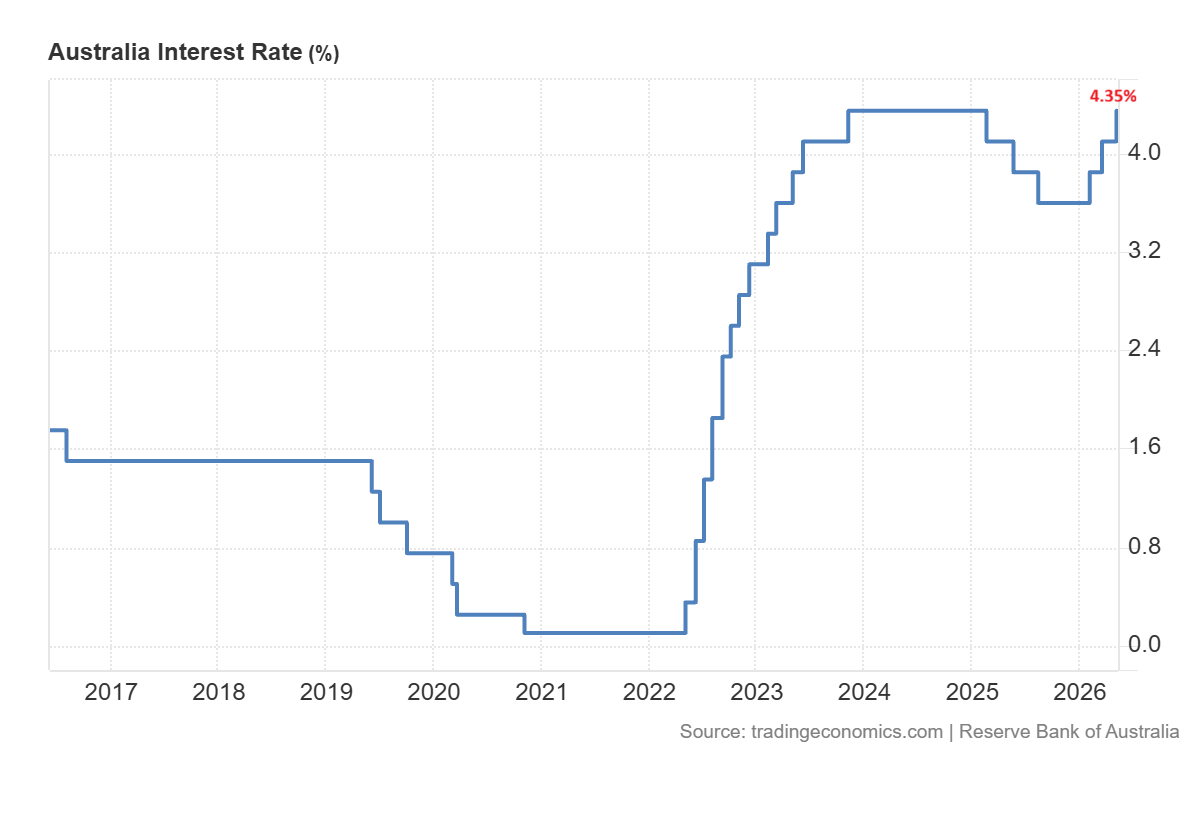
Australia’s interest rate picture has become more complex in the wake of the RBA’s hike in the cash rate to 4.35%. The move comes as oil driven inflation collides with weaker growth, fragile confidence and rising household pressures. The central bank needs to control inflation. But the next policy move will be more difficult to determine due to a slowdown in business activity and international risks stemming from the U.S.-Iran conflict. This article presents the latest outlook and forecast for the RBA interest rate and how this will affect the AUDUSD and ASX 200 as markets prepare to deal with inflation risks and economic growth.

Oil-Driven Inflation Keeps Australian Rate Hike Risk Alive
Sticky Inflation Pushes Policy Back Into Restrictive Territory
RBA policy has returned to a restrictive stance with the latest decision. The central bank raised the cash rate to 4.35% and Governor Michele Bullock indicated that the board has more scope to monitor inflation risks and downside risks to growth. This move was due to the oil fuelled inflation pressure forcing the bank to raise its inflation expectations significantly.
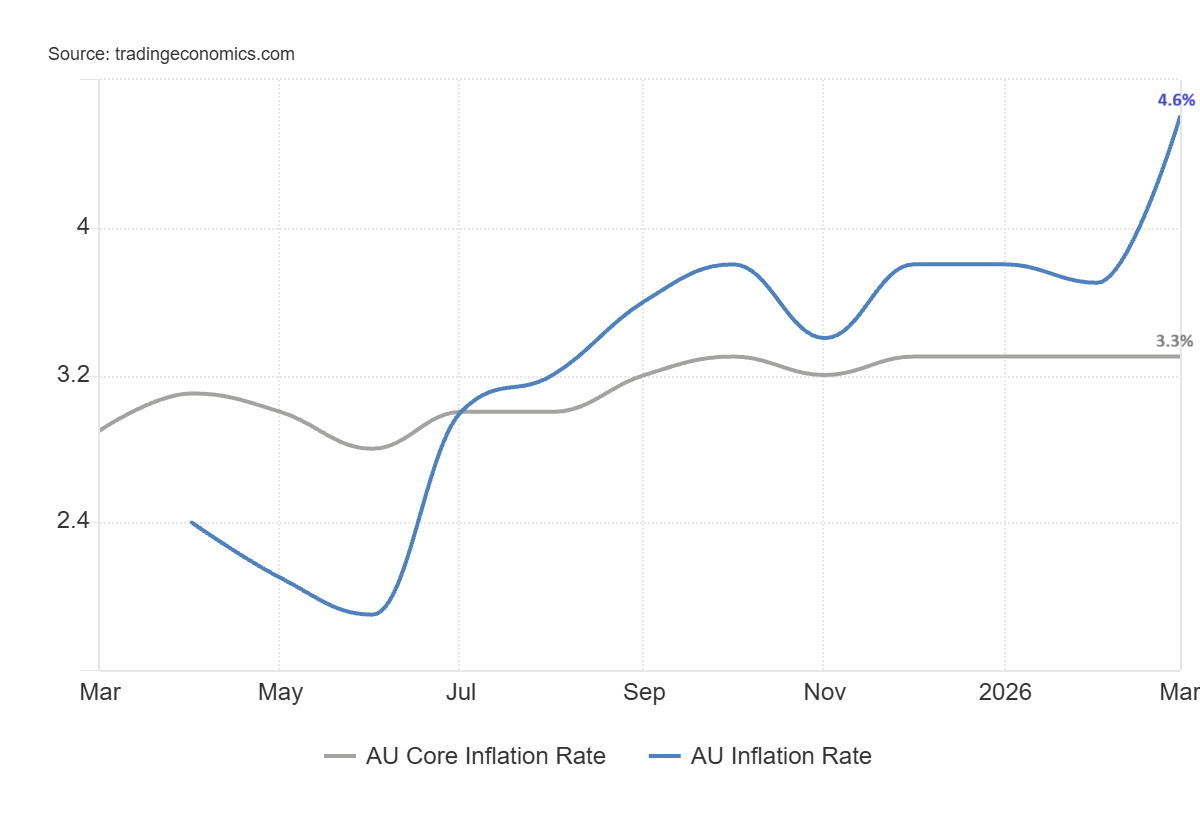
The bottom line is that inflation has proven more difficult to manage. The chart below shows that the headline CPI has increased to 4.6% and core inflation has been higher than the RBA’s 2-3% target zone.
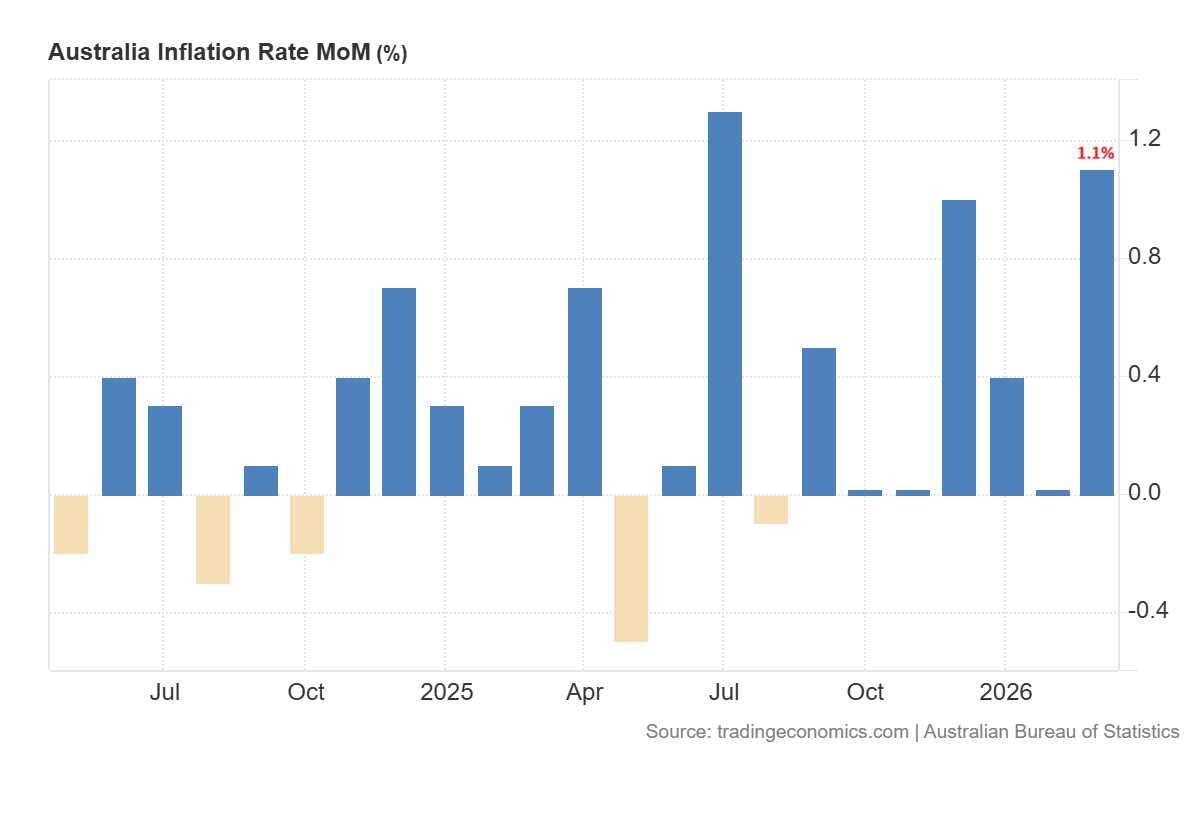
This increment was 1.1% higher in March as compared to the last month.
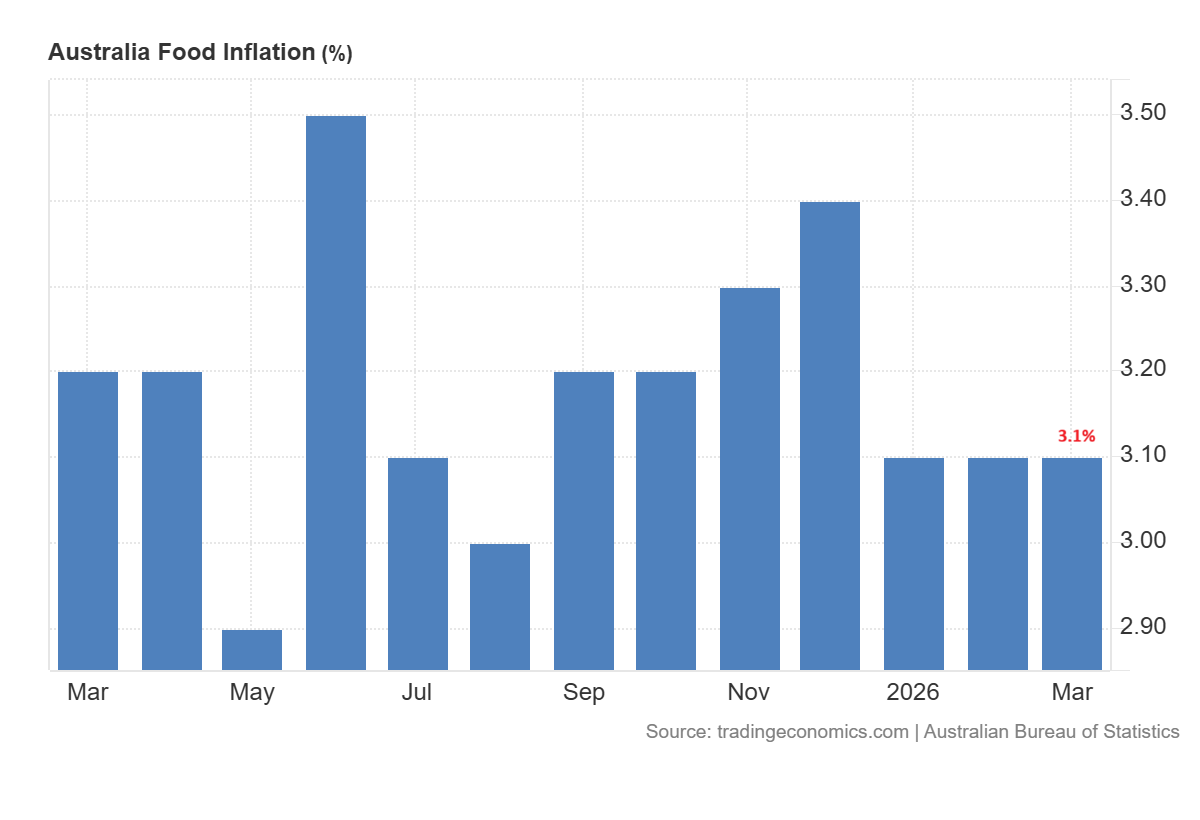
The cost of food in Australia does not show a big impact yet but if the WTI oil prices remain above $100 per barrel in May and June, the food inflation will likely see the impact.
That’s important because the RBA responds not just to current inflation. It also responds to the threat that households and firms start anticipating higher inflation for longer. When this occurs, businesses start charging more, employees start demanding more pay and the central bank has to keep interest rates higher to stop the trend.
The major shock is fuel prices. Fuel prices have a direct impact on the price of transport. They also raise the costs of business throughout the chains of supply. This can permeate food, services, retail prices and wages. The RBA pointed out that increases in fuel prices are also contributing to inflation and can have second round effects. That’s why the May rate increase wasn’t simply in response to one data point. This was done to prevent the temporary inflation in energy prices from becoming a broader inflation issue.
Oil Prices and Strait of Hormuz Risk Shape the June Outlook
Now the outlook is uncertain regarding the rate and depends on the Strait of Hormuz. If the Strait remains closed and oil prices remain above $100, the inflation may surge to 5%. That would put additional strains on the RBA to maintain high rates. If the war heats up and oil prices rise, the RBA will likely be forced to hike rates. If the war cools down and oil prices retreat, the RBA might pause and wait for earlier rate hikes to curb demand.
This view is already reflected in market prices. In the wake of the decision, the Australian dollar was seen edging slightly lower and bond yields for three years tumbled as markets wagered on the chances of a further interest rate increase being unlikely. The response to this increase in May was construed as hawkish but not necessarily the beginning of new aggressive cycle. The swaps suggest that there is only slight risk that it will rise again in June.
Australia’s Economy Faces Pressure From Higher Rates and Oil Prices
Weak Growth Limits the RBA’s Room for More Tightening
The RBA is in a tight situation. Inflation is too high while growth is beginning to weaken. This makes the interest rate outlook more complicated than normal tightening cycle. The central bank needs to tame inflation without aggravating the economic slowdown further.
The economy is still expanding but only slightly. The S&P Global Australia Composite PMI bounced back to 50.4 in April up from 46.6 in March.
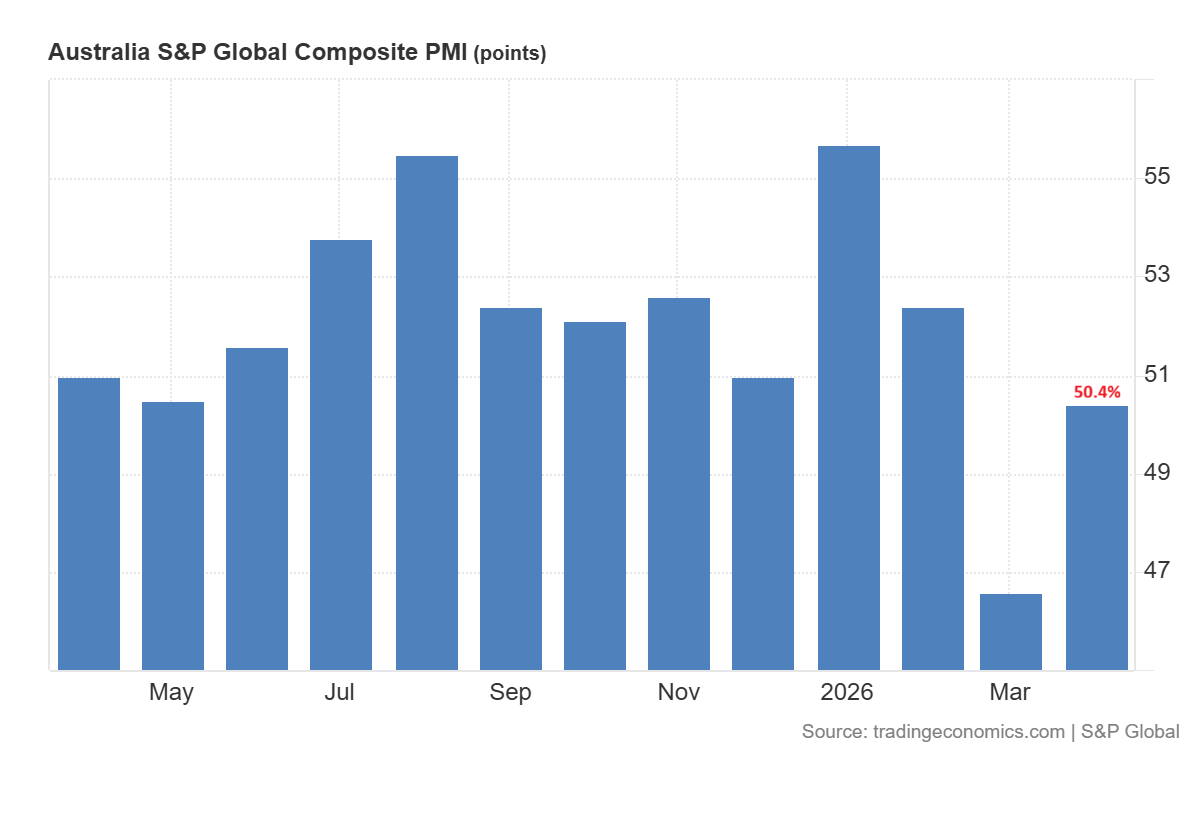
A move above 50 indicates expansion. Despite this expansion, the reading is not that strong. It reflects an increase in business activity but there is not enough momentum to take any more of a beating from higher borrowing costs.
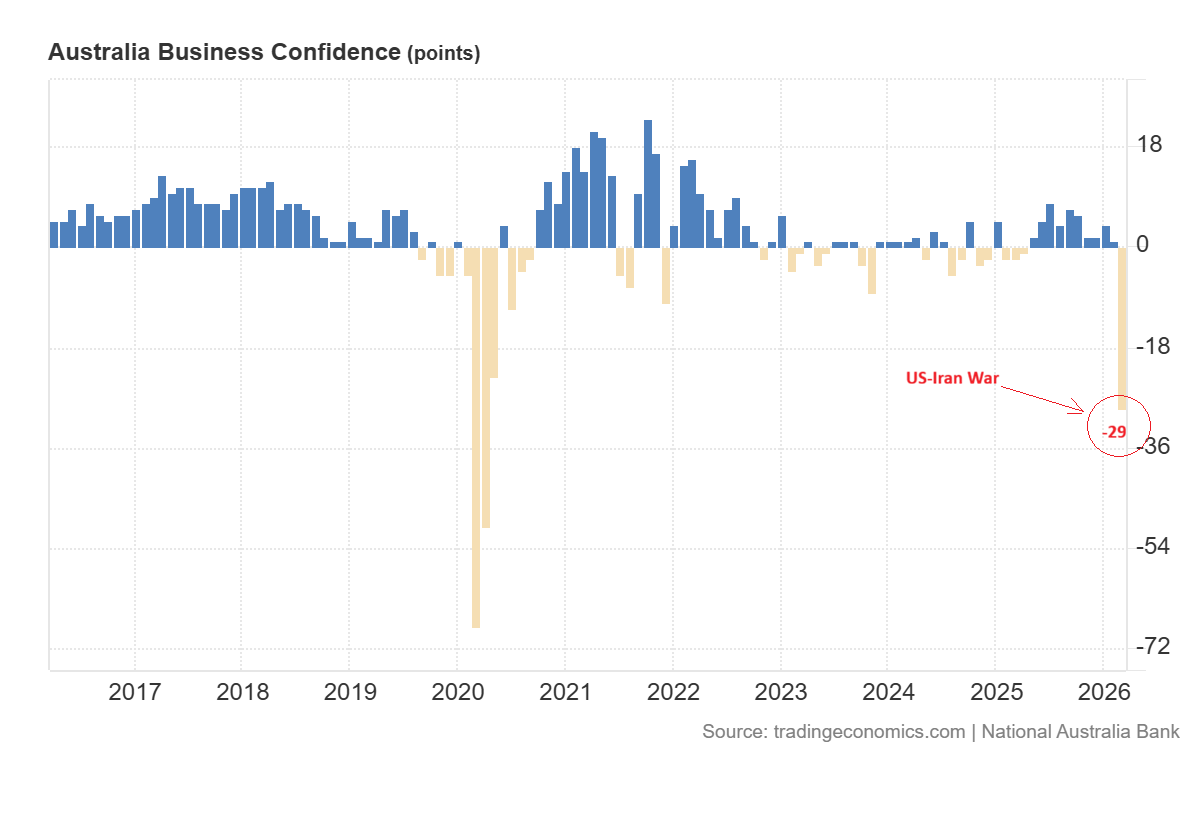
The chart below shows that the business confidence in Australia also plunged to -29 in March. This is the largest drop on record since April 2020. The war is expected to maintain high energy prices and impact on the spending power of businesses and consumers.
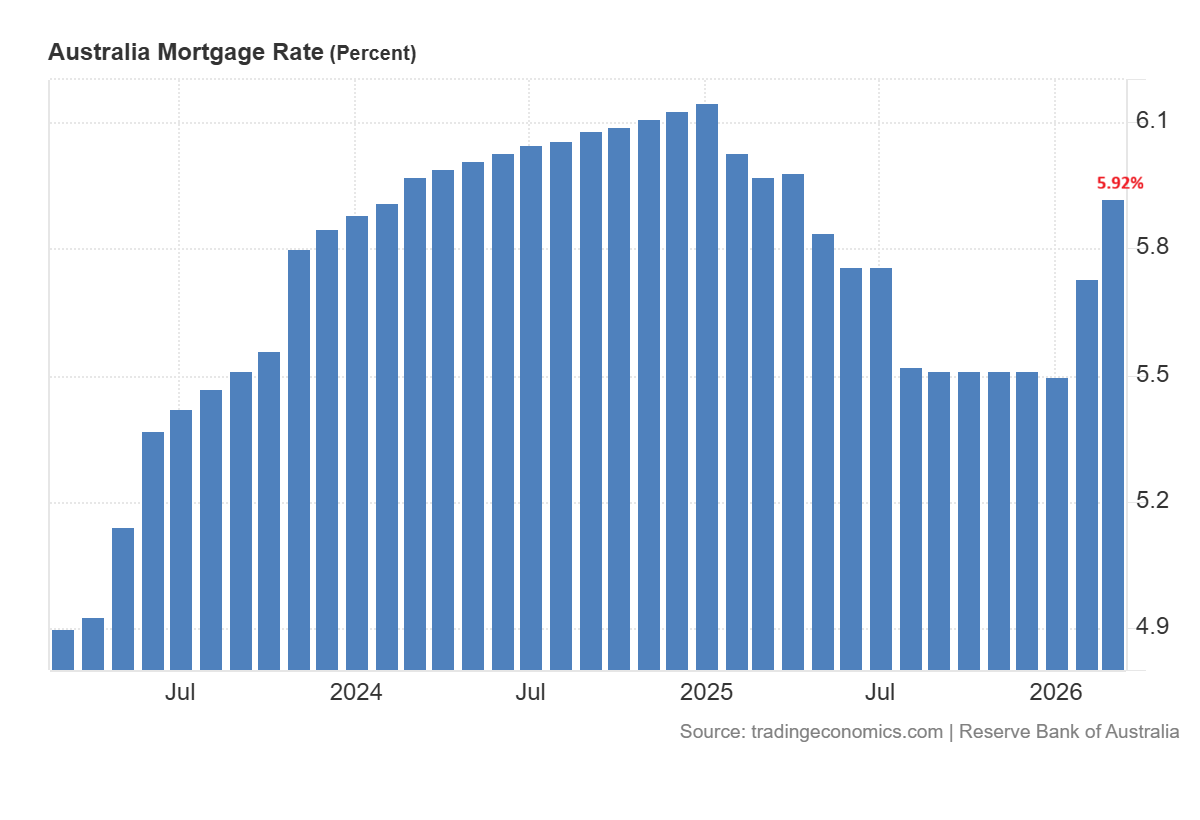
Higher mortgage rates are already having an impact on households. The housing market has lost momentum with higher borrowing rates and uncertainty. It is important because housing is a key area of monetary policy in Australia. Higher rates translate to higher mortgage payments, reduced turnover and reduced consumer spending.
Strong Labour Market Keeps Inflation Risk Alive
The labour market continues to be the primary source of support. The jobless rate remains low at 4.3%, and provides RBA some room to fight inflation. A good job market can help to sustain wages and spending. It can also cause sticky inflation. The RBA could be concerned about low unemployment with high prices of fuel if the rate of decline in inflation expectations is not quick enough.
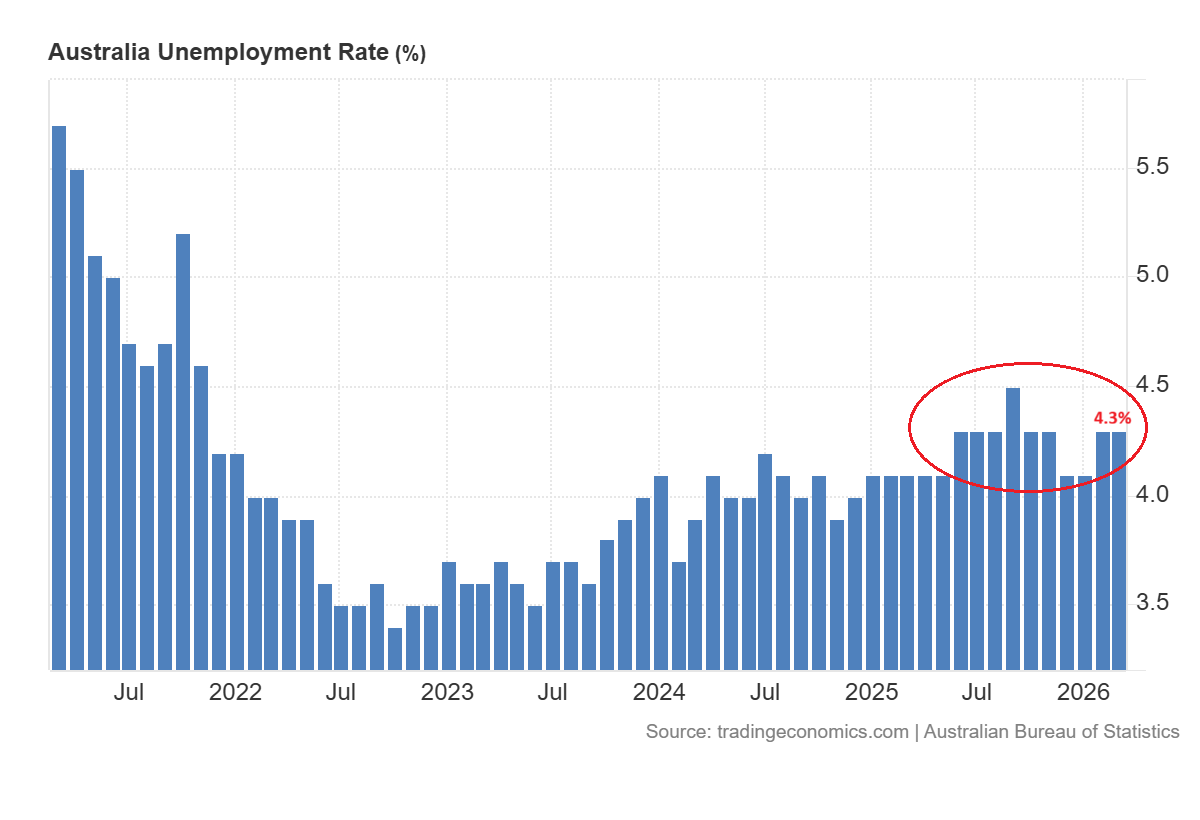
This is one reason why the RBA might want to hold back from another interest rate increase after May. The central bank has already tightened three times this year. It now needs to gauge the extent of the damage that higher rates are inflicting on demand. But this is not a dovish pivot. The RBA could hold back from tightening in June and maintain a tightening bias for later meetings.
Australian rates will remain high in the coming months in the base case. A June rate cut looks unlikely unless inflation expectations fall and oil prices stay under control. That said, if inflation continues to run hot, another September move can’t be ruled out. The RBA is not looking to stimulate growth. It’s working to put a lid on the inflation.
AUDUSD Forecast: Rate Support Helps, But Growth Risks Limit the Upside
AUDUSD is now in the middle of two forces. Australian interest rates are a positive for the Australian dollar as higher rates make Australian assets more attractive. However, the upside is capped by a slowdown in growth, dwindling confidence and growing risk aversion around the world. This is why the pair failed to rally strongly following the RBA hike.
The first driver is a rate spread. If the RBA is hawkish and the Federal Reserve maintains the interest rates at current target range of 3.50% to 3.75%. It will suggest that AUDUSD may have a foot on the ground. The chart below shows that the RBA hike in May has left a big difference in interest rates between the Federal Reserve and the RBA.
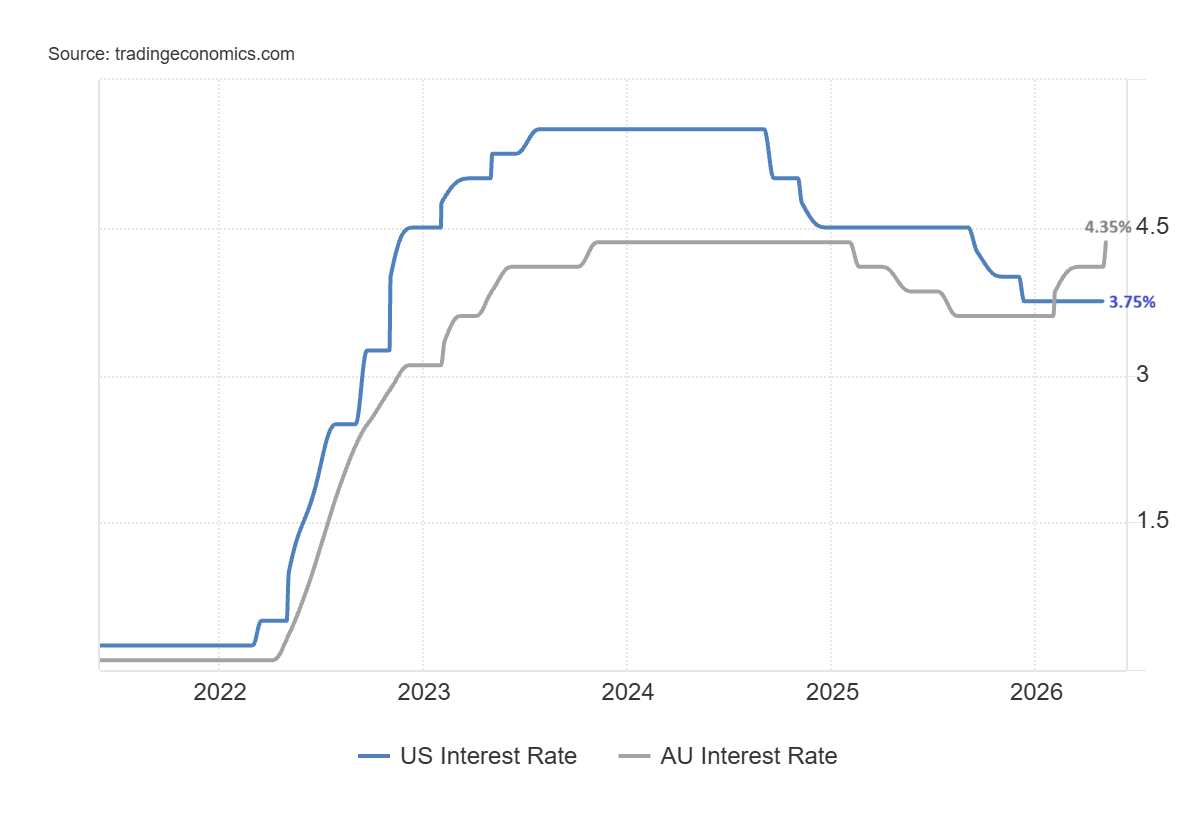
According to the latest probabilities by the FedWatch tool, the Fed still expects the interest rates to hold in 2026. But the uncertainty from the higher oil prices will impact the decision.
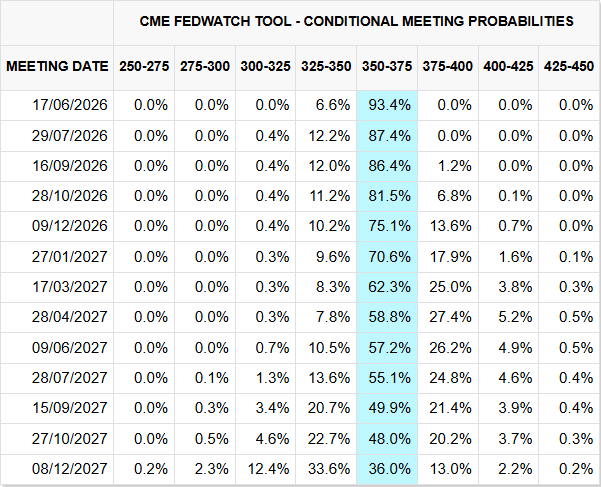
Aussie would be attracting more U.S. dollars if the yields were higher in Australia. This is particularly the case if markets factor in another RBA rate hike for September.
But the second driver is risk sentiment. The Australian dollar is a growth sensitive currency. It tends to work best in the downtrend of global trade, commodity prices and equities. The oil shock from the war is thus a mixed signal for the AUD. It can help to push up inflation and stimulate RBA rates, but it can also negatively impact consumer demand and decrease global risk appetite.
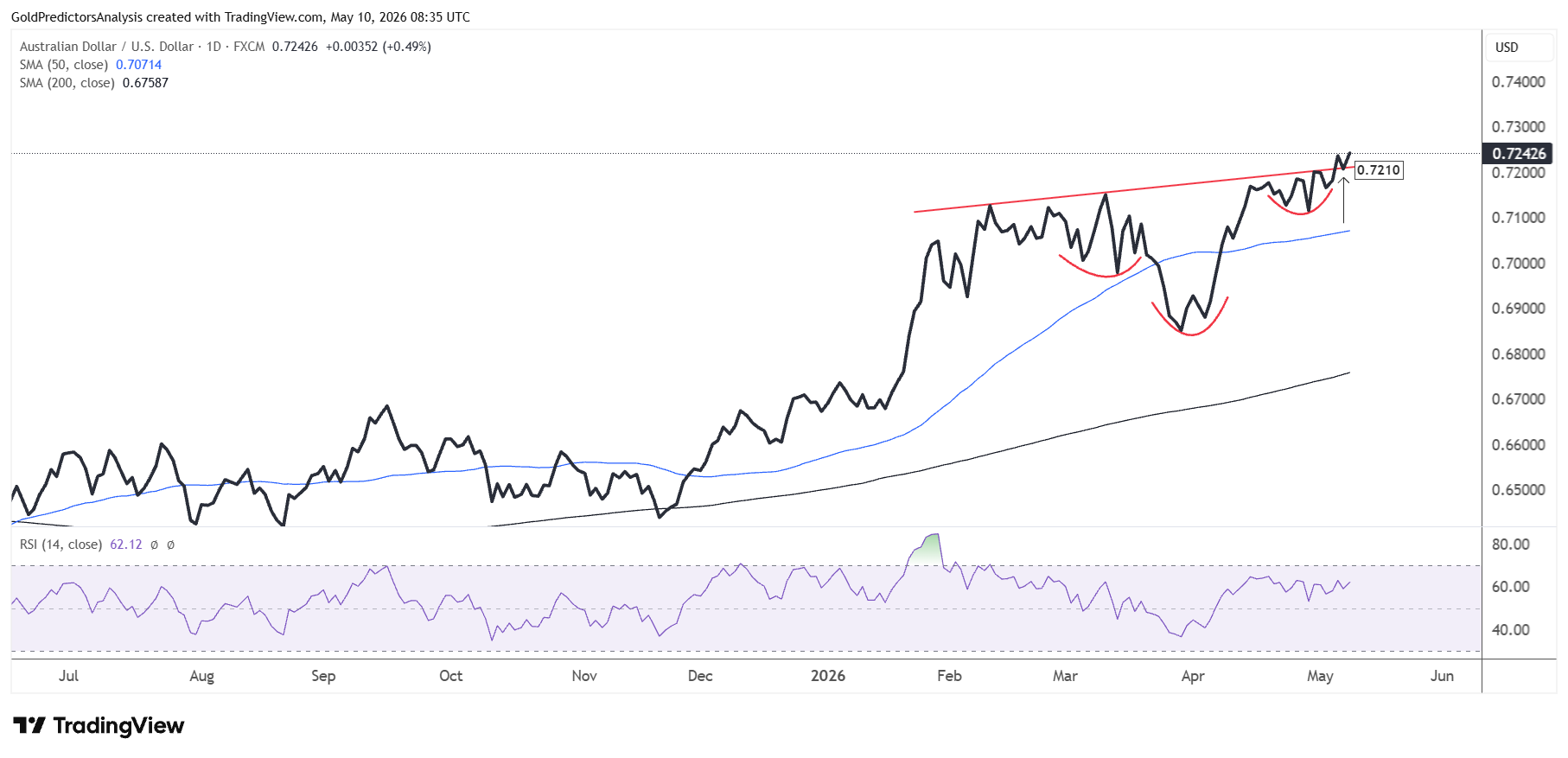
Despite these risks, the technical picture for AUDUSD remains strongly constructive after the break from the neckline of the inverted head and shoulders pattern at 0.7210. This breakout has opened the door for a strong move to higher levels as long as 0.7210 holds.
ASX 200 Forecast: Higher Rates Test Valuations as Banks Offer Support
Banks Help Cushion the ASX 200 Against Rate-Hike Pressure
The ASX 200 seems to react differently to higher interest rates. The interest rates typically squeeze stocks as they raise discount rates and lower the value of future earnings. They also raise the borrowing costs for individuals or businesses. That may have a negative impact on consumer stocks, property-related stocks and high growth stocks.
But the ASX 200 isn’t just responding to an increase in rates. It’s also responding to inflation, oil, China and the banking business. The reason why financial stocks matter is that they indicate confidence in the overall economy and housing market. The ASX 200 Financials Index is consolidating in between 9,000 and 10,000. Despite the strong volatility, the financial index is still above the 9,000 support level. So that means the market isn’t entirely risk off yet.
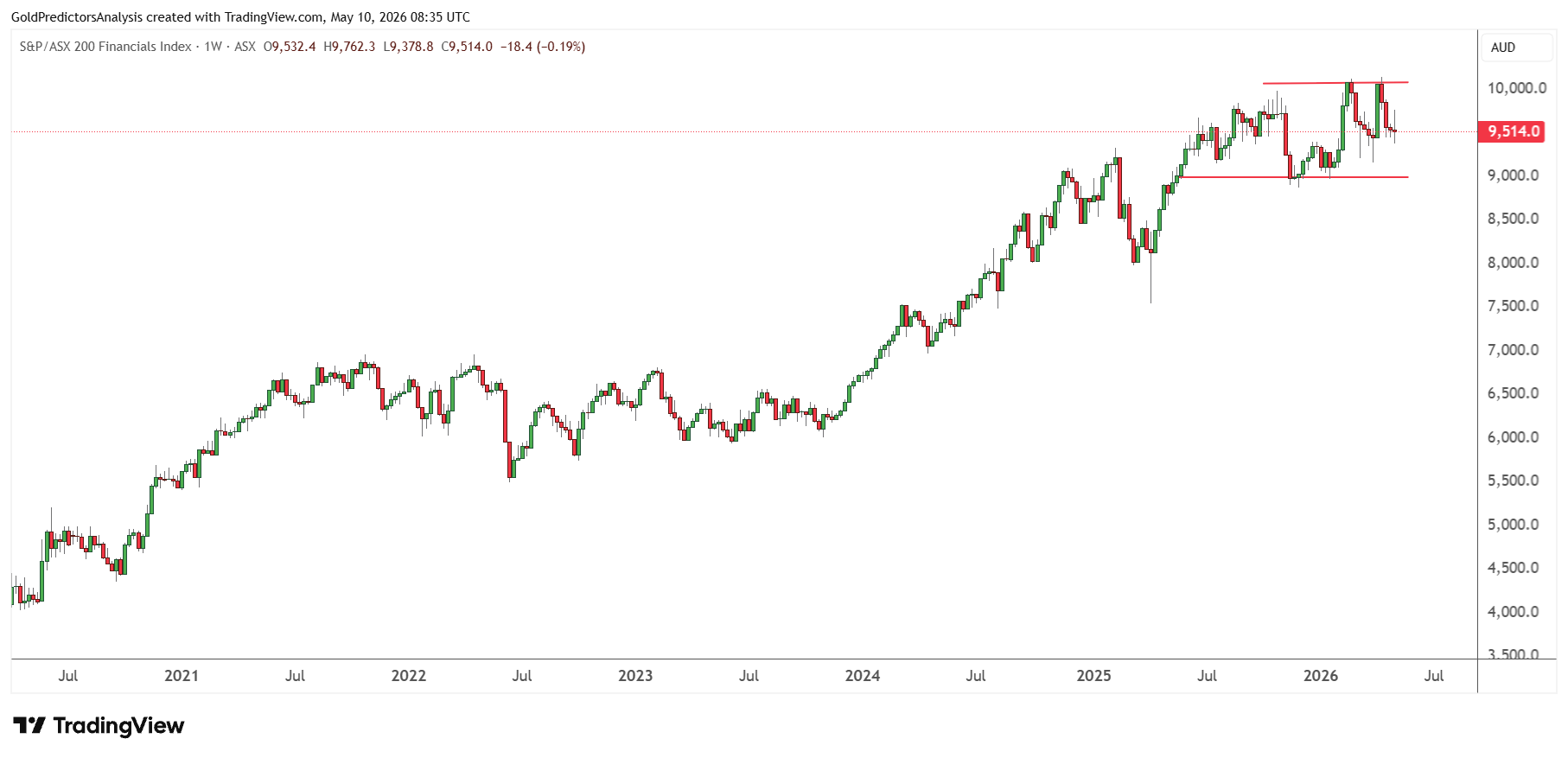
Higher rates can be achieved by improving lending margins for banks. However, this benefit is subject to certain limitations. When rates climb too high, mortgage stress increases, credit demand decreases and the risks of bad loans grow. This makes the financial sector crucial to the ASX 200 forecast. When banks are above the support, it can make the rest of the index fairly resilient. If the financials break lower, it would indicate deeper stress in the housing and credit market.
China Demand and Oil Prices Could Decide the Next Move
China also plays a part in the ASX 200. The mining and materials stocks depend on the Chinese demand. The chart below shows that the China composite indicator increased to 98.8 in April.
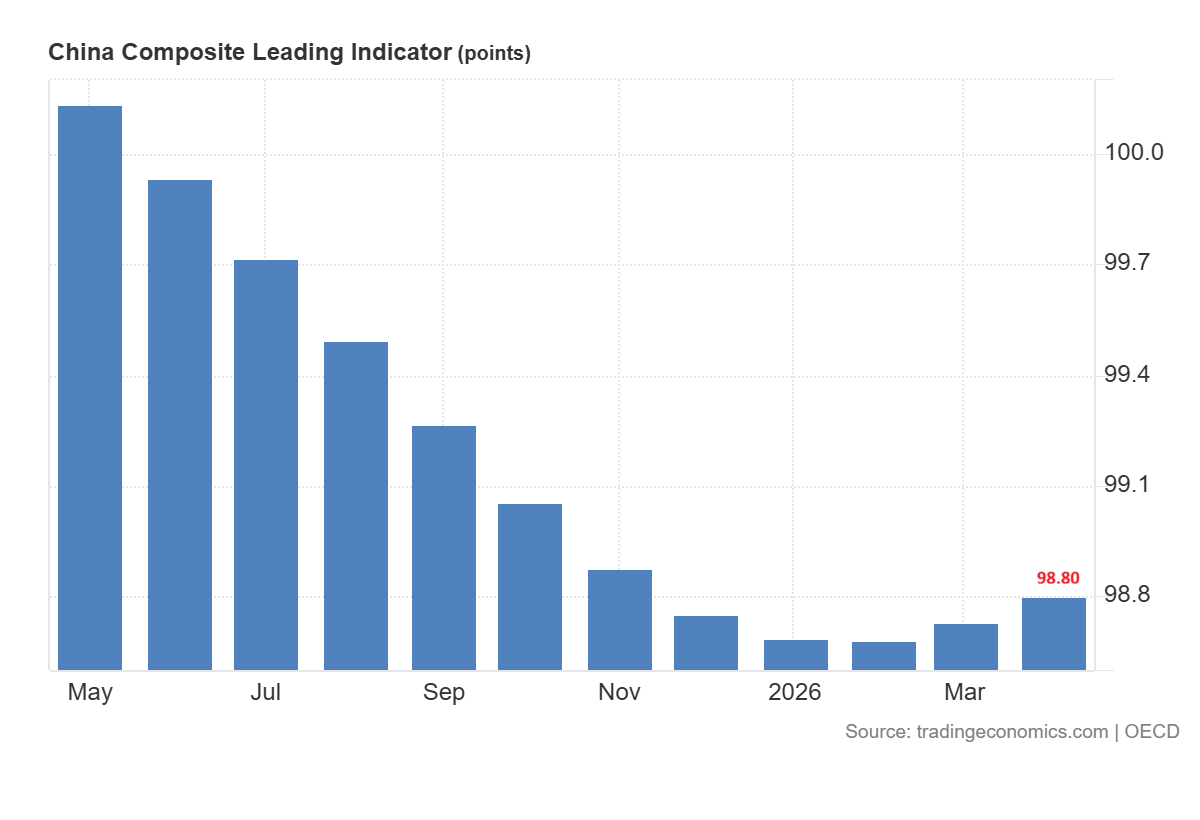
The slight uptick in China’s composite leading indicator was a plus for sentiment, but the index still read below 99, signalling a weak recovery. A more robust China cycle would help to mitigate the effects of rising Australian rates for miners. If China’s outlook weakens, the ASX 200 will be under more pressure from rate-hike sentiment at home.
The base case is that the ASX 200 will continue to be supported with financial data holding important levels and Chinese data improving. However, the positive effects could remain constrained until markets are definitely convinced that inflation has passed its peak. The RBA’s decision to pause in June would be good for sentiment. A further oil induced inflation shock would have the opposite effect. It would drive up bond yields, drive down valuations and add to the risk of further drawdown in Australian stocks.
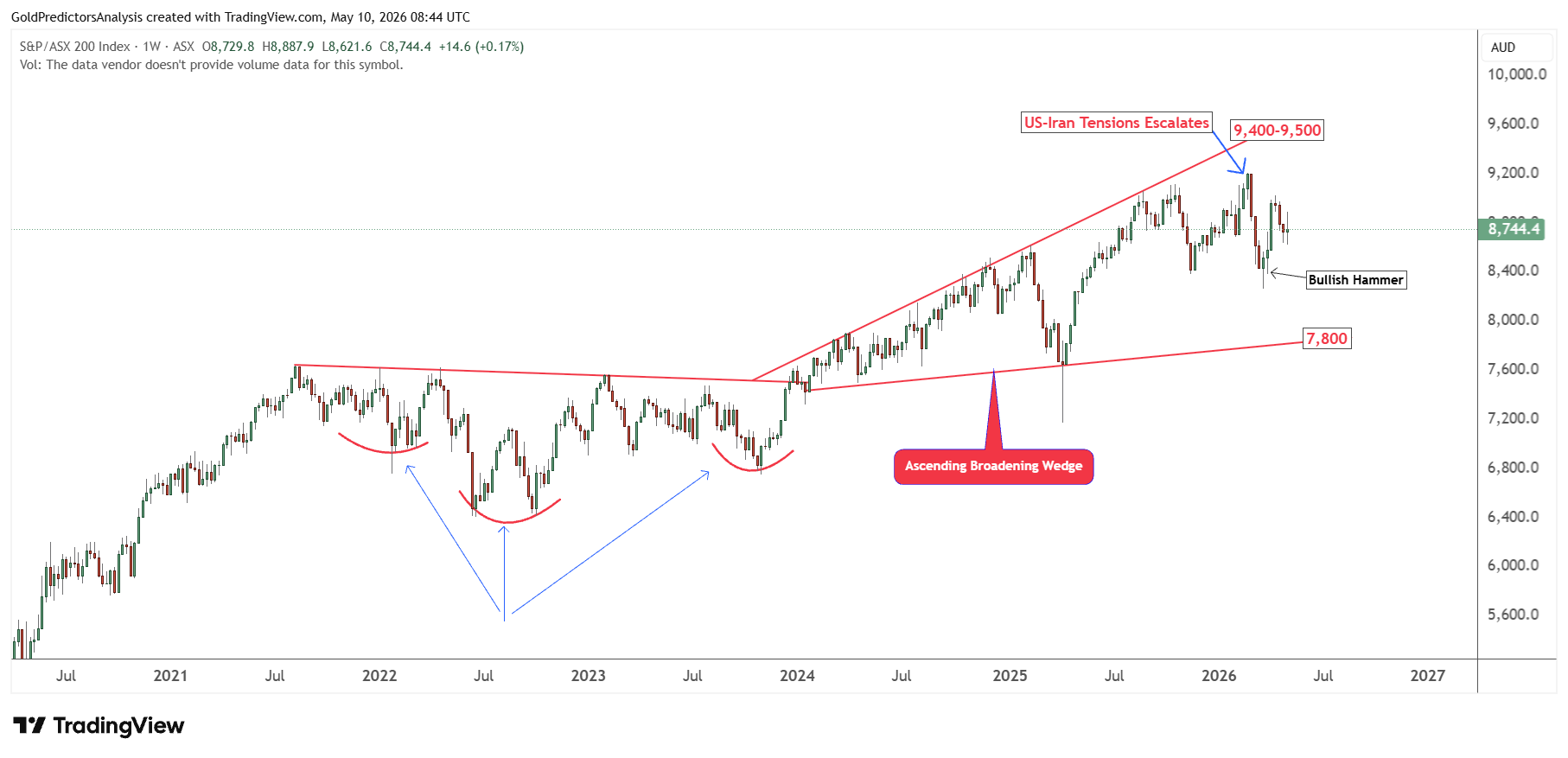
From technical perspective, the ASX200 remains in a constructive pattern despite the US-Iran war-related volatility. In case of an extreme energy crisis, the 7,800 level remains the long-term pivotal level where the long-term investors will buy stocks for accumulation. This level is defined by the support of ascending broadening wedge pattern above the inverted head and shoulder structure.
Final Thoughts
The outlook for the interest rates is bound to inflation, oil prices and the RBA’s tolerance for slower growth. The central bank is not ready to ease policy at this juncture, given the risk of higher fuel costs and expectations of higher inflation. But the economy is already feeling pressure from a lack of business momentum, weak business confidence and a lagging housing market. That could leave the RBA open to not cutting in June, but it is unlikely to be dovish unless inflation settles more clearly and oil prices remain in check.
This is a mixed picture for markets. The interest rates could support AUDUSD, but growth concerns and global uncertainty could hold back the rally. The ASX 200 is also under pressure from rising yields and declining valuations, but financials and miners with a Chinese connection can help to mitigate the pain.
The base case suggests a higher interest rate, which could keep the AUDUSD supported on dips, and the ASX 200 to present a constructive picture until inflation does not accelerate again. An escalation in US-Iran war and higher oil prices may bring strong volatility in the ASX 200 in May and June. But the index will remain bullish as long as the pivotal level of 7,800 holds.
If you’d like to know more about how interest rates drive currency moves, please visit our educational area.