Bearish Pressure Builds Below Key Trend Indicators
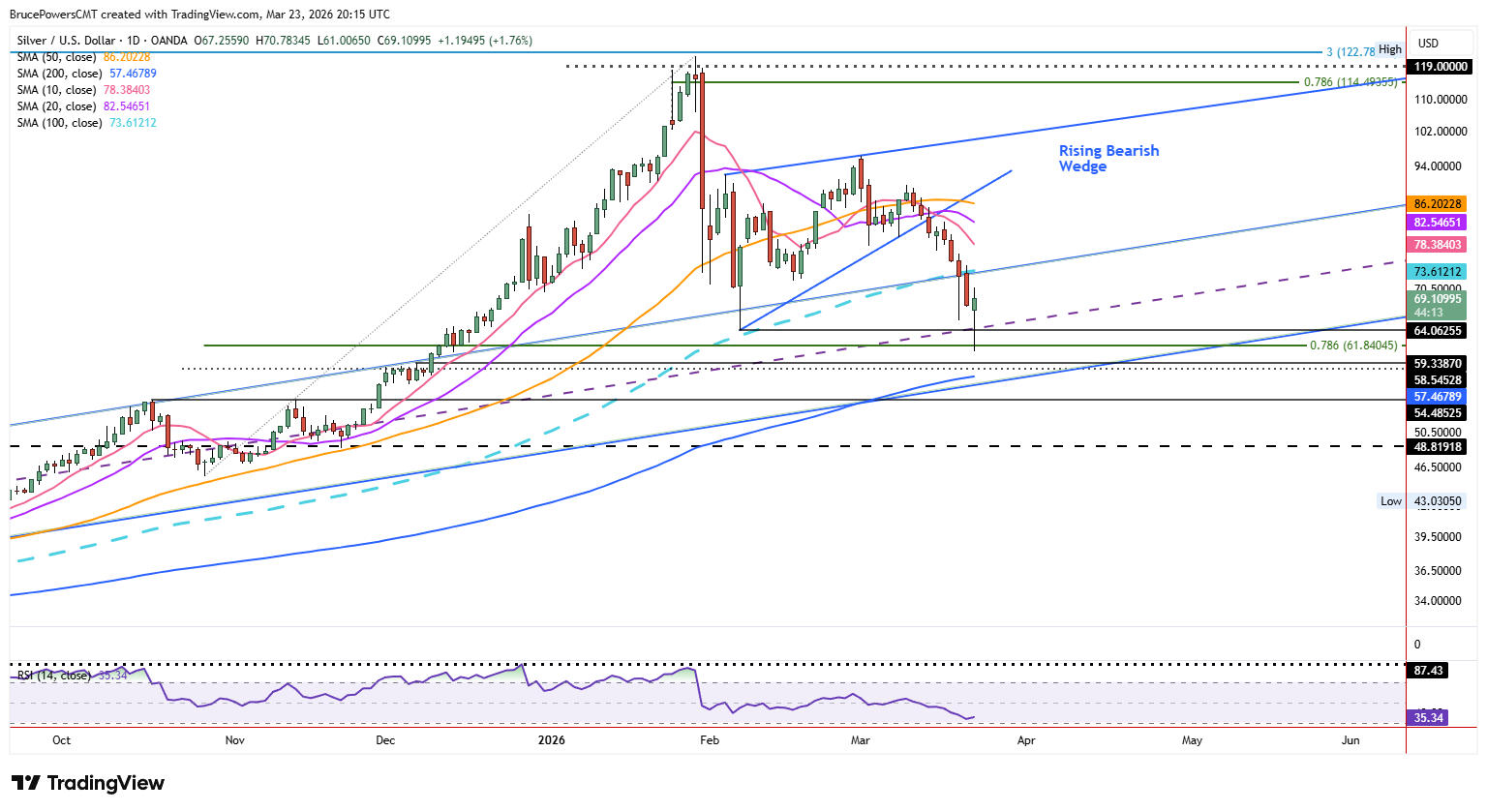
Given that silver remains below the 100-day moving average and back inside a large ascending trend channel, downward pressure is likely to persist. At the same time, it spiked to a 14-week low of $61.01 before attracting buyers. Demand sharply improved from there intraday, leaving the precious metal in a strong position to possibly end the day with a bullish hammer reversal candle, which would require confirmation on a move above the day’s high.

Trend Structure Weakens After Breakdown
The initial decline fell below the higher swing low of $64.06 from February, thereby weakening the integrity of the trend structure. Note that Friday’s high tested resistance at the 100-day moving average, after it had previously represented support since April 2025. There are two indicators, prior resistance and the 200-day moving average, that add to the potential significance of the new low and may help determine whether it will hold longer-term or be a temporary stop on the way to test lower support areas.
Downside Targets Draw Price Lower
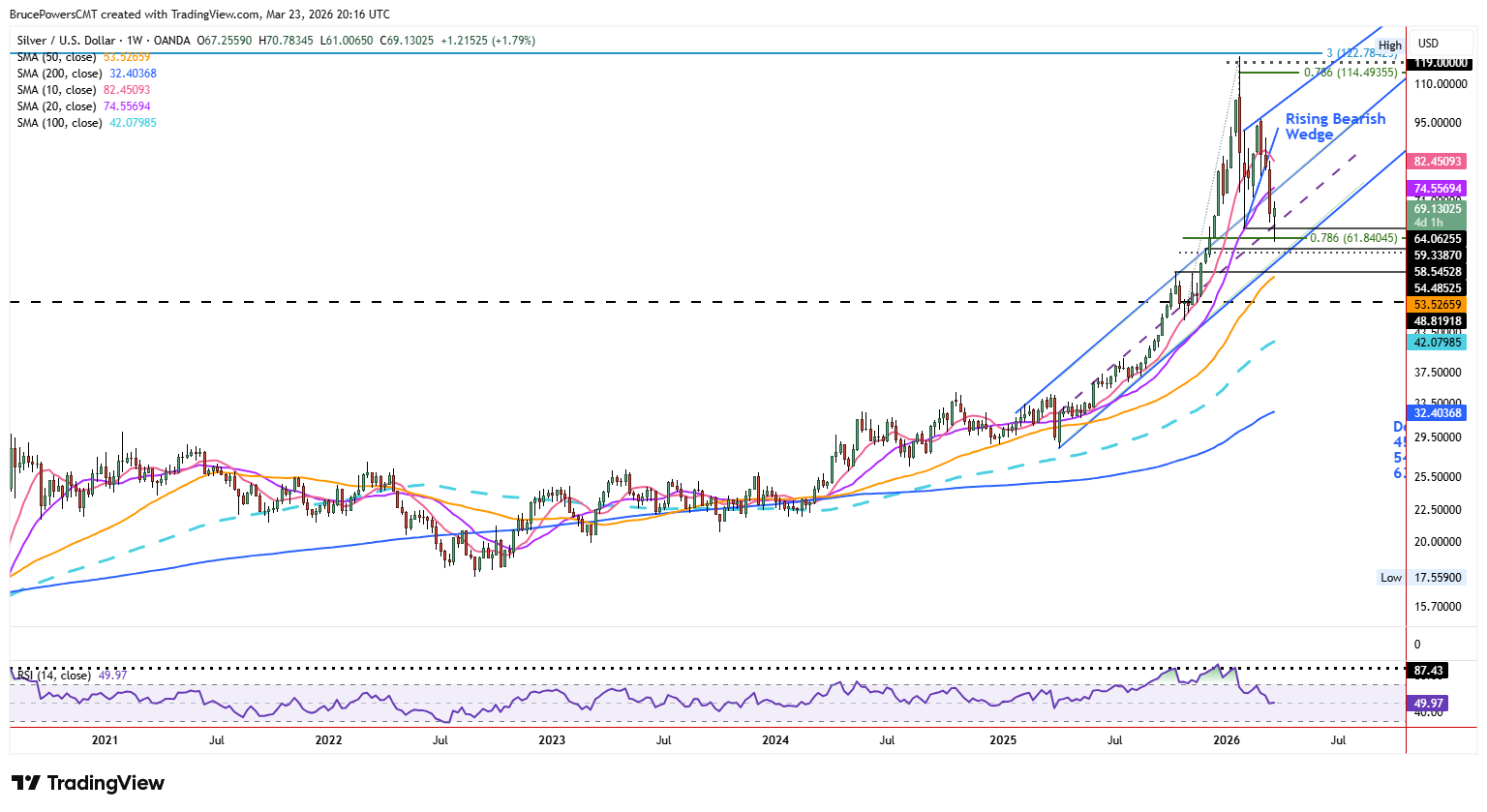
Key lower price zones are near the 200-day moving average at $57.47 and a prior trend high near $54.49 from October. A pullback to test key prior resistance as support would be a normal swing within a trend. Nonetheless, price has been away from the 200-day line since June. It may well act as a magnet to pull price toward it before the current bearish correction completes. A sustained decline below the 100-day average is bearish, while a drop back into the channel range reinforces that weakness.
Support Reaction Emerges Near Channel Midline
Consequently, Monday’s decline found support shortly after completing a 78.6% Fibonacci retracement at $61.84. It is also interesting to note that the February swing low is aligning with the middle line of the bullish channel, and that the day will likely close above that price area. Therefore, the area near the middle line has been recognized as support, at least for now. It has been recognized in the past as both support and resistance, reinforcing its importance as a recurring pivot zone.
Watch for future interactions with this level, as repeated recognition would strengthen its relevance as a key price area. This behavior also ties back to the opening bearish context, as even within ongoing downward pressure, identifiable support zones may temporarily stabilize price before the next directional move develops.
Silver Price Forecast
Every new Silver analysis as it publishes, today's technical signal and key levels, live price — on one page.
See all Silver forecastsIf you’d like to know more about how to trade gold and silver, please visit our educational area.