The S&P 500 and Dow Jones Industrial Average are trending higher, but the market backdrop is becoming more complicated. The tariff pressure is returning, inflation is strong and the Fed is focusing on price stability. The treasury yields keep climbing and test the investor confidence in growth stocks. But the easy liquidity and strong technical momentum continue to support the risk assets. This creates a mixed setup for the S&P 500, where the AI and technology strength support the bullish momentum. But the Dow Jones must hold the key support to extend its breakout.

Tariff Risks Return as New Duties Threaten Stocks
Tariff revenues are decreasing at the US Treasury as $22 billion in illegally collected tariffs were refunded to importers in May. But businesses continue to pay tariffs on goods from several nations despite invalidation of Trump’s tariffs by the Supreme Court in February.
The 10% global tariff rate will expire by July but the White House highlighted that it will replace the lost revenues with more durable import taxes. The forced labour proposal might be the first step.
These trade policies are a key risk for stocks. The tariffs increase the cost of imports and reduce the profit margins. Some companies may shift this burden to the consumer which may affect the consumer demand. Other companies may absorb the cost, which may affect the earnings.
The legal situation also remains uncertain. Some tariffs are being refunded but other tariff instruments are continuing under other trade legislation. Section 301 and Section 232 investigations may impose additional duties on specific industries such as steel, copper, robotics, medical devices and lumber. This results in uncertainty for companies that rely on global supply chains.
But the tariff wall does not hit all sectors equally. The duties were minimal in fast growing areas such as data centres and AI infrastructure. This balances the S&P 500 as large tech firms tied to artificial intelligence continue to outperform.
Dow Jones Price Forecast
Every new Dow Jones analysis as it publishes, today's technical signal and key levels, live price — on one page.
See all Dow Jones forecastsInflation and Fed Rate Pressure Weigh on Market Sentiment
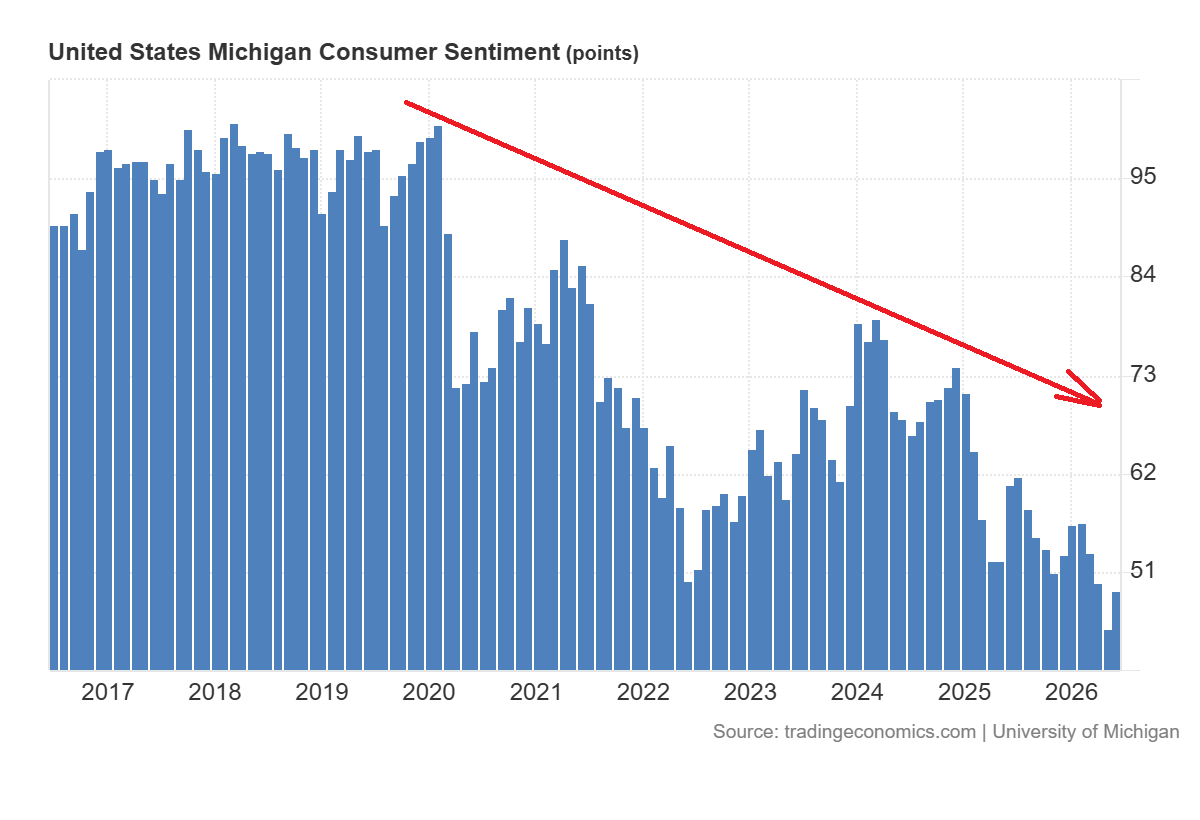
The sticky inflation and rising costs are also a burden on the U.S. economy. The consumer confidence remains low and inflation pressure is picking up in May at a faster rate. But this is a warning sign for markets as poor sentiment and higher prices can hamper consumer sentiment.
The cost pressure is not only coming from tariffs. The higher energy prices after Iran war have increased the input costs across segments. This pressure may not go away immediately even if a peace agreement is signed. That is why businesses may still face higher operating costs for the next few months.
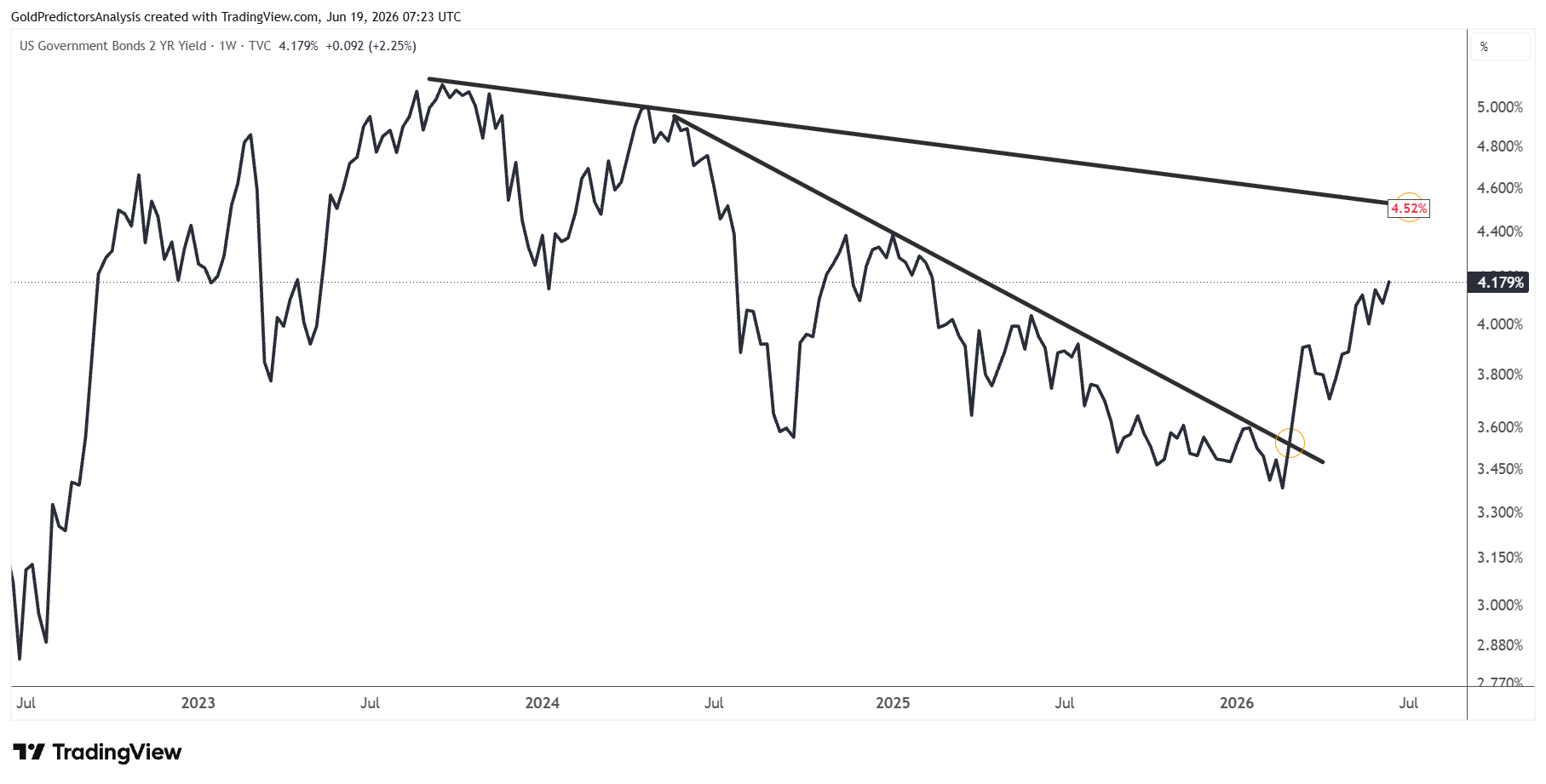
The market tone changed after Kevin Warsh led his first Fed meeting as Chair. Warsh spoke in a hawkish tone as the Fed did not adjust the funds target range from the 3.5% to 3.75% range. He consistently emphasized price stability and highlighted that Fed will continue to combat inflation.
Markets reacted quickly to hawkish Fed. The 2-year Treasury yield rose to 4.17% after the Fed’s decision. This rally indicates that investors expect a tight policy. This also put a strain on equity values, particularly in growth stocks. The chart below shows that the 2-year Treasury yields remain constructive.
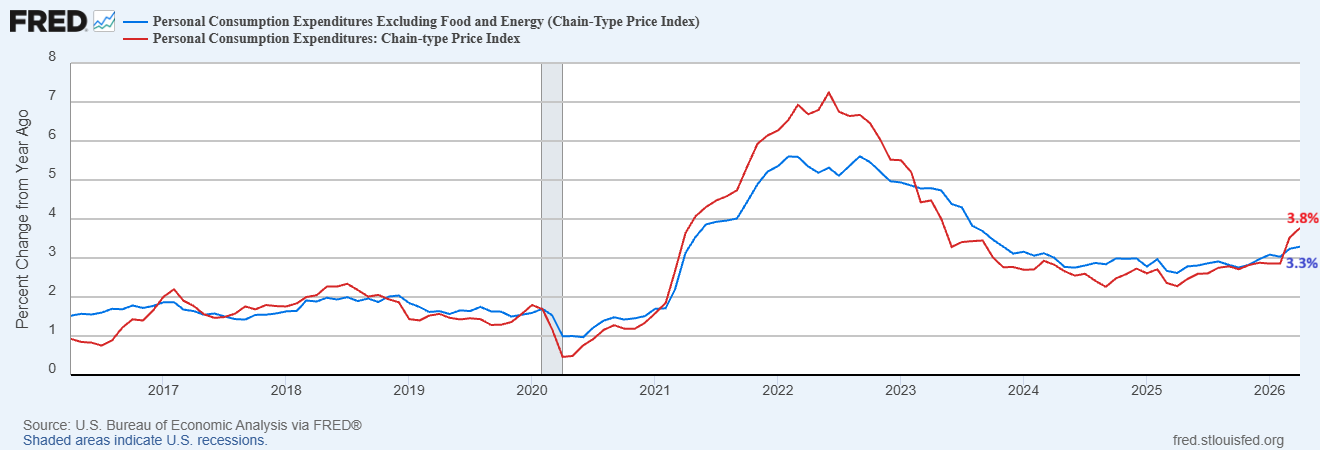
The core PCE inflation is above the Fed’s 2% target and remains elevated for long time as seen in the chart below. This makes it more difficult for the Fed to reduce interest rates.
Easy Liquidity Supports Stocks Despite Inflation Risk
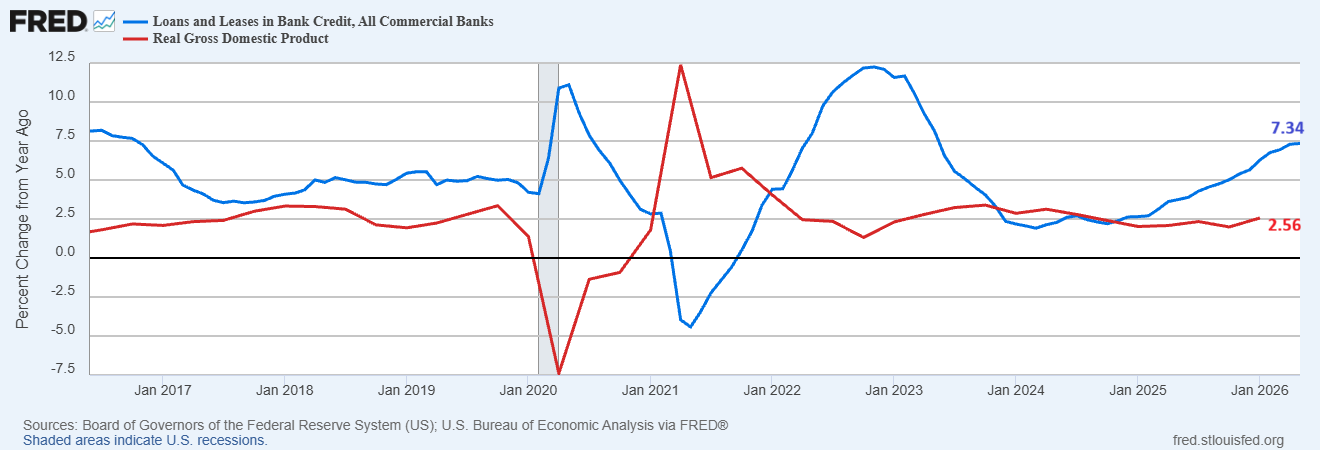
There is also inflationary pressure as bank credit is increasing at a faster rate than real GDP. Expansion of credit tends to lead to rising prices if it grows faster than output.
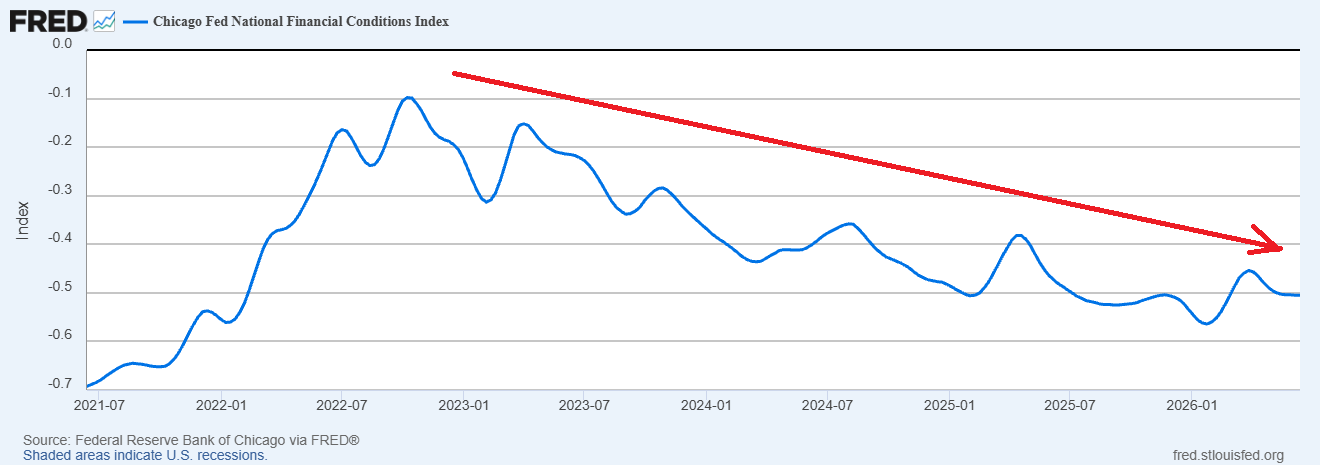
Meanwhile, the financial conditions are still easy as the Chicago Fed National Financial Conditions Index is trending in a negative direction. This implies that liquidity remains supportive. But this also poses an issue for the Fed. The condition of easy money can be conducive to asset prices but can also ensure that inflation remains sticky. That is why the Fed might need to remain hawkish despite some deceleration in growth.
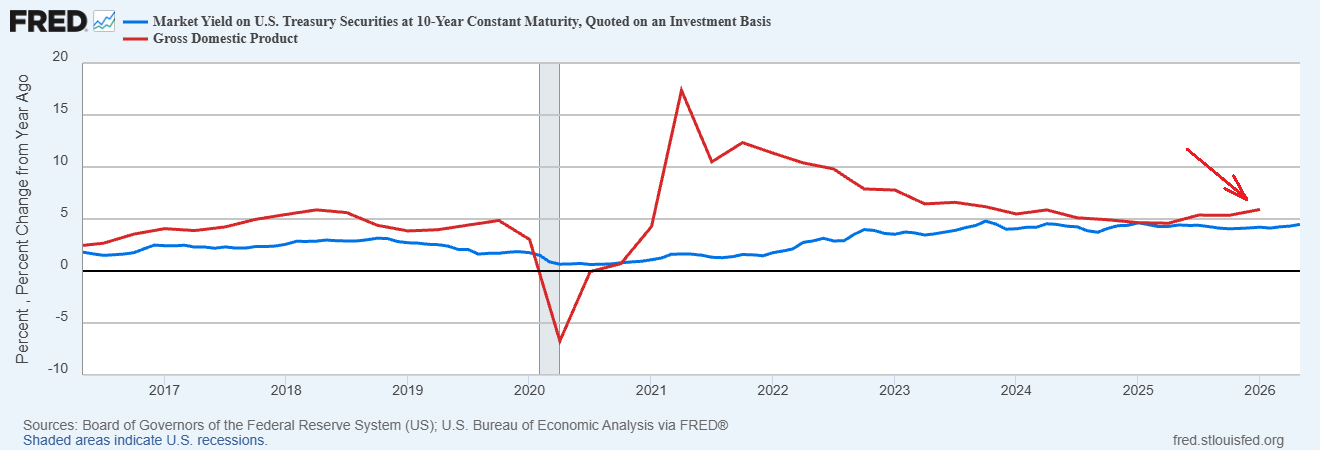
The chart below shows that the nominal GDP remains above the 10-year Treasury yield. This is an indication that policy support is holding long term yields in check. The Fed’s balance sheet and Treasury buybacks are working to ease liquidity and market stress. While this is good for stocks in the short term, it may also help to maintain inflationary pressure.
S&P 500 Forecast: AI Rally Supports Bulls as Yields Rise
S&P 500 Bulls Rely on AI Strength as Yields Rise
The S&P 500 remains supported by technology, AI infrastructure and large-cap growth stocks. The tariff structure is important here as the fastest growing parts of the economy are not facing the same pressure as older industrial sectors. There is sustained policy support for data centres, AI hardware and digital infrastructure. This can support the S&P 500 to perform well compared to other indexes.
But the clear risk comes from the higher Treasury yields. Growth and tech stocks are weighted heavily in the S&P 500. These stocks are more sensitive to interest rates as their valuations depend on future earnings.
There are also mixed effects on S&P 500 due to tariffs. Businesses have a bit more control over their pricing and might be able to absorb higher import prices. Bigger tech and software stocks might also be under less pressure. But the consumer facing companies, retailers, manufacturers and companies with global supply chains could see margins under pressure.
The key issue for the S&P 500 is whether AI strength can overcome macro pressures. The index can hold if its investors continue to place AI demand, data centres and strong earnings of mega-cap technology stocks in focus. But if the yield continues to rise and inflation keeps the Fed on a hawkish stance, the rally could narrow.
The overall situation is still positive as liquidity is easy and growth stocks are still leading. The S&P 500 outlook is cautiously bullish, but any upside may depend on the ability of tech to take the strain from tariffs, inflation and higher rates.
S&P 500 Keeps 7,000–7,200 as Key Buy Zone
From a technical perspective, the S&P 500 remains in a strong and healthy uptrend since the lows in April 2025. The recovery from the April 2025 bottom was a V-shaped recovery which produced the ascending broadening wedge pattern from July 2025 to the recent highs.
The recovery in March 2026 also produced a V-shaped recovery pattern and broke the 7,000 level. The breakout above the 7,000 level in April 2026 indicates that the S&P 500 remains in strong bullish momentum and looks toward the 8,000 level. This target is defined by the target of the ascending broadening wedge pattern.
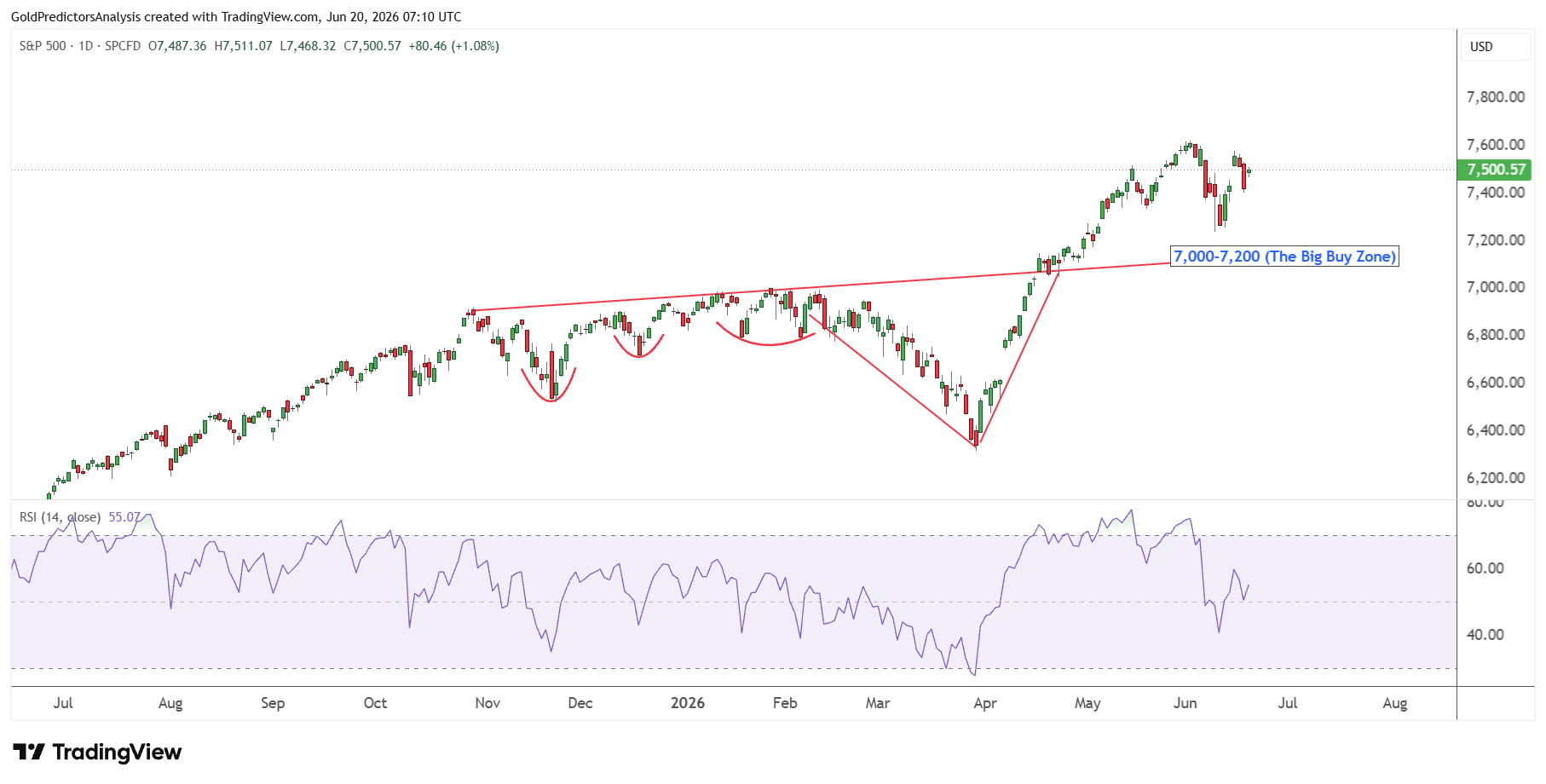
This constructive price action in the S&P 500 indicates that 7,000 to 7,200 remains the big buy zone.
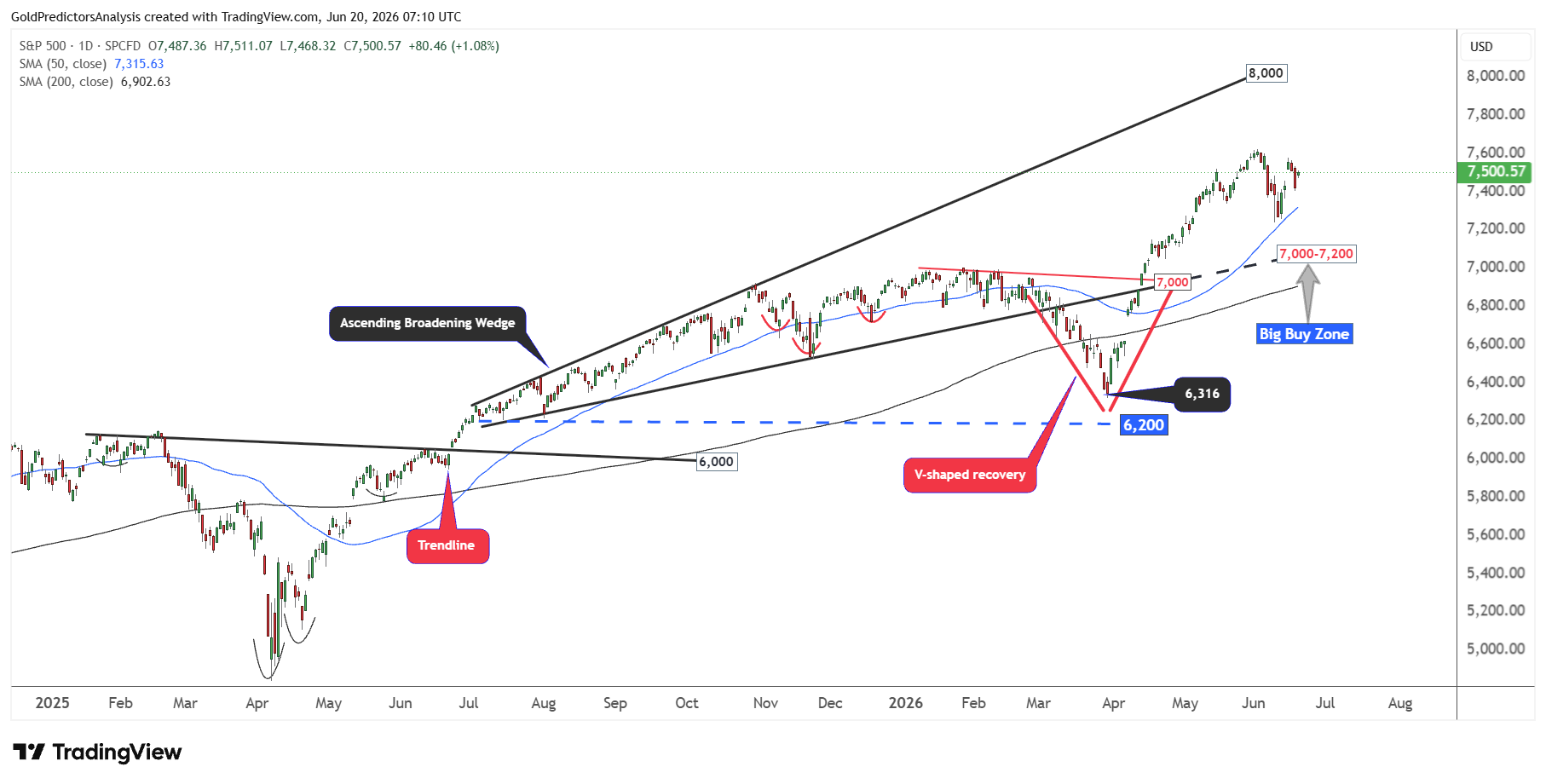
The short-term price action in the S&P 500 also shows a strong bullish structure in terms of the V-shaped recovery in March 2026. Therefore, any correction toward 7,000 to 7,200 may be considered a strong buying opportunity. The index rebounded from the 7,237 level that was close to the buy zone area of 7,000-7,200.
Dow Jones Forecast: Tariff Risk Tests 50,000 Support
Dow Jones Faces Higher Tariffs and Industrial Cost Risks
The Dow is more vulnerable to tariff risk and industrial risk than the S&P 500. The index consists of leading industrial, financial, healthcare and consumer firms. A number of these companies are sensitive to input costs, global trade policy and consumer demand. When tariffs increase and cost pressures work their way through the economy, the Dow becomes more vulnerable.
The increment in taxes on steel, copper, lumber, machinery, robotics and medical devices may impact industrial and manufacturing companies. These industries could face reduced profitability and increased expenses. The demand could decline if businesses pass these costs to consumers. If the companies don’t pass these costs to consumers, the earnings will be affected.
Financial stocks can benefit from higher yields to a degree, but when borrowing costs go up, industrials and consumer stocks can suffer. A hawkish Fed also lowers the likelihood of imminent rate cuts which can curb investor demand for cyclical stocks.
But the Dow could benefit if the economy avoids a sharp slowdown. Tricky monetary circumstances and robust nominal growth can prop up company earnings. Demand can remain strong, while inflation remains high, with some Dow companies continuing to see sales growth. The risk is that growth in revenue may come from higher prices rather than increased real demand.
Dow Jones Breakout Above 52,000 Could Open 55,000 Target
The Dow Jones Industrial Average also shows strong bullish momentum since the September 2022 lows. The formation of an inverted head-and-shoulders pattern from 2021 to 2023 and then the emergence of an ascending broadening wedge pattern from January 2024 to the recent highs indicate that the breakout above 50,000 has opened the door for a strong move toward 55,000.
The recent drop in the index in February 2026 toward 45,000 and then the recovery from 45,000 to above 50,000 produced a V-shaped recovery. This pattern indicates a sustained move to 55,000 as long as 50,000 holds.
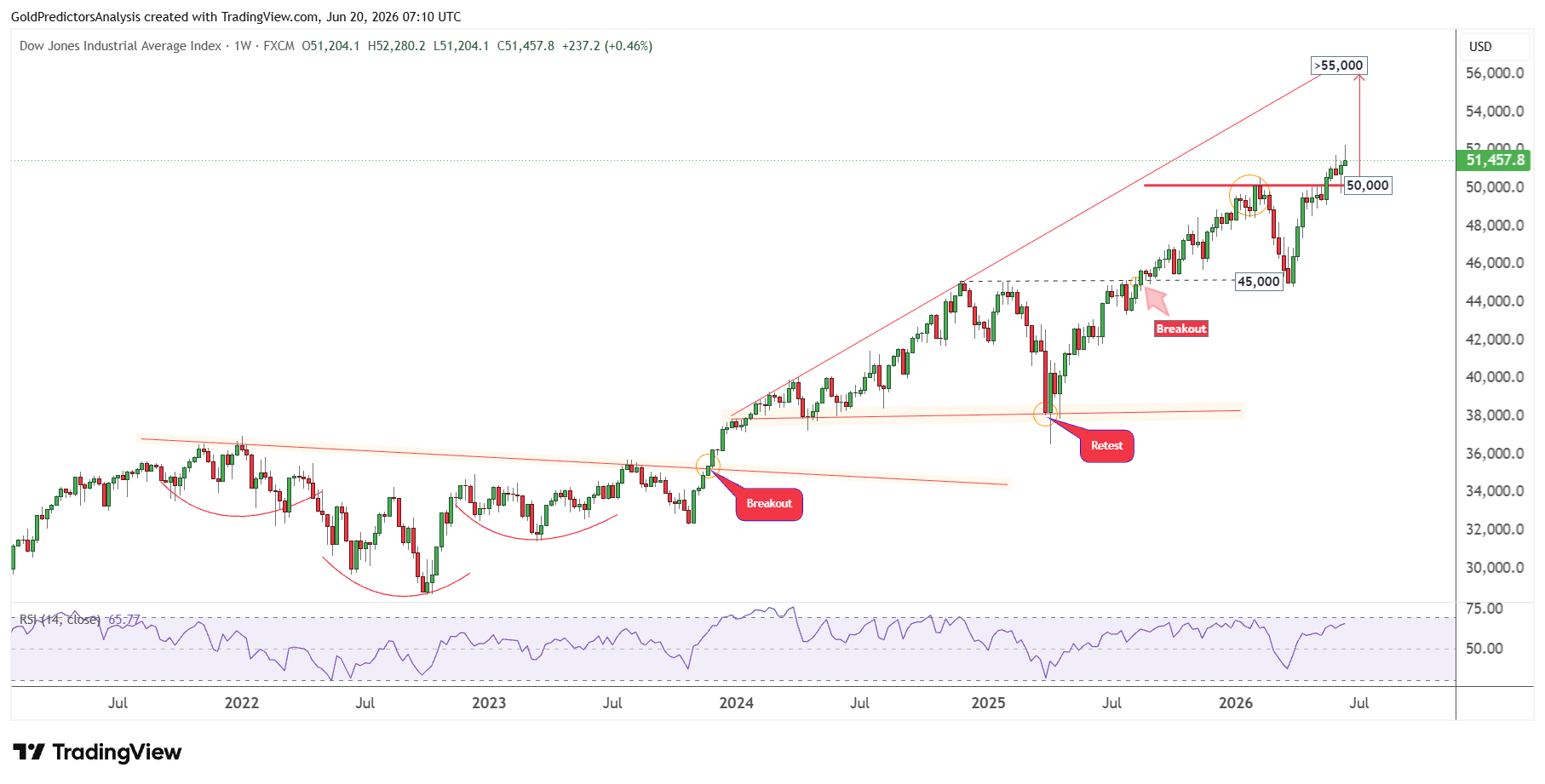
Last week’s candle produced a sharp shadow but failed to close below 50,000. This keeps the bulls alive. This means that any correction back toward the 50,000 area leads to a strong recovery.
The short-term price structure for Dow Jones shows a similar pattern. The chart shows a clear buy signal in March 2026 at the support level of 45,000.
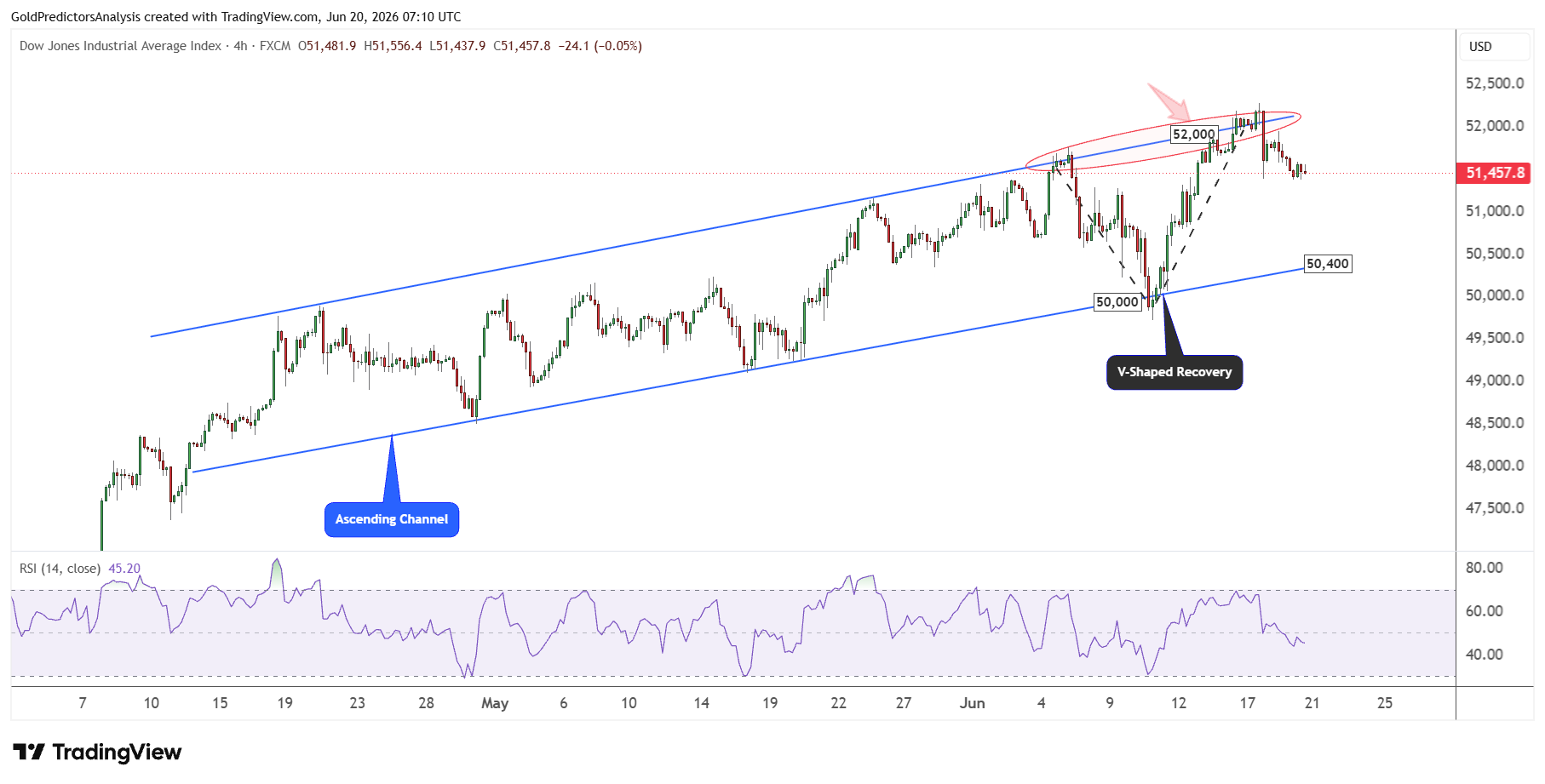
Now the price has been trending within the ascending channel pattern as seen by the black dotted trend lines. The price has already retraced the 50,000 area and rallied toward the 52,000 level. This shows the short-term bullish trend for the Dow Jones.
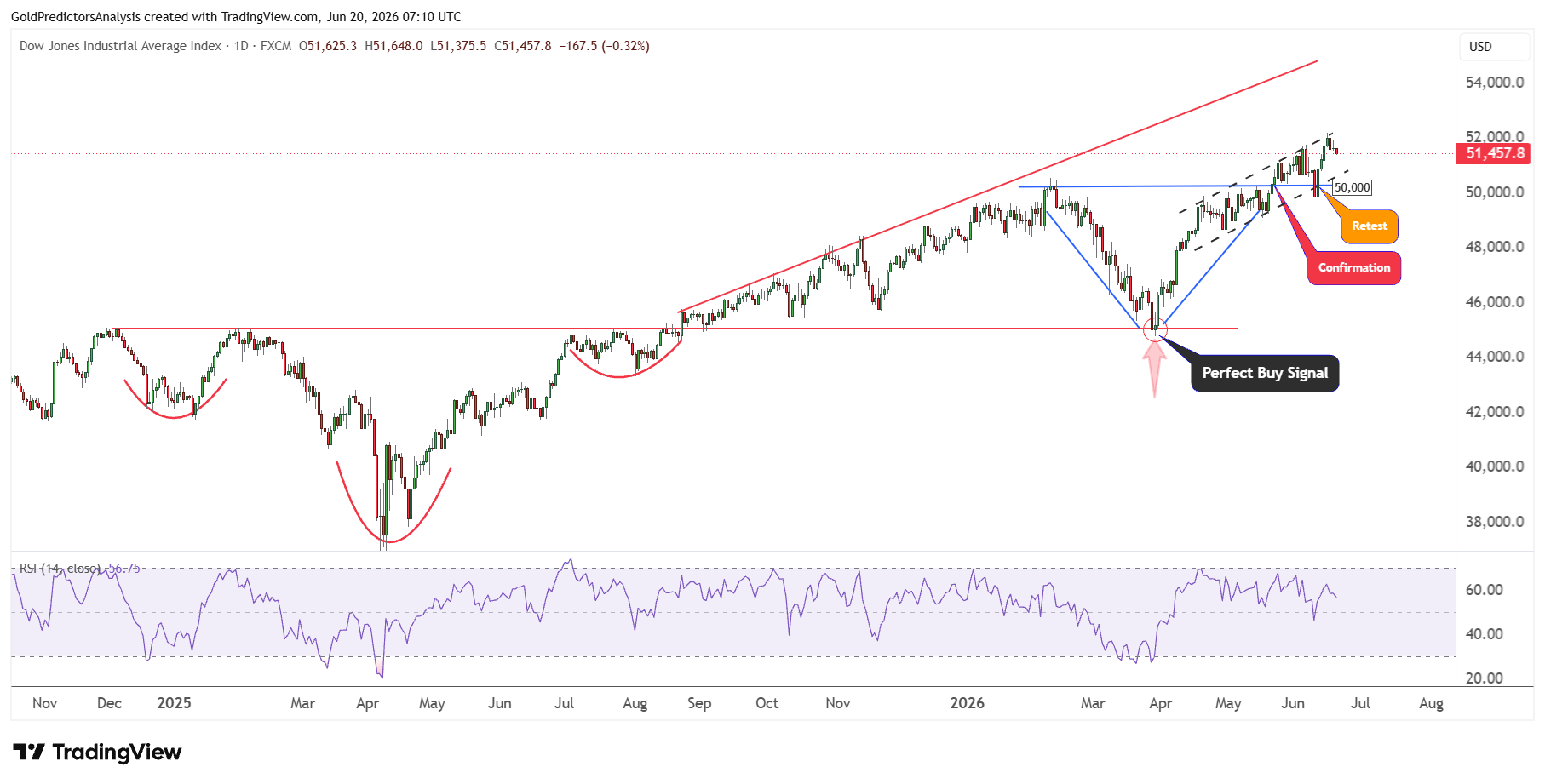
I identified the support of the 50,000 level in the previous article. I expected a rally back to 52,000. The index has already hit the 52,000 resistance and is correcting back toward support. The short term recovery from 50,000 within the ascending channel was also a V-shaped recovery. This indicates strong bullish momentum in the short term and increases the likelihood of an upside breakout above 52,000. The short-term support of this ascending channel is seen at 50,400.
Final Words
The S&P 500 and Dow Jones remain supported by strong technical momentum but the macro backdrop is still mixed. Tariffs, sticky inflation and rising Treasury yields are all continuing to exert pressure on stocks. But the easy liquidity and robust nominal growth continue to aid risk assets. This suggests that the market can continue to rise, but the rally may be more selective.
The S&P 500 may keep outperforming if technology and AI stocks continue to lead. Dow Jones may remain supported if 50,000 holds and attracts new buyers. As long as the 50,000 level holds, the next move in Dow Jones will likely be to the 55,000 level. A break below 50,000 may push the index to the lower support zone of 48,500.
On the other hand, the S&P 500 has already found support at the 7,200 zone as expected. Now the index must hold the 7,000 zone to keep the bullish momentum alive. But investors should remain cautious as tariff risk and a hawkish Fed continue to cap upside in the near term.
Read more: SPX Eyes 8,000 as Fed and Tariff Risks Rise