The S&P 500 Index is currently white-knuckling near all time highs again. Indeed, this is a historic peak that seems to defy the laws of geopolitical gravity. While the index flirts with fresh records, the Paradox of 2026 is in full swing. To the east, the Strait of Hormuz remains a ghost town, with 10 to 13 million barrels of oil offline and WTI crude surging past the $100 mark in risk scenarios. Yet, on the trading floor, the VIX has slumped towards 18.50. It’s a little over a 1% decline that signals a market either remarkably resilient or dangerously oblivious. The margin for error has never been thinner.
Macro Backdrop: Manufacturing Still Soft
The Dallas Fed Manufacturing Index remains negative at -2.3 for April 2026. That’s not a disaster, but it’s still contractionary. For equity traders, this creates a mixed setup. Growth sentiment remains supported by earnings and AI spending, but the macro backdrop isn’t clean. Adding to the volatility is a historic pivot at the Federal Reserve. This Wednesday marks Jerome Powell’s final meeting, clearing the path for Kevin Warsh to take the helm. Warsh inherits a not so pleasant scenario. He must navigate calls for monetary easing while facing the inflationary blockade of the Strait of Hormuz and global tariffs.
Dallas Fed Manufacturing Remains Negative in April 2026
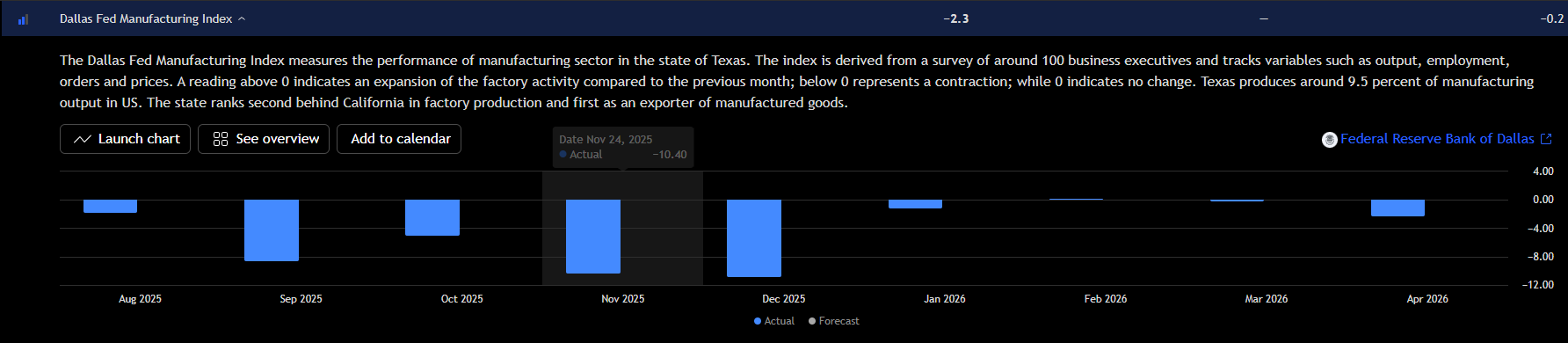
Dallas Fed Manufacturing Index April 2026 showing contraction at -2.3
Source: TradingView
Earnings Muscle vs. Hot Charts
The S&P 500 is sitting in a powerful spot heading into the busiest earnings stretch of the season. I’ve noted that semiconductor stocks have done most of the heavy lifting in 2026, with the SOX up 45%, while the Magnificent Seven has been far less impressive outside of Nvidia. That makes this week’s results from Microsoft, Amazon, Alphabet, Meta, and Apple critical. If AI capex guidance stays firm, the S&P 500 can keep leaning higher. If guidance wobbles, the chart may finally feel gravity. We’re moving past AI hype to demand hard evidence of ROI.
S&P 500 Weekly Chart Holds Bullish Breakout Above 7,000
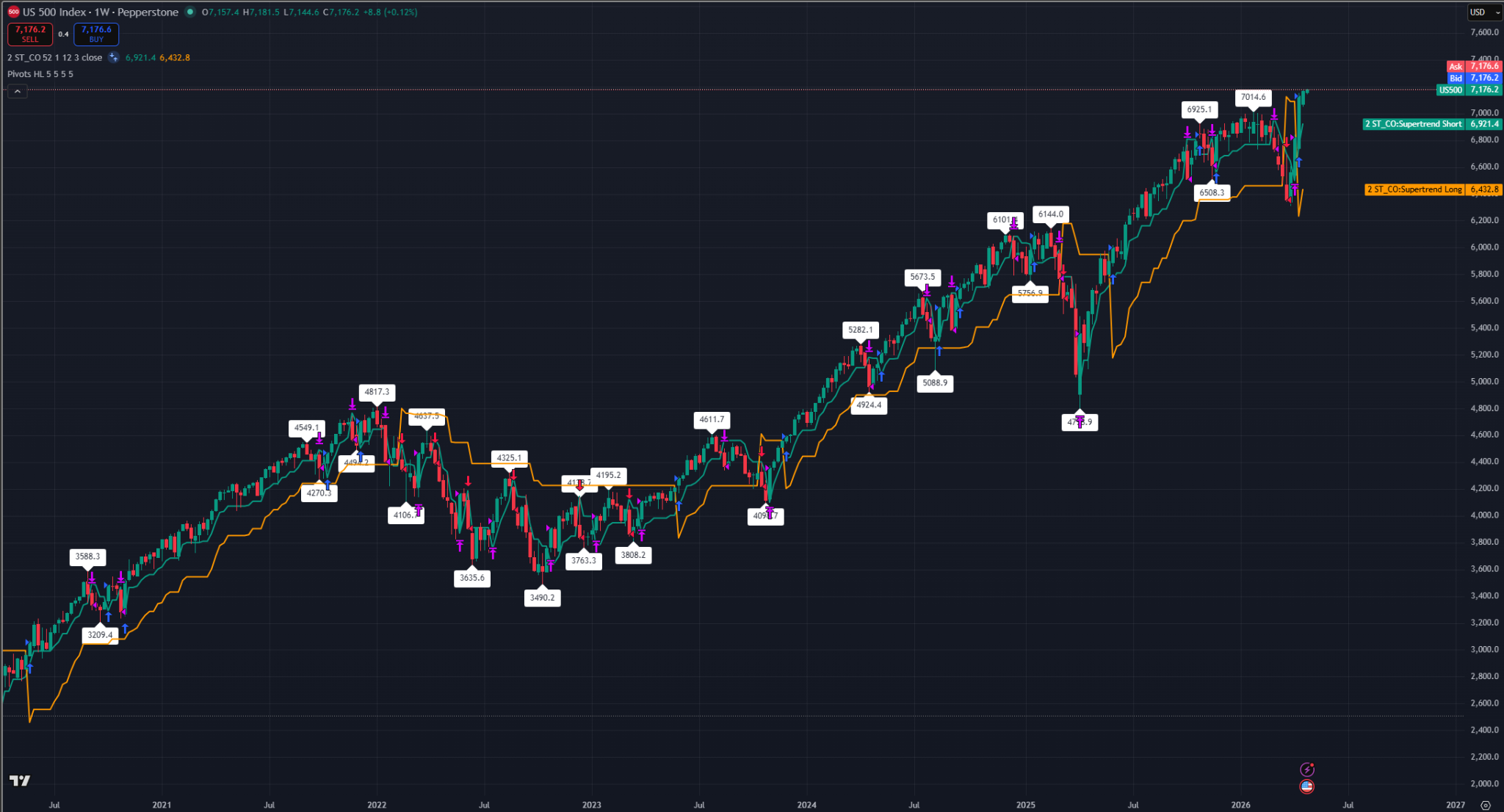
S&P 500 weekly technical chart showing bullish trend above 7,000
Source: TradingView
Daily Chart: Momentum Strong, RSI Stretched
The daily chart shows a clean surge from the 6,311.6 low into the current 7,170–7,180 area. Price is trading comfortably above the 21-EMA, and the candles remain more or less aligned with bullish trend conditions. RSI is the caveat here. At roughly 72, momentum is strong but stretched. That doesn’t automatically mean sell, in strong trends, RSI can stay overbought longer than traders expect. But it does raise the risk of a pause, especially if earnings fail to confirm the AI growth narrative. A dip into 7,014–7,000 would look normal. A break below 6,944 would be more concerning.
S&P 500 Daily RSI Signals Strong but Stretched Momentum
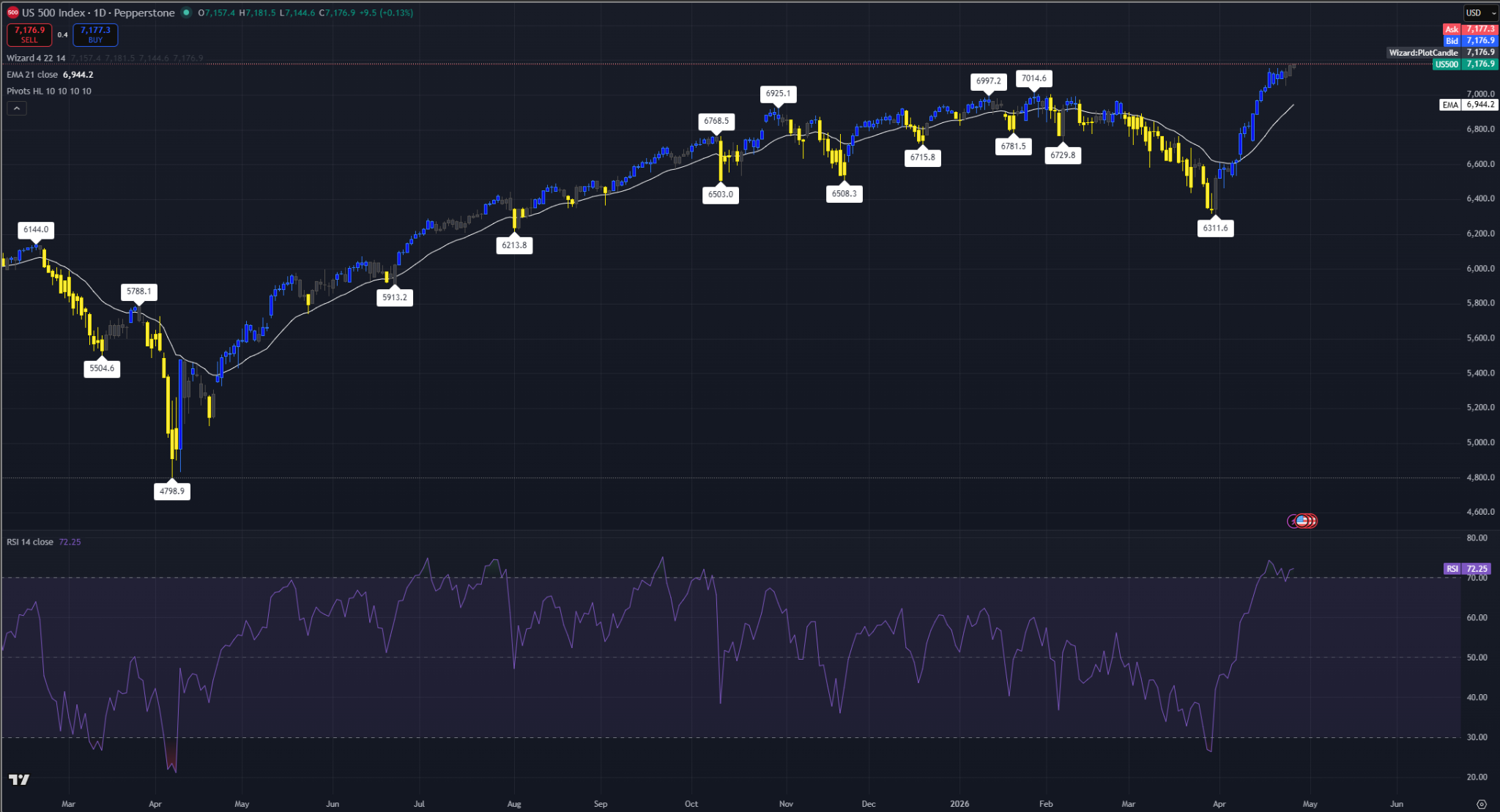
S&P 500 daily chart with RSI above 70
Source: TradingView
Technical Analysis: The 7,200 Magnet
Technically, the market is currently long gamma, a regime where market makers’ hedging activity acts as a powerful volatility dampener. I’ve watched this turn the 7,200 level into a Strong Magnet. Rather than acting as simple resistance, this Call Wall is pinning the index, creating a facade of stability. But don’t get complacent. The fundamental floor, the Put Wall at $699, is being eroded by the reality of triple-digit oil prices. A breach of the 7,000–7,050 psychological zone would likely trigger a cascade of selling as the current options structure flips from volatility suppression into amplification.
Renko supports the bullish view. Price is holding above the short-term trend bands around 7,112–7,115, while the 500-SMA remains far below the market. That’s trend separation. Clean air. RSI above 60 and the Z-score SMA around over 1.0 suggest momentum is positive but not wildly overheated on the Renko view. I think the daily chart looks stretched, but the short-term execution chart still has room if buyers defend the 7,112 zone.
S&P 500 Renko Confirms Short-Term Bullish Breakout
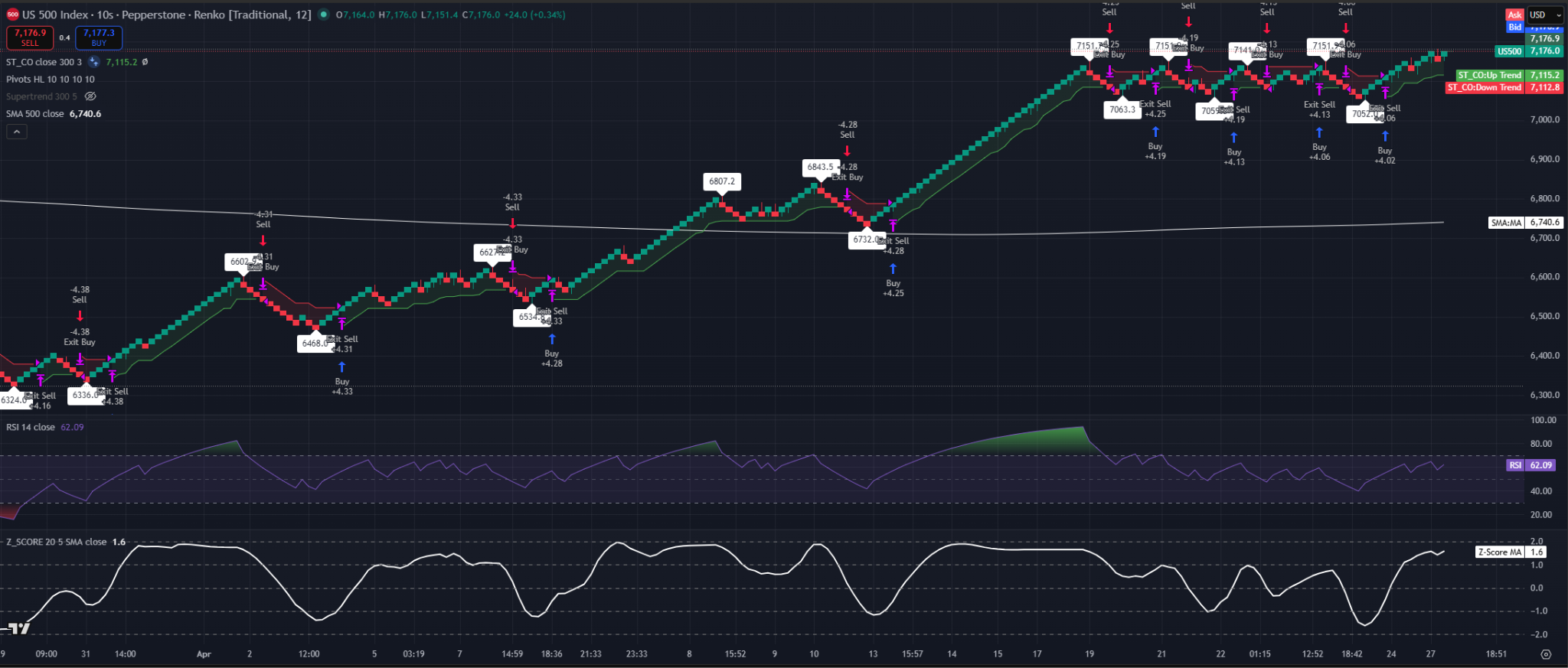
S&P 500 10-second Renko chart with 12-brick size and bullish trend support
Source: TradingView
The Verdict
Current Trend Direction: Bullish
Bias: Positive
Key Support Levels: 6310,6,920,
Key Resistance Levels: 7,200, 7,450
Medium-Term Path: I expect the S&P 500 to maintain its upward trajectory toward the 7,250–7,450 zone, provided the $676 billion AI capex narrative remains intact through this week’s earnings. While the RSI suggests a brief pause might be necessary, the technical breakout above 7,000 is too clean to ignore. Dips toward 7,100 should be treated as buying opportunities as long as the 21-day EMA holds.