



Trump’s Iran Deadline Weighs on Stock Index Futures
The major U.S. stock index futures are lower at the mid-session on Tuesday as tensions between the U.S. and Iran weighed on investor sentiment. The decline came ahead of President Trump’s deadline for Iran to reopen the Strait of Hormuz, with little confidence that an agreement would be reached.
At 16:14 GMT, the Dow Jones Industrial Average is down 246 points, or 0.52%, while the S&P 500 dropped 0.46% and the Nasdaq Composite is lower by 0.67%.
Technical Outlook
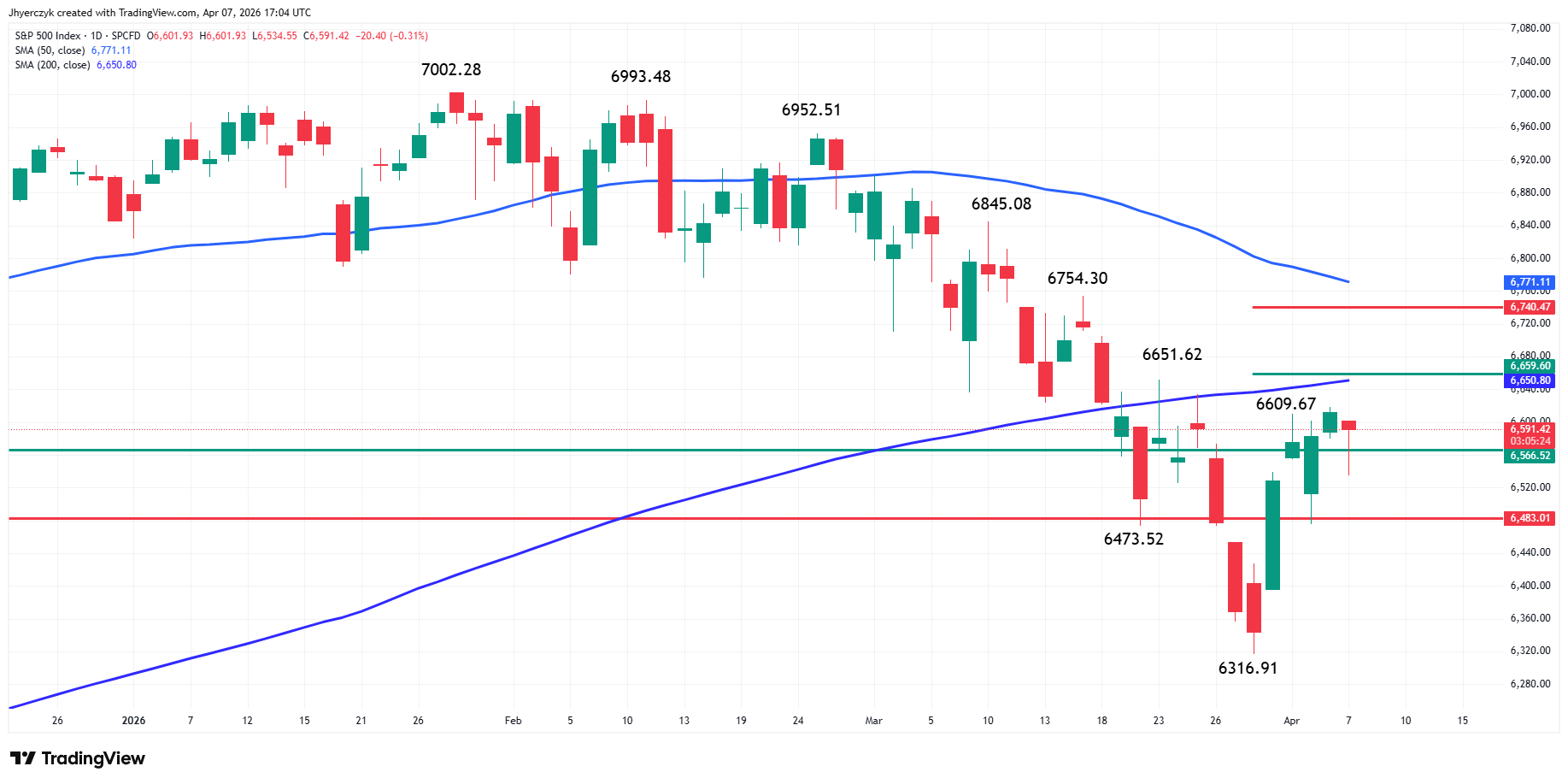
Technically, the S&P 500 Index (SPX) is in a downtrend, but short-term momentum shifted to the upside following the confirmation of the closing price reversal bottom at 6316.91 on March 31. However, after overcoming a long-term retracement zone at 6403.01 to 6566.52, the rally has stalled to just below the 200-day moving average at 6650.75 and a short-term retracement zone at 6659.60 to 6740.50.
Trump Warning Rattles Markets as Iran Deadline Approaches
Trump put it simply. Meet the deadline or face military action. Investors didn’t wait around to see how it plays out. They sold first. There were still some signals that back-channel talks hadn’t completely fallen apart but nobody was pricing in a deal getting done in time. Reports of U.S. strikes on Iranian infrastructure were already circulating. When the downside looks like that, you cut exposure and ask questions later.
Oil Surge Adds Inflation Pressure to Already Nervous Market
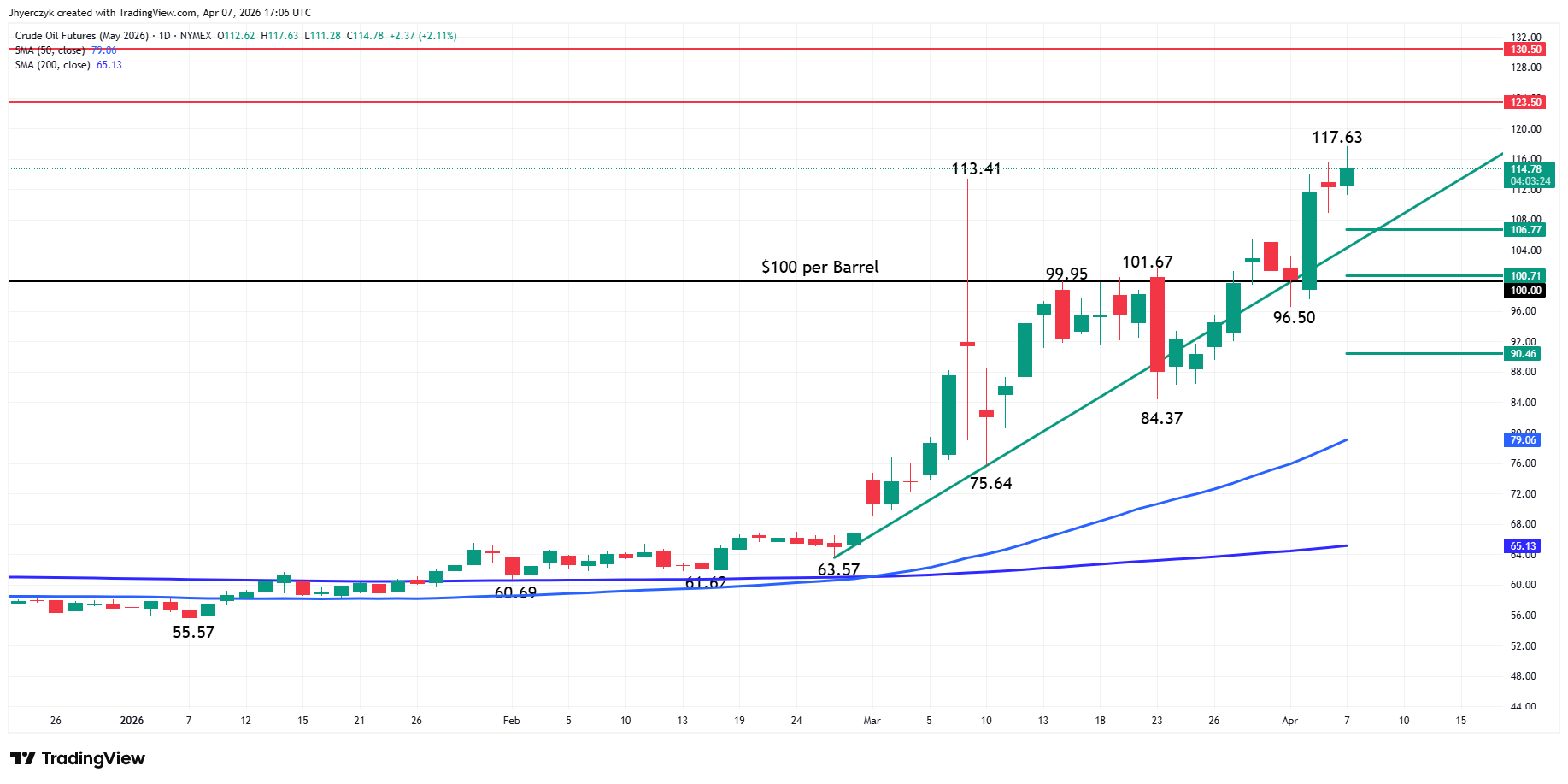
Oil didn’t wait for confirmation. West Texas Intermediate jumped more than 3% to above $117 a barrel and Brent moved above $110. Traders know what a prolonged Hormuz closure does to global supply and they’re not waiting around to find out how bad it gets. The inflation angle is what makes this a double problem for stocks. Higher energy costs feed directly into price pressures and that gives the Fed less room to maneuver. Rate cut expectations were already thin going into today. This doesn’t help.
Sector Breakdown
Technology and growth stocks led the selling and dragged the Nasdaq down with them. Financials and consumer discretionary followed. The only sector holding up is energy, which makes sense with oil running the way it is.
S&P 500 Price Forecast
Every new S&P 500 analysis as it publishes, today's technical signal and key levels, live price — on one page.
See all S&P 500 forecastsBroadcom bucked the trend, up 3% after announcing new artificial intelligence deals. Semiconductor demand stayed steady and the market rewarded it.
Market Outlook
The Middle East is running this market right now and that isn’t changing until there’s a resolution one way or the other. A last-minute deal would flip sentiment fast. No deal and you get another leg lower. Economic data and Fed signals are in the background for now but they come back into focus the moment the geopolitical noise settles down.
Energy stocks have the wind at their back as long as oil stays elevated. The rest of the market stays on defense until traders get the clarity they need on what happens next with Iran.
The daily chart pattern indicates the market may be waiting for a catalyst. In the meantime, a slight upside bias is developing with the 200-day moving average a potential trigger point for added strength. This may be enough to bring in more investors, but the SPX will really have to retake the 50-day MA at 6771.00 to bring in stronger buyers.
If a ceasefire deal is off and the war escalates, sellers should push the SPX back below 6566.62 and 6483.00. If new buyers don’t emerge then a retest of 6316.91 is likely over the near-term. Essentially, look for an upside bias over 6566.50 and a downside bias under 6483.00. In between, we’re calling it neutral.
More Information in our Economic Calendar.