



The U.S. economy continues to grow but the growth is becoming more fragile. Tariff tensions have appeared to abate as the U.S. and EU managed to avert another trade shock, while markets continue to be supported by tax cuts, liquidity, lower rates and AI spending.
In my view, this backdrop supports further upside in U.S. equities in the short term, but it also raises the risk of a deeper correction later. The inflation pressure, rising oil prices, higher Treasury yields, private credit risk and stretched valuations indicate that the rally is now stressing beneath the surface.
This article highlights the effect of tariff relief, fiscal stimulus, AI capital expenditures, stock market valuations, Treasury yields, the U.S. dollar and defensive market rotation in a cycle of robust momentum and escalating financial risk.

Trump Tariff Relief Fails to Remove Economic Pressure
The EU’s provisional acceptance of the elimination of import restrictions on U.S. products has reduced the possibility of another tariff shock. This is part of a larger trade agreement made with Washington in July. In that context the EU committed to lower duties on U.S. industrial products and to provide greater access for U.S. agricultural and seafood exports. In turn, the U.S. will maintain a 15% tariff on the majority of goods coming from the EU.
This is important because the U.S. and EU trade almost $2 trillion in goods and services each year. An escalation would have impacted companies, supply chains, consumers and investors. The deal provides businesses with some breathing room. It also helps prevent higher tariff hike on European cars, which Trump had threatened if the EU did not live up to its pledges.
But the deal is not a complete end to uncertainty. The EU provided an option to suspend the concessions if the U.S. does not follow through. The pact also expires at the end of 2029 unless Congress extends it. This makes the deal less risky in the short term. But it is not a permanent fix to the main issue.
The overall economic problem hasn’t changed. While tariffs may benefit some specific industries, they also can have an impact on prices, trade patterns and inflation pressures. It keeps the investor’s attention on margins, import prices and global supply chains.
Dow Jones Price Forecast
Every new Dow Jones analysis as it publishes, today's technical signal and key levels, live price — on one page.
See all Dow Jones forecastsEconomic Indicators Show an Inflationary Boom
Stimulus and Liquidity Keep Growth Supported
The U.S. economy is expanding, but the expansion depends on stimulus. Trump’s Big Beautiful Bill added fiscal support through tax cuts. The Federal Reserve also cut rates even though unemployment was already below the 5% target and PCE inflation was above the Fed’s 2% target.
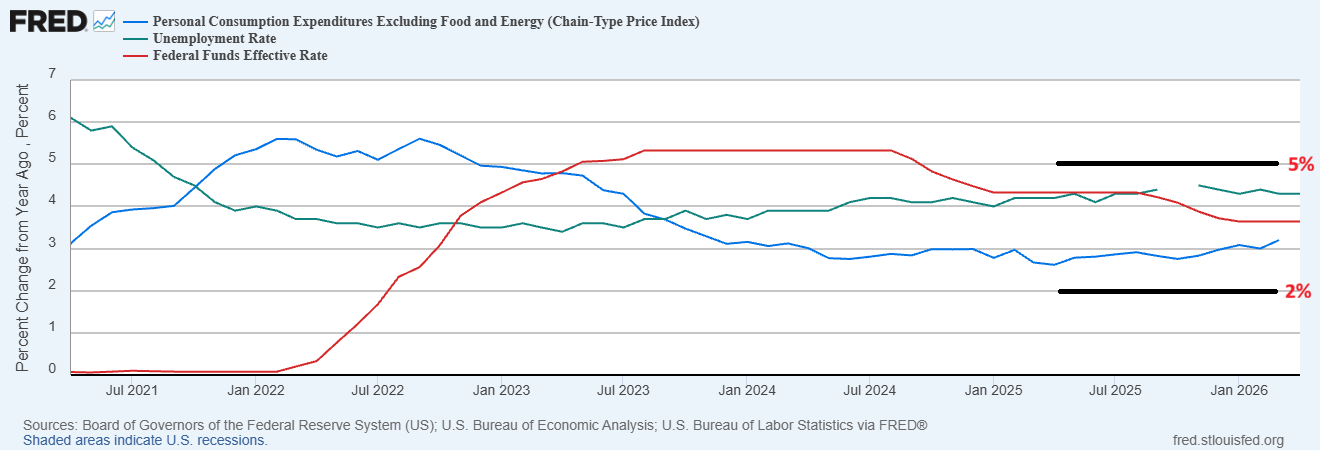
This is important because Fed’s job is to support full employment and maintain price stability. The rate cuts during the lower unemployment and higher inflation can fuel demand and keep inflation alive.
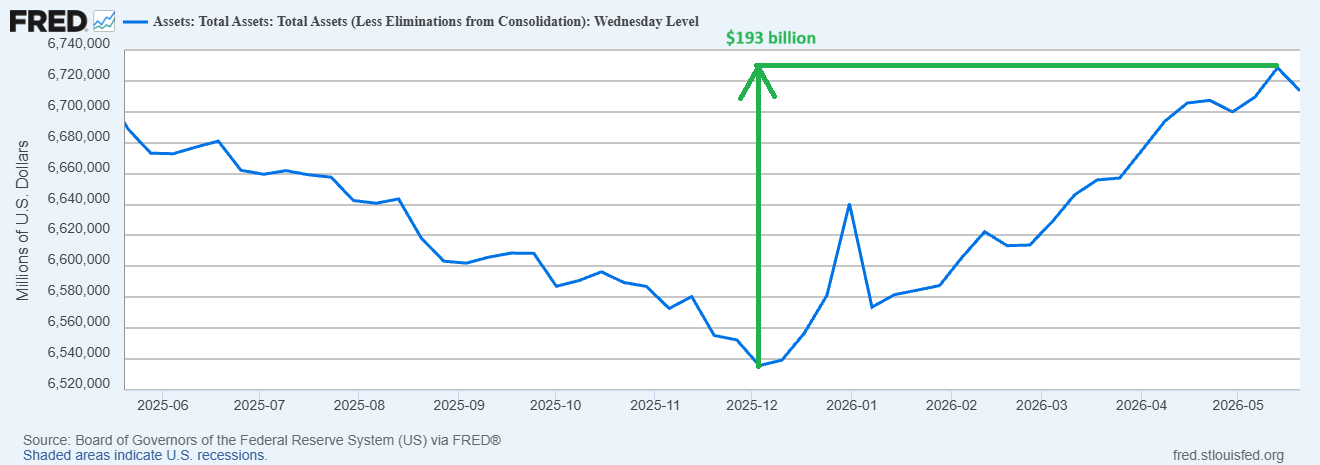
Liquidity is also improving. The Fed has expanded its balance sheet. The chart below shows that the Fed has added about $193 billion to financial markets since December 2025.
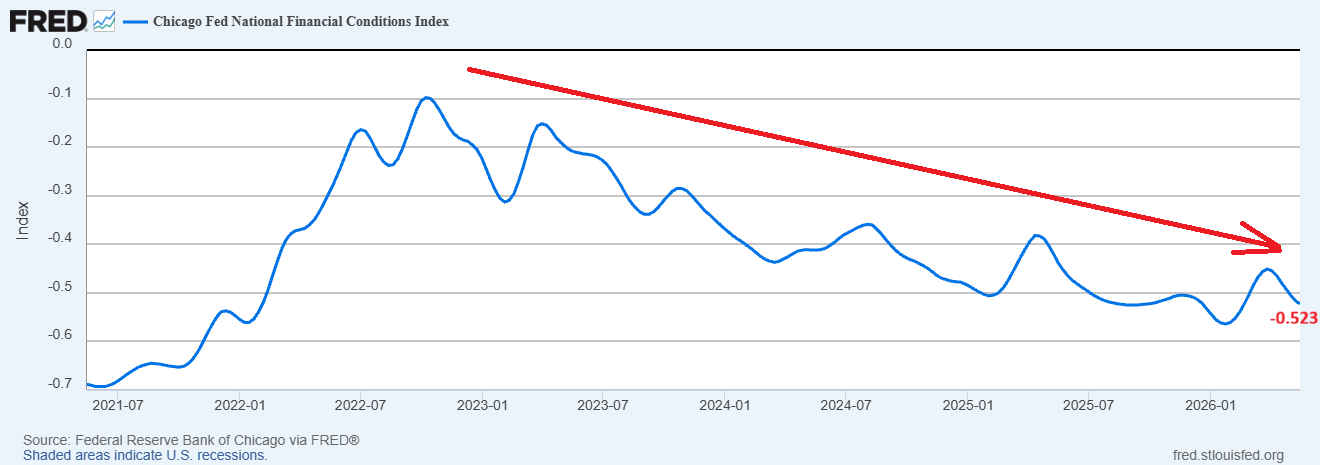
The Chicago Fed National Financial Conditions Index also confirmed the liquidity as it has been declining since 2023. The decline in this index indicates that financial conditions are becoming easier. This supports asset prices, credit creation and investor risk-taking.
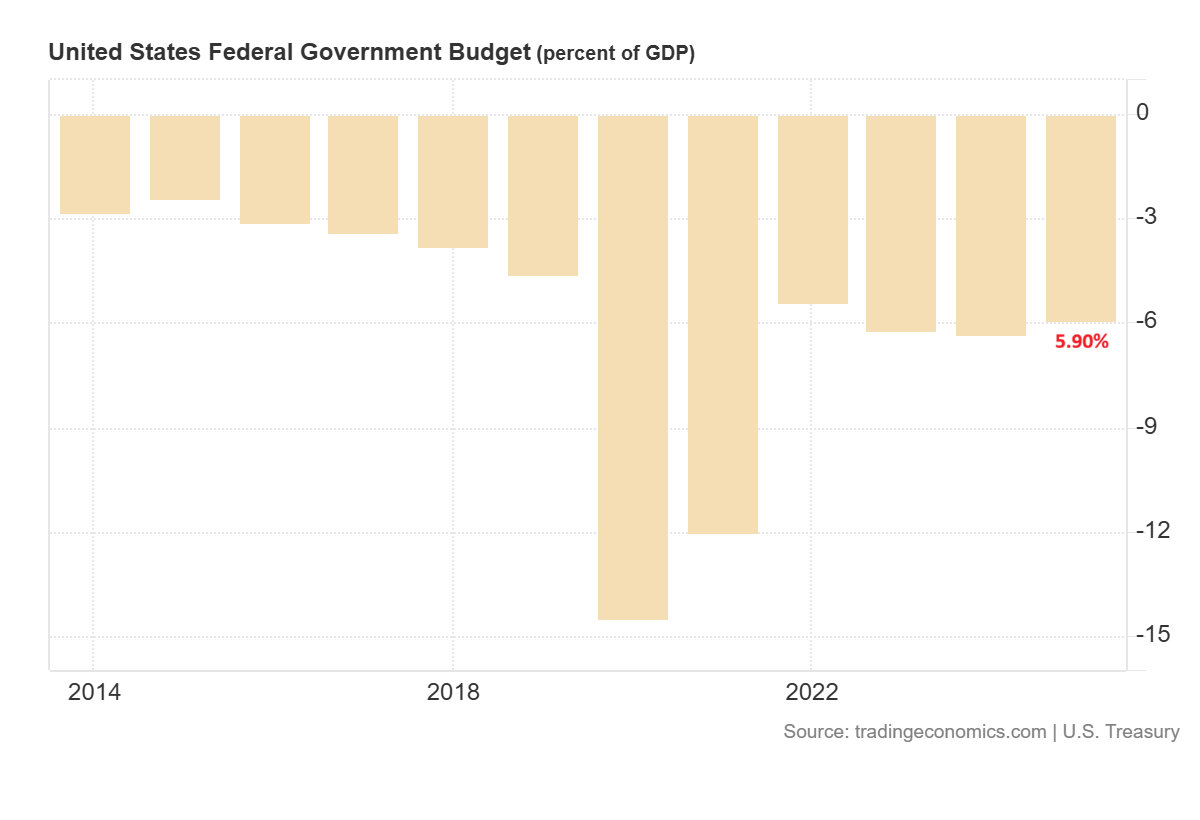
Fiscal policy also adds another layer of pressure. The budget deficit is expected to exceed 6% of GDP in 2026 as shown in the chart below. Spending discipline will be unlikely before the November midterm election.
AI Spending and Oil Prices Add Inflation Pressure
AI spending is the major driver for the past five years. The chart below shows that the capital spending for Amazon (AMZN), Alphabet Inc. (GOOG), Microsoft Corp. (MSFT), Meta Platforms Inc. (META) and Oracle Corp. (ORCL) has surged during the past decade. This spending has contributed to a huge share of GDP growth in the last five years. Most of this surge comes from 2023.
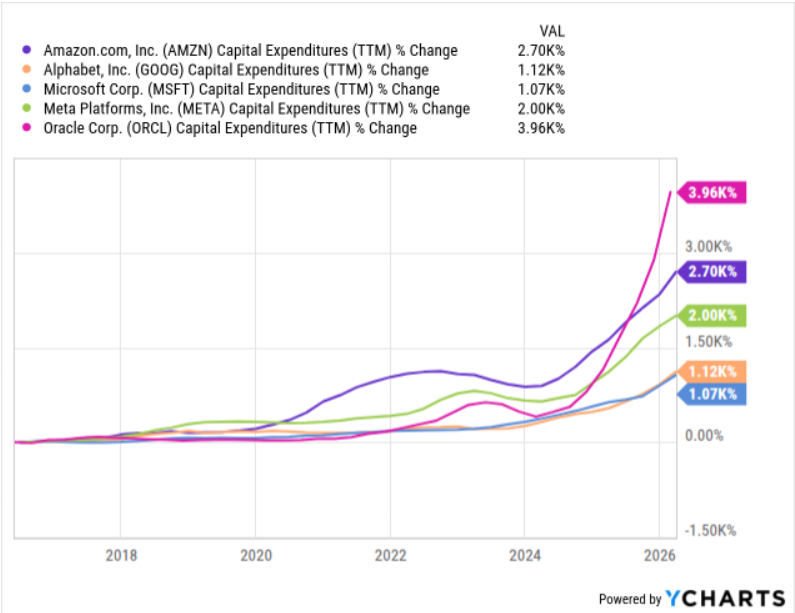
The economy is expected to grow and the tax-pricing of companies will continue to grow. This makes the economy look stronger, but it also creates concentration risk. If AI investments lose momentum, then GDP growth may lose one of its strongest supports.
In 2026, war spending will also add pressure to the financial markets. Military spending tied to the Iran conflict costs also adds pressure to the financial markets. According to the US Department of War, the US military spending has surpassed the $1 trillion mark.
The higher oil prices are feeding into inflation expectations. Crude oil prices keep rising because of supply disruptions and shipping restrictions through the Strait of Hormuz. This suggests that inflation pressure might be difficult to control.
U.S. Stock Market Faces Bubble Risk Despite Strong Momentum
The U.S. stock market has gained from the same forces that are lifting the economy. Equities are bolstered by tax cuts, lower rates, easy liquidity and AI spending. These forces account for a high degree of risk appetite in tech stocks.
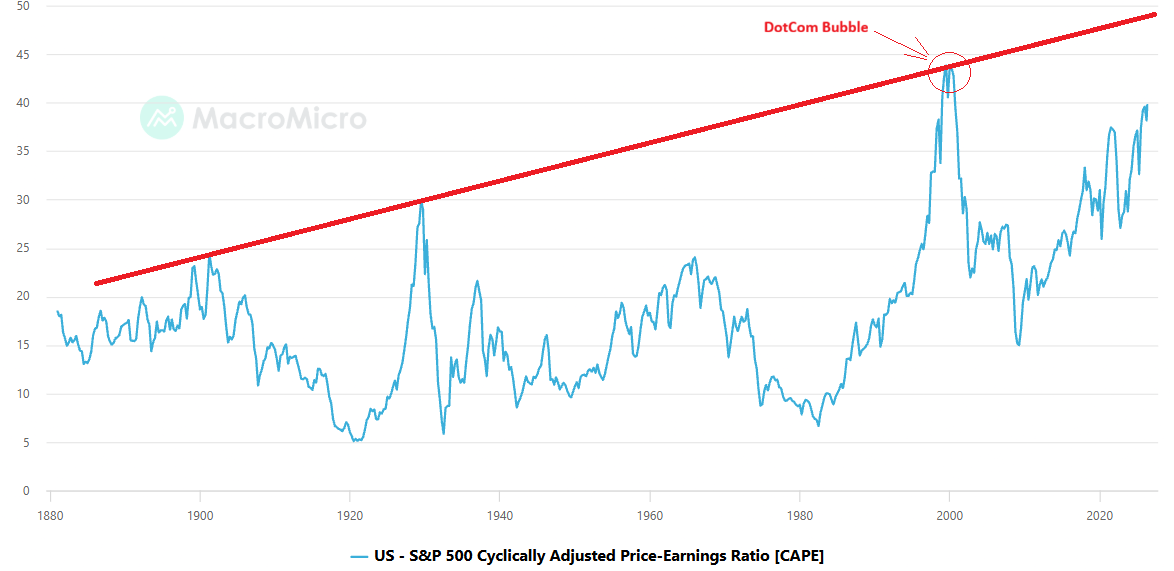
The surge in the Nasdaq index shows an element of excess. During the last 3 years, the Nasdaq index has more than doubled. The Robert Shiller CAPE has surpassed 40 for the first time since the Dotcom bubble. This doesn’t mean that a collapse has to be imminent. But it demonstrates that valuations are in the overstretched range.
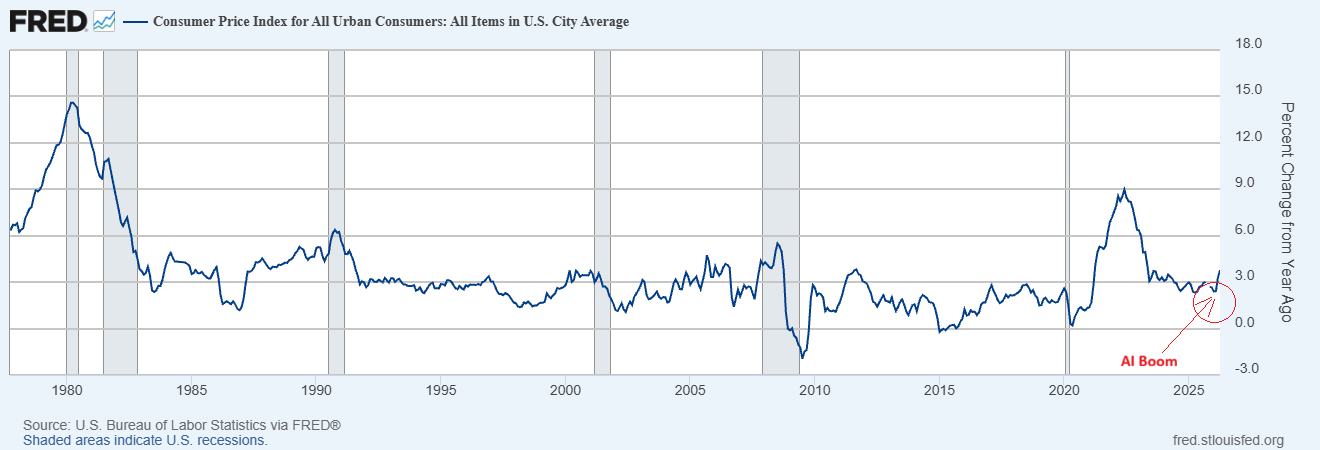
In 1980, CPI reached just below 15%. A new inflation wave is just beginning, which is driven by AI, private credit and government debts.
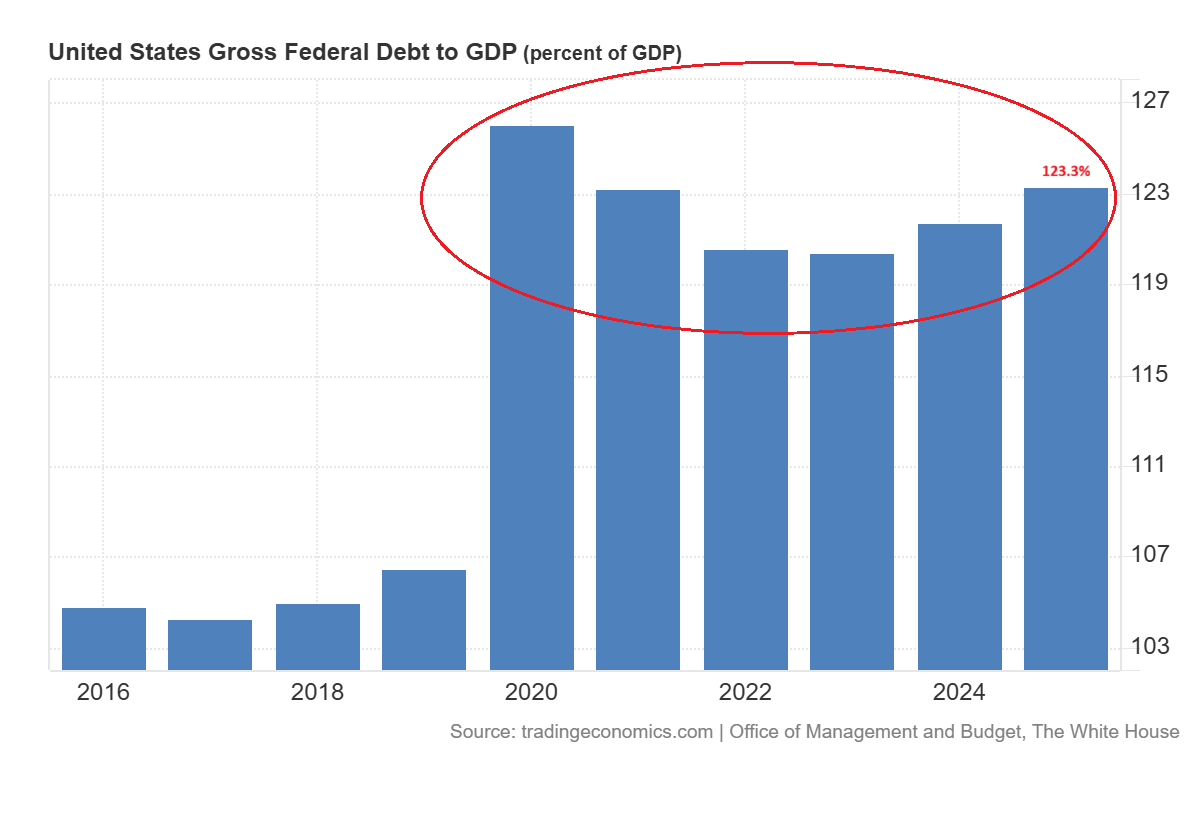
The chart below shows that the US debt-to-GDP ratio has grown at a much faster rate since 2020.
An important issue is private credit. The industry has expanded at a rapid pace and is less transparent than the public credit markets. Banks are exposed through credit lines. Private credit assets are also held by insurance companies. Losses can ripple through the entire financial system if they occur in this area.
It makes the stock market volatile. The rally may persist as long as liquidity remains loose and AI investments continue to be strong. However, the risk is increasing. Market confidence could shift rapidly due to higher oil prices, persistent inflation, rising yields and diminishing credit conditions. The strongest pressure can come first from highly valued growth stocks and levered companies.
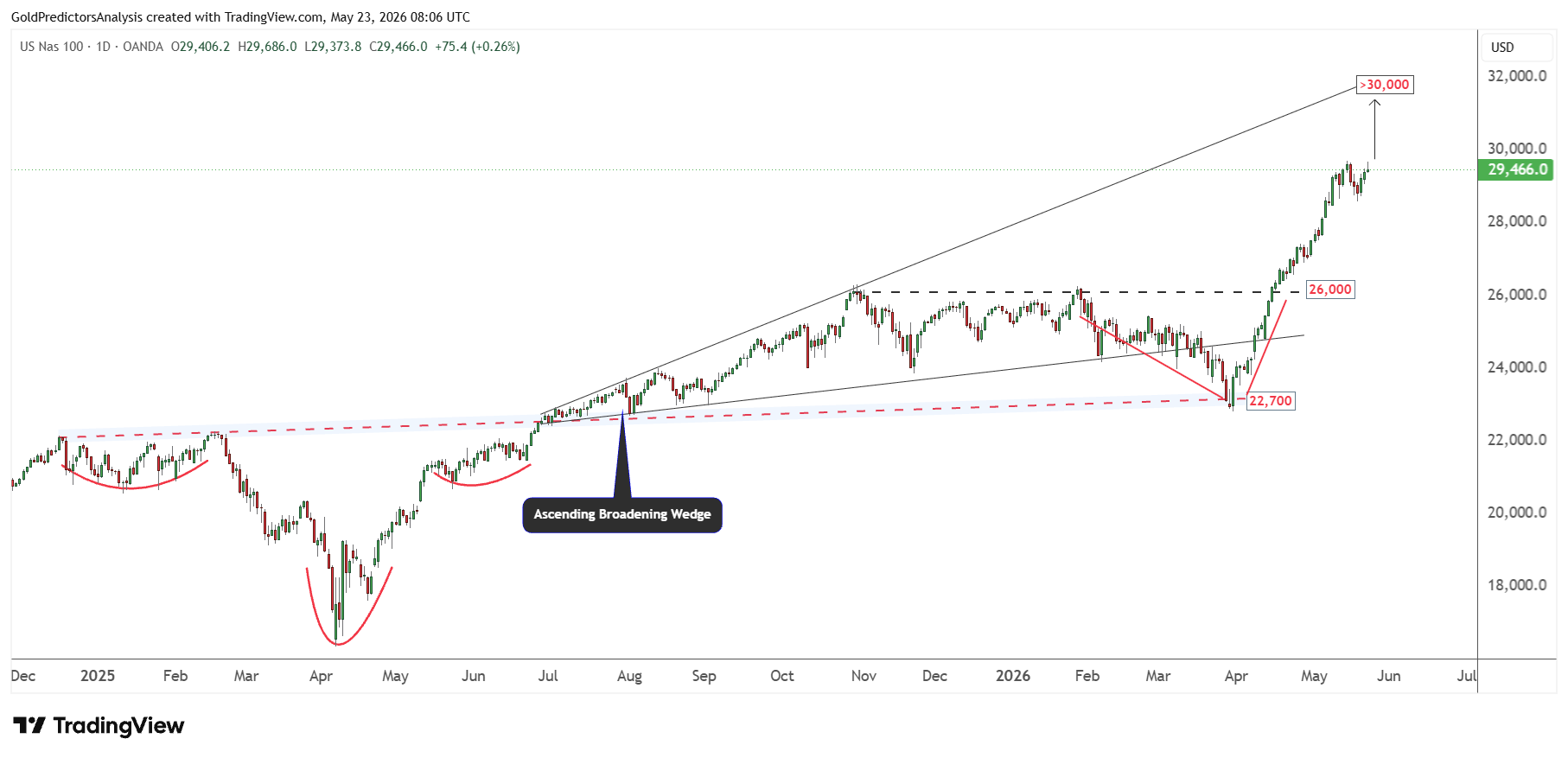
Nasdaq 100 Forecast: V-Shaped Recovery Targets 30,000
From technical perspective, the Nasdaq index looks set to surge higher in the short term toward 30,000. This surge is defined by the technical formation of a V-shaped recovery above the long term support of the 22,700 level.
The formation of an ascending broadening wedge pattern highlights strong volatility in the index. A break above the 26,000 level indicates that the index will likely move toward 30,000.
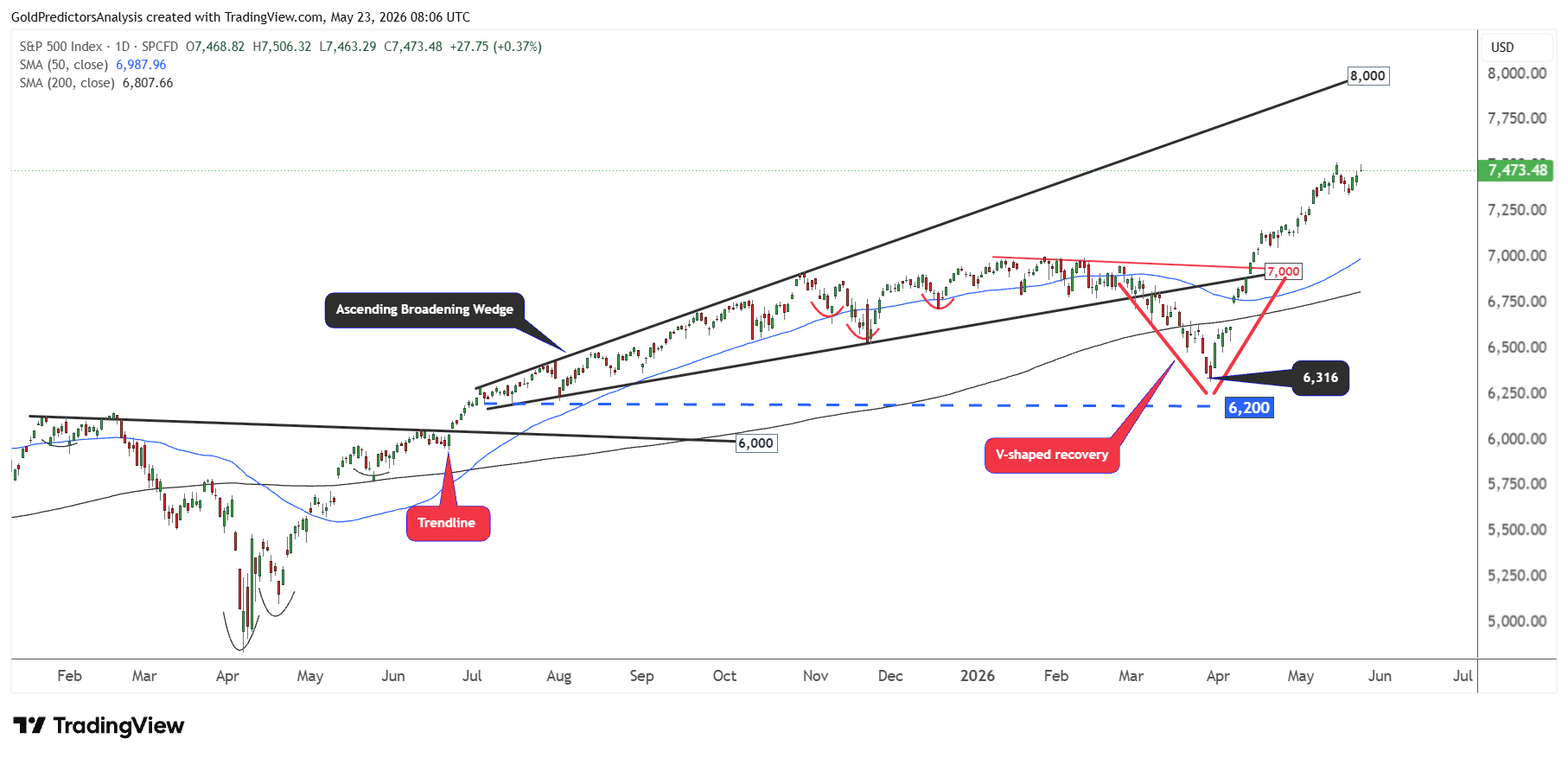
S&P 500 Forecast: Breakout Above 7,000 Opens Path to 8,000
From technical perspective, the S&P 500 has broken the 7,000 level after forming a V-shaped recovery above the long-term support of 6,200. This breakout has opened the door for the target of the 8,000 level in the S&P 500 in the short term.
The strong bullish momentum after the breakout of the 7,000 level indicates a sustained move toward the 8,000 level. Any recovery toward the 7,000 area will likely offer buying opportunities for the next move higher.
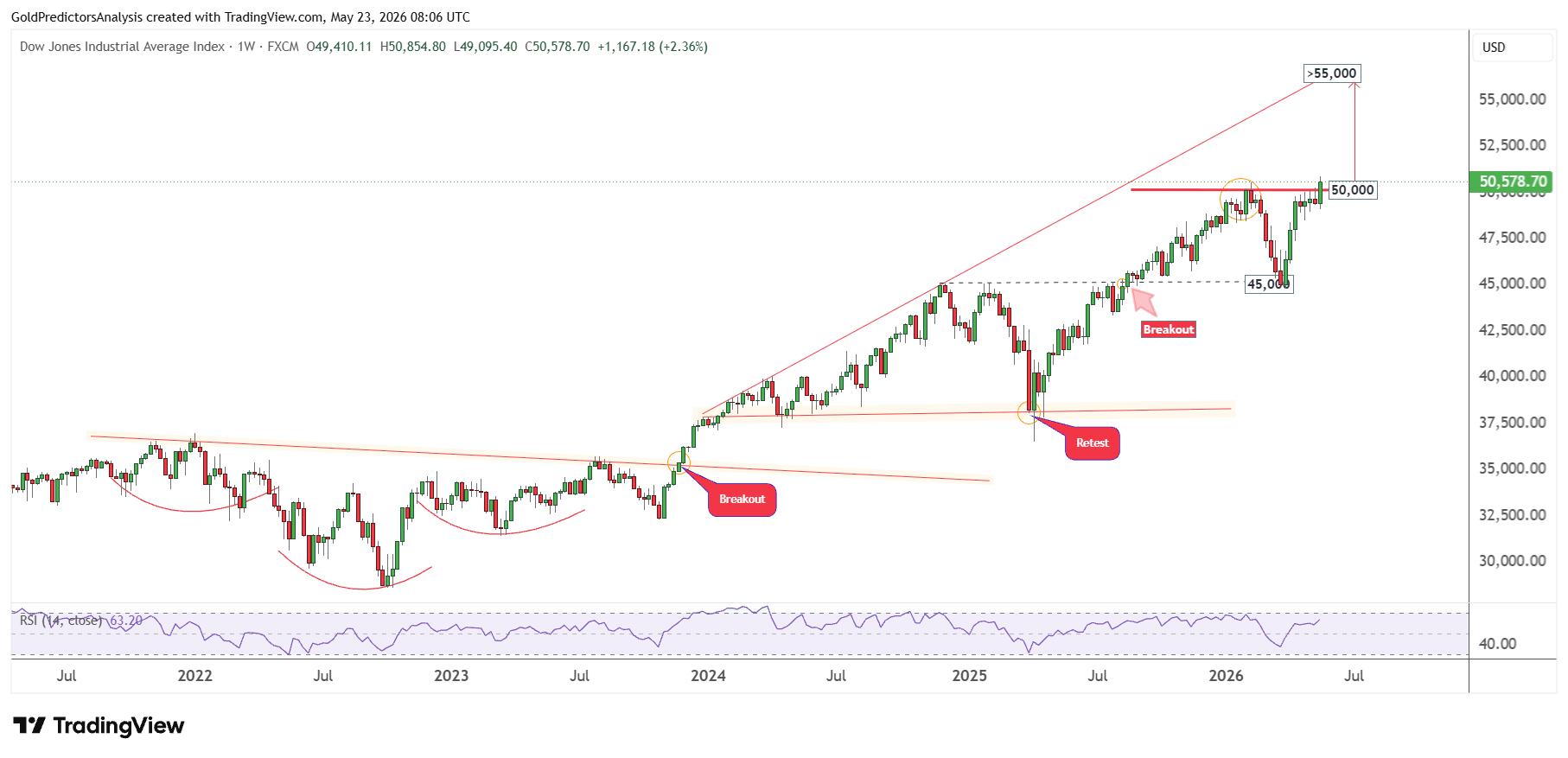
Dow Jones Forecast: Breakout Above 50,000 Confirms Bull Market Strength
From technical perspective, the breakout in the Dow Jones 30 at the 50,000 level has confirmed the U.S. bull market. This breakout indicates a major breakout in the U.S. stock market and suggests a sustained upward move toward 55,000.
This breakout in the Dow Jones 30 indicates that the S&P 500 and Nasdaq will likely move toward their prime targets of 8,000 and 30,000, respectively.
Treasury Yields and the U.S. Dollar Reflect Fiscal and Inflation Stress
U.S. Treasury Yields: Fiscal Risk Keeps Pressure on Borrowing Costs
The long-term Treasury yields are emerging as a major flash point. The rise in yields reflects the fact that investors are requiring higher returns for debt supply and fiscal risk, as well as inflation. This poses issues for the government, business and consumers.
The higher the yield the more expensive it becomes to refinance a loan. Private credit borrowers and corporate borrowers face much higher rollover cost. This creates a risk of solvency, particularly for companies that borrowed a lot of money at low rates last cycle. A modest uptick in borrowing costs can have a negative effect on companies that do not have strong cash flow.
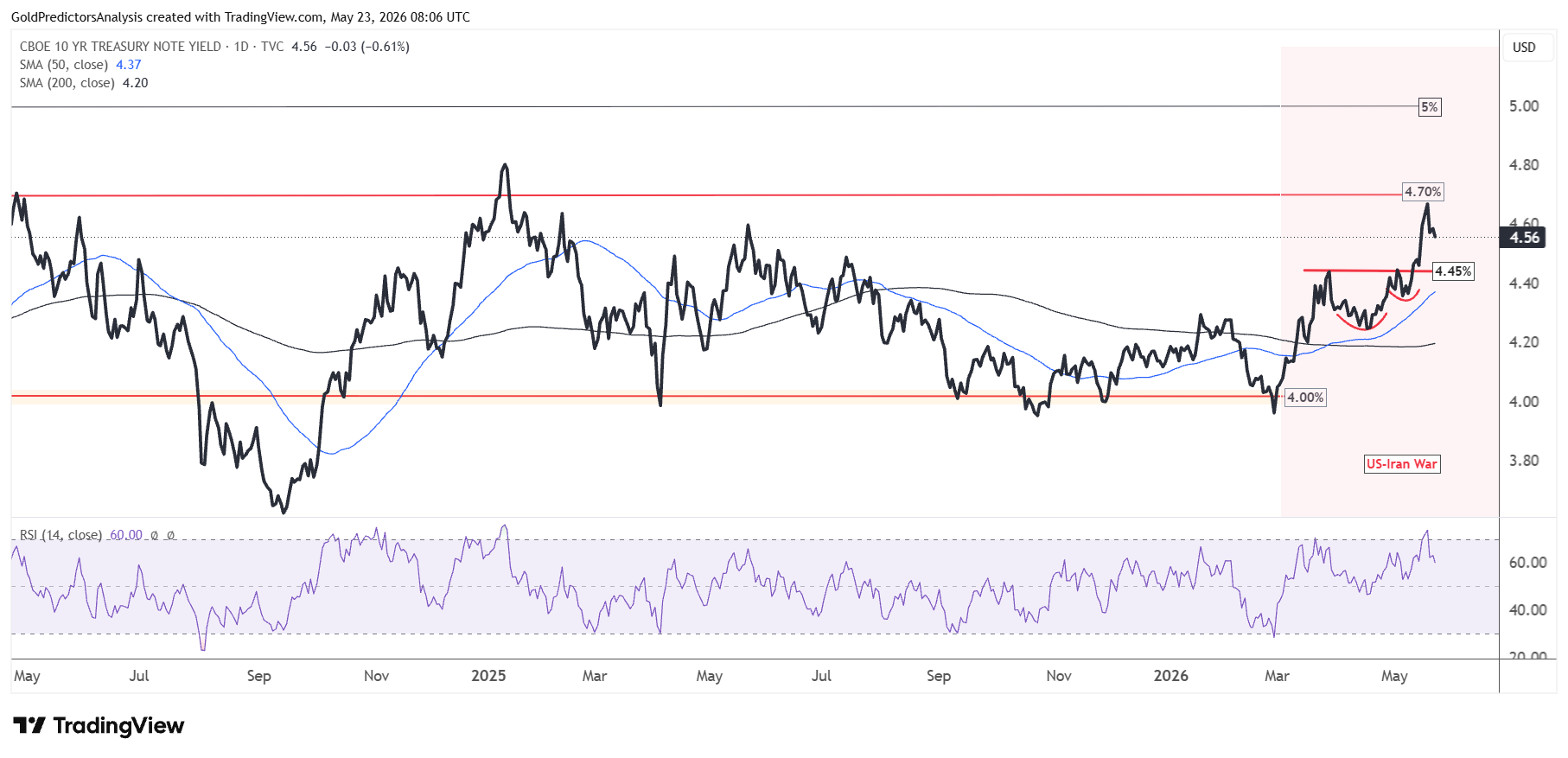
The daily chart for the U.S. 10-year Treasury yield shows that the yield hit my target of 4.70% and corrected lower to the 4.56% level. The immediate support remains at the 4.45% area. But the short-term direction remains higher.
Overall, the yield has been consolidating within the range of 4.70% and 4% during the past year. A break of any of these levels is required to trigger the next move. A break above 4.70% will likely push the yield toward 5%.
U.S. Dollar: Higher Yields Support the Dollar but Confidence Risks Remain
In the short term, higher yields would be supportive for the U.S. dollar. Global capital tends to flow to dollar assets when long-term rates increase. This can push up the dollar, putting pressure on the commodities, emerging markets and foreign currencies.
But the US dollar faces long-term confidence issues. If investors focus on debt sustainability, fiscal deficits and political risk, it will lead to instability in the US dollar. If this is the case, then increased yields do not convey confidence. These can be an indicator of stress.
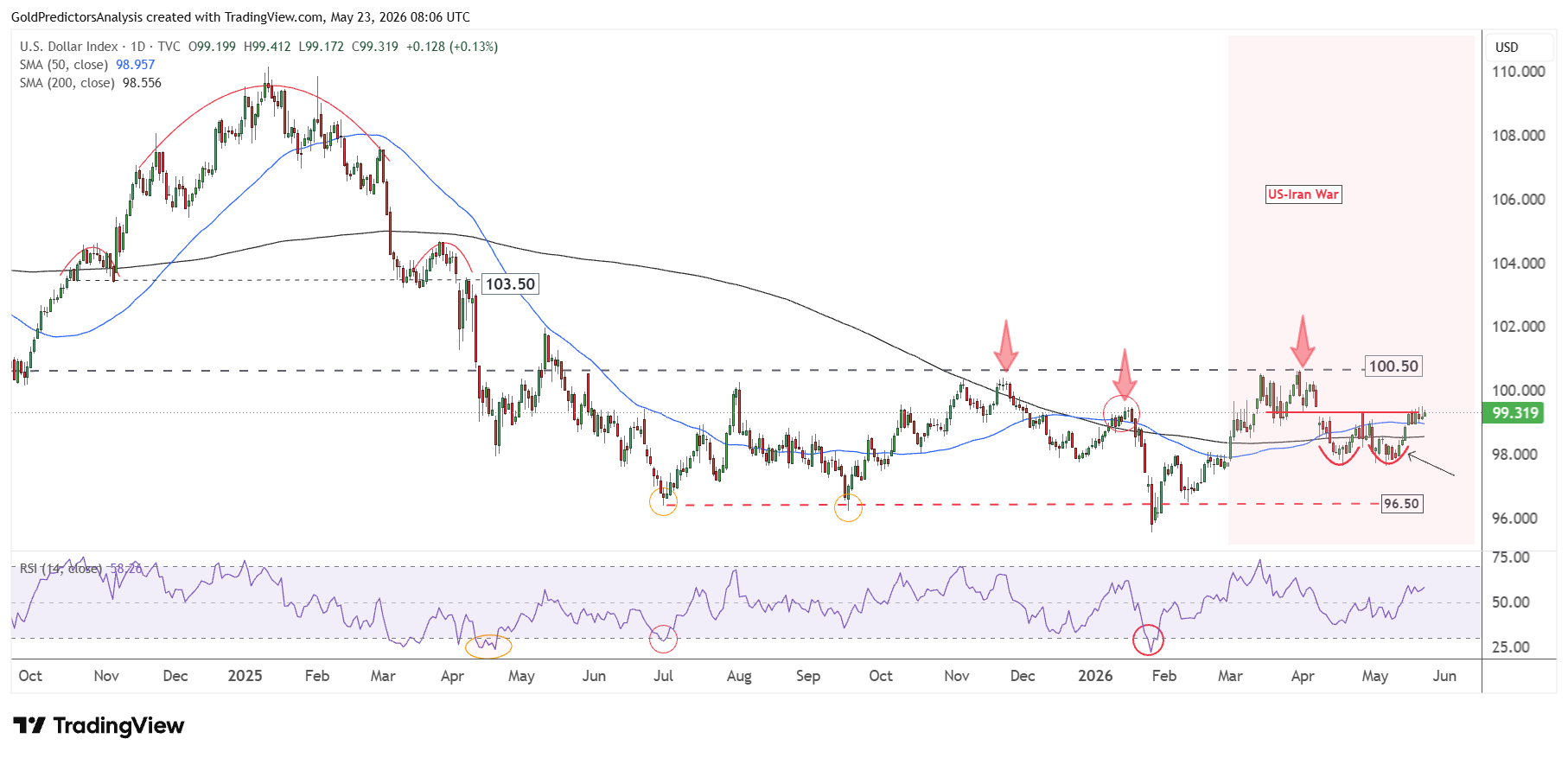
The daily chart for the U.S. Dollar Index shows that the index has formed a double bottom pattern above the 97.70 level and is attempting to break above the 99.30 area. A confirmed break above 99.50 will take the U.S. Dollar Index to the 100.50 level. A break above 100.50 will take the index to the 102 level in the short term. However, a break below 96.50 will take the index to the 90 level.
Gold Benefits From Fragility, Inflation Risk, and Defensive Rotation
Gold (XAU) remains the defensive part of this setup. The market is under threat from inflation pressures, fiscal pressures, geopolitical risks and financial fragility. These circumstances lead to a demand surge for gold as a safe haven.
But the gold price could come under pressure in the short term due to rising Treasury yields and a strengthening U.S. dollar. An increase in yields increases the opportunity costs of holding gold. A higher dollar price also provides a higher price for foreign buyers. This can dampen the upward momentum if investors are concerned with interest rates.
The long term picture for gold remains bullish. Inflation has not yet been under control. Oil prices could keep climbing if the Iran situation persists and shipping through the Strait of Hormuz remains curtailed. Fiscal deficits are still large. These forces are serving as a sustaining demand for hard assets.
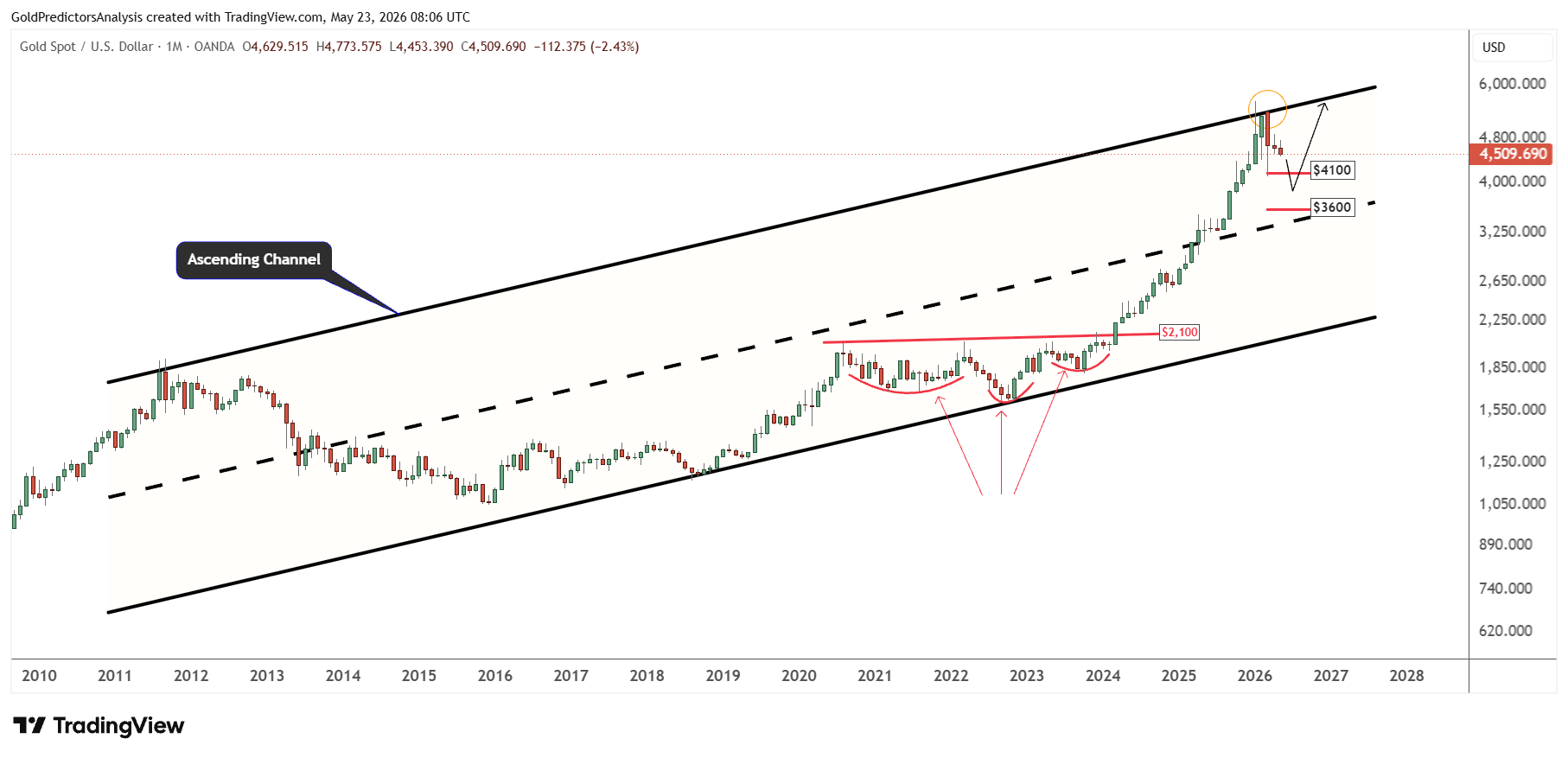
From a technical perspective, the correction in the spot gold price from the $5,600 area is due to profit-taking at the strong resistance level. This resistance is defined by the ascending channel pattern, which was stretched from the bottom of the August 2018 lows.
On the other hand, the formation of an inverted head-and-shoulders pattern from August 2020 to February 2024, and then the breakout above the $2,100 level, indicates that gold prices have formed a long term bottom. This correction will likely offer strong buying opportunities for the next leg higher.
From the technical charts, there are only two levels that point to the possible bottom formation. The first level is $4,100 and the second is $3,600. Any correction back to these levels will likely form the bottom in gold prices and push prices toward the $6,000 to $7,000 level in the medium term.
In Closing: Strong Momentum Meets Rising Fragility
The U.S. market remains strong on the surface, but bigger risks are starting to build. Stocks continue to benefit from tax cuts, easier liquidity, investments in AI and reduced rates. Nasdaq, S&P 500 and Dow Jones are all higher and that’s a sign that risk appetite is still good. The prime targets for Nasdaq, S&P 500, and Dow Jone 30 remain the 30,000, 8,000, and 55,000, respectively. But there are risks in this rally as valuations are stretched, debt has increased, private credit risk has risen, and oil prices are high. Investors could begin to question the strength of the move if yields continue to rise and inflation remains sticky.
This is still a gold defensive game. In the short term, the potential of higher yields and a strengthening U.S. dollar could weigh on gold prices but the long term picture remains bullish. Demand for hard assets remains strong due to fiscal stress, inflation risk, war spending and financial fragility. The next rally may be imminent if gold holds above the support area at $4,100. If the price breaks below $4,100, that would pave the way for a $3,600 retest. This correction in gold will offer an upside target of $6,000 to $7,000.
Read more: Inflation Impact Spreads as Treasury Yields, Gold, Silver and Stocks Face Volatility


