Stocks Claw Back from Steep Overnight Losses as Iran War Rattles Markets
The major U.S. equity indexes are lower on Monday shortly after the cash market opening. Prices are clawing back, however, from steep losses suffered in the overnight futures market. The catalyst that triggered the early session sell-off was the U.S. and Israeli attack on Iran over the weekend. Although the event created a wave of instability in the global marketplace, the quick bounce back in stocks suggests investors were waiting for worse.

Gold Jumps, Oil Soars and VIX Hits Yearly High
While stocks were going down, gold jumped to its highest level in a month as demand for the safe-haven asset grew. Crude oil also soared more than 7% before consolidating. Stock market investors were also taking protection in the option market, which drove up the CBOE Volatility Index (VIX). This fear gauge rose to its highest level this year.
Trump Says Operation Ahead of Schedule but Traders Aren’t Convinced
President Trump is optimistic that the war with Iran will end quickly, saying the operation is “ahead of schedule.” But in my opinion, this is wishful thinking especially if Iran blocks the Strait of Hormuz and continues to bomb its Arab neighbors. An analyst at Barclays said he didn’t think the war would drastically alter the U.S. economy, but that it’s still too early to buy dips. Since the new year began, investors have gotten used to entering new positions on weakness, but buying while the war is still escalating could turn into a risky proposition.
Oil’s 7% Surge and Quick Reversal Says the Strait Risk Isn’t Priced In
Oil jumped over 7% on the opening then promptly sold off to nearly fill in its overnight gap. This tells me that traders haven’t fully priced in the possible closing of the Strait, where roughly 25% of the world’s oil is transported daily. Besides the fear of creating an oil shortage, there are also new concerns that inflation pressures could be reignited.
Tech and Banking Lead the Decline While Defense and Energy Shine
The selling pressure today hit across all sectors with losses led by tech and banking shares. Stocks like Broadcom, Amazon and Alphabet fell in the tech sector, while Morgan Stanley and Goldman Sachs dragged the financial sector lower.
NASDAQ 100 Price Forecast
Every new NASDAQ 100 analysis as it publishes, today's technical signal and key levels, live price — on one page.
See all NASDAQ 100 forecastsThe bright spots were defense companies like Northrop Grumman, Lockheed Martin and RTX. Oil companies like Exxon Mobil and Chevron also posted solid gains.
ISM Manufacturing Expands but SPX Still Faces Resistance at 50-Day MA
In economic news, the U.S. manufacturing sector expanded in February for the second straight month but only the third time in 40 months, according to the ISM manufacturing PMI report. The headline number is bullish for stocks, but employment is still contracting and there are still concerns about tariffs hurting corporate earnings.
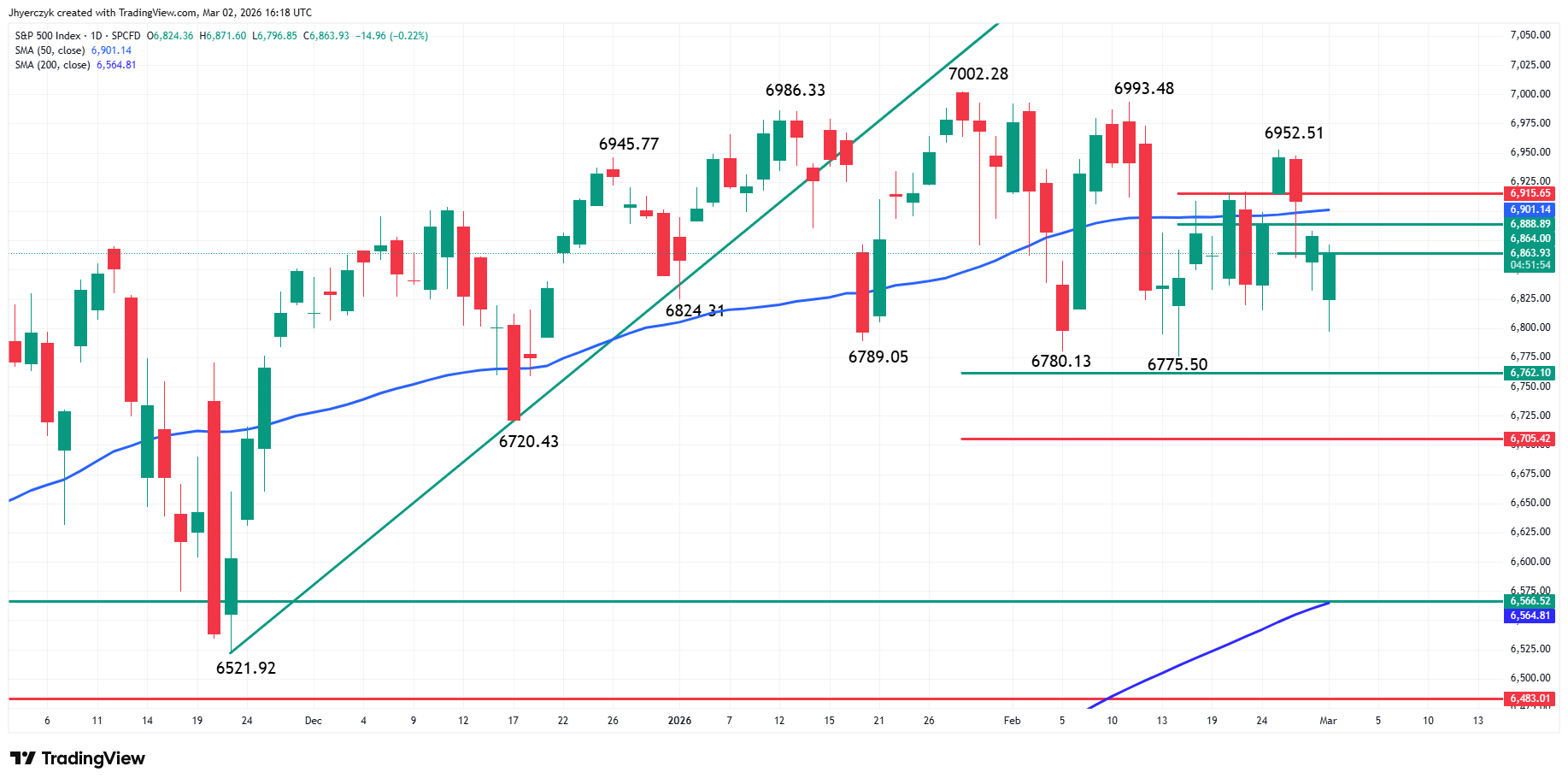
Technically, the SPX is nearly even for the session after the sharply lower opening. It is still facing headwinds at 6864.00 and 6888.89, but the major resistance is the 50-day moving average at 6901.22. Trader reaction to this indicator will set the direction into the close.