Stocks Climb but Can’t Hold the Highs
The major U.S. stock indexes are edging higher but retreating from intraday highs at the mid-session on Tuesday as they continue to attempt to recover from the current sell-off ahead of Wednesday’s Federal Reserve interest rate decision. Eyes continue to be on the Iran War with crude oil volatility influencing investor stock market sentiment.

Fresh Attacks Knock the Wind Out of the Rally
After an early session jump, the stock indexes hit an intraday peak close to the time CNBC reported fresh attacks on the United Arab Emirates’ energy infrastructure. The move likely drove up the chances of a prolonged war and supply disruptions.
Energy Is the Only Sector Nobody Wants to Fade
Energy is the hottest sector on Tuesday, posting a 1.75% mid-session gain. Investors are reacting today to another surge in oil prices. Traders are also casting doubts on the U.S. government’s attempt to get allied nations to escort tankers through the Strait of Hormuz. State Street Energy Select SPDR ETF (XLE) is up 2% on the day, helped by a 1% rise in Exxon Mobil.
Fertilizer Stocks Catch a Bid on Tanker Strike
Shares of fertilizer companies are also trading higher after a tanker was struck near the Strait. Key fertilizer companies to watch include Mosaic, up 5%, CF Industries, up 3% and Nutrien, which gained 2%.
The 200-Day Is the Last Line of Defense
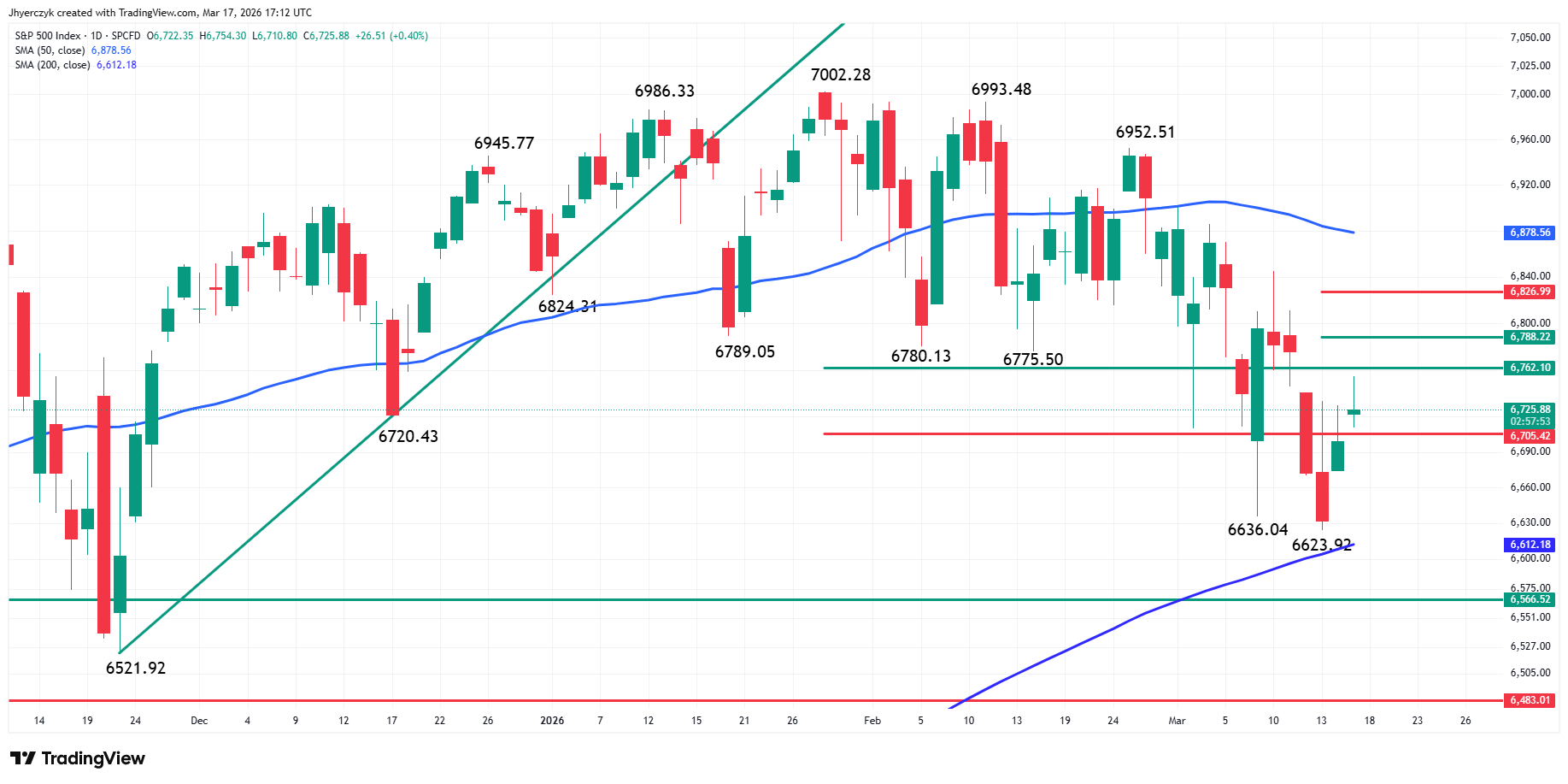
Technically, the S&P 500 Index (SPX) is still in a downtrend, but showing some resilience near the 200-day moving average at 6612.16. As long as this key support and trend indicator holds, investors will remain cautiously optimistic of at least a rangebound trade until they can assess the length of the war between the U.S. and Iran.
Dow Jones Price Forecast
Every new Dow Jones analysis as it publishes, today's technical signal and key levels, live price — on one page.
See all Dow Jones forecastsSPX Bulls Have a Case but Still Face Headwinds
Investors seem to like the four-month retracement zone at 6705.42 to 6762.10, which could be acting like a pivot. I can build a case for near-term strength over 6762.10. However, buyers will still face headwinds at 6788.22 to 6826.99 as well as the 50-day moving average at 6878.46.
A Break Below 6705 Changes Everything
A sustained move under the 61.8% level at 6705.42 will be a sign of weakness, however. This could lead to a retest of the 200-day MA at 6612.15. If the momentum is strong enough, sellers could break this indicator with 6566.52 to 6483.00 the next major target zone.
Nasdaq Looks for Footing at the 200-Day
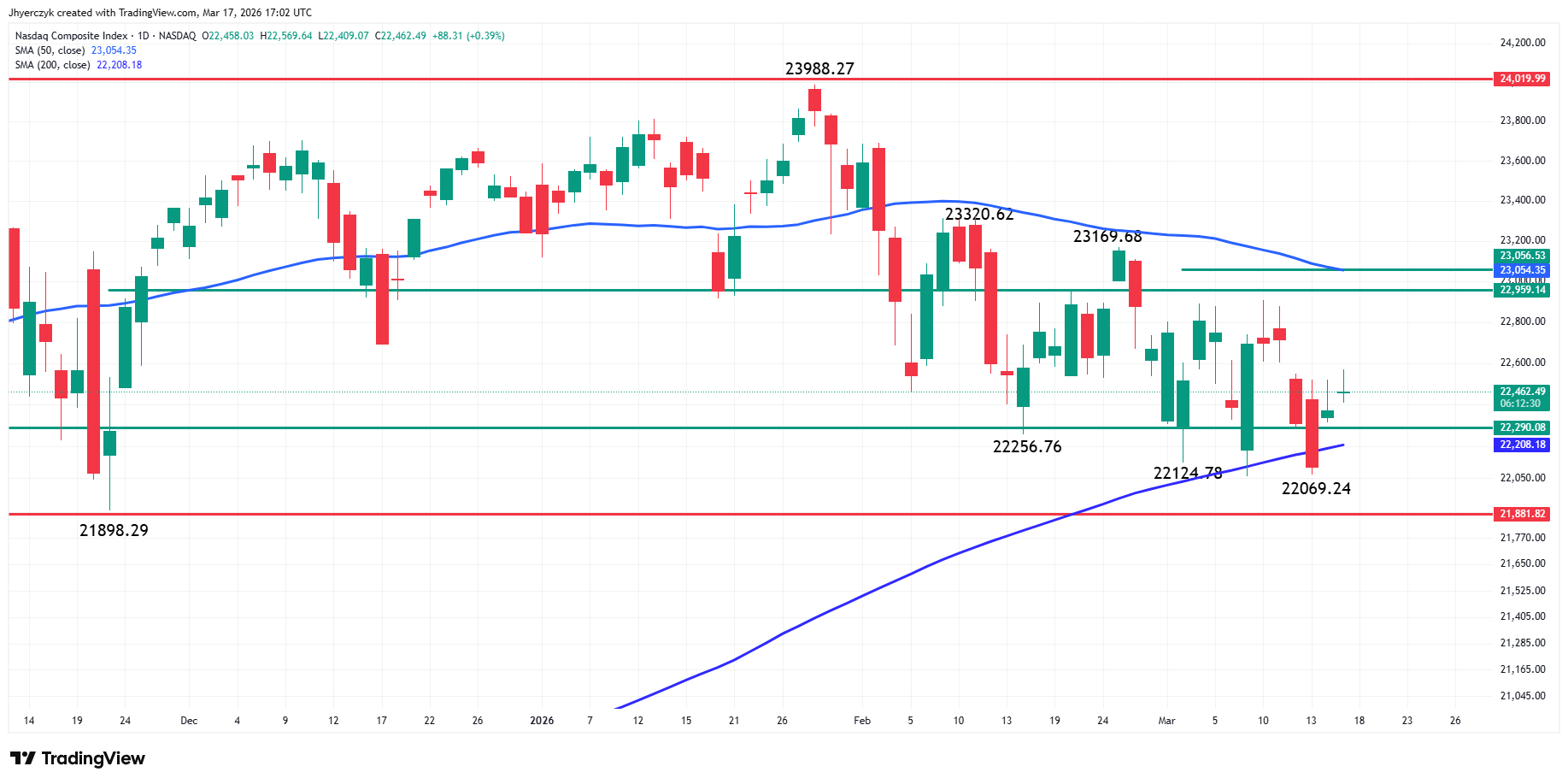
The Nasdaq Composite Index (IXIC) is also trying to establish new support at the 200-day moving average at 22208.18. The test of the long-term retracement zone at 22290.08 to 21881.82 was successful on Monday when buyers stepped in at 22069.24. But we still haven’t seen that one bullish catalyst that could launch an extended rally. Instead we’re just looking at a lot of backing and filling.
Bottom Line
Overall, investors seem to be recognizing support and value by stepping in to stop against steep price slides, but traders don’t appear to be willing to take out offers, which would help with the upside momentum. The stock market is bearish in my opinion and traders are selling rallies, but not to the extent of triggering a crash. That’s not off the table yet, but short-term, we’re seeing some resilience.
More Information in our Economic Calendar.