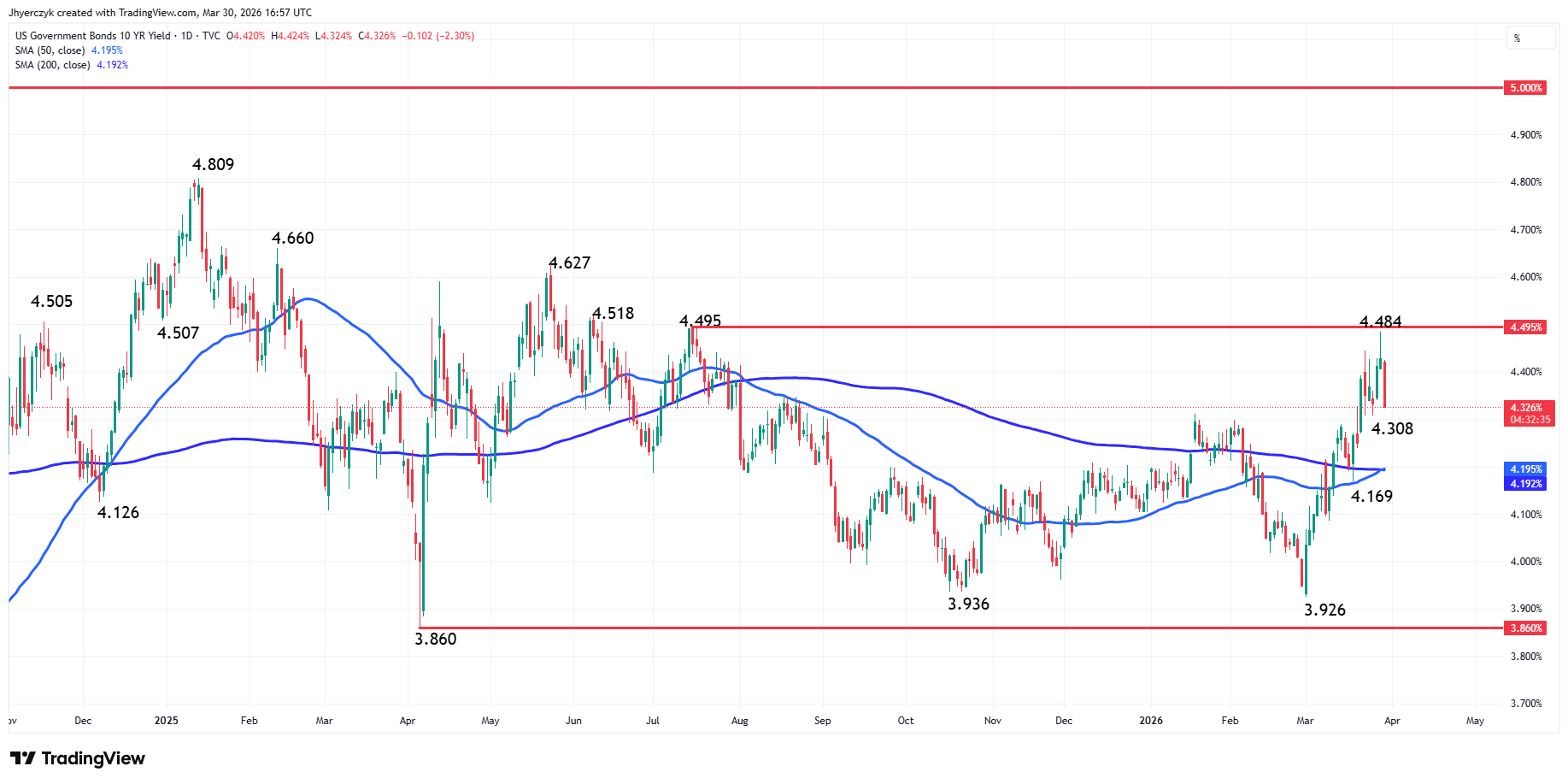
I believe the financial markets are sitting on a pressure point at this time, and it all comes down to the U.S. 10-year Treasury yield. The key level that all eyes are on is 5%. Now there is still room to go until this level is broken, I think it’s not too early to start paying attention to it.
If yields break above 5%, it would not be just another potential breakout. It would represent a major shift in the entire market narrative. For the past month, we’ve already seen signs of stress with equities struggling, gold losing upside momentum, and the U.S. Dollar holding firm. This is not going to be a small development. For example, a sustained move above 5% would force traders to reassess valuations, risk appetite, and positioning across every major asset class.
Ahmed Yousre, Global Market Strategist at PU Prime commented:
Recent movements across Treasury yields, the U.S. dollar, and gold prices reflect a broader shift in market expectations surrounding Federal Reserve policy and geopolitical developments. The U.S. Dollar Index (DXY) has come under pressure as Treasury yields declined, with the 10-year yield easing toward 4.32% and the 2-year yield falling to around 3.80%. This suggests that markets are increasingly reassessing the likelihood of further monetary tightening.
At the same time, gold prices have staged a notable rebound, recovering from their worst monthly performance since 2008. The pullback in yields has reduced the opportunity cost of holding non-yielding assets, while a softer U.S. dollar has enhanced gold’s appeal to international investors.
A key driver behind these moves is the evolving geopolitical backdrop, particularly developments surrounding U.S.–Iran tensions. Reports indicating potential de-escalation have improved market sentiment and contributed to expectations of lower oil prices. This, in turn, helps ease supply-driven inflation pressures, reducing the urgency for the Federal Reserve to maintain a restrictive policy stance.
In this context, Federal Reserve Chair Jerome Powell’s remarks that long-term inflation expectations remain well anchored have reinforced the view that additional rate hikes may not be necessary in the near term. Markets are also increasingly pricing in a more accommodative policy path, further weighing on yields and the dollar.
Overall, the combination of declining yields, a softer dollar, and easing inflation concerns has created a more supportive environment for gold. However, the sustainability of this trend will depend on incoming inflation data, Fed policy signals, and geopolitical developments, which remain key drivers for cross-asset performance in the near term.
Source: TradingView
The Stock Market Will Feel It First
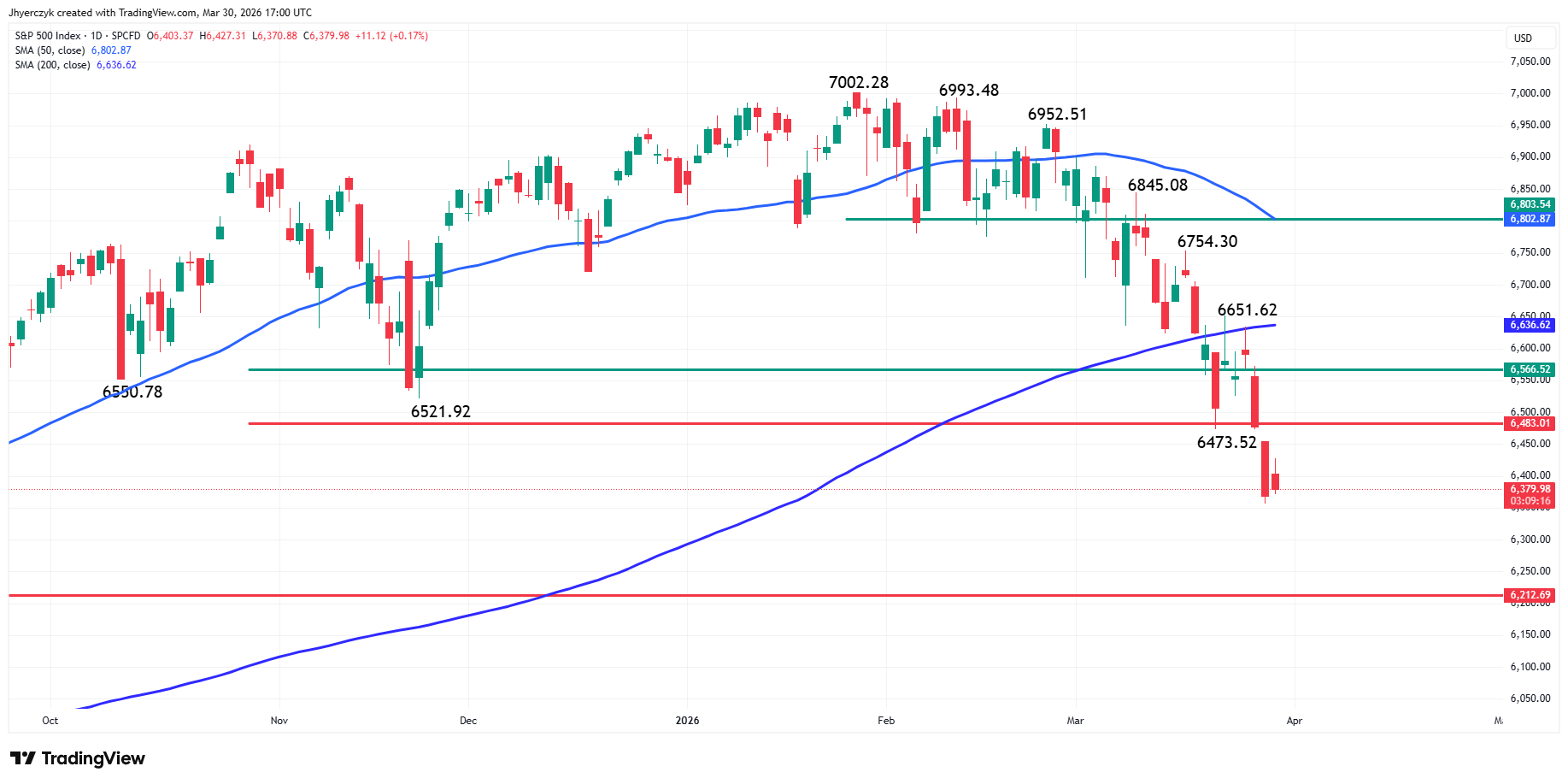
The first place I expect to see a major reaction would be the stock market, and I think the reaction could be swift and decisive. Higher yields will mean higher borrowing costs and tighter financial conditions. But this won’t really come as a surprise for those who follow the analysts at Goldman Sachs and Morgan Stanley, who have already warned that equity valuations are already stretched even after the current sell-off. If yields push through 5%, the benchmark S&P 500 is likely to face more selling pressure as investors rotate out of stocks and into safer, higher-yielding Treasurys. Simply put, it will signal that stocks are once again competing with bonds.
Source: TradingView
Nasdaq Takes the Biggest Hit
I think the tech-weighted Nasdaq would likely take the biggest hit in this higher interest rate environment. Growth stocks, which make up most of the index, will be the most sensitive to rising yields because their valuations depend heavily on future earnings. Let me explain it in a little more detail. When interest rates rise, those future cash flows are worth less in today’s terms. This particular event will be news when it happens, but it has happened before and as recently as 2022. So if 10-year yields push above 5%, I think investors will start aggressively slashing exposure to technology stocks. That should put pressure on both the Nasdaq and the S&P 500’s tech sector. And it won’t be just a stock rotation by investors chasing yields. I expect to see momentum funds join the selling party along with algorithmic traders.
The Dow Gets a Short-Term Pass but Not for Long
Now the Dow may hold up better initially than the S&P 500 Index and the Nasdaq Composite. But this short-term avoidance may not last long because nothing is immune to the selling pressure. The reason for the short-term reprieve from the selling pressure is likely going to be the Dow’s exposure to industrial and value stocks. They tend to perform better in rising rate environments. But this won’t last long either because higher yields can slow economic activity. This will likely weigh on earnings expectations. I also think that if the market starts pricing in a more aggressive Fed, or prolonged higher rates, even the Dow could be greatly impacted once defensive positioning takes over.
A Dollar Breakout Is Next
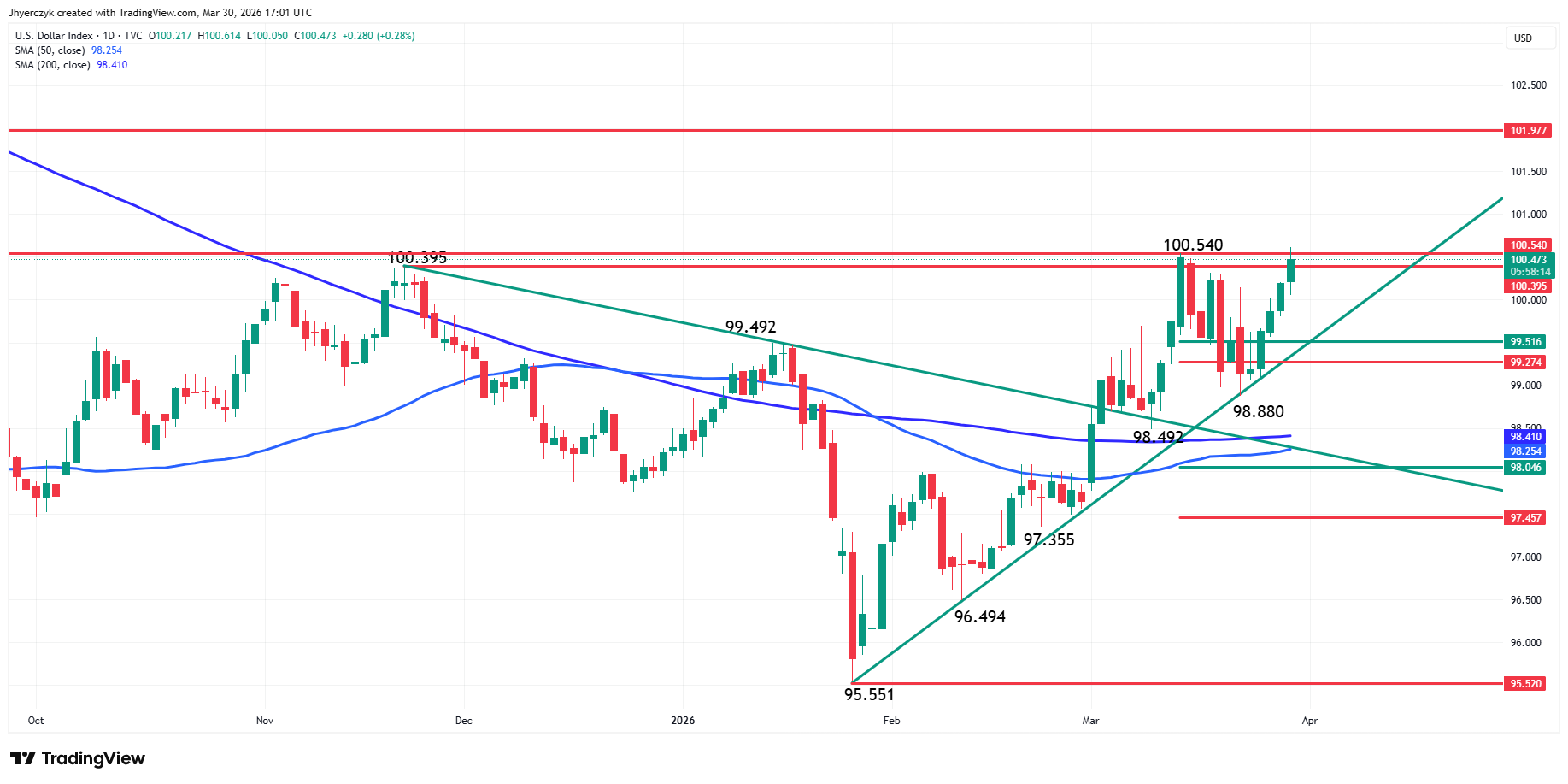
The equity market is just the start. The dollar has been strong for about three months and a move above 5% in the 10-year yield would likely push it even higher. Higher yields attract global capital and the dollar follows. JPMorgan has been saying for months that yield differentials are one of the strongest drivers of currency moves. If yields break out, the dollar breaks out with them and that puts pressure on everything else.
Source: TradingView
Gold Loses the Safe-Haven Argument
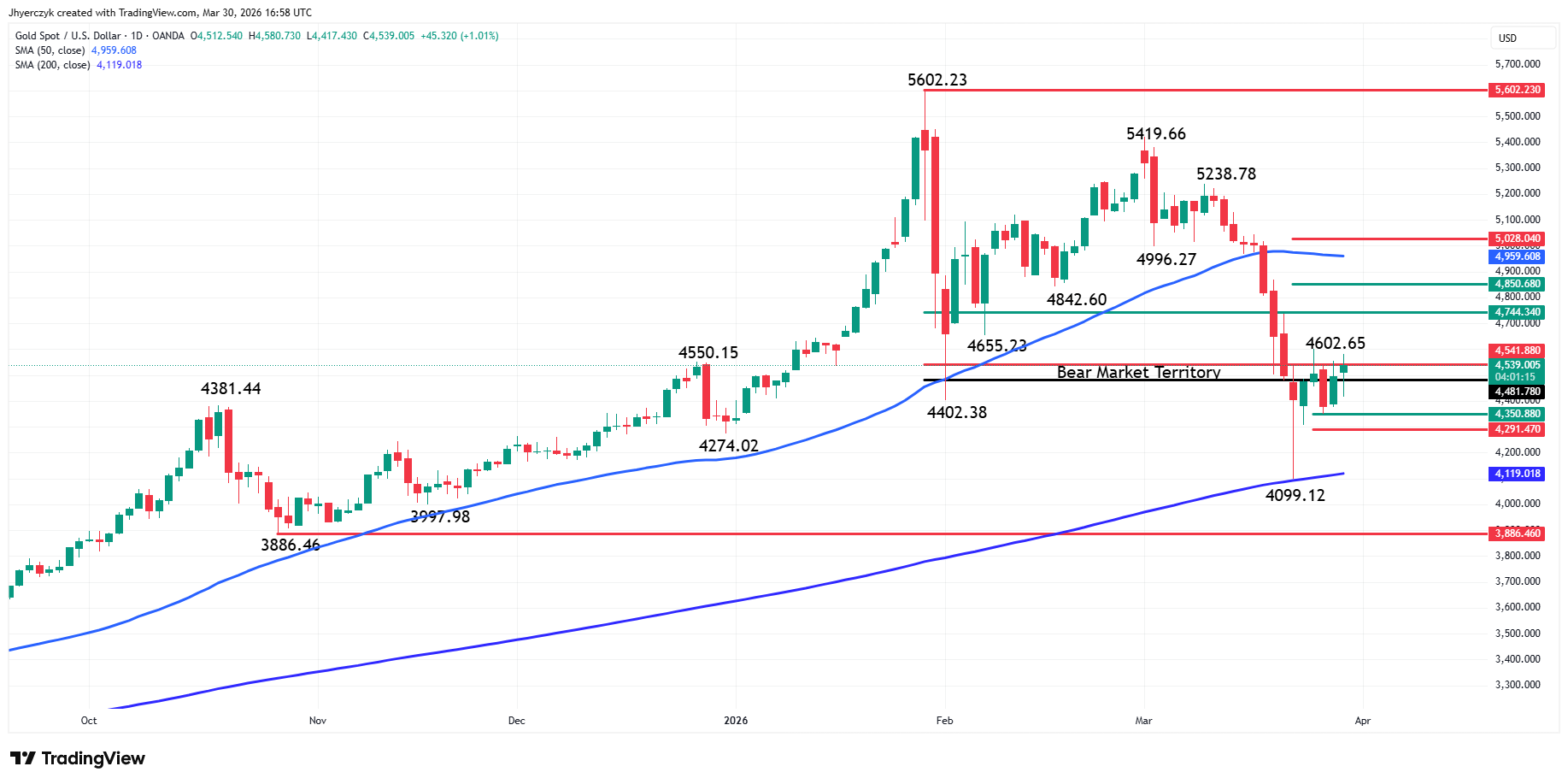
When the dollar breaks higher, gold is going to have a problem. Some will argue that geopolitical risk and inflation should support gold prices. I don’t buy it this time. Rising yields are already doing real damage. The market has shifted away from the safe-haven story and toward the interest rate story. When Treasurys are offering a 5% return, the case for holding a non-yielding asset like gold gets harder to make every day.
Source: TradingView
Silver Is in an Even Worse Position
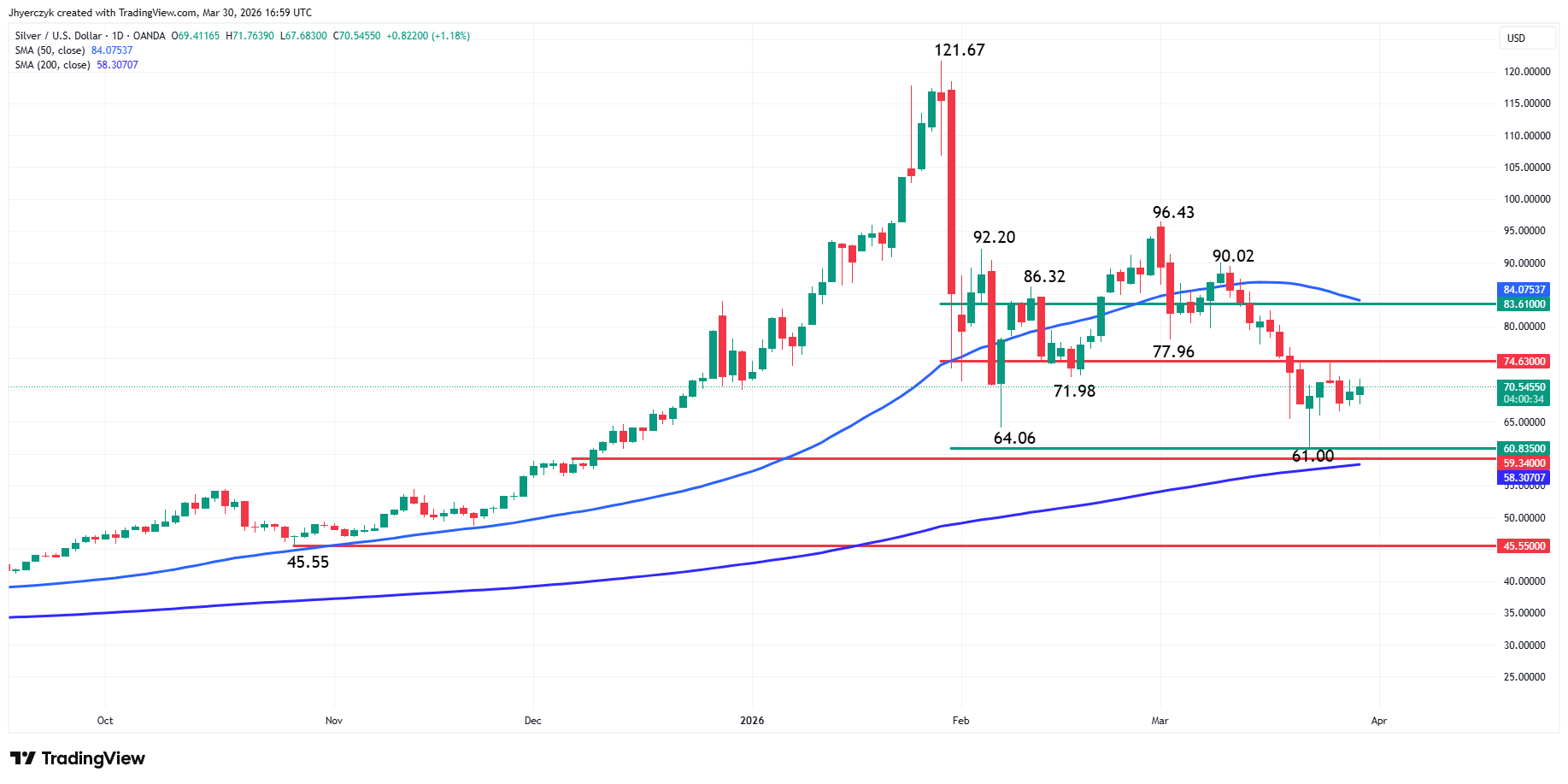
Silver is more exposed than gold because it’s tied directly to industrial demand. A move above 5% in yields signals tighter financial conditions and slower growth. That’s a bad combination for silver. Weak industrial demand and rising rates have already been capping rallies. Safe-haven flows aren’t going to rescue it. Traders are selling strength not chasing it.
Source: TradingView
Positioning Could Accelerate the Move
One thing that doesn’t get written about enough is positioning. When yields cross key levels like 5%, it forces massive reallocations. Risk parity funds, hedge funds and asset managers all have to adjust at the same time. That can turn an orderly move into a sharp liquidation fast. We’ve seen it before and we’ll see it again.
The Fed Gets Pulled Back Into the Story
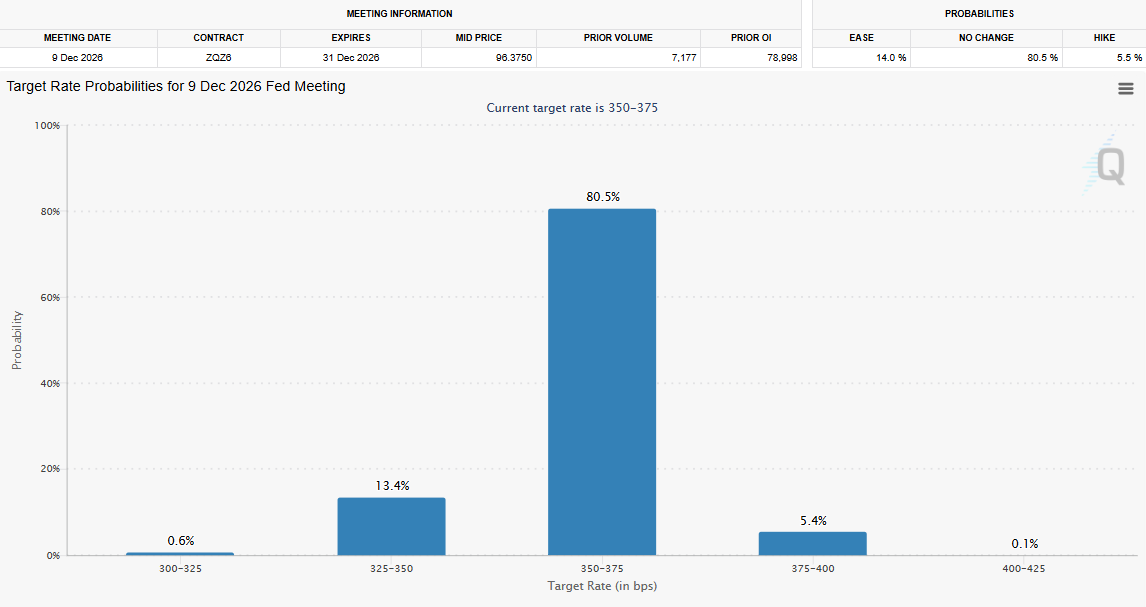
If rates jump above 5% the Fed comes back into focus. That move tells the market rates are going higher for longer or that more tightening is coming. Bloomberg and Reuters have both flagged concerns that higher energy prices and sticky inflation could delay rate cuts. A yield breakout reinforces that and takes away one of the last supports for risk assets.
Source: CME FedWatch Tool
Watch the 5% Level — the Market Won’t Wait
A move above 5% in the 10-year yield is not just a number. It’s a signal that financial conditions are tightening, inflation isn’t going away and the market is adjusting to a new reality. Stocks face more pressure, the dollar strengthens and precious metals keep falling. Watch the 5% level closely. When it breaks with conviction, the market isn’t going to wait around. It moves fast and in one direction.