Powell Off the Hook, Warsh Moving In
The U.S. Dollar Index is giving back Thursday’s gains Friday and two things hit at the same time. The Justice Department dropped its investigation into Powell and Warsh moved closer to the Fed chair seat. Rate cut odds jumped and the dollar felt it immediately. Keep reading for the key levels and what decides the next move.

Technical Outlook
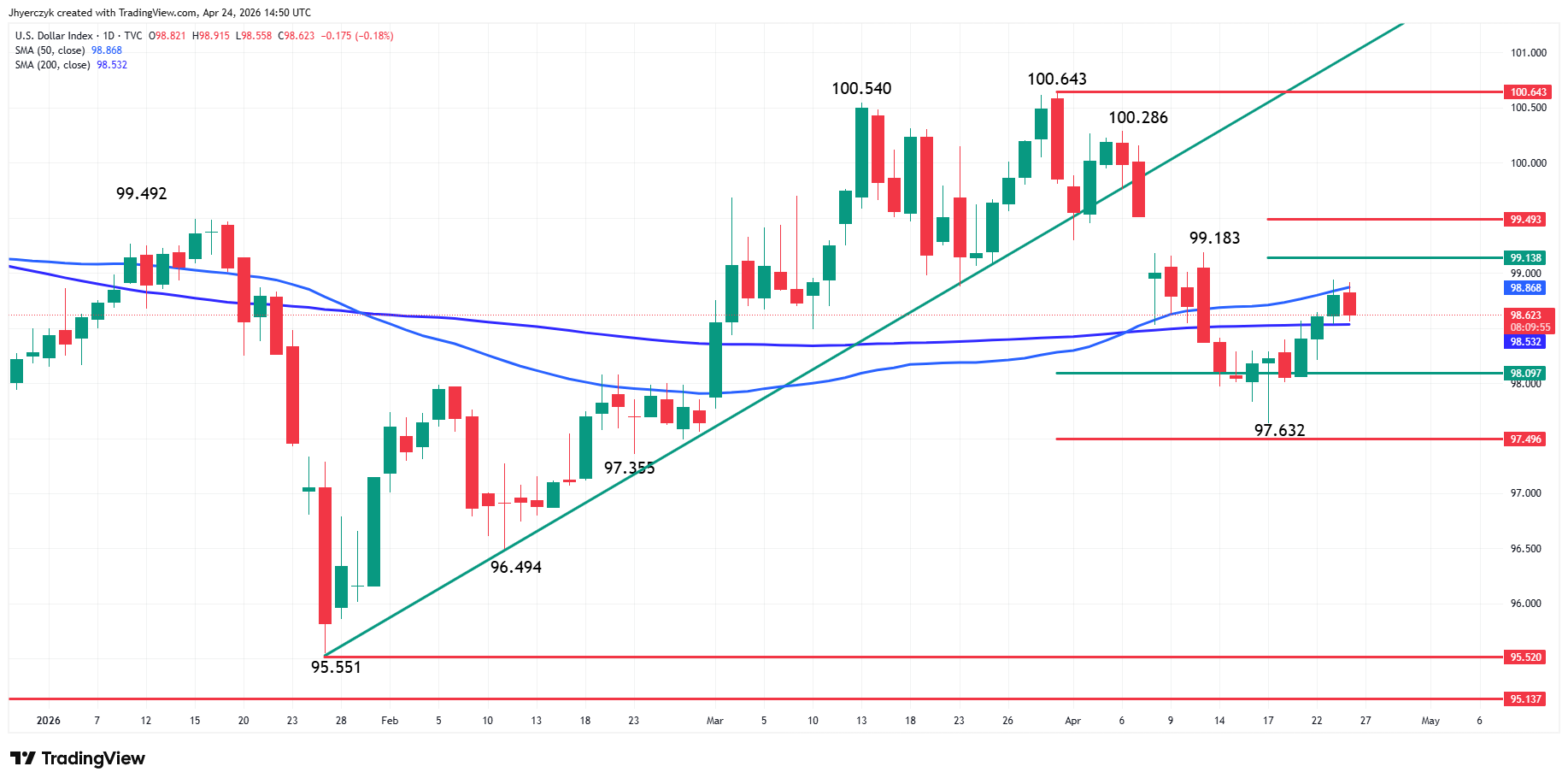
The U.S. Dollar Index is playing the moving average game late Friday. Early in the session the index failed to overcome the 50-day MA at 98.866 and shortly before the close it is testing 200-day MA support at 98.531.
After hitting a two-week high yesterday, the buying dried up, which confirmed my suspicions that the rally from 97.632 was fueled by short-covering rather than new buying. Based on what I’m seeing, the direction of the next move will be determined by trader reaction to the moving averages. This means we’ll look for an upside bias to develop over 98.867, and for the downside bias to resume under 98.531.
The nearest potential upside target is a short-term retracement zone at 99.138 to 99.493. The closest potential downside target is the long-term retracement zone at 98.097 to 97.496.
The latest technical movement reaffirms what we’re seeing in the fundamentals. Fed policy is supportive, while war uncertainty, oil supply and inflation are bearish factors.
EUR/USD Price Forecast
Every new EUR/USD analysis as it publishes, today's technical signal and key levels, live price — on one page.
See all EUR/USD forecastsWarsh Is Moving the Dollar More Than Powell Did
The Justice Department dropped its investigation into Jerome Powell and the market barely blinked at that part. What traders focused on was what it means for the transition. Warsh is the leading candidate for Fed chair and the market has been reading him as more accommodative than Powell.
Rate cut probability jumped from 23% to 38% in a single session. Lower rate expectations mean lower returns on U.S. assets and that pulls capital out of the dollar. The U.S. Dollar Index slipped 0.28% to 98.55 and the euro, yen and British pound all gained ground on the same move.
Iran Optimism Added to the Pressure
Renewed diplomatic efforts around Iran lifted risk sentiment Friday and that’s a secondary headwind for the dollar. When fear comes out of the market the safe-haven bid goes with it. Talks remain uncertain but even the possibility of easing tensions was enough to nudge flows away from the greenback. The combination of a shifting rate outlook and reduced geopolitical fear hit the dollar from both sides at once.
What Decides the Next Move
Thursday’s rally ran out of buyers right at the 50-day moving average and that confirmed what I suspected all week. The move up from 97.632 was short-covering, not fresh buying. Without new buyers willing to step in above 98.866 the path of least resistance stays lower.
The Fed, European Central Bank, Bank of England and Bank of Japan all have decisions ahead and nobody wants to be aggressively positioned in front of that lineup. The dollar stays rangebound until something forces a decision.
More Information in our Economic Calendar.