



Dollar Drifts Lower as December Cut Looms Large
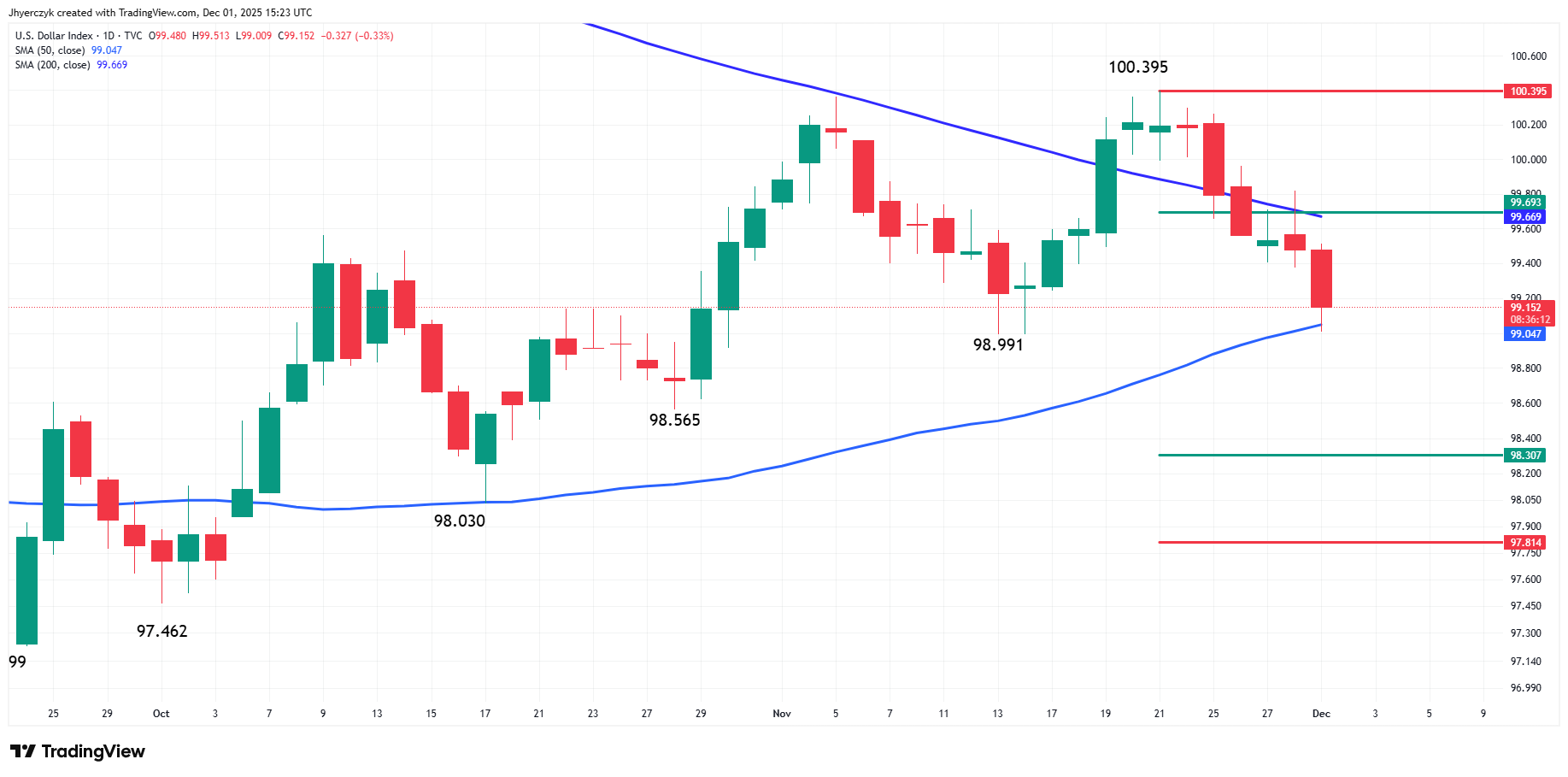
The U.S. Dollar Index is slipping on Monday, with sellers testing a key zone that could open the door to sharper losses. The index is pressing against the 50-day moving average at 99.047 and the swing bottom at 98.991 — a break below both would signal more than just weakness. It would suggest liquidation and fresh selling, with the 98.307–97.814 retracement zone as the next downside target.
For now, the path of least resistance stays lower as long as prices hold below the 200-day at 99.669.
At 15:35 GMT, DXY is trading 99.217, down 0.262 or -0.26%.
Traders Eye the Fed — and What Comes After
The greenback is struggling to find footing as markets gear up for what could be the Fed’s final rate cut of the year. Futures markets are pricing in an 87% chance of a 25-basis-point move at next week’s meeting — up from just 63% a month ago — and that near-certainty is weighing on the dollar.
But what happens after December is murkier. Money markets show little appetite for another cut before spring, and some analysts are floating the idea of a “hawkish cut” — a reduction paired with signals that policymakers aren’t in a hurry to ease again.
Goldman Sachs economists put it plainly: with December nearly fully priced, the market’s attention will shift to what comes next. They think too little is priced in for Q1, especially with a wave of labor data due before the January meeting.
Euro Climbs, Sterling Steadies
Across the pond, the euro pushed to a two-week high near $1.1615, riding the dollar’s weakness. Sterling edged down 0.2% to $1.3211, taking a breather after its best week in over three months — a relief rally following Finance Minister Rachel Reeves’ budget reveal.
EUR/USD Price Forecast
Every new EUR/USD analysis as it publishes, today's technical signal and key levels, live price — on one page.
See all EUR/USD forecastsYields Tick Higher on Growth Optimism
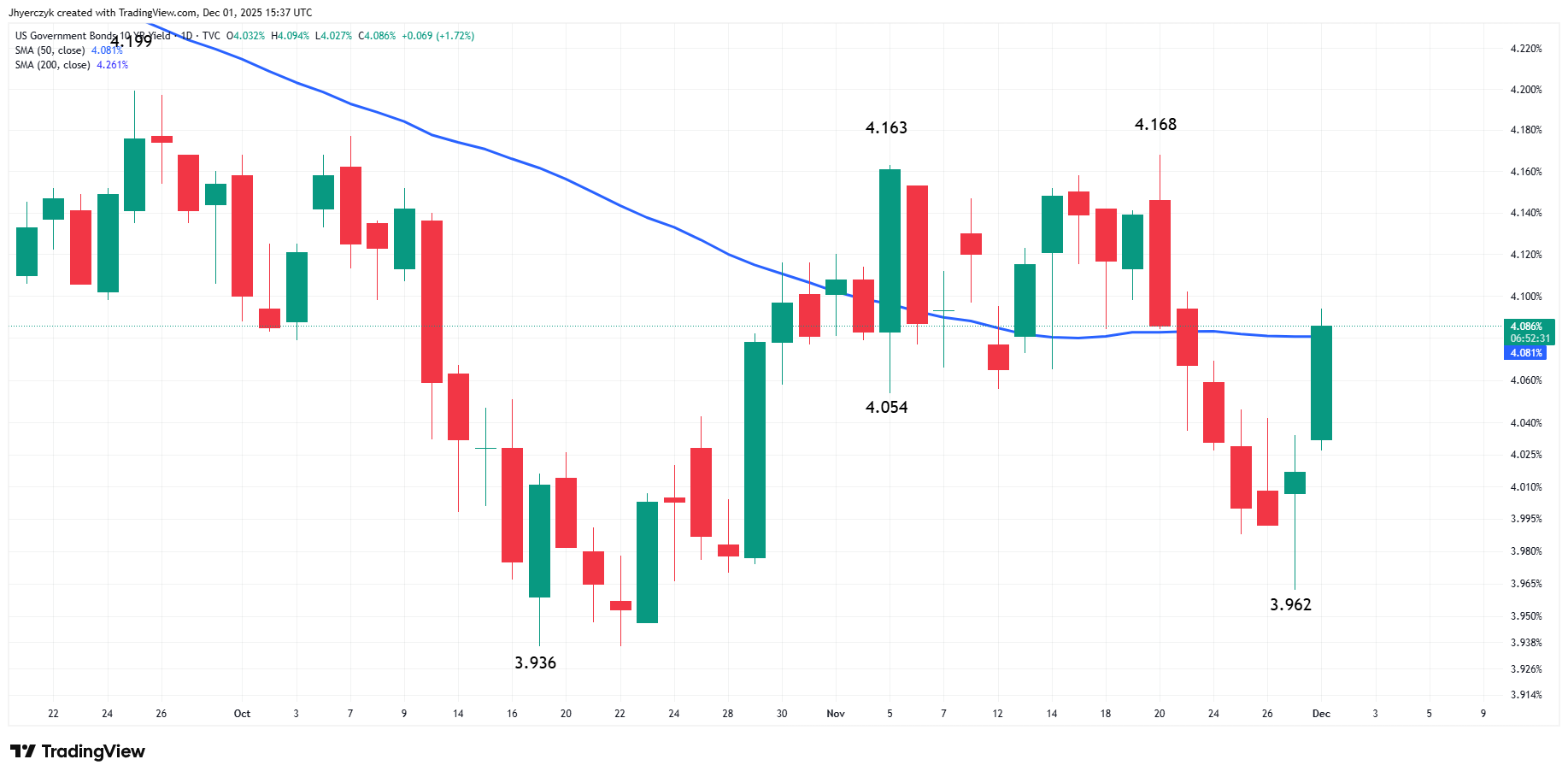
Treasury yields are climbing as traders look toward slightly faster growth in 2026. The 10-year rose to 4.085%, up about 6.6 basis points, while the 30-year pushed to 4.738%. The 2-year ticked up to 3.528%.
Bank of America sees global growth bottoming out next year, helped by rate cuts, less policy noise, and targeted fiscal support — along with a weaker dollar.
Data Lands Soft, Adding to Dollar Pressure
Monday’s data came in mixed but leaned soft. The ISM Manufacturing PMI printed at 48.2, missing the 49.0 forecast and barely budging from last month’s 48.7 — still in contraction territory. ISM Manufacturing Prices ran hotter at 58.5, topping the 59.5 estimate and up from 58.0 prior. The Final Manufacturing PMI landed at 52.2, edging past the 51.9 forecast.
The soft ISM read reinforces the case for a December cut and keeps the dollar on the defensive heading into a busy stretch. ADP Employment and ISM Services drop Wednesday, weekly jobless claims follow Thursday, and the delayed September PCE print — the Fed’s preferred inflation gauge — caps off the week Friday.
Bottom line: the dollar’s under pressure, and the next few sessions could set the tone heading into the December decision.
More Information in our Economic Calendar.