
Dollar Rallies as Strong NFP Data Eases Recession Fears
The U.S. Dollar Index is slightly higher in a volatile session on Wednesday. The index drifted lower early in the session in anticipation of a weak U.S. Non-Farm Payrolls report but turned positive when the data came out better than expected. The dollar was supported by a reversal to the upside by Treasury yields.
Ahead of the report, investors were hoping weak numbers would shift expectations for a Fed rate cut from June to March, but the news was good enough to keep expectations for a June cut intact.
At 15:30 GMT, DXY is trading 97.027, up 0.136 or +0.14%.

Yields Surge as NFP Crushes Expectations at 130K
Treasury yields surged higher in reaction to the January job growth that was more than double Wall Street expectations. The 10-year yield jumped 3 basis points, while the 2-year soared more than 6 basis points. The volatile movement reflected reduced expectations for Fed rate cuts the rest of this year, which is positive for the dollar.
January non-farm payrolls came in at 130,000, greater than the 55,000 consensus estimate. The numbers were much better than the December figures, which were revised lower.
This is actually a positive development for the dollar after yesterday’s weak retail sales report dampened the outlook for the economy, taking the greenback lower. Today’s report triggered a rebound rally because it gives the Fed more time and room to remain on hold.
Friday’s CPI Report Holds the Key
Despite today’s positive reaction, the dollar is not off the hook. Traders are still going to have to deal with Friday’s consumer price index (CPI) report. At its last meeting in January, the Fed seemed to shift its concerns from the job market to inflation. A higher-than-expected reading could be dollar positive.
EUR/USD Price Forecast
Every new EUR/USD analysis as it publishes, today's technical signal and key levels, live price — on one page.
See all EUR/USD forecastsTechnical Picture: Downtrend Intact, But Testing Support
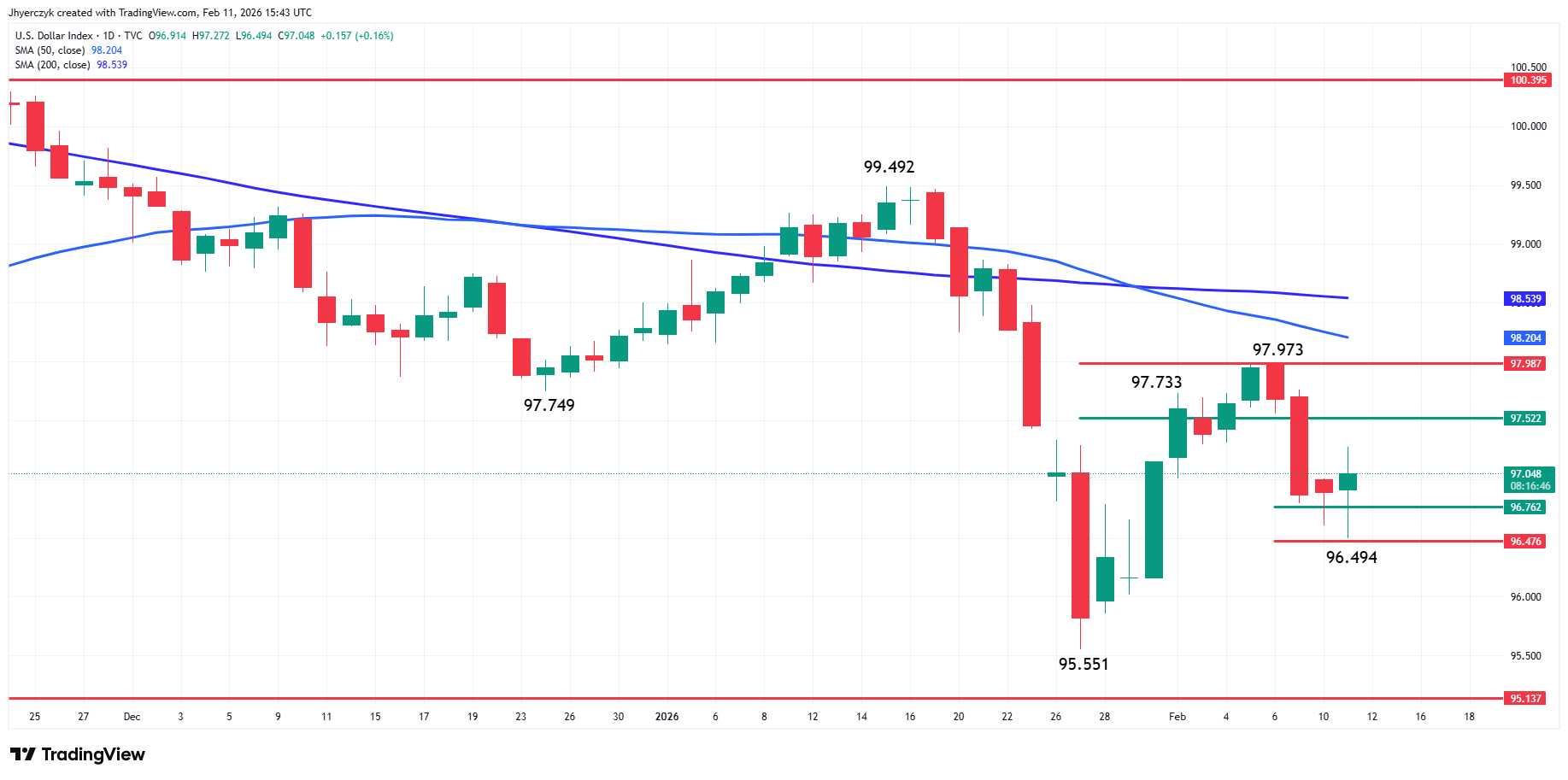
Technically, the main trend is down according to the daily swing chart and the moving averages. A trade through 97.973 will change the main trend to up. A move through today’s low at 96.494 will reaffirm the downtrend, with the main bottom at 95.551 the next target price.
The short-term range is 95.551 to 97.973. The index found support earlier today at 96.494 inside its retracement zone at 96.762 to 96.476. The subsequent rebound could create enough upside momentum to challenge the intermediate retracement zone at 97.522 to 97.987.
Exceeding the intermediate retracement zone could lead to a test of the 50-day moving average at 98.205 and the 200-day moving average at 98.540.
The retracement zone at 96.762 to 96.476 is important to the short-term structure. Keep an eye on it, especially on Friday with the release of the consumer inflation data.
More Information in our Economic Calendar.