
U.S. Dollar Jumps After Strong Labor Market Report
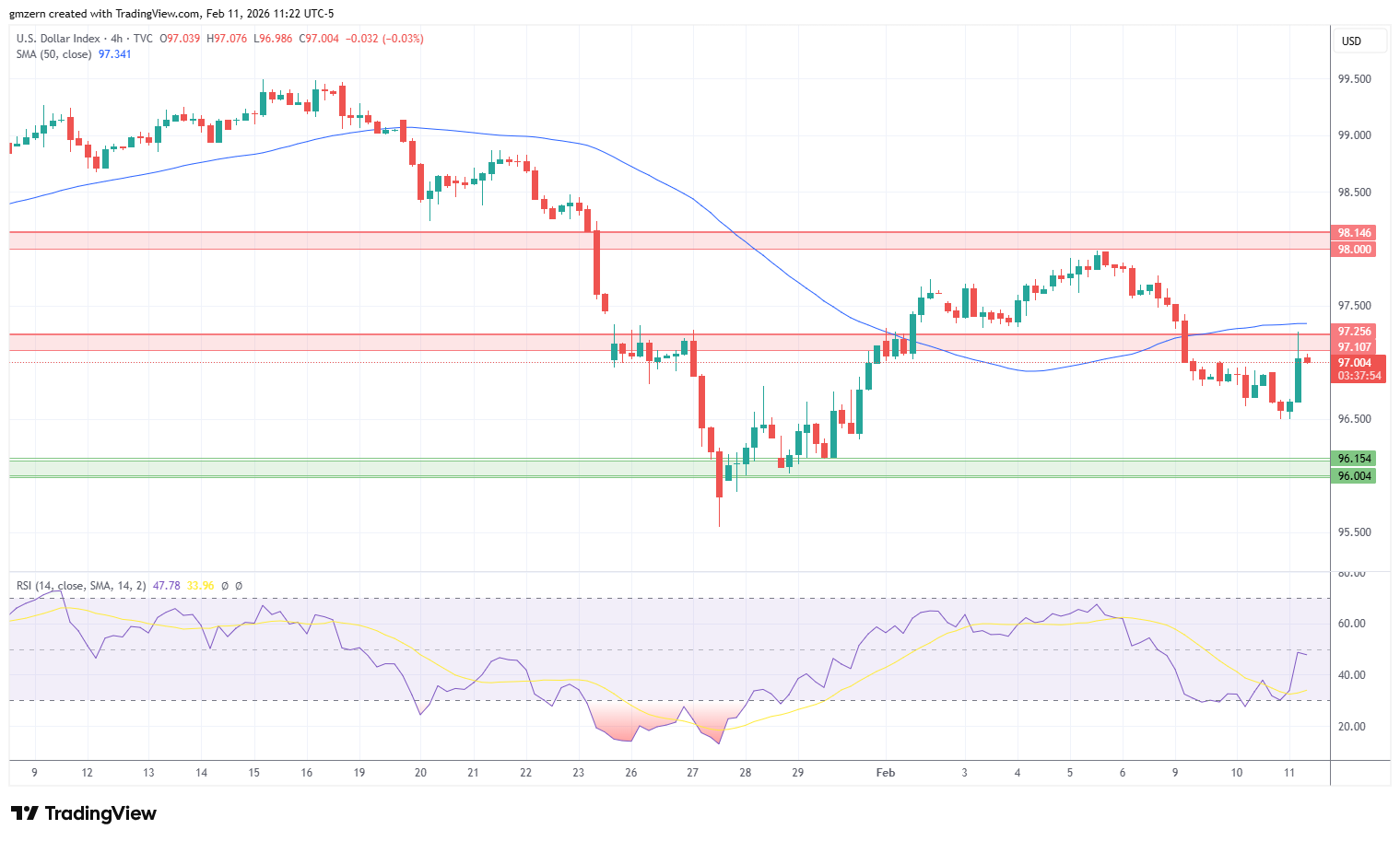
U.S. Dollar Index gains gound as traders react to the better-than-expected Non Farm Payrolls report. The report indicated that the U.S. economy added 130,000 jobs, compared to analyst forecast of 70,000. The previous report was revised from 50,000 to 48,000.
Unemployment Rate declined from 4.4% in December to 4.3% in January, compared to analyst forecast of 4.4%. Average hourly earnings increased by +0.4% month-over-month in January, compared to analyst estimate of +0.3%.
The reports showed that the job market remained in decent shape despite worries about the slowdown of the U.S. economy.
Treasury yields moved higher as bond traders reduced their bets on dovish Fed. The yield of 2-year Treasuries climbed back towards the 3.50% level, while the yield of 10-year Treasuries settled above 4.15%.
The encouraging report and rising Treasury yields provided material support to the American currency.
Currently, U.S. Dollar Index is trying to settle above the nearest resistance at 97.10 – 97.05. In case this attempt is successful, U.S. Dollar Index will move towards the next resistance level, which is located in the 98.00 – 98.15 range.

EUR/USD Tests Support At 1.1835 – 1.1850
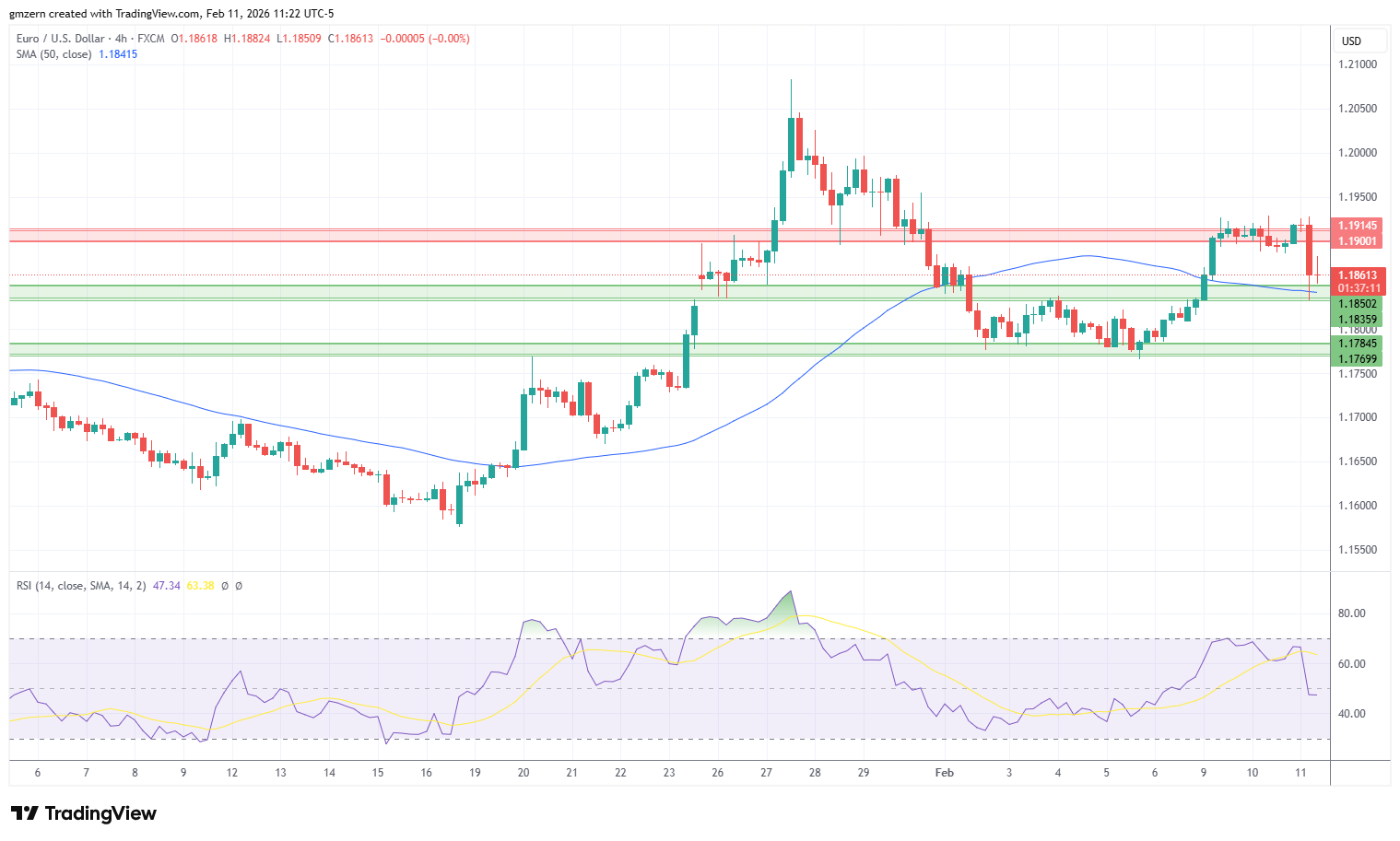
EUR/USD pulled back as traders focused on economic data from the U.S. The strength of the U.S. labor market is bearish for the European currency.
The nearest support level for EUR/USD is located in the 1.1835 – 1.1850 range. In case EUR/USD manages to settle below the 1.1835 level, it will move towards the next support at 1.1770 – 1.1785. RSI remains in the moderate territory, so there is plenty of room to gain momentum in case the right catalysts emerge.
EUR/USD Price Forecast
Every new EUR/USD analysis as it publishes, today's technical signal and key levels, live price — on one page.
See all EUR/USD forecastsGBP/USD Retreats From Session Highs
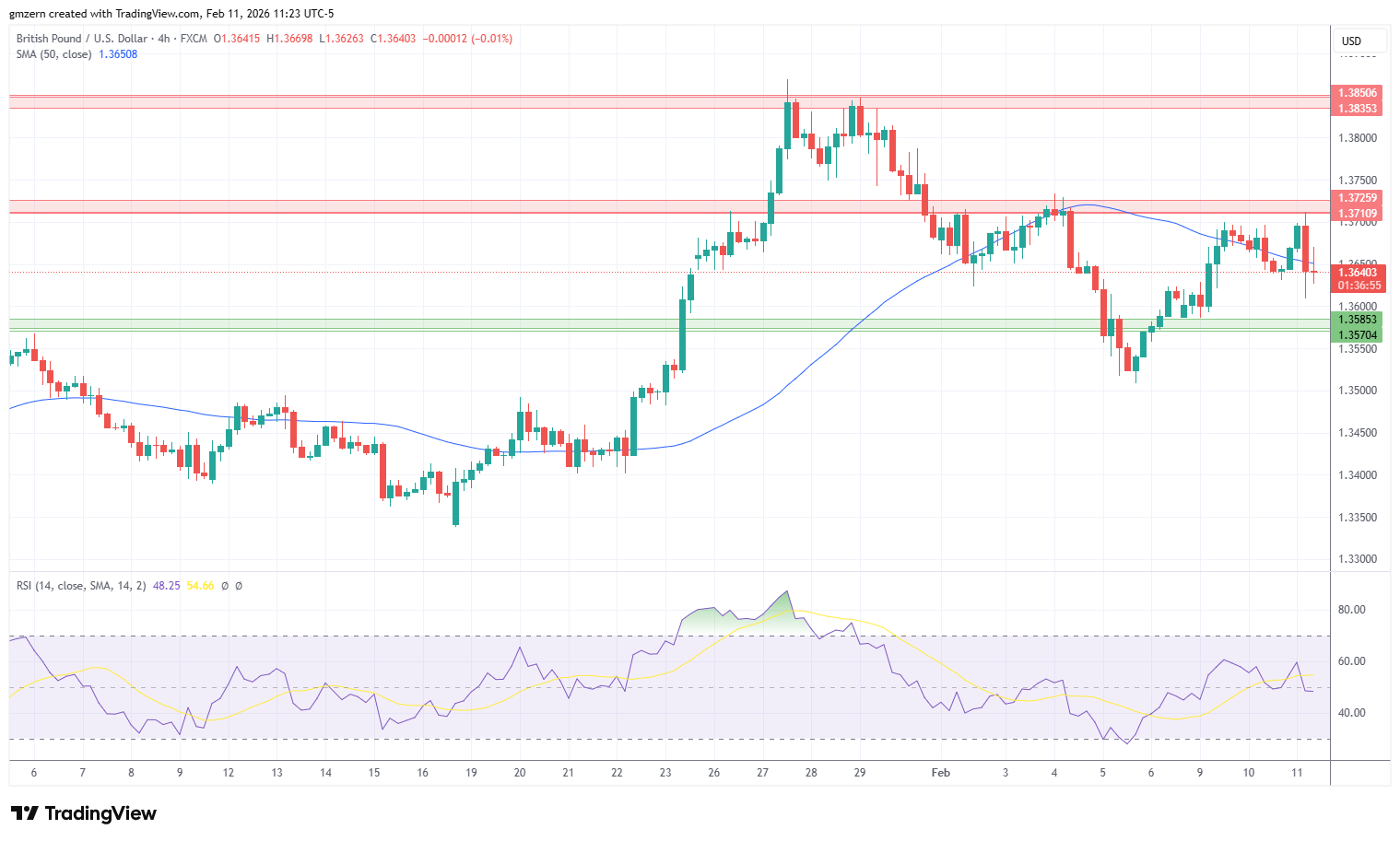
GBP/USD moved away from session highs after the release of Non Farm Payrolls report.
From a big picture point of view, traders shrugged off worries about political crisis in the UK and focused on Fed policy outlook.
GBP/USD has recently made an attempt to settle above the resistance at 1.3710 – 1.3725 but lost momentum and pulled back. If GBP/USD settles below the 50 MA at 1.3651, it will move towards the support level at 1.3570 – 1.3585.
USD/CAD Tests Resistance At 1.3575 – 1.3585
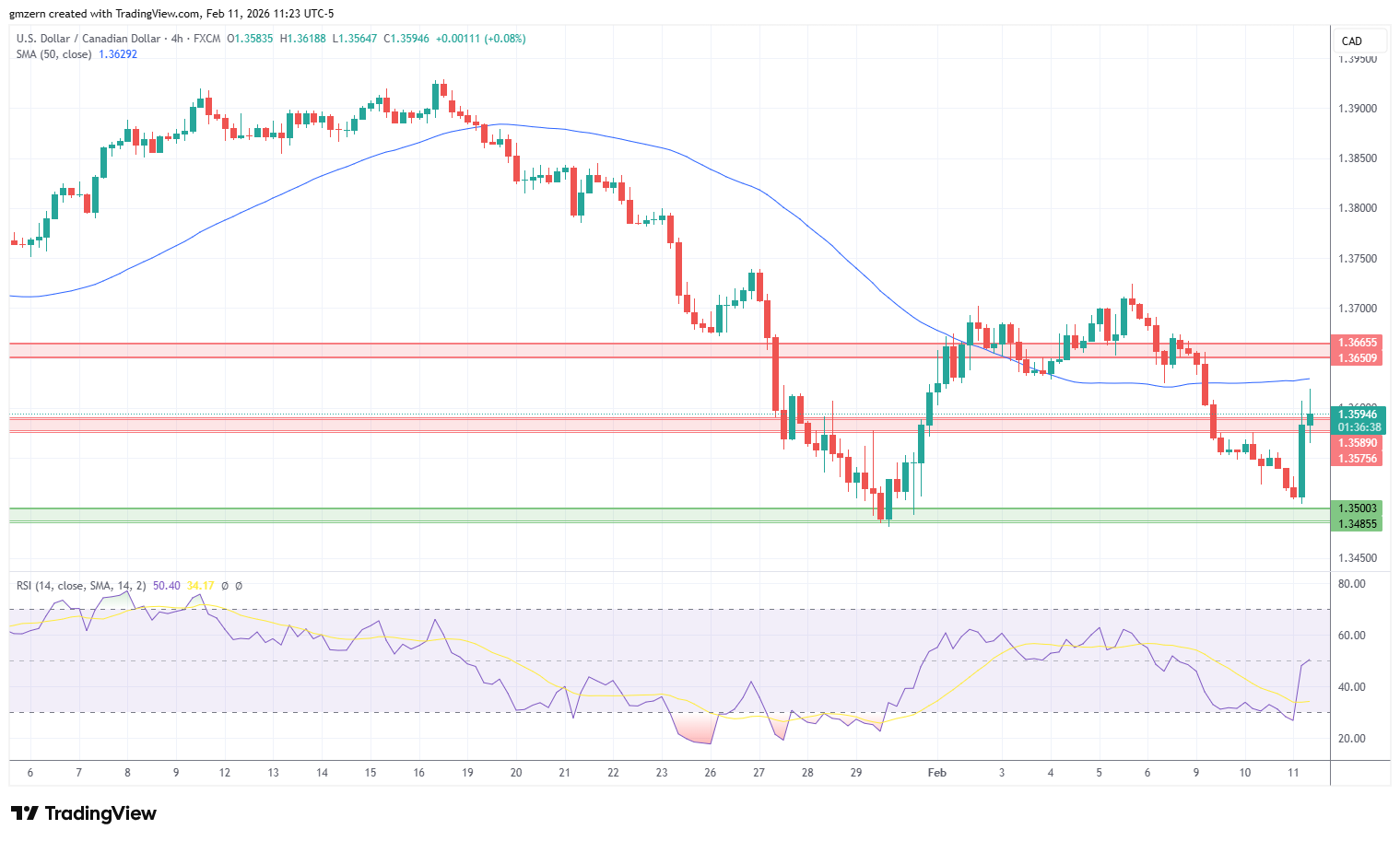
USD/CAD rebounded towards the resistance level at 1.3575 – 1.3590 despite the rally in commodity markets.
Silver made an attempt to settle above the $86.00 level, while Brent oil tested the $70.00 level. These moves did not provide support to the Canadian dollar as traders focused on U.S. labor market data.
Interestingly, other commodity-related currencies managed to gain ground in today’s trading session.
A successful test of the resistance at 1.3575 – 1.3590 will push USD/CAD towards the 50 MA at 1.3628. If USD/CAD climbs above the 50 MA, it will head towards the next resistance at 1.3650 – 1.3665.
USD/JPY Is Under Pressure
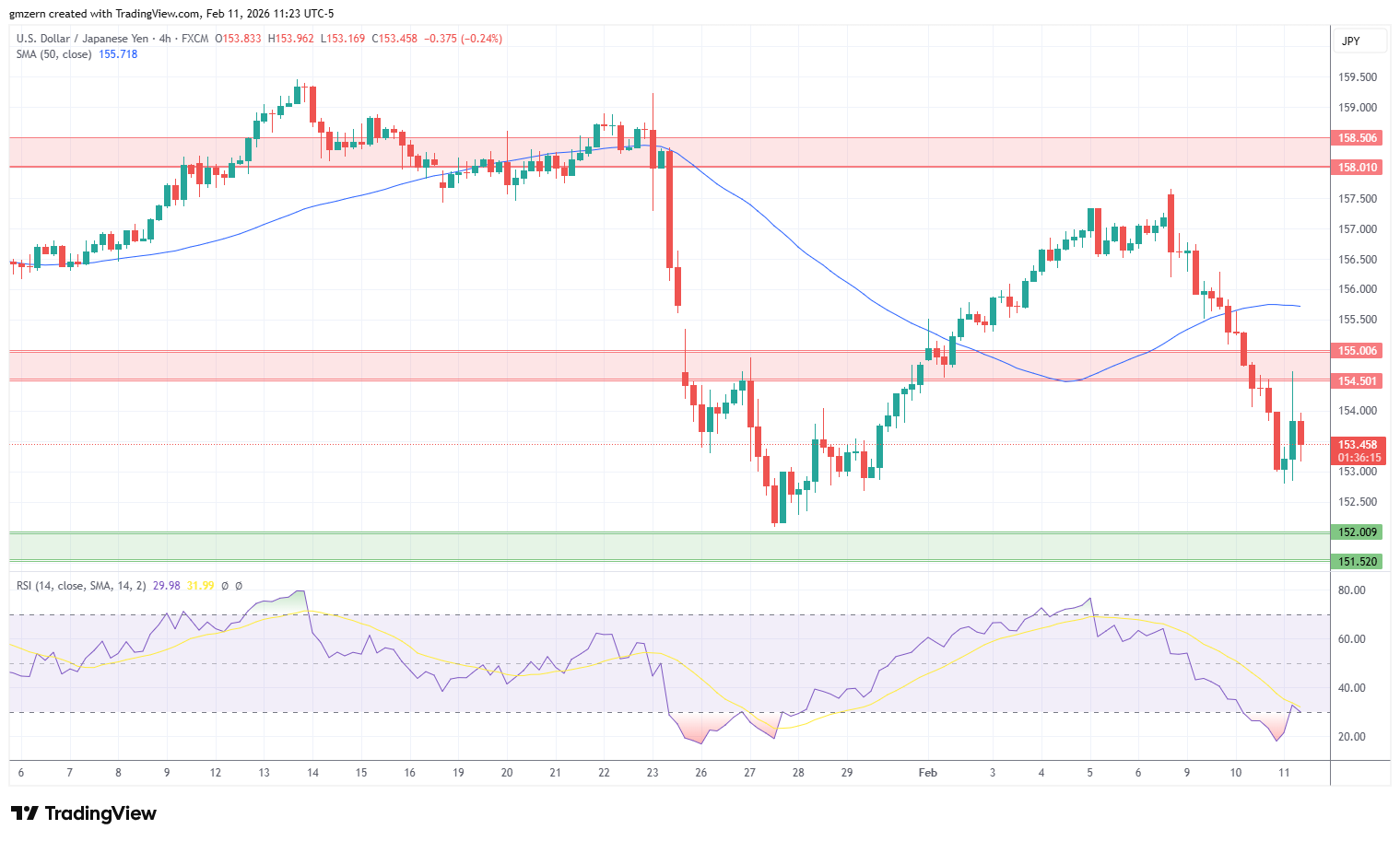
USD/JPY is losing ground as traders ignore rising Treasury yields and strong economic data from the U.S.
There are no important economic reports scheduled to be released in Japan today, so traders will stay focused on U.S. economic reports and Fed policy outlook.
It looks that traders are worried that U.S. and Japan will not allow USD/JPY to climb above the 160.00 level. Intervention risks serve as one of the key catalysts for the Japanese yen. The yen’s role in global carry trade complicates the picture.
From the technical point of view, USD/JPY settled below the previous support level at 154.50 – 155.00 and is trying to settle below the 153.00 level. In case this attempt is successful, USD/JPY will move towards the nearest support, which is located in the 151.50 – 152.00 range. RSI has recently climbed back into moderate territory, so there is enough room to gain additional downside momentum in the near term.
If you’d like to know more about how to trade forex, please visit our educational area.