
Bitcoin (BTC) sold off after a stronger-than-expected US jobs report forced markets to price fewer Fed rate cuts, putting BTC on track to retest support below $60,000.

Bitcoin Technicals Show Pressure Near 200-Week SMA
BTC dropped nearly 5.8% on the day of the labor data release, extending its pullback toward the 200-week simple moving average (200-week SMA; the blue wvae) near $58,200.
Traders widely track this level as a long-term trend gauge that has historically marked major cycle inflection points.
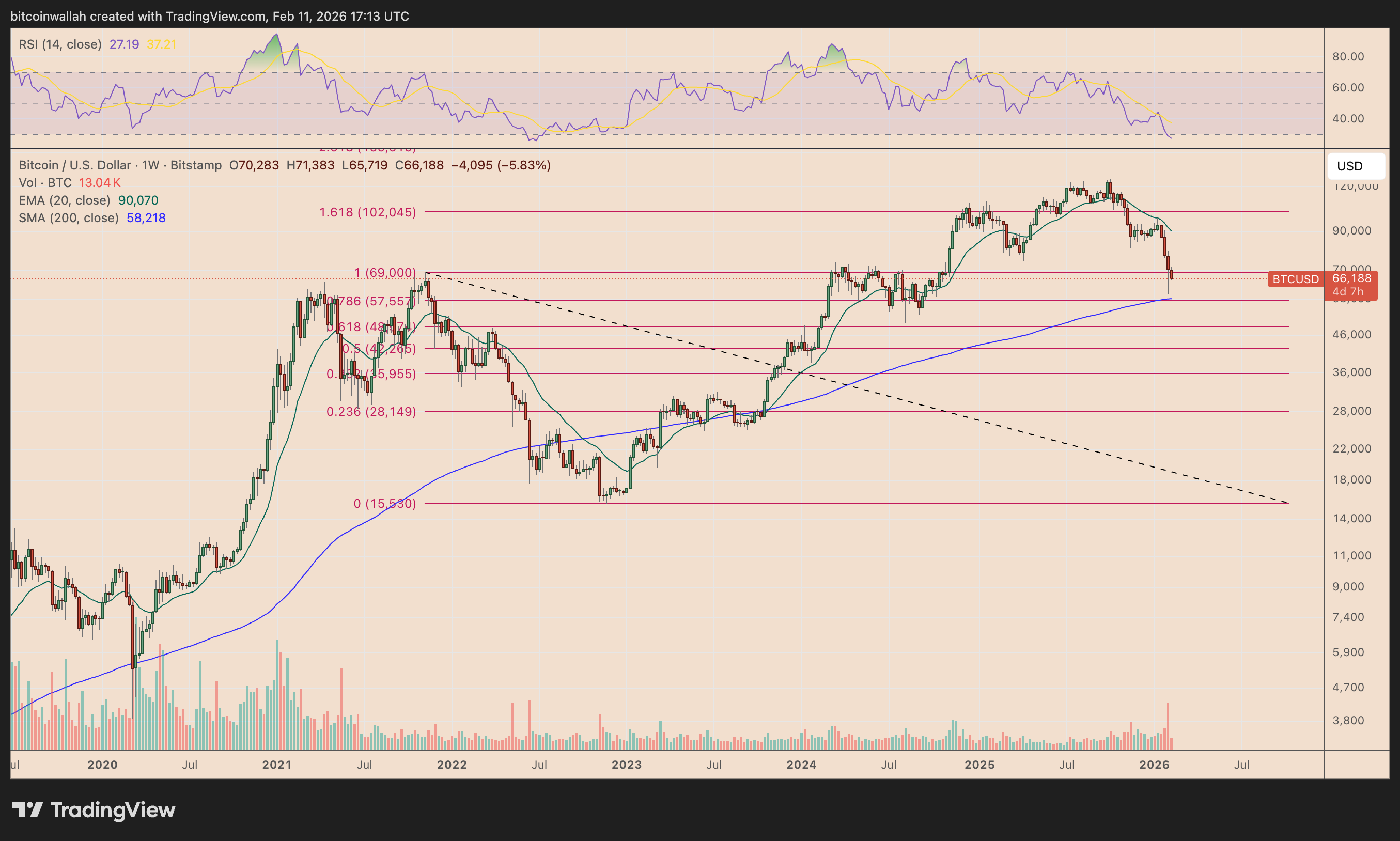
On the weekly chart, Bitcoin has already lost short-term moving average support and now trades just above the 200-week SMA. In previous cycles, sustained closes below this level preceded deeper declines.
In 2022, a confirmed break triggered an additional drop of roughly 30% before the price stabilized.
If BTC closes decisively below $58,200, technical selling pressure could intensify and expose lower retracement levels, beginning with a plunge toward $50,000.
A hold above the 200-week SMA would keep the broader bullish structure intact despite near-term weakness.
Bitcoin Price Forecast
Every new Bitcoin analysis as it publishes, today's technical signal and key levels, live price — on one page.
See all Bitcoin forecastsUS Jobs Surprise Reduces Rate-Cut Expectations
The bearish catalyst for Bitcoin also came from the US labor market.
The US economy added 130,000 jobs in January, well above expectations of around 70,000, while the unemployment rate edged down to 4.3%. The data pointed to continued labor market resilience.
Markets responded by trimming rate-cut bets.
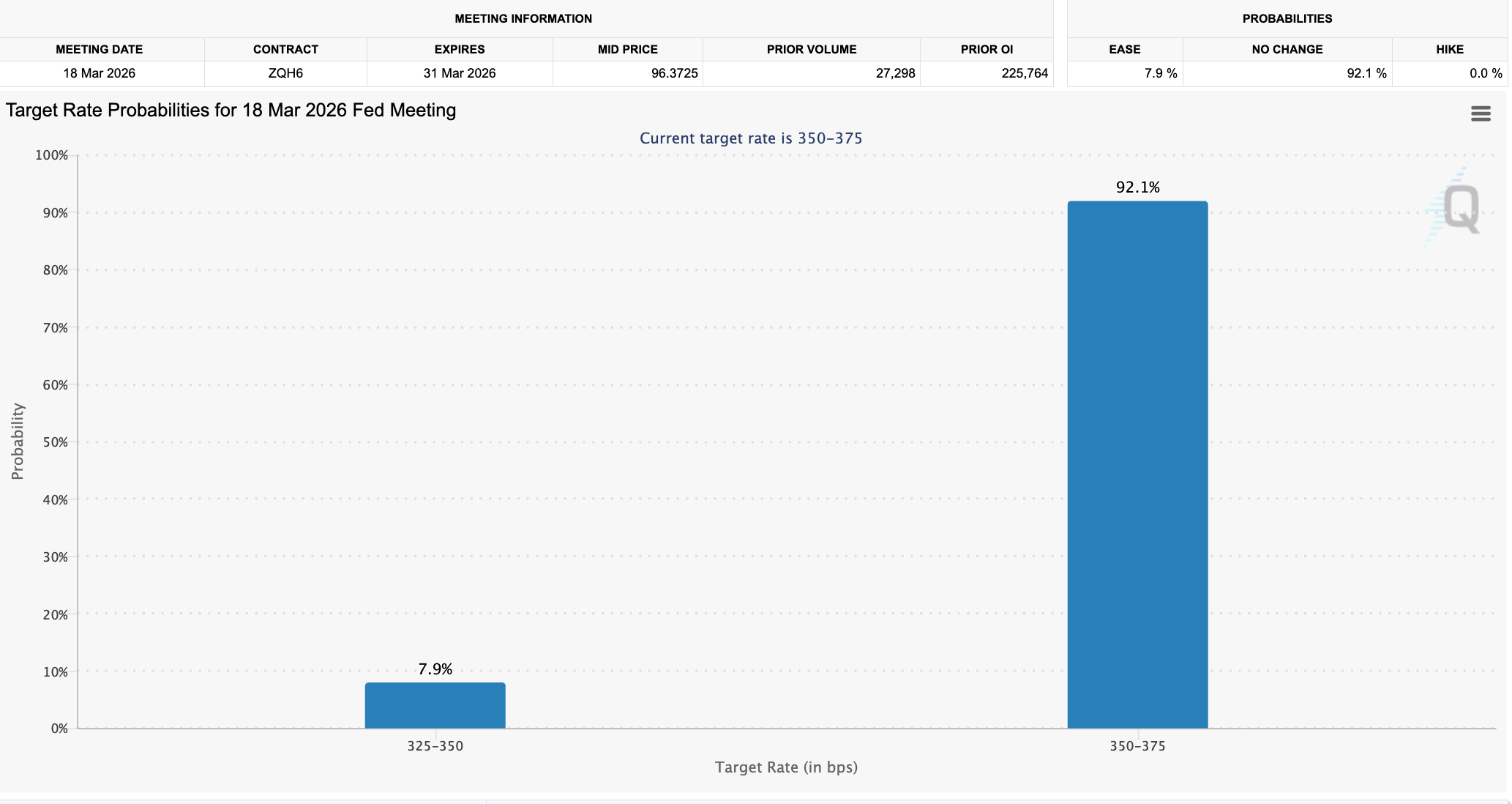
Unless incoming data weakens and revives easing expectations, macro headwinds may continue to pressure BTC near key long-term support.
MVRV Pricing Bands Signal $52K–$55K as Next Downside Cluster
On-chain valuation metrics now align with the technical risk.
Glassnode’s MVRV Extreme Deviation Pricing Bands show Bitcoin trading back toward its mean valuation range, with the next major support cluster sitting between $52,000 and $55,000.
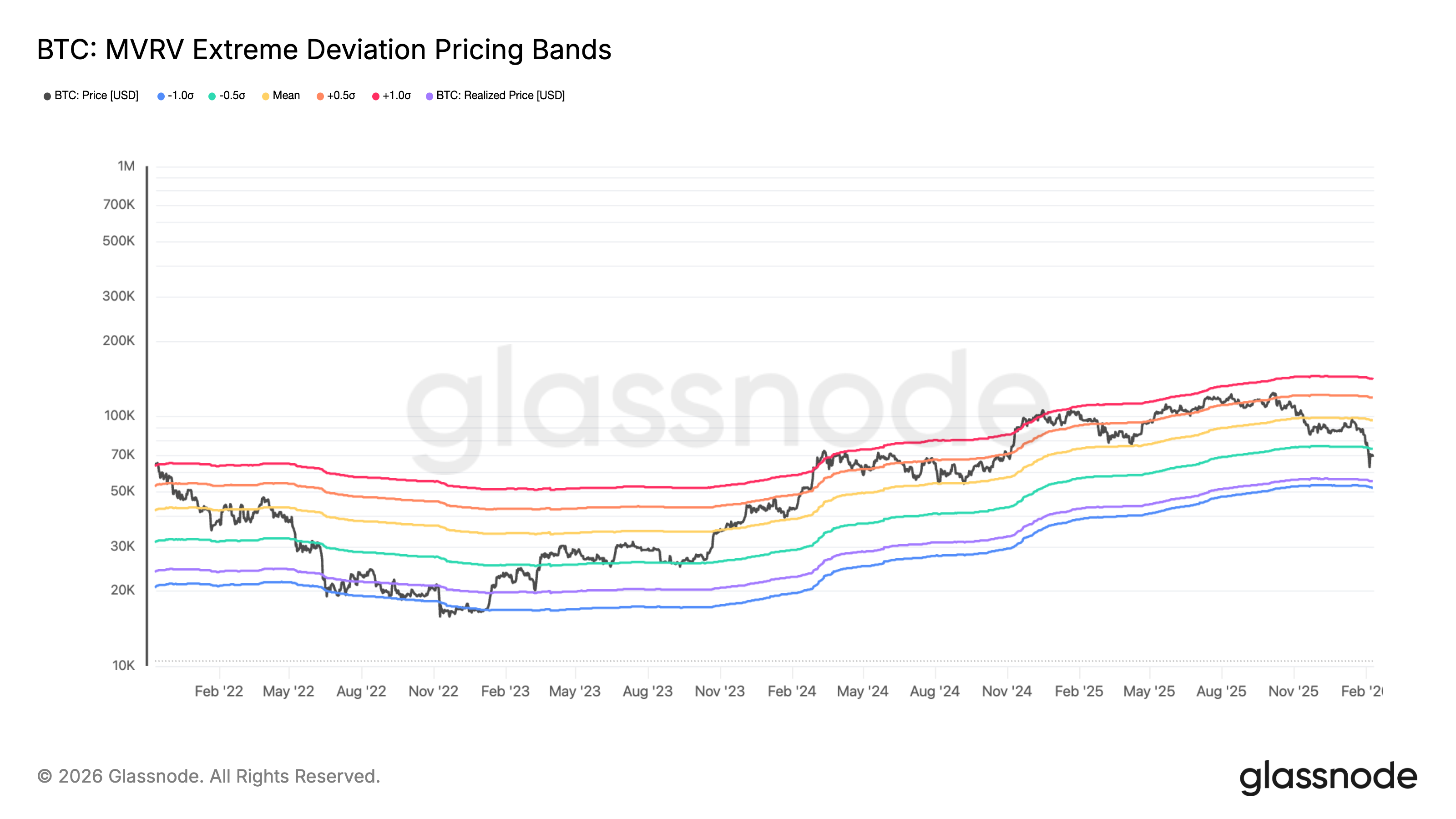
That zone corresponds closely with the aggregated realized price and the -1.0 standard deviation band, levels that historically mark periods of market stress and late-stage capitulation.
In prior drawdowns, BTC often gravitated toward the -1.0σ band before forming durable cycle bottoms.
The metric reflects how far the spot price deviates from the average on-chain cost basis of holders. When the price approaches the realized price, unrealized profits compress and speculative excess resets.