


Bitcoin (BTC) and gold (XAU) receive the tag of monetary alternatives. But their behavior during stress is a different story. The sharp drop in Bitcoin last week shows this difference clearly. Gold price also dropped from $5,600 to $4,400 in just three days, but recovered quickly above $5,000.
Bitcoin trading takes place within a highly financialized derivatives market. Futures and perpetual contracts are the dominant contracts in price discovery. Spot markets often follow derivatives and not the other way around.
Bitcoin’s futures open interest is at around $45.7 billion. Its total market cap stands at around $1.36 trillion. That puts its open interest to market cap ratio in between 3.5% to 3.6%.
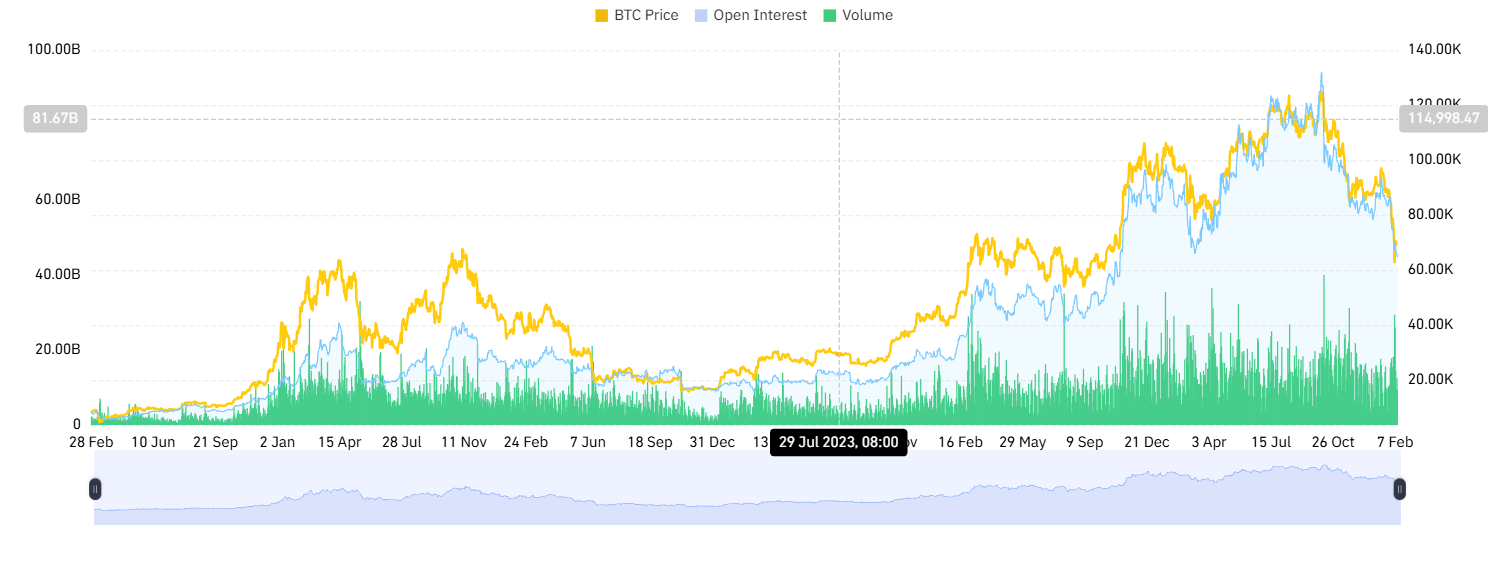
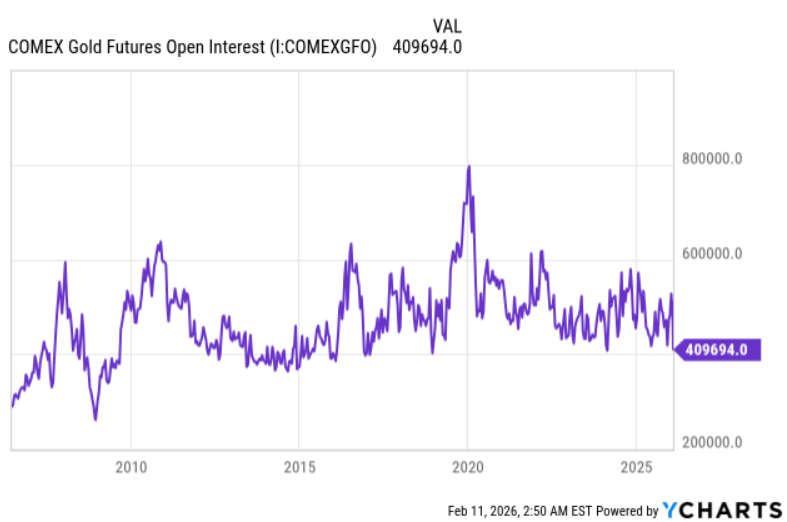
On the other hand, gold looks very different. The total open interest in gold derivatives in and across the COMEX, SHFE and other venues is about $240 billion. Despite the drop in open interest during the past few days, as shown in the chart below, open interest remains stable. However, the market cap of gold is close to $35 trillion. That puts its ratio close to 0.7%. Bitcoin has several times more leverage for its size.
Why Bitcoin Falls Faster in Risk-Off Periods
The price of Bitcoin has historically shown strong volatility. It is not just a “risk asset”, but it is a system for leveraged trading. As prices drop, leveraged positions are close to liquidation levels. Moreover, exchanges are automatic in closing positions. That selling has effect of lowering the price.
However, the gold market behaves differently. Producers and central banks have physical gold. Hedgers use derivatives to counter exposure, not to increase it. Therefore, when gold is falling, natural buyers often step in. The system absorbs pressure rather than increasing its speed.
That is why the gold price corrected strongly from $5,600 due to overbought conditions, but quickly recovered above $5,000. However, Bitcoin continued to experience balance sheet stress.
Bitcoin Price Forecast
Every new Bitcoin analysis as it publishes, today's technical signal and key levels, live price — on one page.
See all Bitcoin forecastsTechnical Analysis – Chart Structure Confirms the Divergence
This difference in the market behavior is also reflected on the technical charts. Both instruments display key levels and patterns along with their underlying market structure. While gold showed a bullish continuation pattern after its correction, Bitcoin shows stress signals caused by leverage.
Gold Technical Setup – Breakout and Rebound from Support
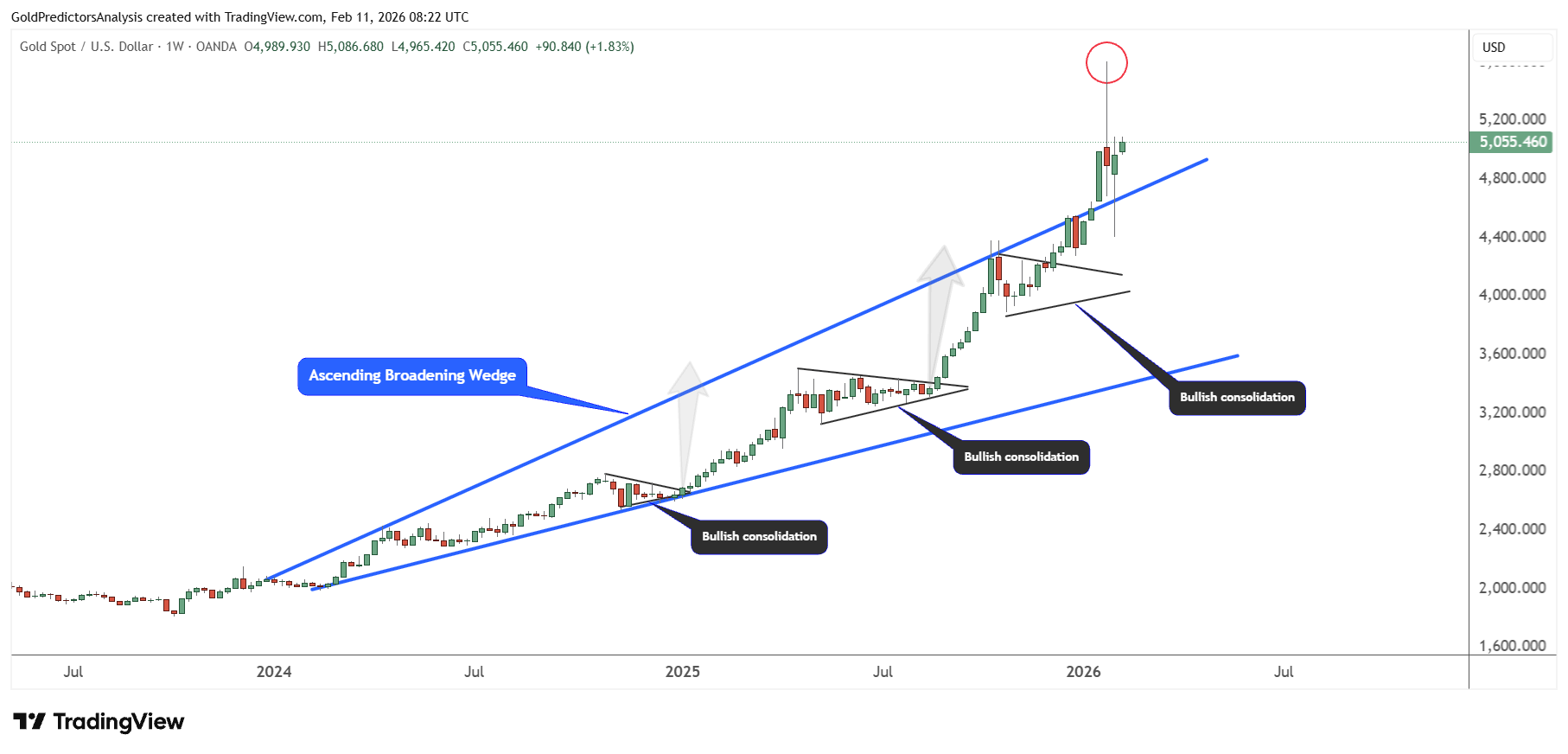
The gold chart below shows a structural breakout at $4,500 from the ascending broadening wedge pattern. This breakout has initiated a strong surge to mark a high at $5,600. However, the price reversed lower to $4,400 quickly by forming a bearish hammer.
The price rebounds from the support of the ascending broadening wedge pattern which indicates that the price is building positive momentum to go higher during the next few weeks. The price may form bullish continuation to break higher during the next phase.
Bitcoin Technical Setup – Breakdown from $100K and Search for Support
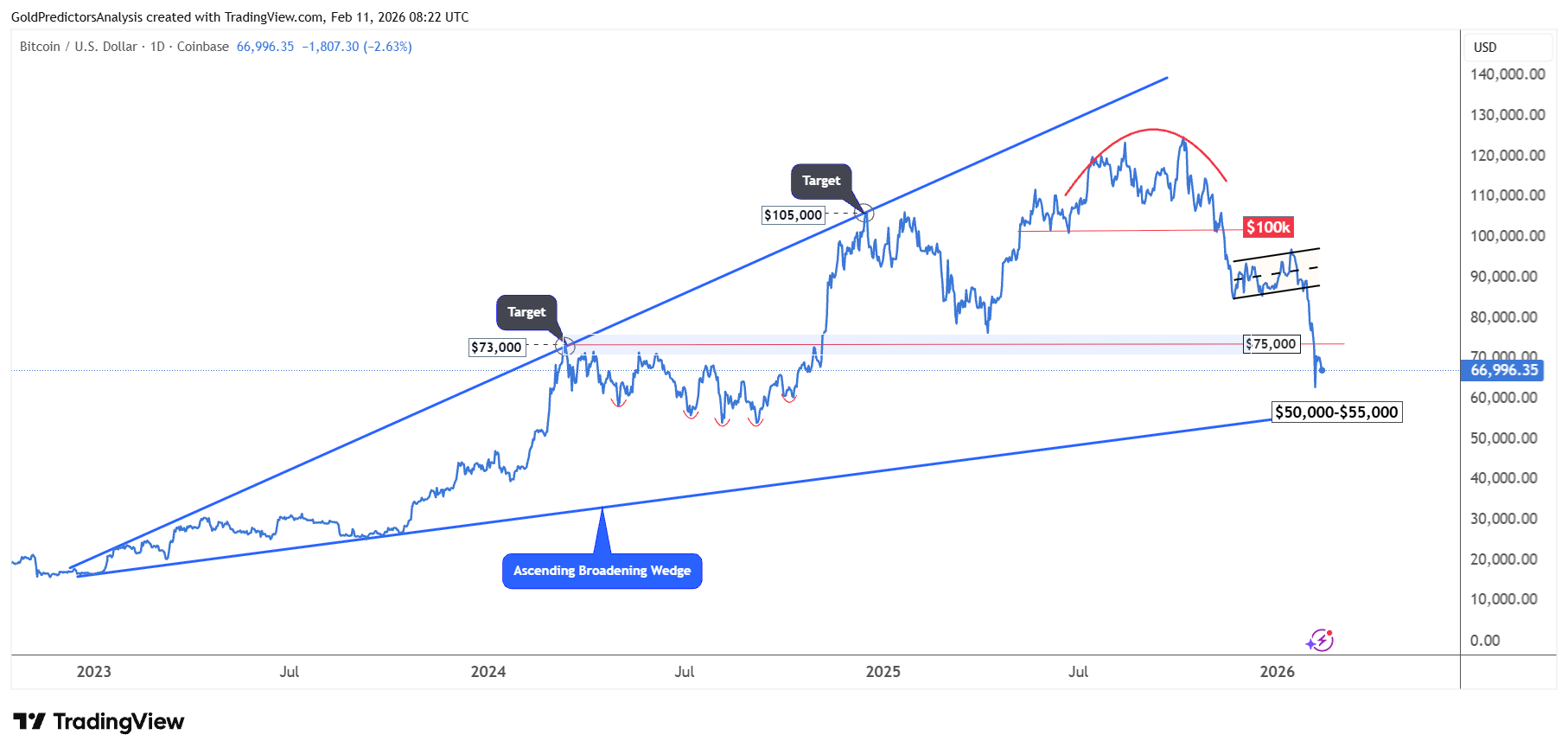
Bitcoin price has formed a rounding top pattern and broken $100,000 as the neckline of this pattern. Then the price formed a bearish hammer and dropped further below $75,000. This breakdown introduced another bearish pressure in the Bitcoin price. This pressure may push the price to the support zone of $50,000 to $55,000.
The price will likely find support within this range and initiate a rebound towards $75,000. Bitcoin price requires a break above $100,000 to gain further upside momentum in 2026.
Bitcoin-to-Gold Ratio – Breakdown Signals Gold Dominance
The Bitcoin-to-gold ratio also shows a strong breakdown from the 31 level, from the triangle pattern in September 2025. This breakdown has initiated a strong drop towards 13. As Bitcoin approaches strong support in $50,000 to $55,000, the ratio is also approaching strong support of 13. A break below the 13 level in the ratio will trigger another drop in ratio towards 9. This breakdown will likely indicate further downside in the Bitcoin price.
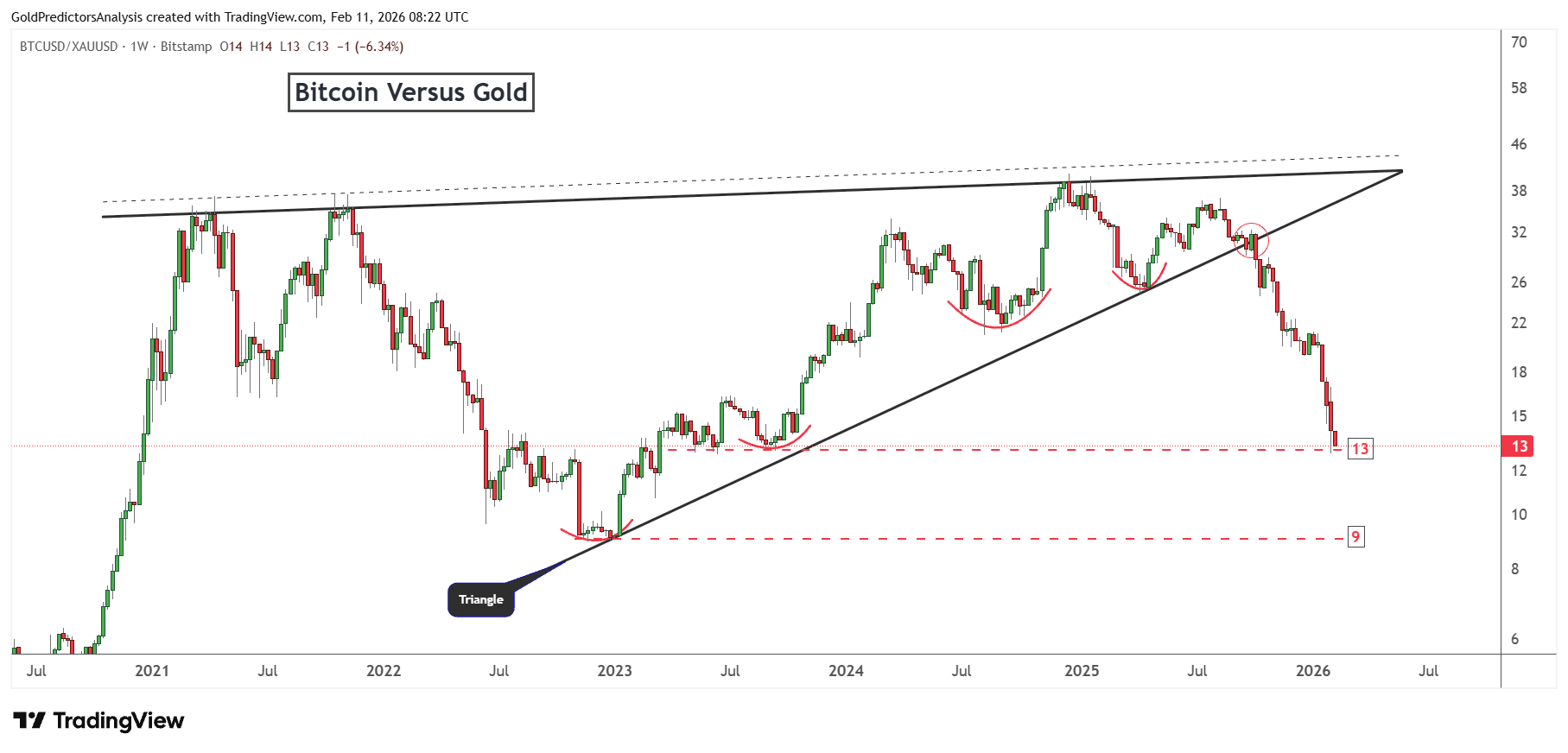
As long as these two levels in the ratio hold, the Bitcoin price will likely find support and initiate a rebound. This strong correction in the ratio indicates dominance of gold over Bitcoin.