The Dollar’s Rally Is Starting to Look Vulnerable
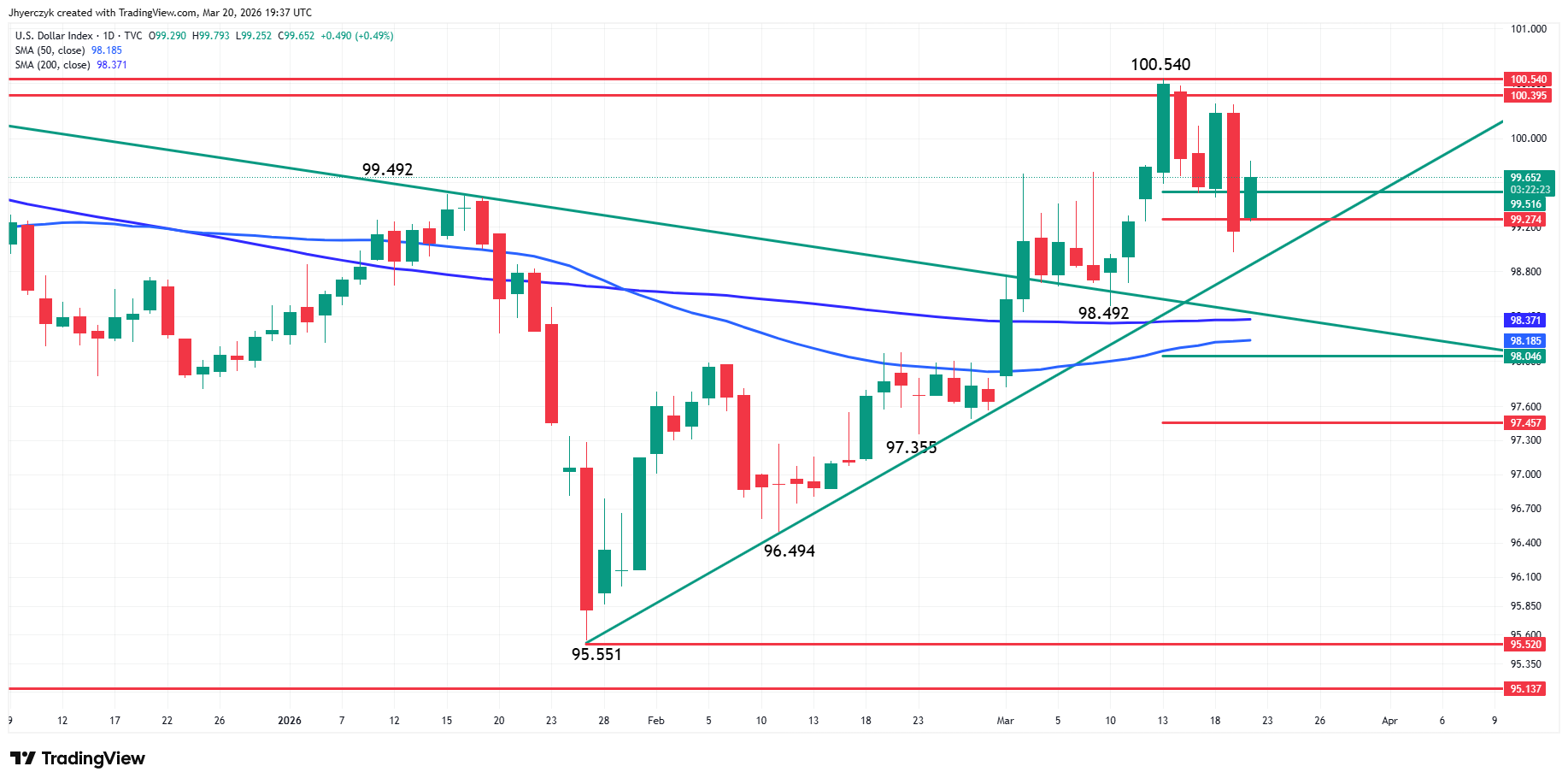
After enjoying a multi-month rally during the first quarter of 2026, the U.S. Dollar Index is starting to look vulnerable. It’s set to close higher on Friday, but lower for the week. Just a week ago, it was testing its highest level since May 29 at 100.54, but heading into the close, it’s starting to look vulnerable to a steep correction to around 98.046 to 97.457.

How the Dollar Got Here
The dollar found its bottom on January 27 at 95.551, just one day before the Fed meeting. The bottom came as a surprise because at that time, investors were pricing in at least two rate cuts by the Fed in 2026. This line of thought is usually bearish for a currency. Those expectations have since disappeared. Helping to drive the dollar higher for nearly two months has been rising Treasury yields, due to the Fed’s reluctance to cut rates because of sticky inflation.
But for the past three weeks, a different variable has entered the picture, sharply higher crude oil prices. Oil is up about 50% since late February and this is creating inflationary fears. So much so that Treasury yields are soaring with the 10-year yield rising to around 4.38% and the 30-year near 4.95%. Rising yields typically support the dollar, but that effect is now being offset by global currency moves in the Forex market.
Other Central Banks Are Catching Up and That Changes Everything
After standing pat on interest rates for several months, this week, several major central banks finally took notice of the rise in crude oil and inflation. Comments from officials at the European Central Bank (ECB), Bank of England (BOE) and the Bank of Japan (BOJ) signaled that they may keep rates higher for longer or even raise them, if necessary. When other countries raise rates or sound more hawkish, their currencies become more attractive, which can pull money away from the dollar.
As a result, currencies like the Euro, Yen and British Pound gained ground this week. Their price action indicates that global rate expectations, not just U.S. policy, are now driving currency markets.
EUR/USD Price Forecast
Every new EUR/USD analysis as it publishes, today's technical signal and key levels, live price — on one page.
See all EUR/USD forecastsIn my opinion, the situation is shifting from a “dollar-supported” environment earlier in the year to a more mixed outlook. The dollar is still getting help from higher U.S. Treasury yields and fewer expected rate cuts, but that advantage will shrink as other central banks catch up.
Simply stated, the dollar’s rally was built on high yields and a patient Fed, but now rising global inflation and more aggressive central banks are starting to level the playing field.
The Trend Is Still Up but the Cracks Are Showing
Technically, the trend is up. A trade through 100.540 will signal a resumption of the uptrend and a trend line break at about 98.975 will shift momentum to the downside. This could trigger a further break into the 200-day moving average at 98.71 and the 50-day moving average at 98.183. This is the last potential major support before the target zone at 98.046 to 97.457.
Now, it’s a little high risk to sell weakness at current price levels because we could see a short-term surge into 99.758 and the formation of a secondary lower top. That pattern will convince me that sellers have returned.
More Information in our Economic Calendar.