Momentum Recovery Meets Resistance Cluster
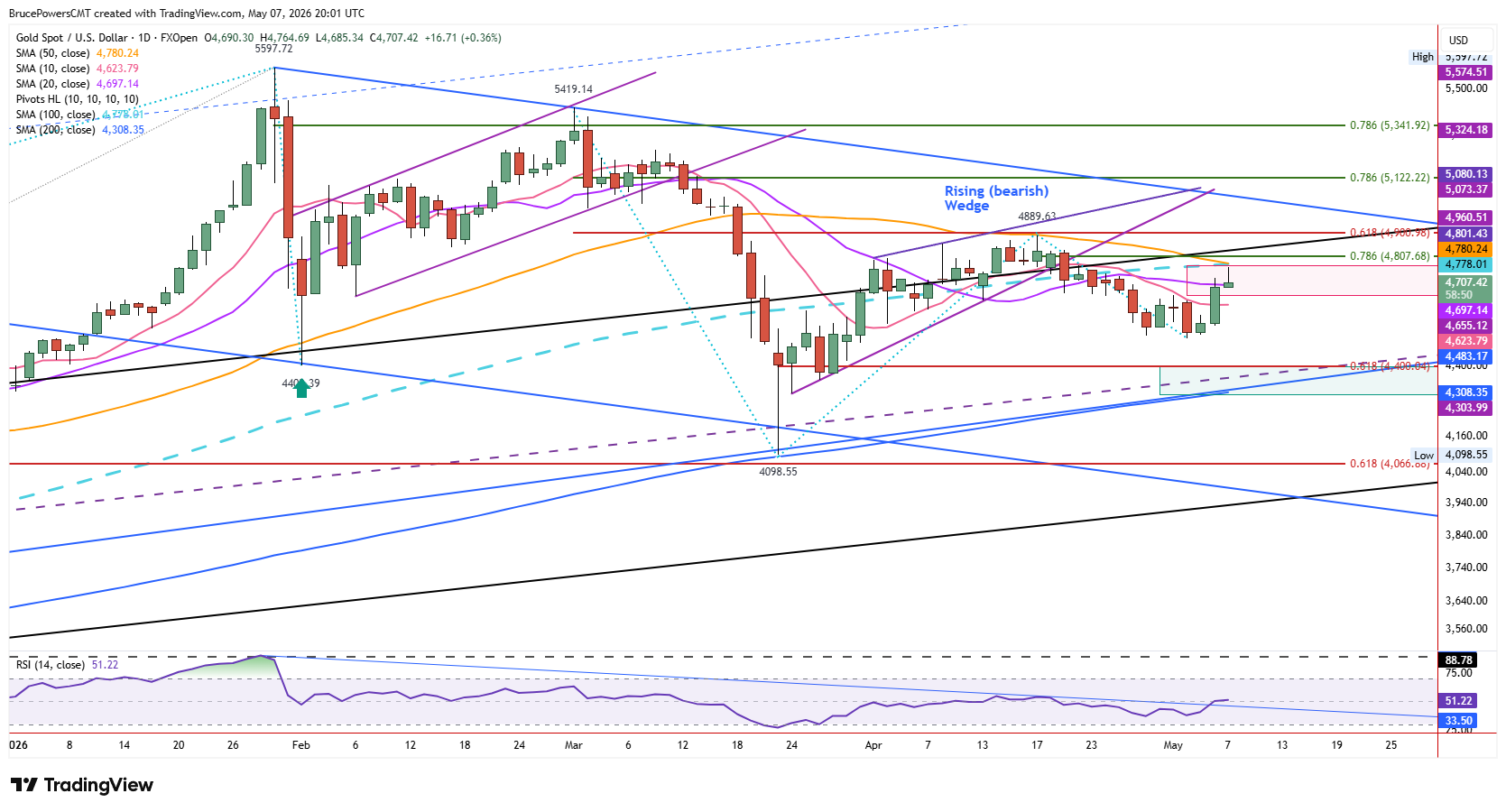
Gold continued to advance and retrace the prior downswing on Thursday, reaching an 11-day high of $4,765 before sellers took back control. A resistance zone near prior dynamic support from the 100-day and 50-day moving averages was successfully tested as resistance. This followed renewed strength as gold reclaimed its 20-day moving average as support, for the first time since April 24. It is interesting to note that the 50-day and 100-day moving averages converged on the same day that they were tested as resistance, strengthening the technical significance of this zone as layered resistance. This strengthens the potential for notable resistance near those averages.

Key Moving Averages Align as Resistance Wall Forms
The 100-day moving average is at $4,778 and it will soon take over the top resistance level as the 50-day average will soon cross below it. The potential significance of that long-term dynamic trend indicator is increased by its recent alignment near the top of a rising trend channel. Again, two indicators are identifying a similar price zone.
Further, the 50-day moving average, now at $4,781, was successfully tested as resistance during the prior rally and the current bounce may be the second confirmation of resistance in this region. And even though the initial reaction near the average is bearish, the reclaim of the 20-day moving average suggests that further testing of resistance may occur, keeping the short-term structure active within a broader consolidation phase.
Bearish Structure Still Dominates Price Action
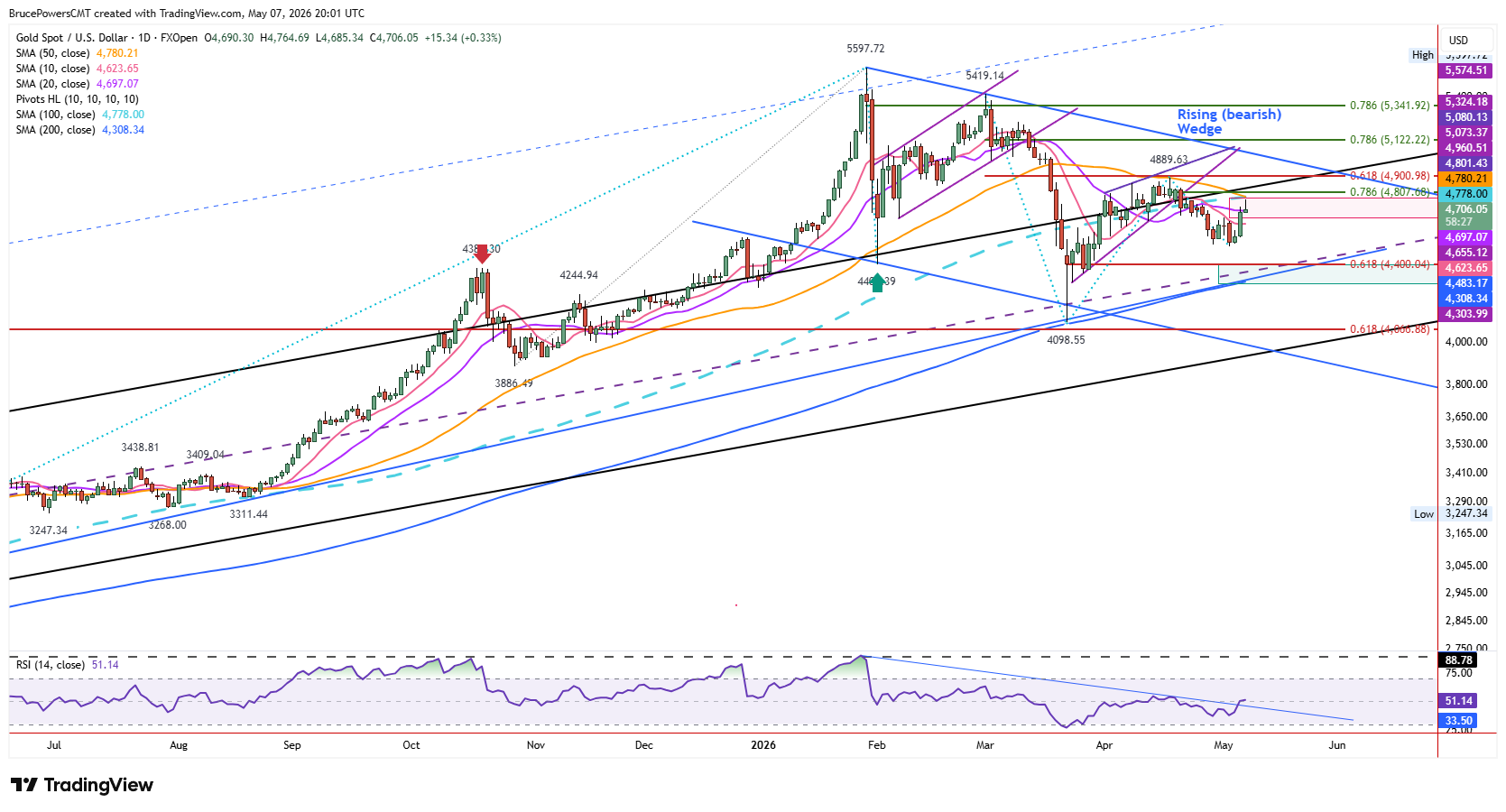
The dominant pattern remains a declining structure, with the potential for a lower swing high to be established from Thursday’s price action. A break back below the 20-day moving average, now at $4,697, will trigger on a drop below Thursday’s higher daily low of $4,685, which takes the form of an inverted hammer candlestick.
That would suggest that the larger bearish pattern is progressing. A new lower swing high was established in April, which was the top of a rising wedge formation. That bearish pattern triggered on April 21 and it was followed by a higher swing low at $4,501 and the completion of a 50% retracement of the previous advance, reinforcing the broader corrective phase still in play despite short-term rebounds.
Gold Price Forecast
Every new Gold analysis as it publishes, today's technical signal and key levels, live price — on one page.
See all Gold forecastsIf you’d like to know more about how to trade gold and silver, please visit our educational area.