Spot Gold Rallies on Peace Headlines Then Gives Back Gains as Oil Reverses
Spot Gold (XAUUSD) pushed to a two-week high Thursday, touching $4,764.01 before pulling back to close near $4,709.85, up $18.94 on the session. The setup made sense in the morning and stopped making sense by afternoon. Oil drove the whole thing in both directions.

The Dollar Did the Work Early
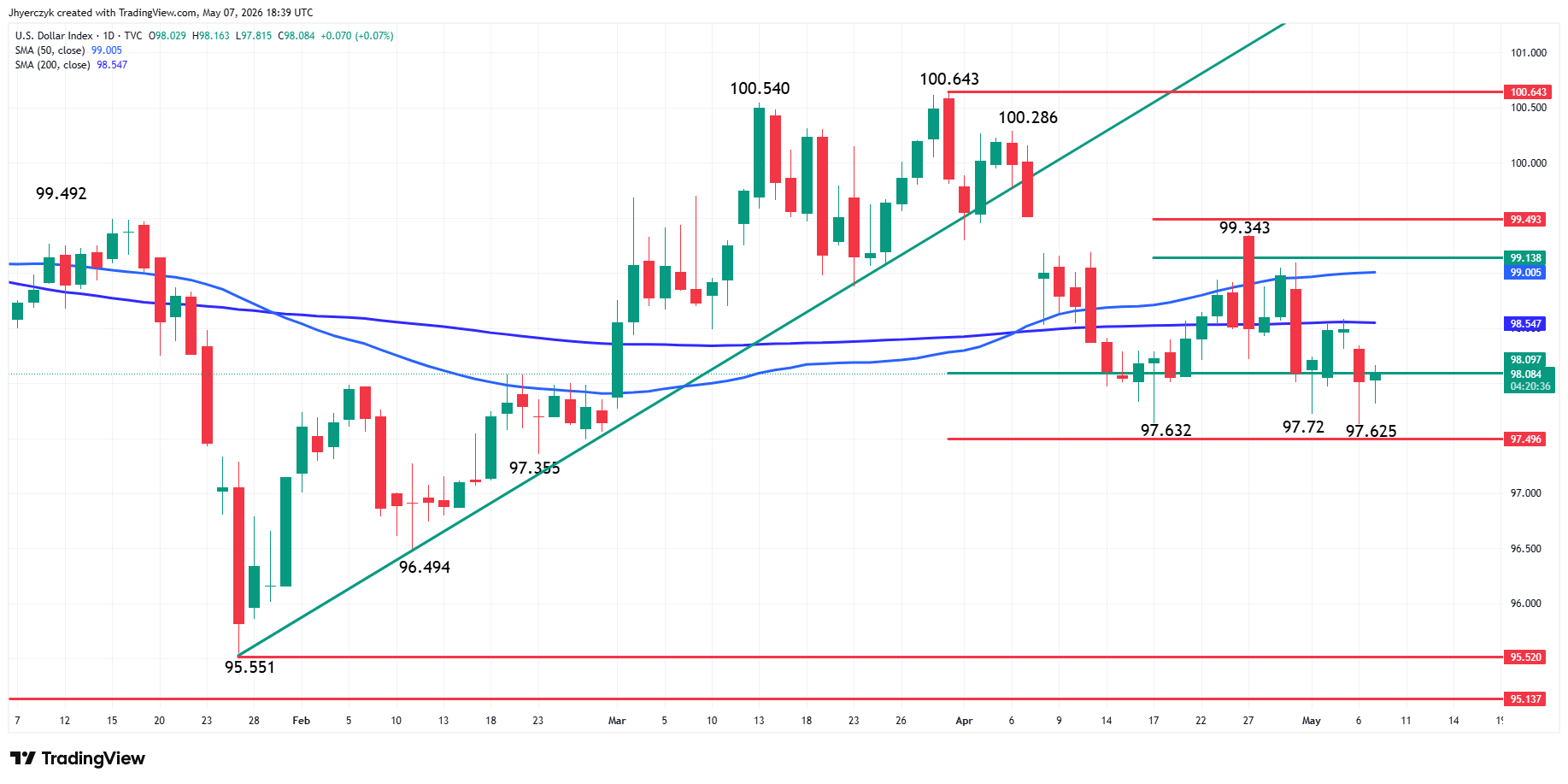
The U.S. Dollar Index hovered near a two-month low Thursday morning and gold felt it immediately. A weaker dollar makes Spot Gold (XAUUSD) cheaper for every buyer outside the United States and that flow showed up in the early session. Treasury yields eased alongside it. When the dollar and yields move lower at the same time gold does not need another reason to climb. It just climbs.
Why the Oil Drop Mattered for Gold
Here is the chain I watched run Thursday morning. Peace headlines hit the tape suggesting the U.S. and Iran were close to a framework agreement. Crude oil dropped hard. Lower oil takes inflation pressure off the table. Lower inflation means the Federal Reserve has less reason to hold rates where they are. Lower rate expectations push Treasury yields down. Lower yields reduce the cost of holding non-yielding assets like gold. The whole sequence ran in about two hours and gold was at a two-week high before lunch.
Rate expectations shifted in real time. Traders trimmed the probability of another Fed rate hike by December to around 12%, down from 16% the day before. That is a meaningful move in one session and gold priced it in immediately.
Then Oil Reversed and Took the Rally With It
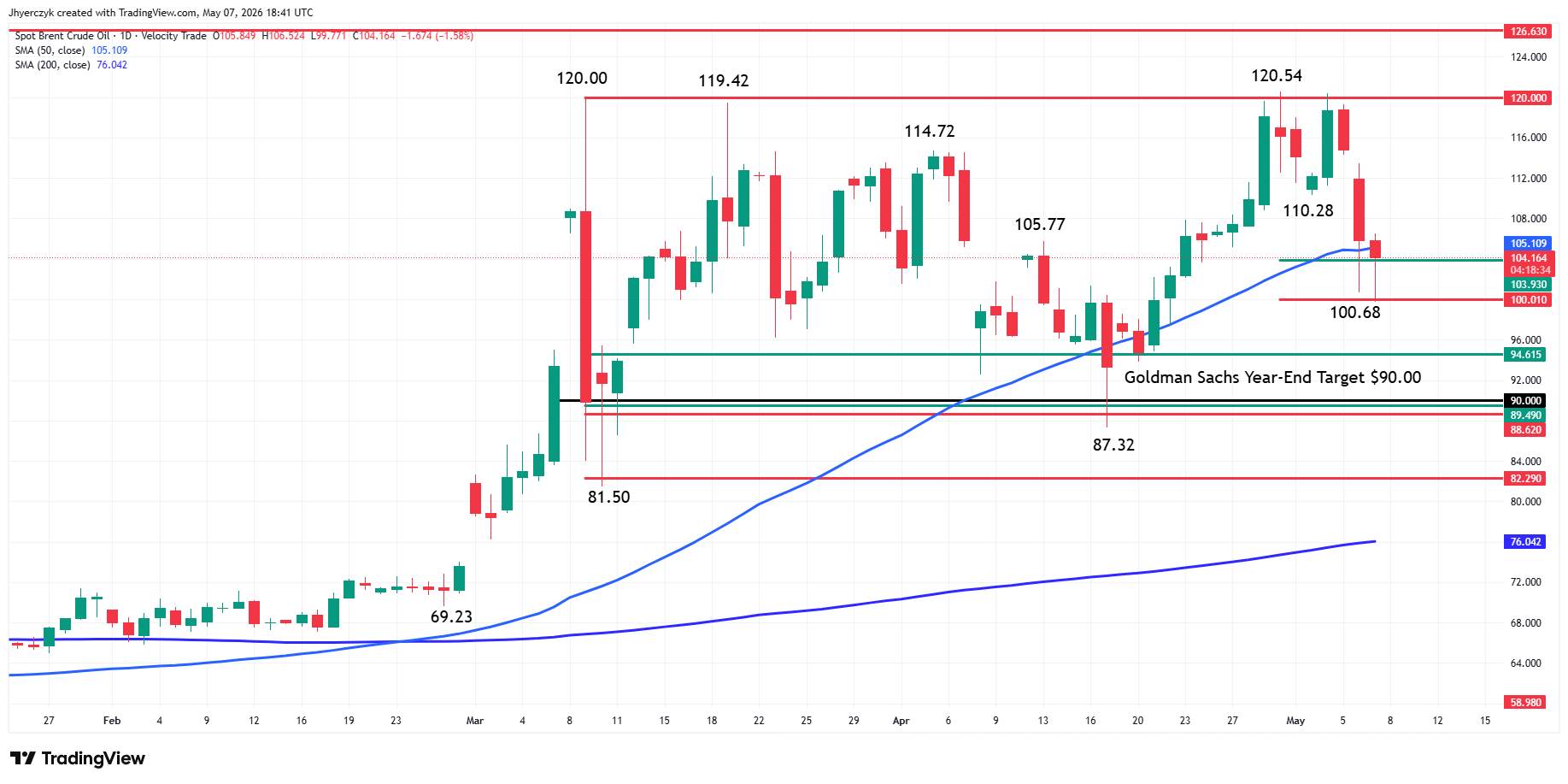
I’ve watched this market flip on a single headline before but Thursday’s reversal was fast even by current standards. Spot Brent crude climbed back above $105 a barrel and West Texas Intermediate crude pushed toward $96 after reports surfaced that U.S. and Iranian negotiations remained fragile. Iran said it was still reviewing the U.S. proposal.
Gold Price Forecast
Every new Gold analysis as it publishes, today's technical signal and key levels, live price — on one page.
See all Gold forecastsPresident Trump warned that military action could intensify if Tehran rejected the agreement. That was enough to flip the oil trade and gold came off its highs with it. Treasury yields moved back up as crude recovered and traders reduced bullish exposure heading into Friday’s employment data. The same chain that lifted gold in the morning ran in reverse in the afternoon.
China Is Still Buying
China’s central bank increased its gold reserves for an eighteenth straight month, with holdings rising to 74.64 million fine troy ounces at the end of March. I keep coming back to this number because it does not get enough attention in daily price discussions. Central bank demand at this level does not disappear because oil reversed in one afternoon session. It is a structural bid underneath this market and it is still there.
Non-Farm Payrolls Is the Next Trade
Friday’s U.S. non-farm payrolls report is what this market is actually waiting on. A soft print, slowing hiring and rising unemployment, tells the Fed the economy is cracking and rate cuts need to come into the conversation sooner. That scenario pushes Treasury yields lower and gives gold another run at $4,744.34 and then the 50-day moving average at $4,790.70. A strong number does the opposite. It hands the Fed cover to stay patient, keeps yields propped up, and gold struggles to hold what it gained Thursday. The late-session reversal Thursday set up a market that is not going into Friday with strong conviction in either direction.
Spot Gold Technical Analysis
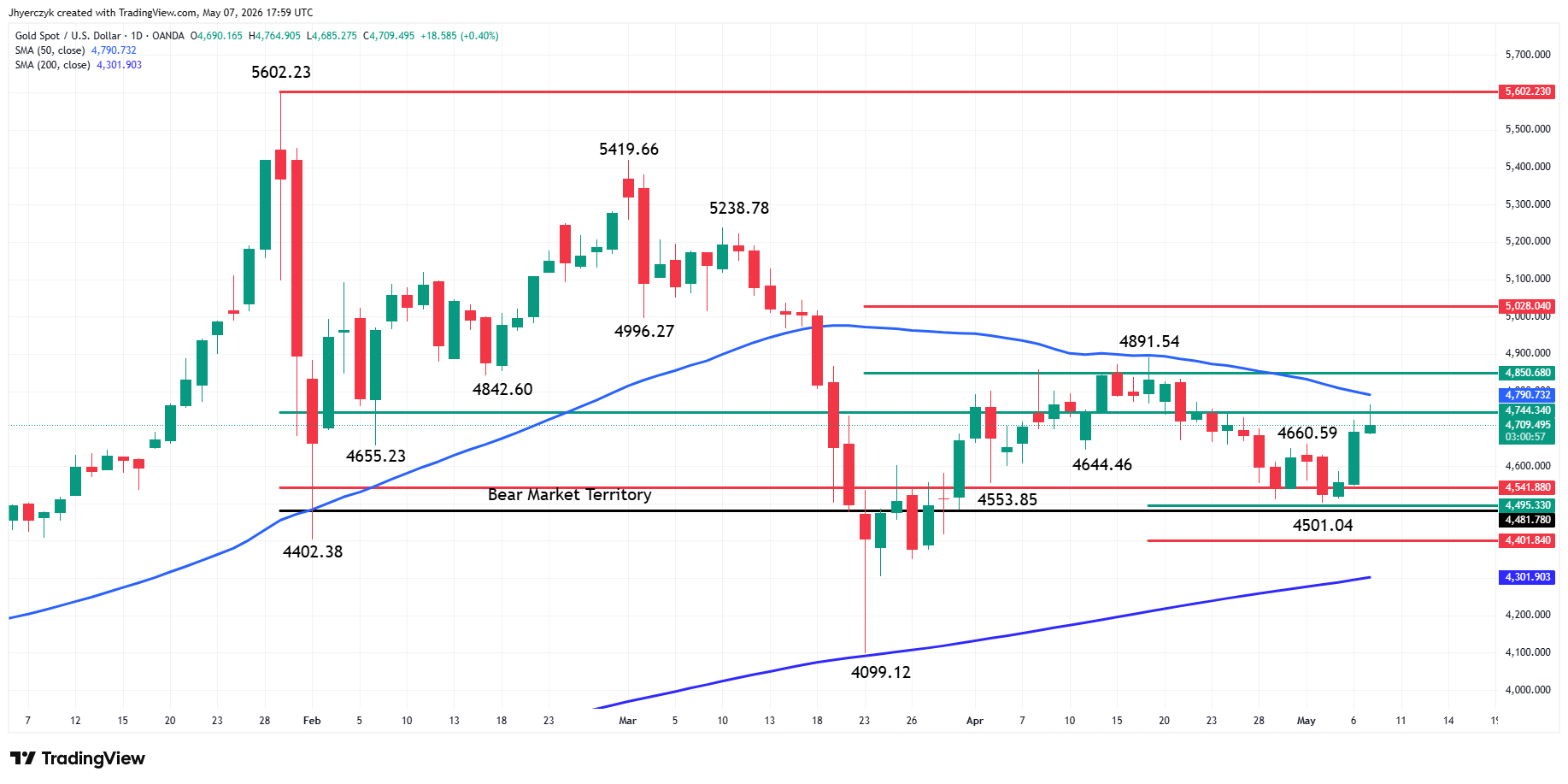
Technically, the main swing chart is in a downtrend, but the minor trend is up, which is helping to generate some upside momentum.
The main trend will change to up on a trade through $4,851.54, while a trade through the minor bottom at $4,501.04 shifts momentum to the downside. The major bottom is $4,099.12.
Retracement level support is at $4,541.88, $4,495.33 and $4,401.84. Retracement level resistance is $4,744.34, $4,850.68 and $5,028.04.
The long-term support is being supplied by the 200-day moving average at $4,301.90. The short-term resistance is the 50-day moving average at $4,790.70.
What have we seen this week? Spot Gold (XAUUSD) found support at $4,501.04, just above the 50% level at $4,495.33. It also held $4,481.78, which is the line that separates the bull market from the bear market. The final support is a 61.8% level at $4,401.84. Putting it all together, buyers came in to defend against the start of a bear market and a 200-day moving average breakdown.
Traders found resistance at a 50% level at $4,744.34, just below the 50-day moving average at $4,790.69, a 50% level at $4,850.68, a swing top at $4,891.54 and a Fibonacci level at $5,028.04.
Putting it all together, the bears are likely to continue to sell rallies and the bulls will start playing for a 50-day moving average breakout. We need a break in the pattern. In mid-April, we saw traders selling strength, and three weeks later, they were buying weakness.
The 50-day and the 200-day MAs are going to continue to compress prices until traders start buying strength or selling weakness.
What I’m Watching
The 50-day moving average at $4,790.70 is the level that decides whether Thursday’s session was a step forward or just noise. Gold touched $4,764.01 and backed off. That is $26 below the 50-day. Getting there is one thing. The price action when it actually touches that level is what I am watching. A clean push through opens the door to the retracement zone at $4,850.68 to $5,028.04 and that is where the real breakout conversation starts. A stall and the range trade reasserts itself.
Friday tells me which version this is. Soft payrolls and the 50-day gets tested fast. Strong payrolls and the late-session reversal Thursday turns into a bigger problem. The value zone at $4,495.33 to $4,401.84 held this week and buyers showed up where they were supposed to. That foundation is intact. Whether the active buyers are ready to take out offers above the 50-day is a different question and Friday’s number is the one that answers it.
If you’d like to know more about how to trade gold, please visit our educational area.