
U.S. Dollar Index Heads for Second Straight Weekly Loss
The U.S. Dollar Index is heading for a second straight weekly loss as the fear trade that drove safe-haven demand unwinds. The Israel-Lebanon ceasefire is holding, U.S.-Iran talks are back on the table and traders are done buying the dollar for protection.
Risk sentiment is the main driver. When geopolitical fear spikes, money flows into the dollar for stability. Now that fear is leaving the market, that flow is going the other way. Traders are rotating back into risk assets and the dollar is paying for it.
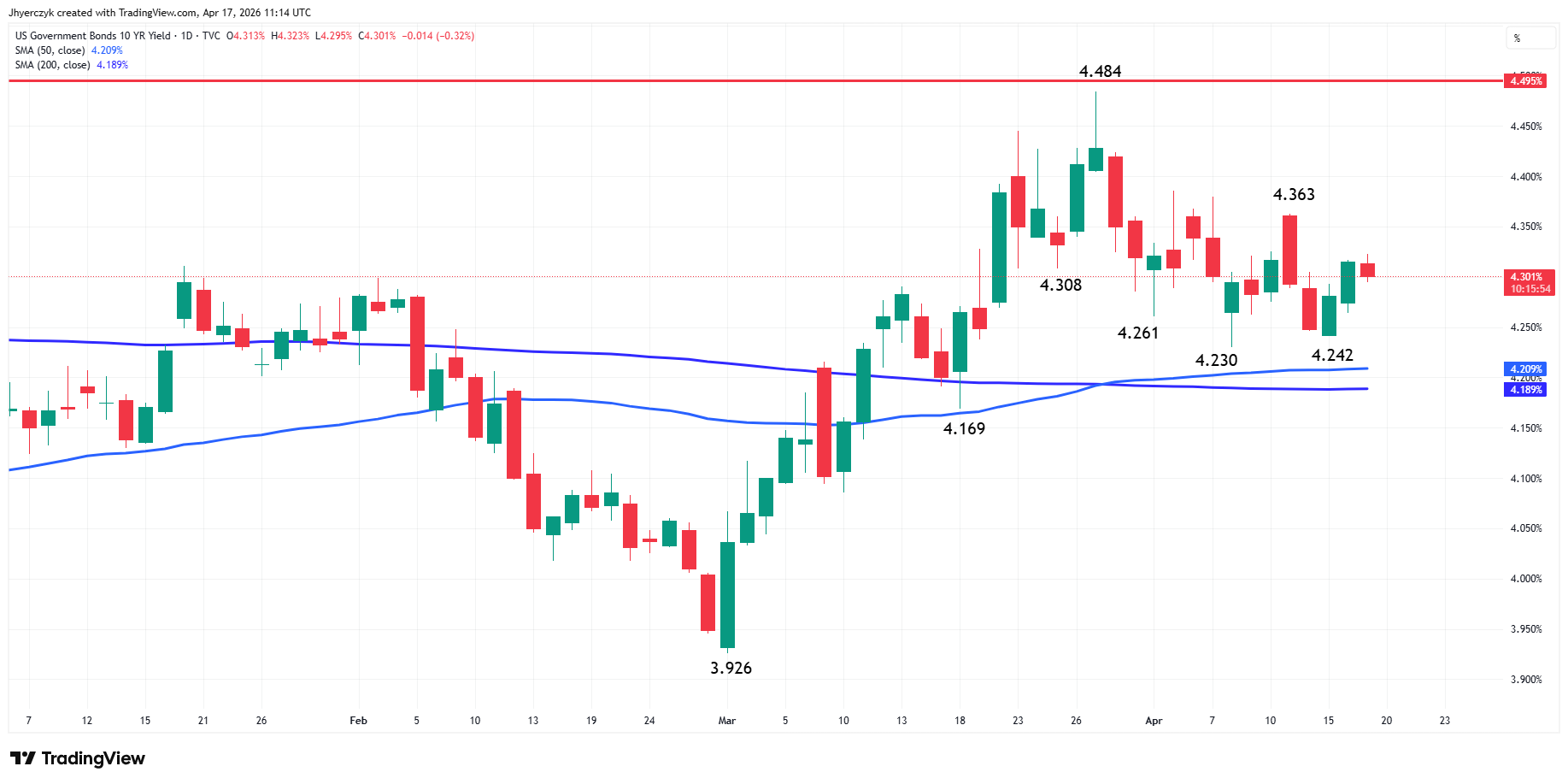
I keep coming back to the Fed when I look at why the dollar can’t find a floor. Markets are pricing rates steady this year, not higher. There’s no tightening catalyst coming from monetary policy. Oil is still elevated and that keeps inflation pressure alive, which should theoretically support yields and the dollar. This week that relationship broke down. Safe-haven unwinding was the dominant force and yields at 4.30% on the 10-Year U.S. Treasury weren’t enough to offset it.
The euro is back near $1.18 and the British pound is holding around $1.35. Both are at pre-conflict levels. Capital is flowing back into European assets and that’s adding another layer of pressure on the dollar from the other side of the trade.
The near-term outlook stays soft as long as geopolitical tensions keep easing and risk appetite holds. No fear, no safe-haven bid, no floor for the dollar.

Technical Outlook
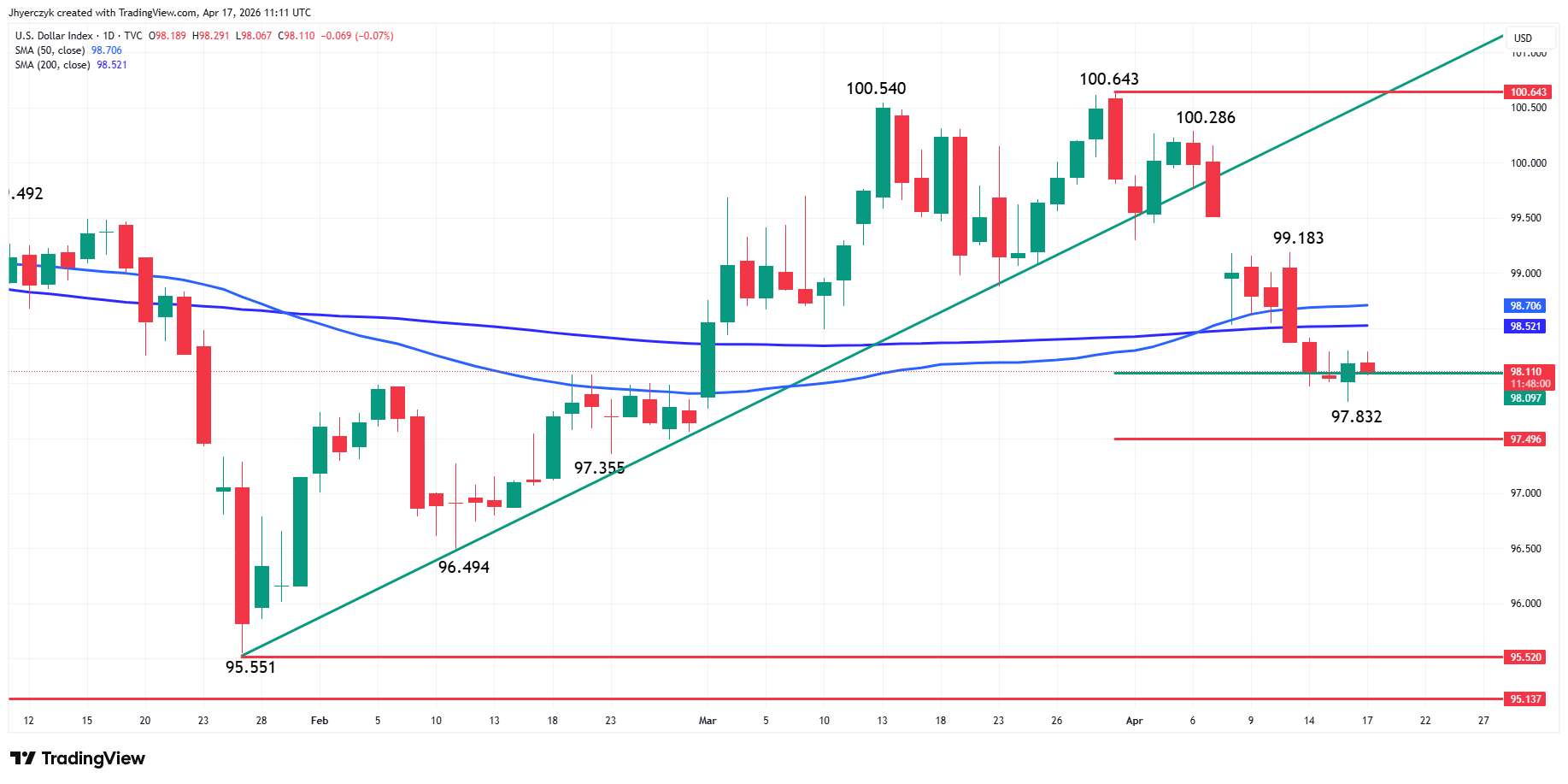
Technically, the U.S. Dollar Index is in a downtrend, but stable on Friday. A trade through 97.832 will reaffirm the downtrend. Taking out 99.183 will shift momentum to the upside.
The main range is 95.551 to 100.643. The dollar index is currently straddling the upper end of its retracement zone at 98.097 to 97.496. This level is likely to control the direction on Friday.
A sustained move over 98.097 will indicate the presence of buyers. If this creates enough upside momentum then look for a quick surge into the resistance formed by the 200-day moving average at 98.521 and the 50-day moving average at 98.706. Overcoming the latter could extend the rally into 99.183.
On the downside, the inability to hold 98.097 will be a sign of weakness. This could lead to a test of this week’s low at 97.832, followed by the 61.8% level at 97.496.
The price action in the U.S. Dollar Index is normal so far. When the market went risk on two weeks ago, traders sold the dollar in textbook fashion, stopping at the retracement zone as expected. Now traders are waiting for the next catalyst. We could see a continuation of the selling pressure, or we could see a short-covering rally that sends it to at least 50% of the 100.643 to 97.832 range.
EUR/USD Price Forecast
Every new EUR/USD analysis as it publishes, today's technical signal and key levels, live price — on one page.
See all EUR/USD forecastsMore Information in our Economic Calendar.