



Currencies Reflect Divergent Monetary Policies and Economic Fundamentals
As of July 1, the dollar, the euro and sterling each trade at a crossroad of different central bank strategies, domestic economic dynamics. The U.S. dollar benefits from the Federal Reserve remaining patient in light of persistent core inflation, leading investors to expect thatU.S. monetary policy will be relatively tight for longer, while domestic demand remains robust and the dollar retains its status as a key reserve currency. Meanwhile the euro is challenged by growth disparities across the euro zone and the European Central Bank’s drive to achieve price stability.
The single currency is thus dependent on domestic fiscal divergences and different inflation pressures, and data around economic activity and wage growth. The pound faces a balancing act, as the Bank of England seeks to weigh sticky services inflation against softer growth signals, with fiscal policy choices and developments in labor markets playing a major role. The relative policy stance to the Fed and ECB also matters.
Underpinning these currency trends is the fact that divergences are likely to remain with regard to inflation, fiscal, and growth fundamentals, sustaining two-way risks. Trade balance and capital-flow dynamics also provide differentials, as investors try to figure out which central bank is most likely to be able to provide stability without dampening economic expansion.
DXY Holds $101.34 – Green Triangle Breakout Test on 1D
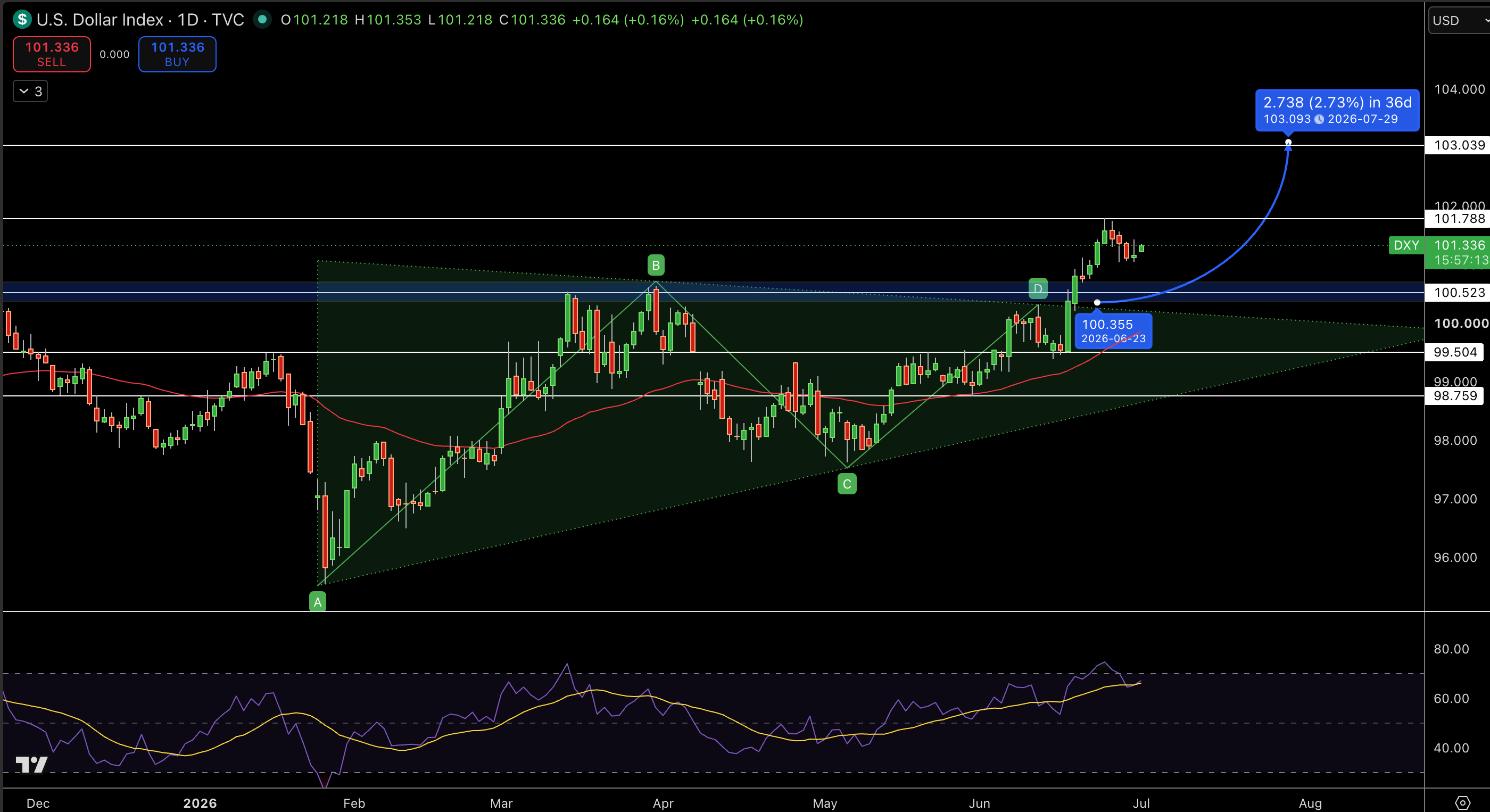
DXY at $101.34 on the D1 Time frame has formed Green triangles that are still testing breakout. We had a Green Breakout at $97.67 and it was tested on the breakout $100.36. DXY now is still forming Green candles with Higher Highs that are in support with the white uptrend. The RSI is holding over 55, which is positive and supports a Green breakout.
We can clearly see on the volume profiles that the $100.36 has now formed as a solid breakout level. We now project that the Fibonacci 61.8 is the next potential level for Green prices in the next couple weeks which is located around $103.09. DXY has now formed a clear Green channel at $100.36 and higher highs with higher lows still show support for the buyers.
Trade Idea: Buy $101.34, targeting $103.09, with a stop at $100.36.
GBP/USD Holds $1.3243 – White Ascending Trendline Defense on 1D
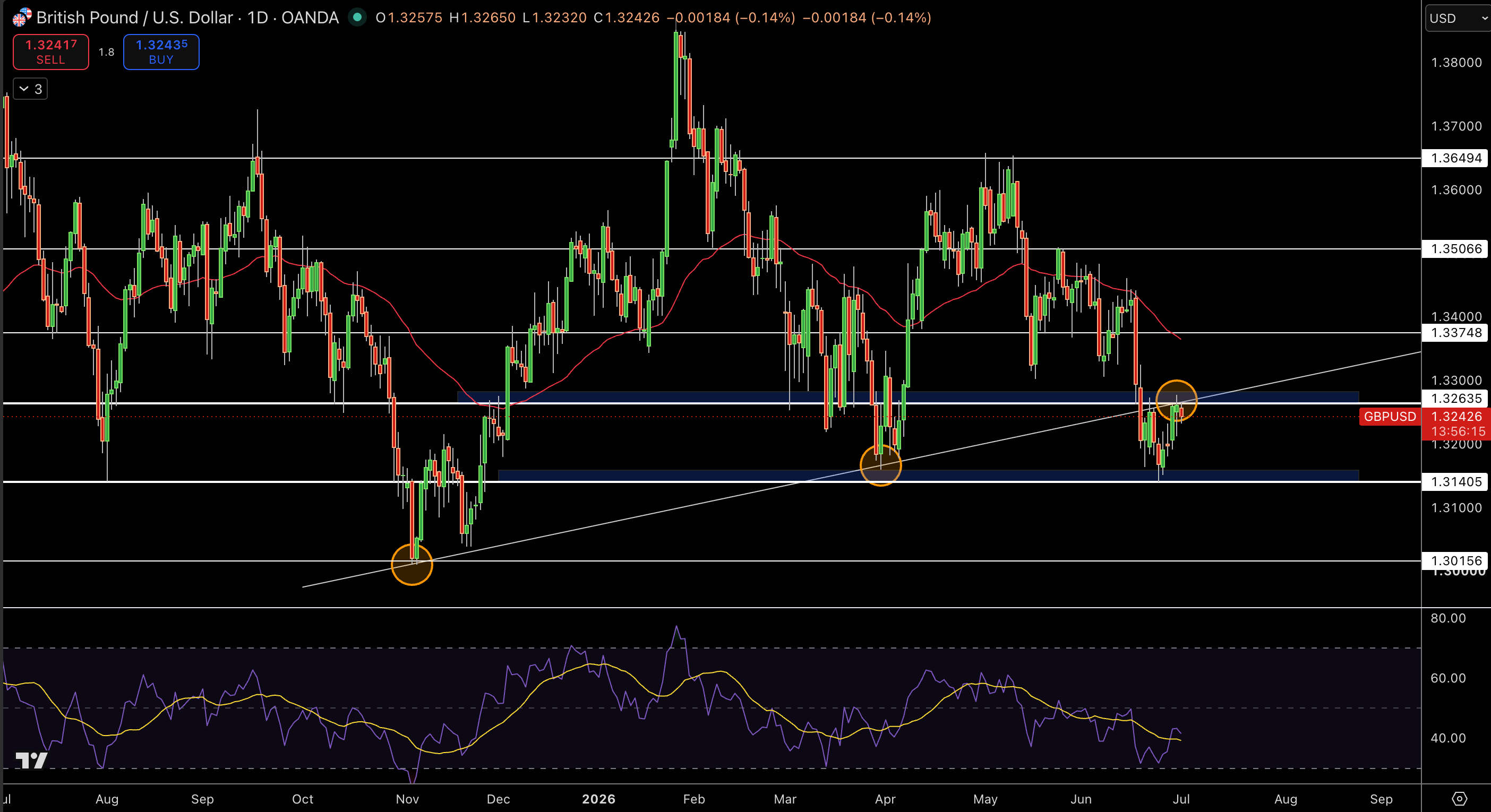
GBP/USD at $1.3243 on the D1 Time frame has formed Green and Red candles that are still testing for breakout. We had a Green breakout from the White support trendline of $1.3206. GBP/USD is now forming Green candles with higher lows that are in support with the white uptrend. RSI is holding around 50 which is neutral and will confirm Green candles once the prices move higher.
GBP/USD Price Forecast
Every new GBP/USD analysis as it publishes, today's technical signal and key levels, live price — on one page.
See all GBP/USD forecastsWe can clearly see on the volume profiles that the trendline $1.320 has now formed as a solid support area. GBP/USD has now formed a clear breakout support level at $1.3206. The next resistance zone will be the MA $1.337 and the previous highs around $1.345. GBP/USD is now neutral at $1.345 and has held $1.3206 within a range channel. Higher lows still show that buyers are now back and are buying on dips.
Trade Idea: Buy $1.3243, targeting $1.337, with a stop at $1.314.
EUR/USD Dips to $1.1400 – Fibonacci 0.236 Defense on 1D
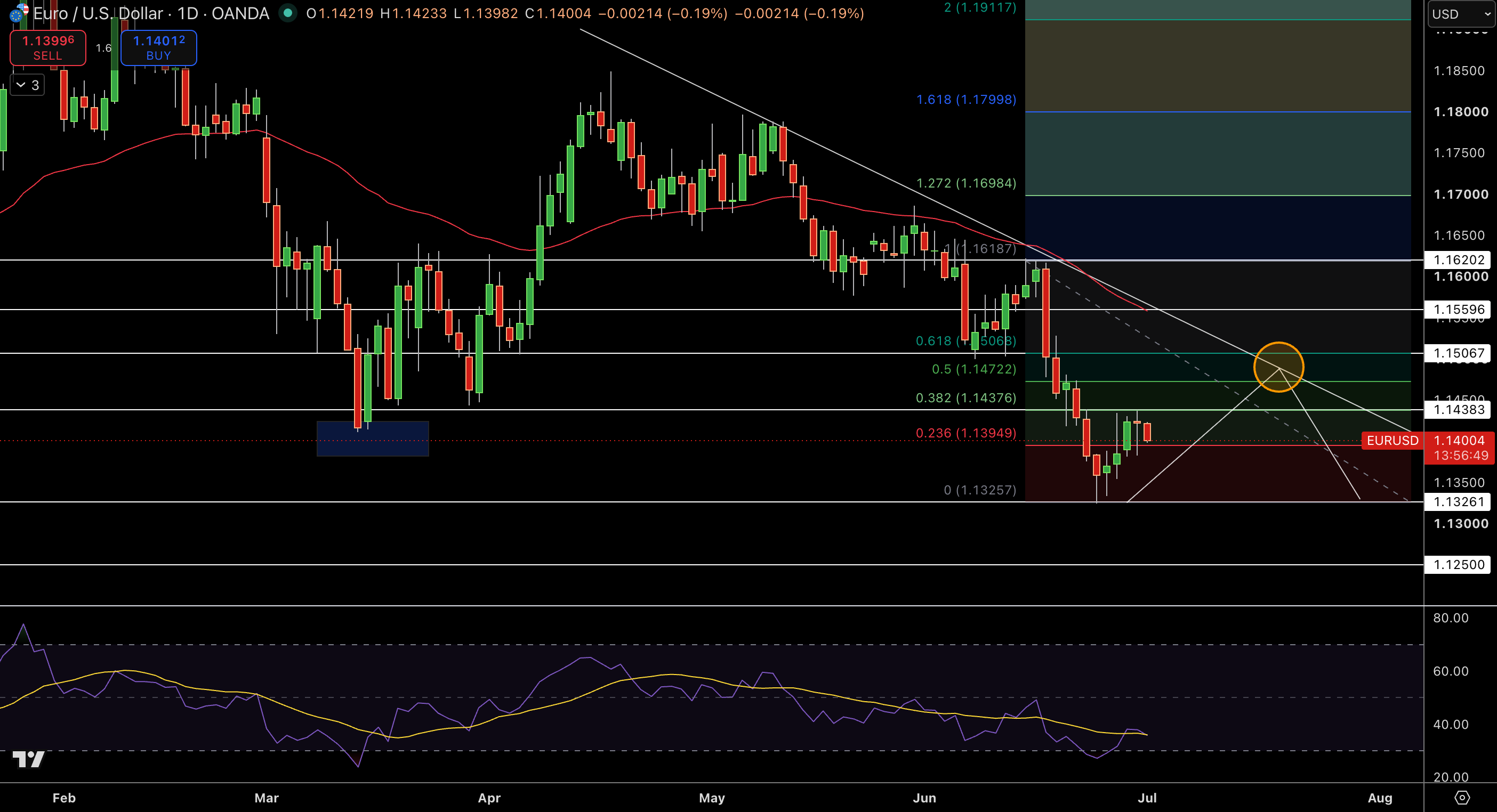
EUR/USD at $1.1400 on the D1 Time frame is now forming Red continuation candles that tested the 0.236 at $1.1438. We had Red breakdown at $1.1799 and it was tested on the Fibonacci 0.236 level. EUR/USD is still forming Red candles with lower highs that are holding $1.1438. The RSI is below 55 at 45 which is negative and supports a Red breakdown.
We can clearly see on the volume profiles that the 0.236 level $1.143 to 1.147 has now formed as a solid breakdown level. The White line has now capped a White trend at $1.162 which will be the next resistance to overcome. EUR/USD is now neutral at $1.162 and has formed support at Fibonacci 0.236. The rejection wicks show that buyers are holding a solid support zone.
Trade Idea: Buy $1.1400, targeting $1.162, with a stop at $1.132.