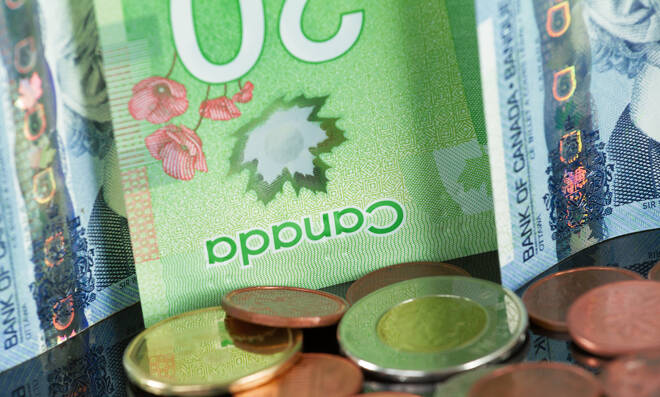
The Canadian dollar depreciated against its U.S. counterpart on Monday as the firm greenback and falling energy prices weighed on the commodity currency.
The Canadian dollar depreciated against its U.S. counterpart on Monday as the firm greenback and falling energy prices weighed on the commodity currency.
Today, the dollar to loonie conversion rose to 1.2583, up from Friday’s close of 1.2552. The Canadian dollar had lost about 1% in July – the second biggest monthly drop since September 2020 and has weakened about 0.8% so far this month.
Canada is the world’s fourth-largest exporter of oil, which edged lower on rising concern that the new delta variant in China will derail the global economic recovery.
U.S. West Texas Intermediate (WTI) crude futures were trading 3.56% lower at $65.84 a barrel. Low oil prices lead to lower U.S. dollar earnings for Canadian exporters, resulting in a decreased value of the loonie.
“July payrolls in Canada were not as good as those in the US, as the economy gained 94k jobs versus the forecasted 150k. The fact that CAD is not amongst the worst performers today as the USD jumped is a signal that the “miss” was surely not enough to dent the notion that Canada is on a solid recovery path. This, in turn, means that the BoC can remain on its policy normalisation path: we expect the end of QE by year-end,” noted Francesco Pesole, FX Strategist at ING.
“In the week ahead, CAD will be only driven by external factors, as the data calendar does not include any market-moving release and there are no scheduled BoC speakers. We’ll be on the lookout for signs of resilience in the oil market (e.g. Brent holding above US$70/bbl) as OPEC releases its monthly market report, where we’ll see how the cartel assesses the impact of the Delta variant on oil demand.”
The dollar index, a measurement of the dollar’s value relative to six foreign currencies, was trading 0.07% higher at 92.869 – not far from this year’s high of 93.437.
The U.S. dollar gained versus a basket of currencies on Friday after the world’s biggest economy added 943,000 Jobs last month and its jobless rate declined to 5.4%, suggesting that the monetary policy tightening will be coming soon.
The greenback was also supported by hawkish remarks from the US Federal Reserve which led markets to move forward with expectations of policy tightening. Richard Clarida said last week that policy conditions could be met for an interest rate hike by late 2022, putting a move in early 2023 on track, according to Reuters.
Reuters reported that he and three other Fed members also hinted at cutting back on bond-buying in the near future, depending on what happens with the labour market.
The risk that the world’s dominant reserve currency, the USD, recovery over the coming year is high, largely driven by the Fed’s expectation of two rate hikes in 2023. A strengthening dollar and growing risk that the Federal Reserve would tighten its monetary policy earlier than expected would push the USD to CAD pair higher.
Vivek has over five years of experience in working for the financial market as a strategist and economist.