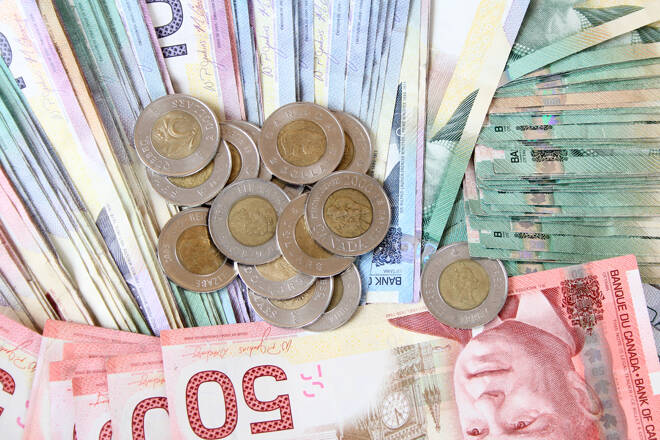
The Canadian dollar strengthened against its U.S. counterpart for the third straight session on Tuesday as the global market appeared less alarmed about the highly transmissible Delta variant of the coronavirus, keeping the greenback stable near its lowest level in five days.
The Canadian dollar strengthened against its U.S. counterpart for the third straight session on Tuesday as the global market appeared less alarmed about the highly transmissible Delta variant of the coronavirus, keeping the greenback stable near its lowest level in five days.
The USD/CAD pair fell to 1.266 today, down from Monday’s close of 1.2645. The Canadian dollar lost about 1% in July – the second biggest monthly decline since September 2020 – and has further dropped about 1.3% this month.
“Despite a new spike in inflation in July (headline rose to 3.7% YoY) in Canada, the loonie was hardly hit from the global risk-off mood, losing around 3.0% against the dollar and getting close to the 1.3000 level,” noted Francesco Pesole, FX Strategist at ING.
“Another leg higher in USD around the Jackson Hole conference, more drops in global risk appetite and further signs of weakness in the oil market might push USD/CAD above 1.3000 in the week ahead. Any signs of better resilience of CAD compared to other pro-cyclicals will likely be determined by the ability of oil prices to survive the current re-rating of global growth. At the same time, we note that USD/CAD is currently 2.8% overvalued, which may suggest most of the negatives may have been priced into the pair already.”
The dollar index, which measures the value of the dollar against six foreign currencies, was trading 0.04% higher at 92.996. Despite the safe-haven currency’s biggest weekly rise in more than two months last week, markets rose on Monday as weak data implied the Fed wouldn’t remove its accommodative stance soon.
A report from IHS Markit found that U.S. businesses’ activity growth slowed for the third straight month in August, largely due to capacity constraints, supply shortages, and the rapid spread of Coronavirus.
According to the Fed minutes, if the economy continues to improve as expected, the Fed may reduce the bond-buying stimulus this year. That means the Fed will not flood the financial system with cash if they reduce debt purchases. This is typically positive for the dollar.
However, it is likely that the world’s dominant reserve currency, the USD, will rise over the coming year, largely due to the expectation of two rate hikes by the Fed in 2023. With the dollar strengthening and a possibility that the Federal Reserve will raise interest rates earlier than expected, the USD/CAD pair may experience a rise.
Canada is the world’s fourth-largest exporter of oil, which jumped about 2% on Chinese demand optimism and a weaker dollar. U.S. West Texas Intermediate (WTI) crude futures were trading 1.95% higher at $66.92 a barrel. Higher oil prices lead to higher U.S. dollar earnings for Canadian exporters, resulting in an increased value of the loonie.
Vivek has over five years of experience in working for the financial market as a strategist and economist.