


What a difference 100 days can make.
As the U.S-Israel-Iran war enters its 100th day, the world is now in a radically different place from three months ago. Oil prices remain elevated near the $100 mark. Inflation is rising again. Supply chains are tightening. Global growth is slowing. Stagflation risk is back. And Central banks are now widely expected to raise interest rates multiple times in 2026.
For savvy traders, this is not background noise. It is the beginning of a major repricing.
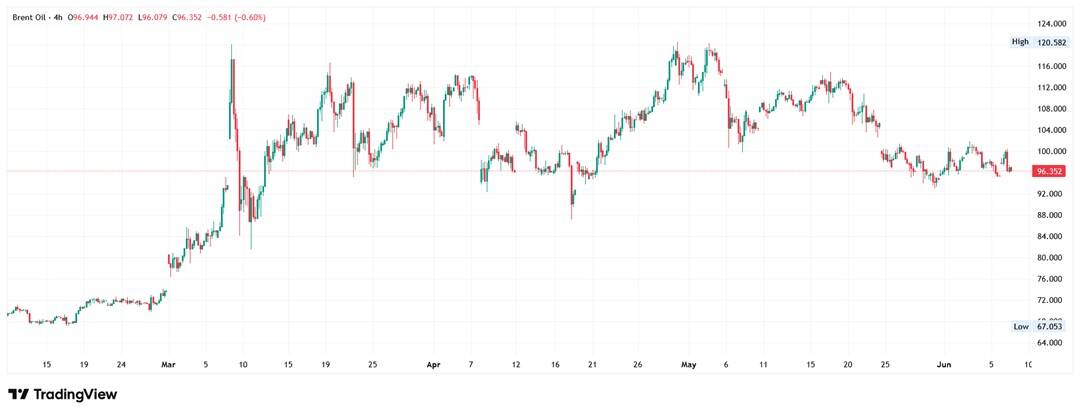
Crude Oil is no longer simply reacting to geopolitical headlines. It is being pulled higher by a powerful combination of war risk, collapsing spare capacity, depleted inventories, refinery stress, peak summer demand and the return of renewed inflationary pressures.
“Markets are not moving randomly,” says Lars Hansen, Head of Research at The Gold & Silver Club. “They are moving with force, direction and conviction. When energy security, inflation and supply disruption collide, Oil becomes the trade markets cannot ignore.”
The Physical Market Is Flashing Red
The key mistake traders are making is assuming this crisis can be solved by one political headline.
It cannot.
Roughly one-fifth of global Oil and petroleum product flows move through the Strait of Hormuz. Any sustained disruption affects far more than Crude. It hits Diesel, Gasoline, Jet Fuel, LNG, Fertilizer, shipping costs, food production and global inflation expectations.
According to data tracked by The Gold & Silver Club – as much as 14 million barrels per day of supply are now offline or constrained.
Against global Oil demand near 103 million barrels per day, that means more than 13% of global supply is potentially impaired at precisely the moment the Northern Hemisphere enters peak consumption season.
“The physical Oil market does not reset with a signed agreement,” Hansen says. “A headline can change sentiment in seconds, but barrels, tankers, insurance and refinery flows take months to normalize.”
That is the crucial point traders may be missing.
ADNOC Group CEO Sultan Al-Jaber has warned that even if a deal were signed immediately, flows through the Strait of Hormuz would not fully recover overnight. Getting back to 80% of pre-conflict flows could take at least four months, while full normalization may not arrive until the first or even second quarter of 2027.
Reopening Hormuz is not a light switch. It is a complex, multi-month process involving insurance markets, shipping restarts, infrastructure repairs, production ramp-ups and confidence rebuilding across the entire Energy supply chain.
“A signed deal does not restore supply,” Hansen says. “Only time restores supply. That is why Oil markets could remain far tighter for far longer than traders currently expect.”
Brent Oil Price Forecast
Every new Brent Oil analysis as it publishes, today's technical signal and key levels, live price — on one page.
See all Brent Oil forecastsInventories Are Becoming the Real Shock
The inventory data is now impossible to ignore.
U.S commercial Crude stocks recently fell by 3.3 million barrels to 441.7 million barrels, leaving inventories around 2% below the five-year average. Gasoline inventories dropped by 2.6 million barrels, while distillate stocks fell by 2.1 million barrels and remain roughly 11% below normal seasonal levels.
Total commercial Petroleum inventories declined by 8.3 million barrels in a single week.
At the same time, U.S refineries are already running aggressively, with Crude inputs near 17 million barrels per day and utilisation around 94.5%. That leaves very little spare capacity if supply tightens further or product demand accelerates.
This is why the upside risk is becoming explosive.
ExxonMobil Senior Vice-President Neil Chapman has highlighted the danger of extremely low inventory levels, suggesting that once the market reaches those conditions, $150 to $160 Oil becomes a realistic upside target.
“The Oil market is not short of narratives,” Hansen says. “It is short of barrels. That distinction matters because narratives can reverse instantly. Physical shortages cannot.”
The Window for Cheap Oil May Be Closing
The risk is that traders are still treating geopolitical disruption as temporary. But the physical market is already behaving as though the shock is structural.
Inventories are falling. Refinery utilisation is stretched. Shipping flows remain impaired. Strategic reserves are finite. China could return to the import market at scale. Central banks are preparing for rate hikes because inflationary pressures can no longer be contained.
That creates a rare and highly asymmetric setup.
Oil does not need to stay at $100 to damage the economy. Even a temporary spike can lift transport costs, squeeze corporate margins, reignite inflation expectations and force policymakers into a more aggressive stance.
For traders who missed Oil’s earlier surge, June and July may offer a second chance. But that window may not stay open for long.
“In markets like this, hesitation is expensive,” Hansen says. “The biggest opportunities usually appear before consensus accepts the obvious.”
Crude Oil is no longer a side trade. It is becoming the dominant macro trade of 2026.
And if the market is only beginning to price the real scale of this supply shock, the next breakout could be faster, sharper and far more profitable than most traders are prepared for.