



Gold Recovers as Peace Talk Report Cools Oil
Gold is higher Friday because the pressure that crushed it Thursday finally broke. Pakistan is exploring a path to restart U.S.-Iran peace talks with China’s support and that headline hit crude after the sharpest weekly run since the war started. Brent fell more than 3% toward $96 and WTI dropped toward $88. Treasury yields followed oil lower with the 10-year pulling back more than 4 basis points to 4.657% after clearing 4.70% Thursday. A softer flash PMI reading added to the bond bid. The sellers who had everything working for them Thursday lost their momentum Friday and gold found buyers for the first time since Wednesday’s covering rally fell apart.
At 17:08 GMT, Spot Gold is trading $4,076.53, up $26.75 or +0.66%. The metal is up about 0.7% for the week after recovering from Thursday’s sharp selloff.
Gold has fallen about 23% since the U.S.-backed war with Iran began in late February because higher energy prices have kept the rate outlook pointed against the metal. Friday’s recovery does not change that larger picture. It shows what happens when crude stops making the inflation story worse for one session.
Diplomacy Gave Oil a Reason to Pull Back
Pakistan’s foreign minister reportedly discussed a renewed effort to restart U.S.-Iran talks with Chinese officials last week. That does not mean a deal is close. Iran is still restricting Hormuz traffic, the Houthis have put Saudi Red Sea shipping under pressure and U.S. forces completed a thirteenth straight night of strikes on Iranian targets. Trump said Thursday he was close to deciding on a massive attack. The diplomats are talking about restarting talks while the military is still conducting strikes.
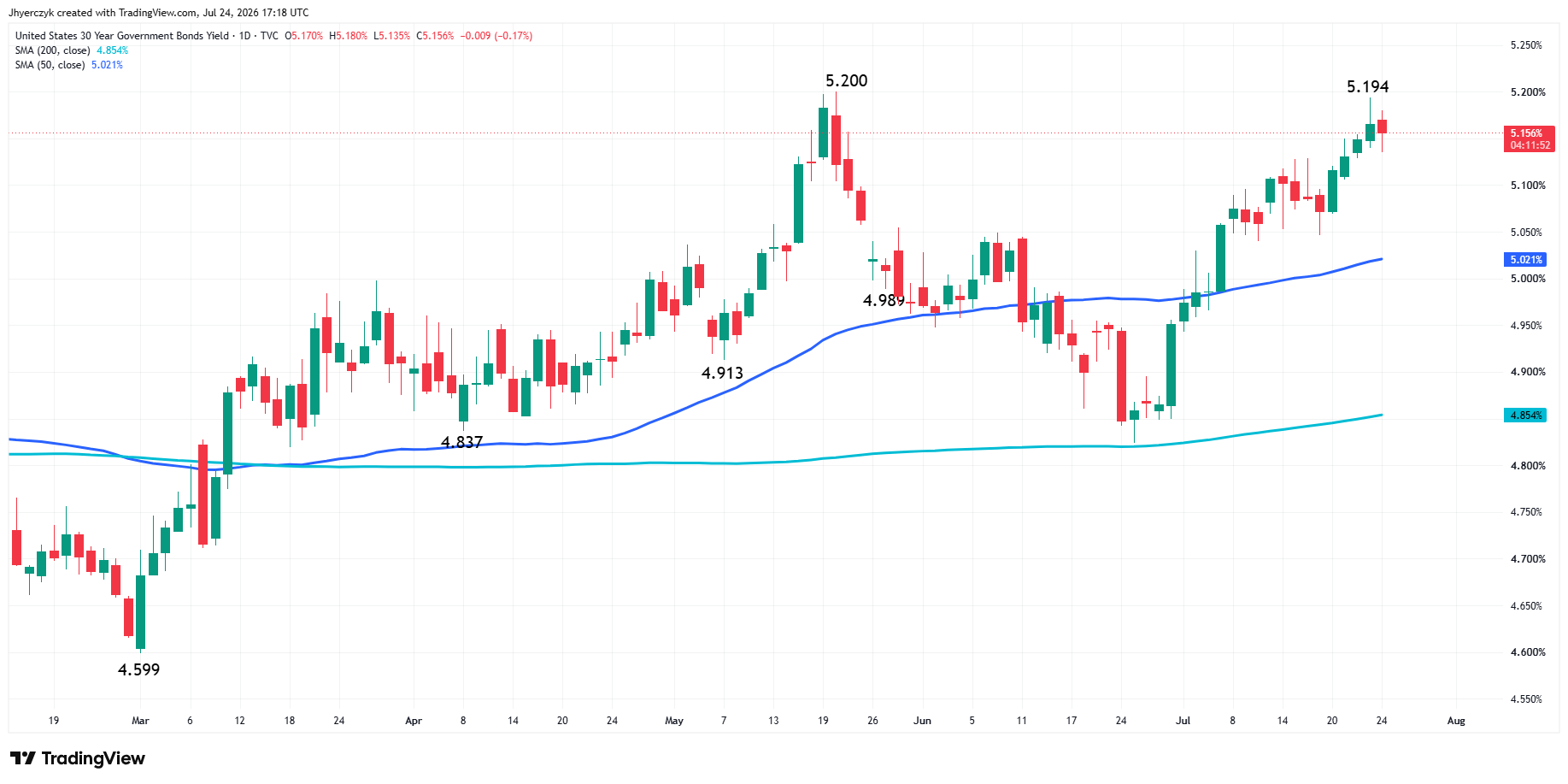
But the headline was enough to knock crude back after the weekly surge. Brent fell toward $96 and that took the immediate inflation pressure out of the bond market. The 2-year yield slipped to 4.311% and the 30-year backed off to 5.14%. Those are still elevated levels but gold needed the direction to change and Friday gave it that.
PMI Miss Helped the Bond Bid
The S&P Global flash U.S. PMI came in at 53.8, below the 54.4 estimate. Still expansion but not the strong print the bond bears needed after Thursday’s surge in yields. That gave Treasury buyers another reason to step in Friday and the combination of softer data and lower crude pulled the 10-year further from Thursday’s high.
Tai Wong, an independent metals trader, said gold appears to be building a base around $3,950 despite the rise in yields. ING sees the recent strength as dip-buying and short-covering after the correction from record highs. That reads right for Friday. The sellers could not keep control once the oil trade backed off and buyers who have been waiting for a pause in the yield surge found their opening.
Gold Price Forecast
Every new Gold analysis as it publishes, today's technical signal and key levels, live price — on one page.
See all Gold forecastsFOMC Next Week Is Still the Problem
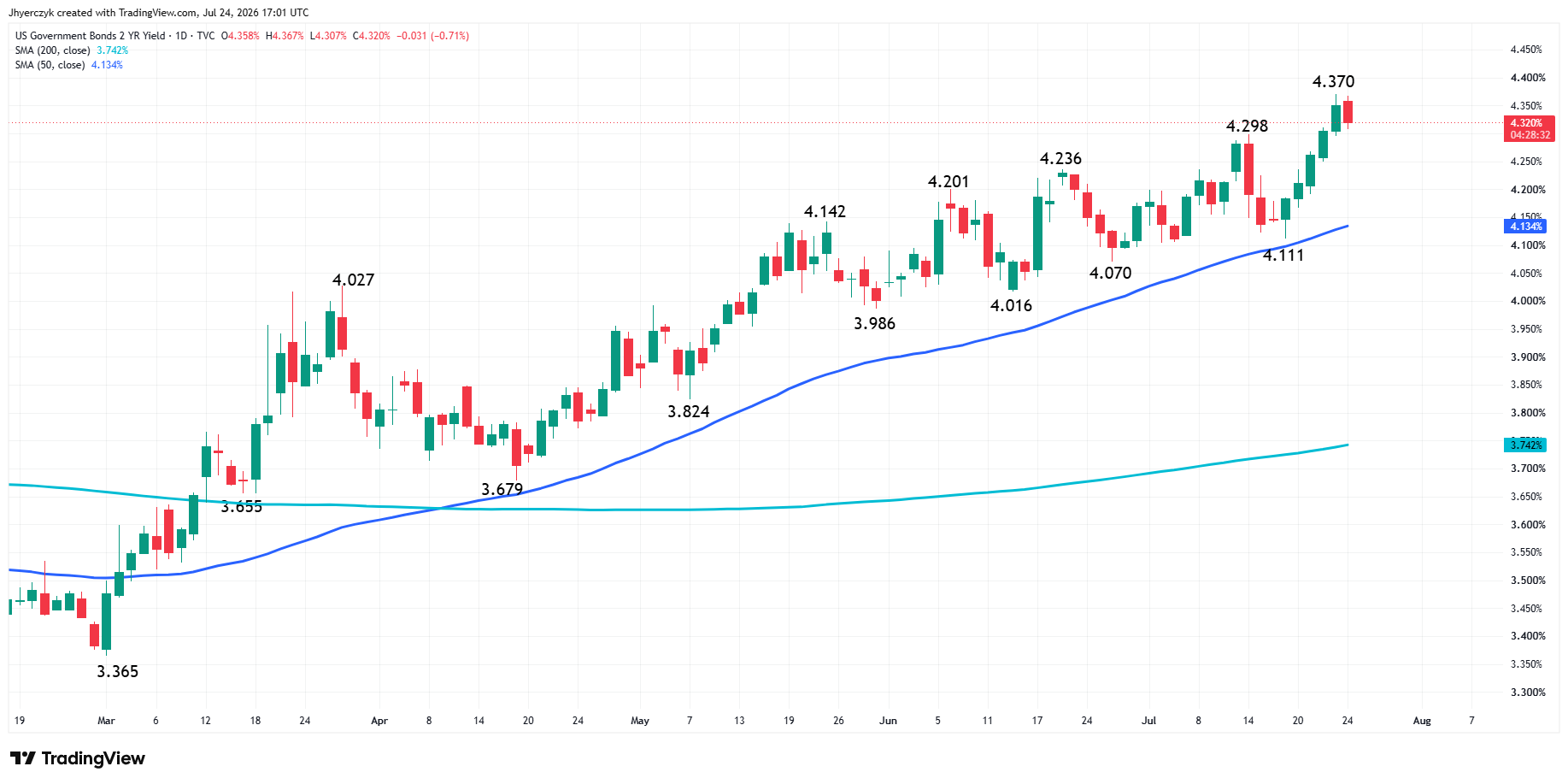
September hike odds are sitting near 80% and Friday’s pullback in crude did not move that number. The FOMC meets next week and Warsh has been skeptical of forward guidance since he took the chair. He dropped easing language from the June statement and did not submit a dot. A hold is the most likely outcome but the statement is what matters for gold and the Fed has crude near $100, a 10-year above 4.65% and the lowest jobless claims reading since 1969 sitting in front of it. That is not the backdrop for a dovish pivot.
Gold fell 23% from its January record high because the war kept lifting crude and crude kept lifting rate expectations. One Friday of lower oil after a week where Brent added roughly 10% does not reset that trade. The way I see it, Friday’s move is positioning relief after Thursday’s extreme. The rate picture that drove the selling has not changed.
Spot Gold (XAUUSD) Technical Analysis
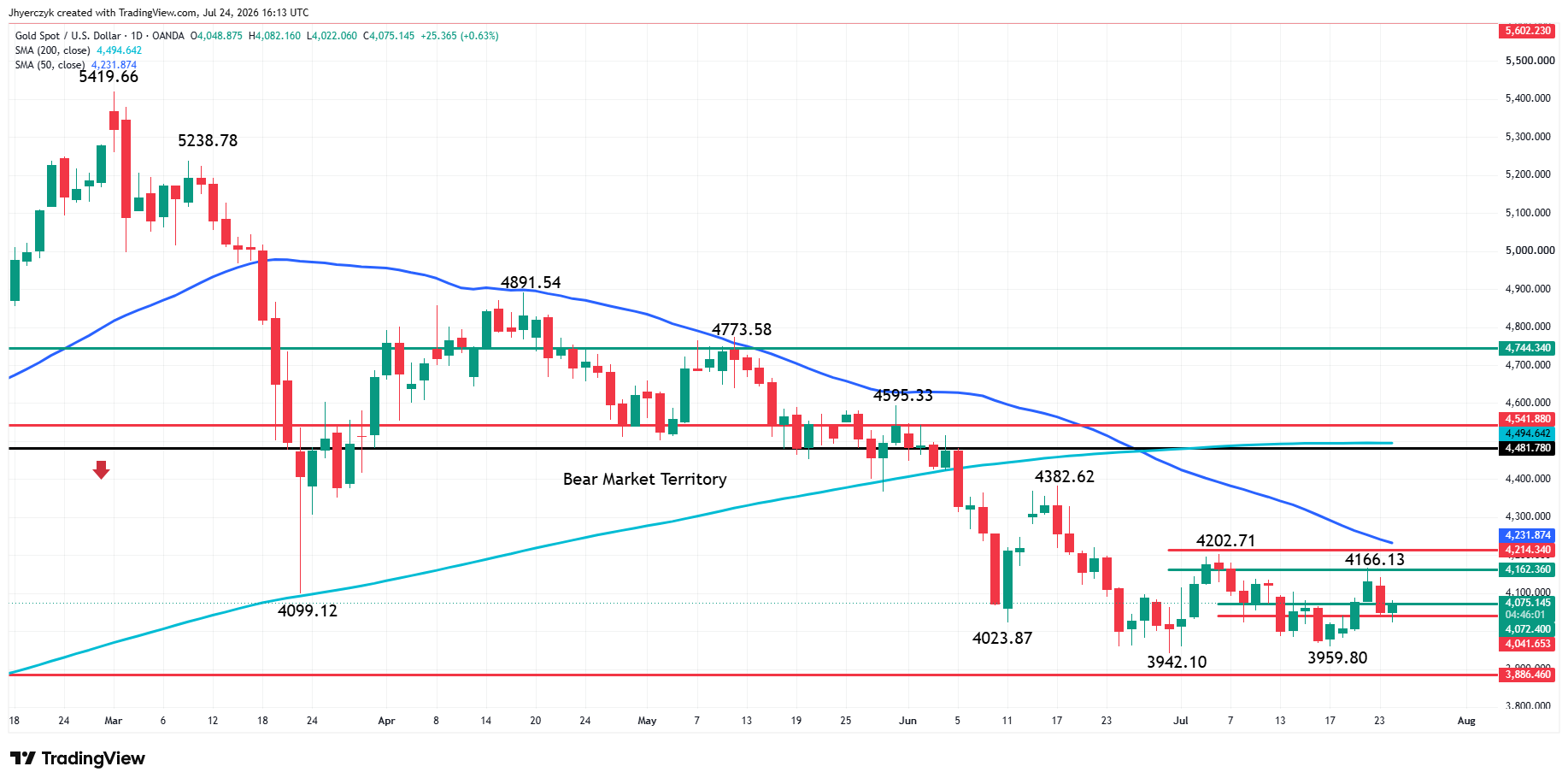
Spot gold is edging higher at the mid-session on Friday while navigating a short-term retracement zone at $4072.40 to $4041.65. Trader reaction to this zone could determine the near-term range. Bullish traders are trying to create another higher bottom and bearish traders want to reaffirm the new secondary lower top at 4166.13.
The current compression formation is getting a little crowded, with resistance from a main top at $4166.13, a retracement zone at $4162.36 to $4214.34, another swing top at $4202.71 and the 50-day moving average at $4231.90, which could be either resistance or a trigger point for an upside breakout.
On the downside, support is being provided by a pair of bottoms at $3959.80 and $3942.10. The long-term support is $3886.46.
What to Watch
Gold is responding to lower oil and a diplomatic headline, not an improvement in the rate outlook. The immediate test is whether crude stays below $100 heading into the weekend and whether yields continue to move away from Thursday’s highs. Trump’s decision on broader strikes is the variable that determines whether Friday’s relief extends into next week or reverses on a single headline. A wider attack sends crude back up and puts the inflation trade right back in control.
The FOMC meeting decides whether the recovery can build beyond short-covering. A hold with no hawkish escalation gives dip buyers room to stay involved. A statement centered on oil-driven inflation and a resilient labor market puts sellers back in charge. Gold is navigating a compression zone between resistance overhead and the bottoms below. Bullish traders are trying to build a higher bottom while the bears want to confirm the new lower top. The reaction to the short-term retracement zone sets the direction into the FOMC meeting and the crowded resistance cluster above is what the market has to clear before a recovery becomes something more than a relief rally.
If you’d like to know more about how to trade gold, please visit our educational area.