For decades, traders and investors alike were trained to reach for Gold, Government Bonds and the U.S Dollar whenever the world turned unstable.
Oil was rarely granted entry into that inner circle. It was considered too cyclical, too volatile and too politically exposed to qualify as true protection.
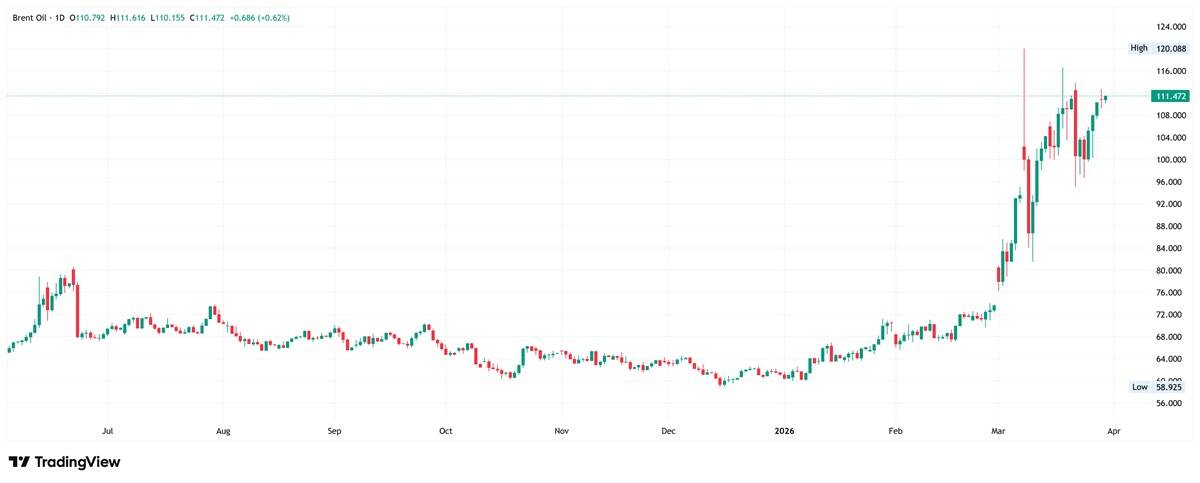
In 2026, that hierarchy is being challenged in real time. As inflation proves far stickier than policymakers hoped, global growth slows and geopolitical fault lines threaten the arteries of global energy supply, Crude Oil is no longer trading like a simple growth asset. It is increasingly emerging as one of the market’s most powerful defensive trades.

The Safe Haven Playbook Is Being Torn Up
This is no longer a standard inflation scare. It is a classic Stagflationary setup: slower growth colliding with persistent price pressure, forcing markets to confront fewer rate cuts, firmer bond yields and tighter financial conditions.
Risk assets are already feeling the strain. Liquidity is being drained, volatility is accelerating and confidence in the old market leadership is beginning to crack. In that kind of environment, hard assets reclaim their authority.
“Traders are still anchored to an outdated playbook,” says Lars Hansen, Head of Research at The Gold & Silver Club. “The COVID crisis set and drove the market for the next five years until 2025. Now, in 2026, the rest of the decade will be shaped by Energy. Those who fail to recognize that shift will be dangerously late.”
Why Oil Is Starting to Behave Like a Hedge
What is changing is not merely Oil’s price, but the market’s perception of what Oil represents.
Gold Price Forecast
Every new Gold analysis as it publishes, today's technical signal and key levels, live price — on one page.
See all Gold forecastsIn a world where energy security is now taking priority over affordability and even sustainability, Crude is being re-rated as a strategic store of geopolitical value. Underinvestment in upstream production, fragile supply chains and the strain of an unfinished energy transition have left the global system acutely vulnerable to disruption.
That vulnerability is exactly what gives Oil its new safe-haven status.
The threat is no longer theoretical. A prolonged disruption through the Strait of Hormuz would trigger a shock the market is still failing to fully price. Yet the physical interruption is only the beginning. The real escalation begins when governments and institutions start hoarding supply at the same time.
“This is where the market is still underestimating the scale of the problem,” Hansen says. “The physical disruption is the trigger, but precautionary hoarding is the multiplier. Once nations start securing supply simultaneously, price escalation becomes far more aggressive than most forecasts imply.”
Protectionism Could Make Everything Worse
One of the greatest risks during any energy crisis is not just war, but policy error. Governments often try to shield domestic consumers through price freezes, fuel controls and export restrictions. In practice, these measures usually worsen the global shortage. Price caps discourage production and encourage consumption. Export bans tighten international markets even further.
That process is already unfolding. Russia is banning Gasoline exports from April 1, pulling roughly 117,000 barrels per day out of global circulation just as supply stress intensifies. China has also moved to restrict fuel exports, including jet fuel, in a bid to protect domestic demand.
The result has been immediate dislocation across Asia-Pacific energy markets, with jet fuel premiums surging and shortages beginning to affect airline activity. When large economies begin hoarding energy, shortages do not ease. They accelerate.
The Energy Supercycle Is No Longer Theoretical
There is a deeper structural force beneath the headlines. The world is dismantling the old hydrocarbon system before the new one is ready to fully carry the load. AI-driven electricity demand, military requirements, industrial resilience and baseload power needs are all reinforcing the central role of fossil fuels. Meanwhile, energy remains chronically under-owned in global portfolios.
“Oil is under-owned, undervalued and still widely underestimated,” says Hansen. “That is exactly the kind of setup that creates asymmetric upside. In an Energy Supercycle, constrained supply and inelastic demand do not produce polite moves. They produce violent repricing.”
Goldman Sachs now outlines scenarios that see Oil spiking to $120, $140 and even $160 depending on the duration and severity of disruption. Hansen’s view is even more direct: “If disruption persists, $150 is not the ceiling. It is the next milestone.”
The Smart Money Has Already Moved
Over the past 15 years, The Gold & Silver Club has earned a reputation as one of the most accurate forecasters in the Commodities space – earning the firm recognition as a trusted authority among institutional investors and private wealth clients alike.
At the start of the year, The Gold & Silver Club declared 2026 “The Year of Hard Assets.” Three months in, that call is beginning to look less like a bold thesis and more like the defining macro reality of the year.
“The market still thinks Energy is a side story,” Hansen says. “It is not. It is the main story of 2026 and Oil may prove to be the safest place to be when the next global shock hits.”
That repricing is not coming at some distant point in the future. It is happening now.
For investors and traders alike, the message is clear: if you wait for full consensus, you will be paying a far higher price for the same thesis. The smart money is already rotating. The only question is whether you move before the crowd – or after it.