


For months, traders have crowded into artificial intelligence, equities and rate-hike speculation. Yet beneath the surface, a more powerful story is unfolding across Energy markets. Geopolitical risk is rising. Supply chains are tightening. Inflation pressure is returning.
Inventories are being drained at speed. And the physical Oil market is now flashing the kind of warning signals that historically precede major price shocks.
This is no longer just a geopolitical headline story. It is becoming a supply, inventory and inflation shock story.
Oil Is the Shock Trade Markets Are Still Underpricing
The most urgent pressure point remains Crude Oil.
Roughly one-fifth of global Oil flows through the Strait of Hormuz, making it one of the most strategically important chokepoints in the world. Any sustained disruption there does not simply affect Crude. It affects Diesel, Gasoline, Jet Fuel, Liquefied Natural Gas, Fertiliser and broader global trade costs.
According to recent market commentary, as much as 14 million barrels per day of supply could be offline or constrained. To put that into perspective, global Oil demand is running near 103 million barrels per day. That means more than 13% of global supply is potentially impaired at precisely the moment the Northern Hemisphere enters peak summer demand.
“Oil markets are forward-looking, but they are not always right,” says Lars Hansen, Head of Research at The Gold & Silver Club. “The mistake traders are making is assuming a political headline can restore physical supply overnight. It cannot.”
Brent Oil Price Forecast
Every new Brent Oil analysis as it publishes, today's technical signal and key levels, live price — on one page.
See all Brent Oil forecastsThe Inventory Cushion Is Disappearing
The core problem is simple: the shock absorbers are being used up.
The latest U.S inventory data reinforces the point. Commercial Crude inventories recently fell by 3.3 million barrels to 441.7 million barrels, leaving stocks around 2% below the five-year average. Gasoline inventories dropped by 2.6 million barrels and now sit roughly 6% below the five-year average. Distillate stocks fell by 2.1 million barrels and are approximately 11% below normal seasonal levels.
Total commercial Petroleum inventories declined by 8.3 million barrels in a single week.
At the same time, U.S refineries are already running aggressively, with Crude inputs averaging 17.0 million barrels per day and utilisation near 94.5%. That leaves limited spare capacity if supply is further disrupted or product inventories continue to fall.
“The Oil market is not short of narratives,” Hansen says. “It is short of barrels. That distinction matters because narratives can change in minutes, but physical supply chains take months, if not years to rebuild.”
Three Buffers Are Running Out at Once
The market has absorbed the disruption so far because three buffers have worked simultaneously.
First, commercial inventories have been drawn down aggressively. Second, China has reportedly reduced imports by leaning on strategic reserves instead of buying at normal market levels. Third, refined product markets have absorbed pressure through already thin stock cover.
None of those buffers are permanent.
The IEA’s historic 400 million barrel reserve release may sound large, but against a 14 million barrel per day deficit, it covers less than one month of lost supply. China’s strategic reserves are also finite. If Beijing re-enters the import market at scale, as much as 5 million barrels per day of demand could return suddenly, not gradually.
“That is the part traders are sleeping on,” Hansen says. “The Crude market can move first, but the product market can extend the shock. Once Diesel, Gasoline and Jet Fuel tighten together, the inflation impulse becomes much harder for central banks and consumers to ignore.”
Why $150 Oil Is No Longer a Tail Risk
Major industry voices are now warning that the upside risk is far larger than futures markets suggest.
ExxonMobil’s Neil Chapman has warned that inventories are approaching unusually low levels and suggested Brent could spike toward $150 to $160 per barrel if buffers are exhausted. Chevron’s Mike Wirth has also highlighted the loss of market “shock absorbers”, warning that the next phase of the crisis could force governments to refocus sharply on energy security.
That matters because Oil does not need to stay at $150 to damage the economy. Even a temporary spike can lift transport costs, pressure corporate margins, reignite inflation expectations and complicate central bank monetary policy plans.
Pullbacks May Be the Biggest Buying Opportunity
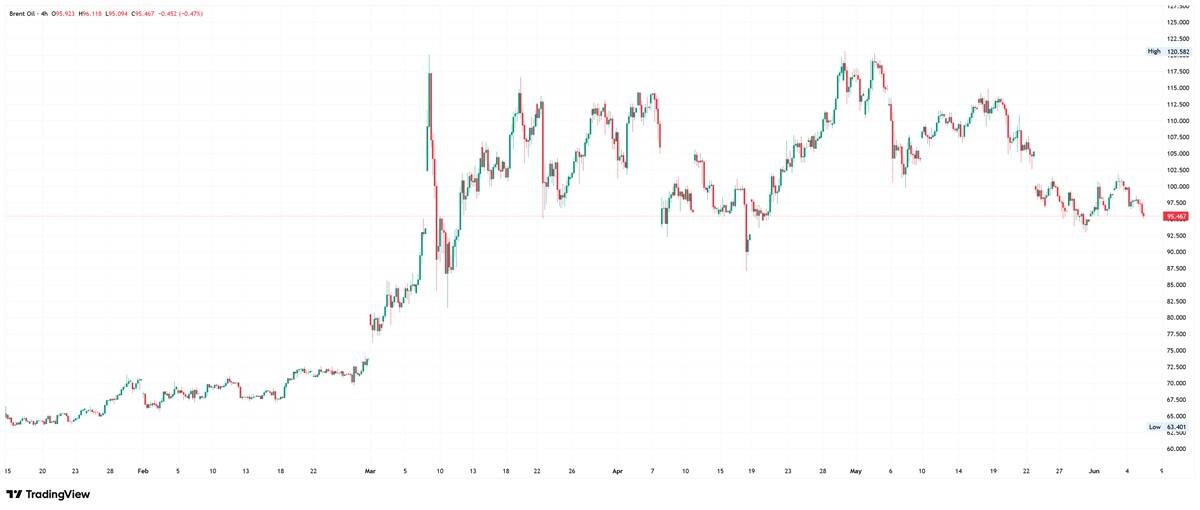
After an explosive move higher, Oil has pulled back as trader’s bank windfall profits – ready to capitalize on the markets next big move.
Pullbacks in structurally bullish markets often feel uncomfortable in real time. Yet they can become the highest-conviction entry points before the next leg higher. With geopolitical risk unresolved, inventories under pressure, refinery capacity stretched and peak summer demand approaching, the risk-reward remains heavily skewed toward higher prices.
“Oil has rarely looked this asymmetric,” Hansen concludes. “Volatility is elevated, but that is exactly where opportunity lives. The current pullback may be the last cheap entry before the next historic breakout begins.”
For traders who missed Oil’s spectacular surge in May, June and July may offer a second chance. The window may not stay open for long. In this market, hesitation doesn’t just cost time. It costs profit.