


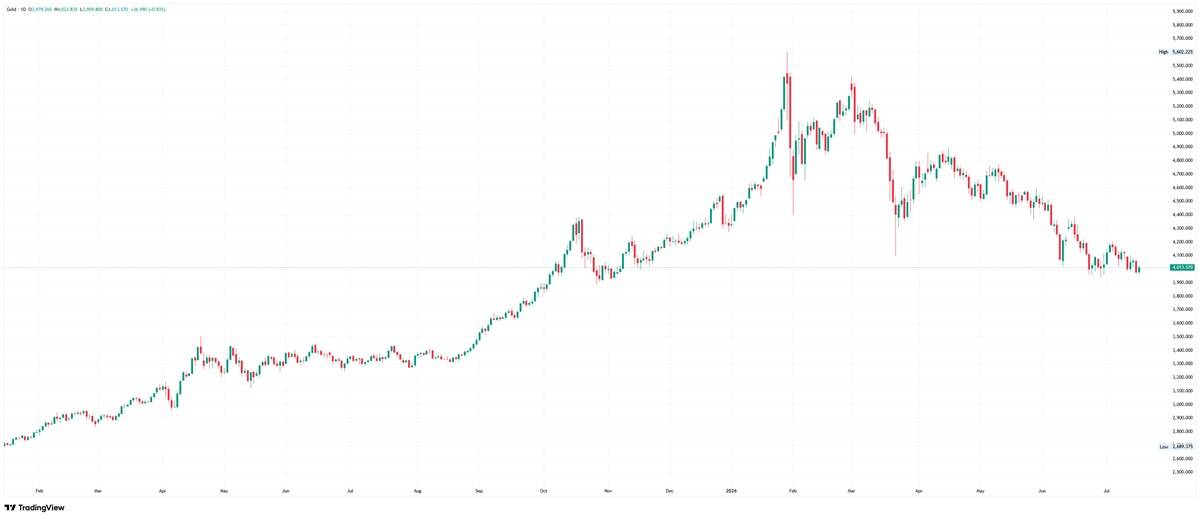
History suggests these are often the periods that separate patient traders from those forced to chase momentum later. What makes this correction different is not simply the technical backdrop. It is the behaviour of the world’s largest buyers.
Official-sector demand has accelerated once again. According to the World Gold Council, Central banks purchased a net 41 tonnes of Gold in May, more than doubling April’s total of 19 tonnes. That represents a monthly increase of over 115% – a remarkable shift at precisely the moment speculative positioning has cooled.
“Central banks are not reacting emotionally to short-term price swings,” says Lars Hansen, Head of Research at The Gold & Silver Club. “They are accumulating strategic reserves while prices remain below recent highs. That is typically where the biggest opportunities emerge.”

The World’s Largest Buyers Continue to Accumulate
Poland once again led official buying, adding another 18 tonnes during May and lifting its total reserves above 614 tonnes after purchasing 64 tonnes so far this year.
China also expanded reserves by 10 tonnes – its strongest monthly increase since late 2024 – marking an extraordinary twentieth consecutive month of reported Gold purchases. That sustained buying program has now lifted China’s official holdings beyond 2,330 tonnes.
Meanwhile, the latest Central Bank Gold Reserves Survey revealed that 89% of reserve managers expect global Gold holdings to continue rising over the coming year, while 45% intend to increase their own allocations – the highest reading ever recorded.
“The smart money is not waiting for headlines to confirm the trend,” Hansen explains. “Institutional buyers are positioning well before the next leg higher becomes obvious.”
Gold Price Forecast
Every new Gold analysis as it publishes, today's technical signal and key levels, live price — on one page.
See all Gold forecastsSilver May Offer Even Greater Upside
While Gold continues attracting Central bank demand, Silver is quietly developing one of the strongest fundamental backdrops seen in years.
Unlike Gold, Silver benefits from both monetary demand and industrial consumption.
Global Silver demand continues to exceed mine supply, with the market recording its fifth consecutive structural deficit. Above-ground inventories have been steadily declining as industrial users compete for increasingly constrained physical availability.
Solar manufacturing remains one of the biggest drivers. Modern photovoltaic panels require Silver because of its unrivalled electrical conductivity, and global solar installations continue setting new records. At the same time, expanding electric vehicle production, artificial intelligence infrastructure, advanced electronics and power-grid investment are all increasing long-term Silver consumption.
Investment demand is also recovering.
Exchange-traded products have started attracting fresh inflows, while futures positioning remains well below previous speculative extremes – leaving considerable room for institutional participation should momentum accelerate.
“Silver has the rare combination of structural industrial demand and monetary appeal,” Hansen says. “When both drivers strengthen simultaneously, price moves have historically been far more explosive than Gold.”
Historically, Silver has also demonstrated a tendency to outperform Gold during mature precious metals bull markets as traders rotate into higher-beta opportunities.
The Macro Picture Continues to Strengthen
The broader investment landscape remains supportive for precious metals.
Government debt burdens continue expanding across developed economies. Central banks remain committed to reserve diversification. Persistent geopolitical tensions, elevated fiscal deficits and ongoing concerns surrounding long-term currency purchasing power continue reinforcing the case for hard assets.
Importantly, trader positioning still appears relatively subdued despite these supportive fundamentals.
That disconnect creates opportunity.
“When markets become excessively focused on short-term volatility, they often miss the bigger structural trend,” Hansen says. “The current correction appears far more like a reset within a longer-term bull market than the beginning of a lasting downturn.”
The Window May Not Stay Open for Long
Gold remains below recent highs despite record levels of official-sector conviction. Silver continues trading against one of its strongest supply-demand backdrops in decades.
The combination of accelerating Central bank accumulation, persistent Silver supply deficits, expanding industrial demand and improving technical conditions presents a compelling backdrop for the second half of 2026.
Markets rarely provide comfortable entry points for long.
“The biggest gains are usually earned before consensus shifts,” Hansen concludes. “By the time most traders recognise what is happening, both Gold and Silver could already be trading significantly higher.”
For traders seeking one of the highest-conviction macro opportunities of 2026, the precious metals pullback may prove to be less of a warning and more of an invitation. The only question now is whether you’ll recognise the opportunity before the market leaves you behind?


